Once a taboo topic, autism is slowly being brought into the light, through local advocacy groups, charities and parents having public conversations about those living with the disorder and the issues surrounding them.
Though advocates say more progress needs to be made in Cayman when it comes to acceptance, Melanie Coffey of Inclusion Cayman says the community has come a long way towards recognising autistic individuals and working to build inclusivity.
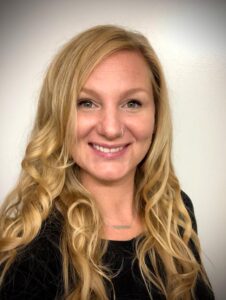
“In my limited experience of living here for 11 years, I have seen a huge increase in celebrating diversity, celebrating neurodiversity. Many stakeholders in the community throughout education to clinical services to other areas of the community have so much more awareness now of diversity and we see that being such a positive thing,” she told the Cayman Compass in a recent Zoom interview.
Formerly known as the Special Needs Foundation Cayman, Inclusion Cayman, according to its website, “is an independent, impartial advocacy organisation supporting families across the Cayman Islands to promote and defend the rights and interests of people with disabilities’.
Coffey pointed out that there are no national statistics or data on the rates of autism specific to Cayman.
However, as an organisation, Inclusion Cayman works on the assumption that rates would be the same as the US, at about one in 44 people, “which is a pretty high prevalence rate”.
“It’s very significant, but it is important to note that the diversity of the autism spectrum disorder is truly limitless and that all individuals with autism will have different symptoms associated and different strengths and talents and gifts,” she said.
At the end of 2020, according to the Economics and Statistics Office’s Compendium of Statistics, there were 522 students registered under the Government School Special Educational Needs (SEN) programme.
The Cayman Islands Disability Policy, which was approved by Cabinet in 2014, noted the benefits of establishing a National Register of Persons with Disabilities which could inform policy, legislation and services. However, Coffey said, to date, this action has not been approved.
Barriers prevent acceptance
April is celebrated as Autism Acceptance Month.
Coffey said she has seen the needle move in accepting diversity in the community, but a number of barriers still exist for families living with autistic relatives.
“In order to access inclusive lives by our families… that’s accessing inclusion throughout the community, whether it be in education or employment or in a church or in a grocery store, we certainly see that awareness piece is growing, but it might be [limited] to certain spaces and… that is truly because of a lack of exposure,” she said.
Historically, individuals with autism or other disabilities, she said, have been placed in other spaces or not embraced in mainstream spaces in the community as much.
A lot of the barriers to accessing inclusion in general would be attitudinal. A lot of persons in those environments, probably persons who make key decisions, might not have exposure to disability or to autism… and therefore there may be some biases as a result, or they may feel there’s a better place or another space for individuals.”
“We’re moving away from that globally now and in Cayman I see a beautiful community of close-knit contacts where people know each other’s family members who have autism, and therefore provides so much better, welcoming community support. But in order to address those larger systemic barriers, we certainly still have a lot of work to do in those places,” she said.
Those areas include access to employment, education, therapies and adequate insurance.
“A lot of the barriers to accessing inclusion in general would be attitudinal. A lot of persons in those environments, probably persons who make key decisions, might not have exposure to disability or to autism… and therefore there may be some biases as a result, or they may feel there’s a better place… for [those] individuals,” Coffey said.
This, she stressed, is why discussions are really important.
“For individuals with autism themselves moving from awareness to acceptance is a really key part of the autism movement we’re seeing globally,” she said, pointing out that families of people with autism want them “to be accepted for who they are, valued and celebrated”.
Coffey added that a key part of inclusiveness is understanding that individuals with autism communicate differently.
This, she said, can be either through social communication or expressive language itself which can also be a huge barrier to inclusion.
She said if the community is not aware of how to communicate with an autistic person or understand their style of expression then making safe spaces for them will be a challenge. Safe spaces where they can be who they are, and meeting their sensory needs, will lead to them being accepted “truly as a key part of society”.
At Inclusion Cayman, she said, they believe that individuals with disabilities have so much to offer the world.
Conversations about changes that impact autistic people and their family’s needs must include those who live the experiences, Coffey said, adding that only then can major changes be observed from policy level to the ground level supports “to ensure that everybody belongs”.
Insurance coverage an issue
Coffey said Cayman has seen a huge increase in therapies and support for autistic individuals and families.
“Many of those therapeutic supports are about serving individuals with neurodiversity, not exclusively autism, but there is certainly far more access to high quality speech and language therapies, occupational therapies, and applied behavioural analysis. When families are choosing those therapies to wrap around their child, we see that there are more options,” she said.
However, insurance coverage remains a challenge.
“We are still faced with the same reality with many of our families that their insurance provision is a huge area of concern,” she said, noting that for some families, 20 or 40 hours of therapy a week may be recommended, but insurance may only cover 21 sessions per year.
She said many are hopeful with the expanded services at CINICO that such therapies will be included in coverage.
Another barrier, she said, is ensuring that those specialists are embedded throughout the community as well so that children can attend the same school as their peers without disabilities and take part in such activities as soccer camp or swim clubs.
“When we think about those really important supports that are embedded, there is… some work to do,” she said, but added that there has been “great progress” in giving teachers or swim instructors or pastors the “opportunity to understand how to support somebody with diversity in their space”.
Inclusion facilitators, Coffey said, are partnering on the ground in schools, community leisure recreation spaces and at work to ensure that they can lend guidance to the people who support individuals with disabilities.
Community groups can help too
Coffey said it takes a community effort to help convert awareness into acceptance, but it starts with baby steps. “There’s no magic wand and there’s no solution overnight, but we certainly know that the key in this is centring the voices of those persons.”
She said that all individuals and families want to belong,” so I would say that as a community we all have a role in that”.
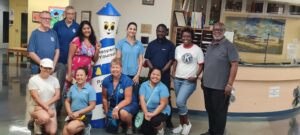
As part of that community effort, the Kiwanis Club of Grand Cayman recently completed a redesign of the sensory garden at the Lighthouse School.
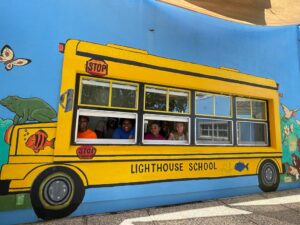
“We are working tirelessly each month to pick a community project that affects our kids’ day to day life,” club president Jessica Kozaily told the Compass.
“For the month of March the objective of our project was to redesign the Lighthouse School’s garden into an impactful sensory garden that allows kids with autism spectrum disorder to interact with nature and improve their physical, sensory, social and emotional wellbeing. It is very important to provide the kids with an outdoor environment that meets their unique needs and increases the meaningfulness of their daily lives.”
The garden’s new wall and floor painting, plants and flower garden, as well as wind chimes, brought the whole project to life.
Related Videos