Caribbean Utilities Company has increased its customer base by 869 customers, or 3%, to 32,365 in the first quarter of 2022.
The utility’s net earnings grew by $2.2 million to $5.5 million compared to the same period in 2021 as a result of higher operating income and lower finance charges.
Electricity sales revenues of $22.1 million in the first three months of the year were $700,000 greater, and 4% higher in terms of kilowatt-hour sales, year on year.
CUC president and CEO Richard Hew said, in a press release, the growth in the tourism industry with the reopening of the island had a positive impact on large commercial electricity sales and the overall economic activity in Grand Cayman.
He said the company remained focussed on controlling its operating costs during a period of rising costs and uncertainty in the supply chain for materials and equipment.
Government participation in renewables
The announcement by the Cayman Islands government last week of a change in energy policy and its intention to hold a majority ownership stake in all future large-scale renewable-energy projects has raised questions over the energy-procurement schemes developed by utility regulator OfReg.
Premier Wayne Panton said the policy shift would accelerate the adoption of renewable energy and help Cayman become energy independent.
Earlier in April 2022, OfReg issued a Request for Qualification (RFQ) for the first round of its Renewable Energy Auction Scheme (REAS).
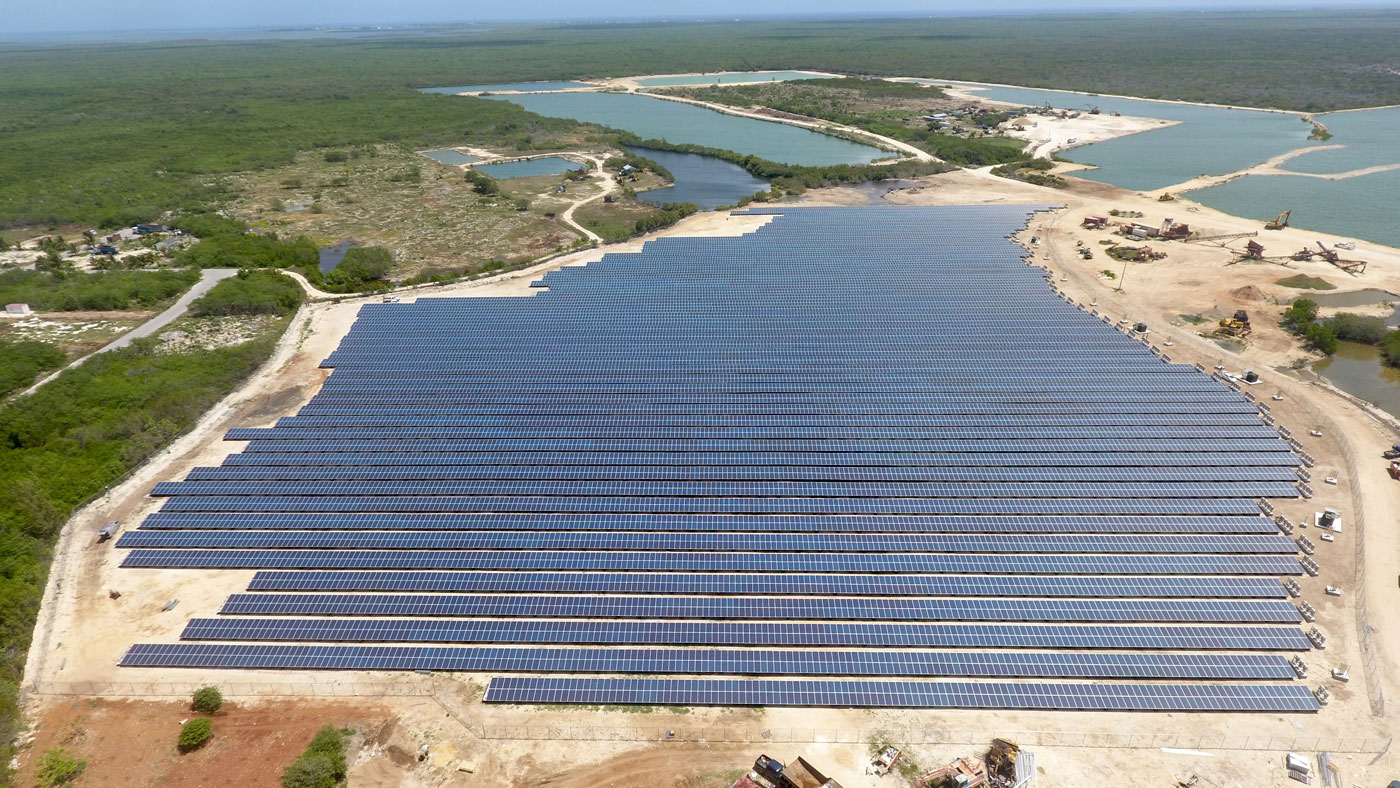
This aims to select the operator of a solar plant and energy storage with up to 100MW capacity, with a 60MW battery energy-storage facility.
OfReg also issued an RFQ for a 23MW Dispatchable Photovoltaic Generation plant with energy storage.
CUC said it is preparing to participate in these bids but said it will have to engage in discussions with the government and the regulator to determine the effect of government’s policy change on the bid process and future renewable-energy plans.
During the quarter, CUC “also arranged for the delivery of temporary generation to meet this summer’s projected peak load while the regulator prepares to procure more solar energy for the grid”, Hew said in the press release.
“The Company looks forward to participating in this procurement process which is aligned with our ambition to have 60% of the energy on the grid from renewable sources by 2030 to lower and stabilize electricity costs and reduce greenhouse gases and other emissions.”
During the first quarter of the year, only 3.36% of CUC’s total kilowatt-hour sales was generated from renewable energy.
Capital investment plan
CUC said it plans to invest $373.2 million from 2022 to 2026, including $22 million for two grid resiliency projects which will involve the undergrounding (replacing overhead cables with underground ones) of the company’s transmission and distribution infrastructure from the North Sound plant to the Seven Mile Beach and South Sound substations.
Undergrounding of these lines will provide resilience and improve power restoration times after a tropical storm or a hurricane.
The capital investment plan, approved by the regulator, will also include the roll out of public electric-vehicle charging locations which will be available in key locations around Grand Cayman.
A 20 megawatt battery energy-storage project, which will allow the company to improve the fuel efficiency of its diesel-generating plant while also supporting further adoption of distributed renewable-energy projects, is also included in the plan among several other projects designed to improve service reliability, efficiency and environmental performance, CUC said.
Related Videos