At a glance
- Utility Regulation and Competition Office accepts CUC’s certificate of need
- Grand Cayman needs additional 96MW of generating capacity by June 2027
- Next step will include a bidding process inviting companies to submit proposals for adding power to the grid
The electricity regulator has approved a ‘certificate of need’ proposal by the Caribbean Utilities Company, bringing to an end a dispute that had delayed bids for new power generation on Grand Cayman.
The Utility Regulation and Competition Office gave the green light to CUC’s certificate of need, which identifies that the island, with its growing population and ongoing construction of new hotels and condominium developments, will require an extra 94 megawatts of generating capacity by June 2027.
CUC is required, by the terms of its transmission and distribution licence, to prepare a certificate of need, predicting the island’s needs and the projected grid capacity to meet those needs.
The next step will see URCO beginning a competitive bid process, starting with a request for qualifications to find qualified bidders, followed by a request for proposals to put forward bids to supply power to the grid.
According to a timeline issued by URCO on the bidding process and the subsequent implementation, it will take approximately three years to meet the predicted capacity.

Richard Hew, president and chief executive officer of CUC, in an interview with Compass TV Tuesday, said the intervening period between June 2027 and when the additional supply comes online in 2029, leaves open the possibility of a “gap” in capacity.
“We don’t know where the projections and load growth will hold true,” he said, “but we may have a gap there that we have to deal with.
“If the gap isn’t filled, then, I don’t want to scare anyone, but the facts of the matter is, as your gap between your total capacity and your total demand narrows, it means that if something should happen, if we have loss of generation, mechanical failure … we would be in a position where we’re struggling to meet with customer [demand].”
According the CUC’s 2025 annual report, the company added more than 800 new customers between 2024 and 2025.
CUC has a current installed generating capacity of 166 megawatts.
Earlier submission rejected
An earlier certificate of need submitted by CUC, which included proposals for solar-power generation, was rejected by URCO, as the two did not agree on what could be considered ‘firm power’. URCO had previously argued that solar energy, even when combined with battery storage, was not firm power.
That matter seemed to be headed for court, before an out-of-court settlement was reached last year in which it has determined that solar farms, backed by sufficient battery storage, are reliable enough to be considered firm power.
The latest certificate of need submitted by CUC did not include mention of solar power, instead just outlining what capacity was needed on island, leaving it up to the regulator to determine how meeting that capacity should be done.

The regulator’s interim chief executive officer, Sonji Myles, in a letter outlining the acceptance of the latest certificate of need, or CON, stressed that “for the avoidance of doubt”, the approval confirmed that the certificate meets the “procedural and substantive requirements” under the licence, paving the way for the tender process to supply additional power to begin.
He added that the approval does not mean that URCO has agreed to “any specific option, configuration, commercial arrangement or procurement approach beyond what is required for a compliant CON”.
Myles told Compass TV, “From the regulator’s perspective, our focus is straightforward; keep the lights on, keep electricity prices as low as reasonably possible, and modernise the system in a way that protects the country’s critical infrastructure and promotes the sustainable future energy needs.”
He added that URCO does not favour any particular provider and that all bids would be looked at carefully, to determine “who can deliver the capacity at the lowest cost to consumers, who can do it in a reliable and resilient way, who can integrate cleaner technologies where practical, and who can deliver a system the country can depend on for decades to come.”
URCO Chairman Samuel Jackson added, “At this stage, URCO is not selecting a specific proposal. We are confirming the system needs and setting the conditions for a fair, transparent process that supports competition and long-term resilience.”
CUC’s Hew noted that the power company first submitted the certificate of need in 2024, which outlined the capacity needed by mid-2027. The delay in that certificate being approved had placed Cayman “behind the ball”, he said.
He noted, however, that last year Cayman had a record 1.2 hours of outage, which he said was better than North American standards.
Hew said CUC research had shown that solar power, plus battery storage, was the most cost-effective and reliable means of supplying energy to the island, adding that he hoped URCO’s future decision on what type of power to add to the grid will include more solar energy.
Reliance on fossil fuels
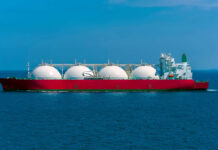
Currently, the vast majority of Grand Cayman’s electricity is diesel generated, a situation, Hew says, that is putting the island at a disadvantage.
“It’s very important that we diversify our energy resources, because, as we see currently, the Middle East conflict has driven fuel prices up, and we’re 97% reliant on diesel right now. So, getting a diversification of our energy resources will be good for our jurisdiction,” he said.
Cayman’s National Energy Policy has set a series of targets for the supply of electricity from renewable sources in the coming years, aiming for 30% renewables by 2030, 70% by 2037 and 100% by 2045.
Hew said CUC analysis, as part of its 2018 Integrated Resource Plan, had shown that “getting to 60% renewables, particularly solar, plus storage, will give us the least cost, cleanest and most reliable grid capacity”.
At times when solar power is not being generated, for example, during a week of rain, the other 40% of diesel-generated electricity would provide coverage, he said.
Hew said Cayman needed 200MW of solar power “to make a dent in our energy needs”.
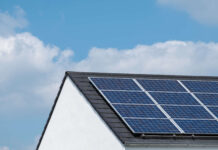
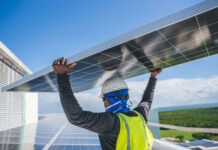
There is currently a request for proposals under way for bidders to supply 22.5 MW of solar power, which would be the island’s biggest utility-scale solar and battery storage project.
Once online, that project is expected to deliver three-and-a-half times the output of the 5 MW Bodden Town solar farm – currently the islands’ sole solar facility – and offset around 16% of Grand Cayman’s peak summer electricity demand, based on system forecasts.
Hew said Cayman would need two or three similar facilities to reach a 50-60% non-renewable energy supply, which he said, “is achievable”.
Related Videos