By Christopher Tobutt
You didn’t glide into Holi; you collided with it.
Even before reaching Sandbar Daiquiri Bar and Grill on 8 March for the Bollywood Holi Bash, the music was already rolling down North Church Street in thick, rhythmic waves – not the tidy, predictable beats of pop music, but something wilder, older and beautifully disorienting. Electronic pulses wrapped around drifting Indian ragas – those haunting, unresolved melodies that seem to hover between worlds. Notes that bend. Scales that shimmer. A sound that sweeps you up.
Upon entering the festival area, one felt that jolt – the delicious kind – the one that says, “Whatever you thought you knew? Leave it at the gate.”
There were two Sri Lankan families, kids practically buzzing with excitement, flower garlands bouncing on their shoulders. Buddhists, they said, on their way to celebrate Holi as if it were their own. Just joy – pure, uncomplicated joy – pulling them forward. While Holi’s roots are in Hinduism, everyone was welcome to join in.
Holi is known as the festival of colours, and the colours were as diverse as the those who attended. This festival doesn’t care about categories. It doesn’t care about who belongs or who fits in. Holi is a tide – and if you step into it, it sweeps you in completely.
Inside the courtyard, the air felt charged, like the moment before a storm breaks. Kids armed with neon water guns. Adults wearing white shirts – blank canvases for the action painting to come. Flower garlands and colour powder packets clutched like secret weapons.
Before the colours flew, guests were treated to fragrant Indian food – rice, spices, and wonderful aromas drifted through the space.
Dr. Shravana Jyoti, treasurer of the Indian Cayman Community and one of the organisers, introduced fellow organiser Abdul Hameed, the group’s president, before explaining the heart of the festival.
“We are celebrating Holi,” Jyoti said. “It is one of the important festivals where we exchange, or throw, colours at each other and we celebrate. Basically, it is to bring equality in the society – we are all ‘playing’ together. It is to celebrate the coming of spring, and there is no differentiation – rich, poor, educated, non-educated. It’s a festival of India.”
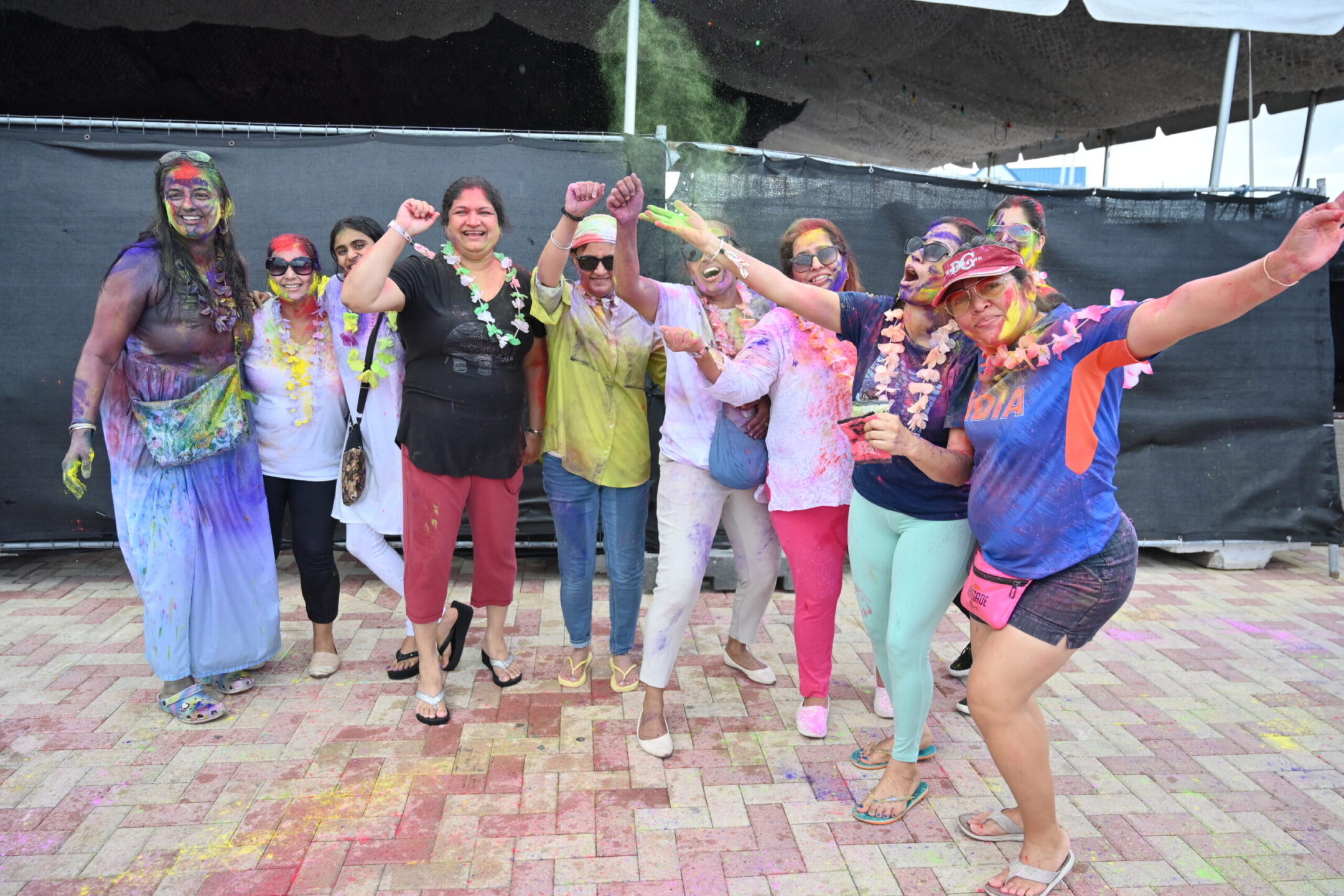
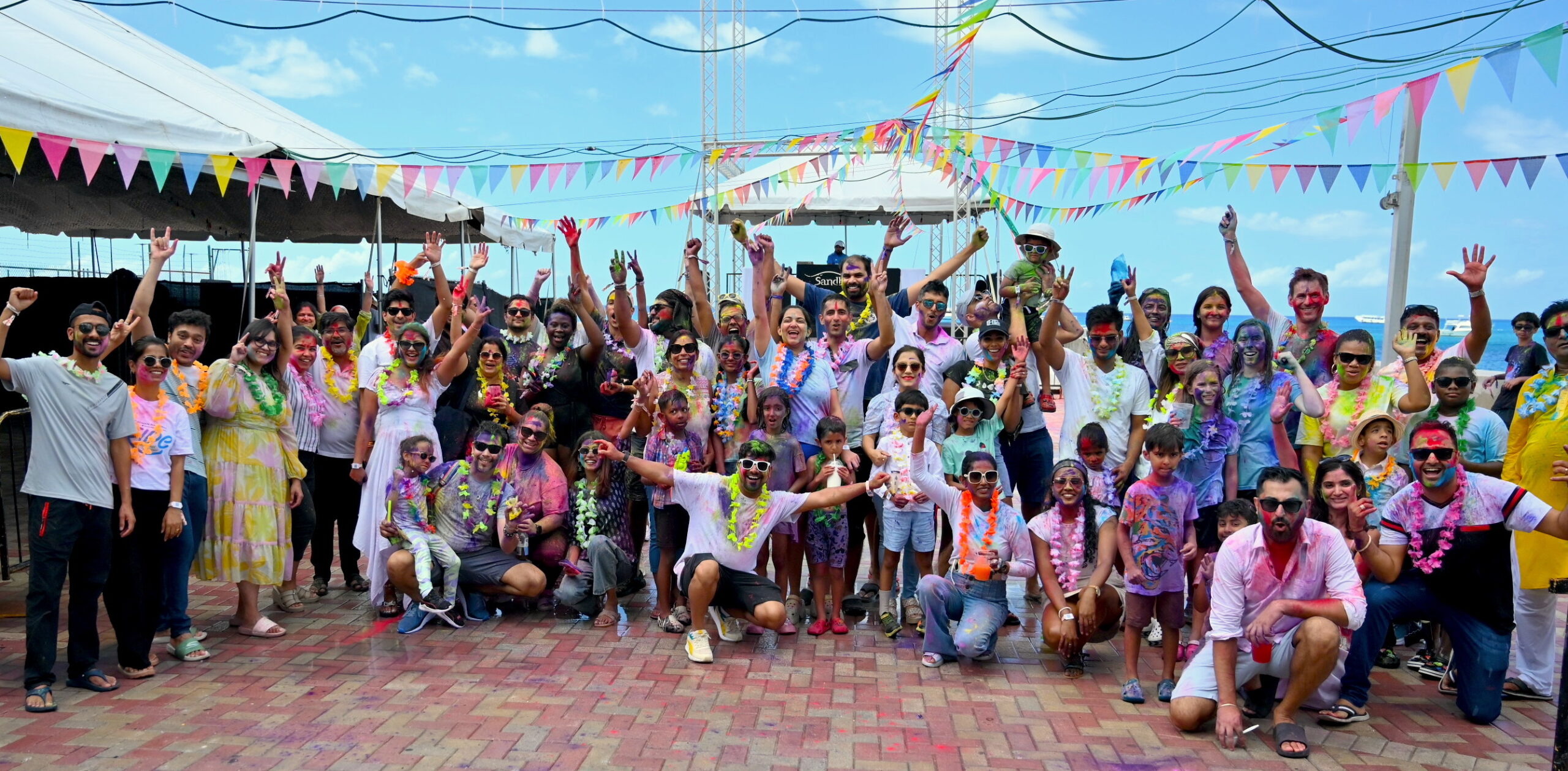
Then the storm broke in waves of colour. Pink, green, purple and electric blue powder erupted into the air, drifting, swirling, settling onto hair, faces and clothes. At first, people dabbed the colours gently – polite, tentative. But Holi dissolves hesitation. Within minutes, the careful dabbing gave way to joyful, unrestrained splashings of colour.
Children squealed as they sprayed friends and strangers with giant water guns. Artificial rain from sprinklers misted the crowd – and then real rain swept in, turning the colours into vivid streaks that made everyone look like walking works of art.
As the afternoon wore on, people became almost unrecognisable. That, perhaps, is Holi’s quiet magic. When everyone is covered head to toe in colour – wet, laughing, and indistinguishable – class, status and background lose all meaning. The crowd became a living ‘action painting’, a swirling, joyful canvas that would make abstract expressionists envious.
Music pulsed through the courtyard, and soon people were joining hands, forming circles, and dancing together in a blur of movement and colour. Children darted between adults; parents lifted toddlers into the air; strangers became instant friends.
Holi may have ancient roots, but at the Sandbar it felt fresh, vibrant and utterly Cayman, too – a rousing metaphor of our islands’ welcoming diversity.
Christopher Tobutt is a freelance journalist who has written for various publications in the Cayman Islands since 2003.
Related Videos