


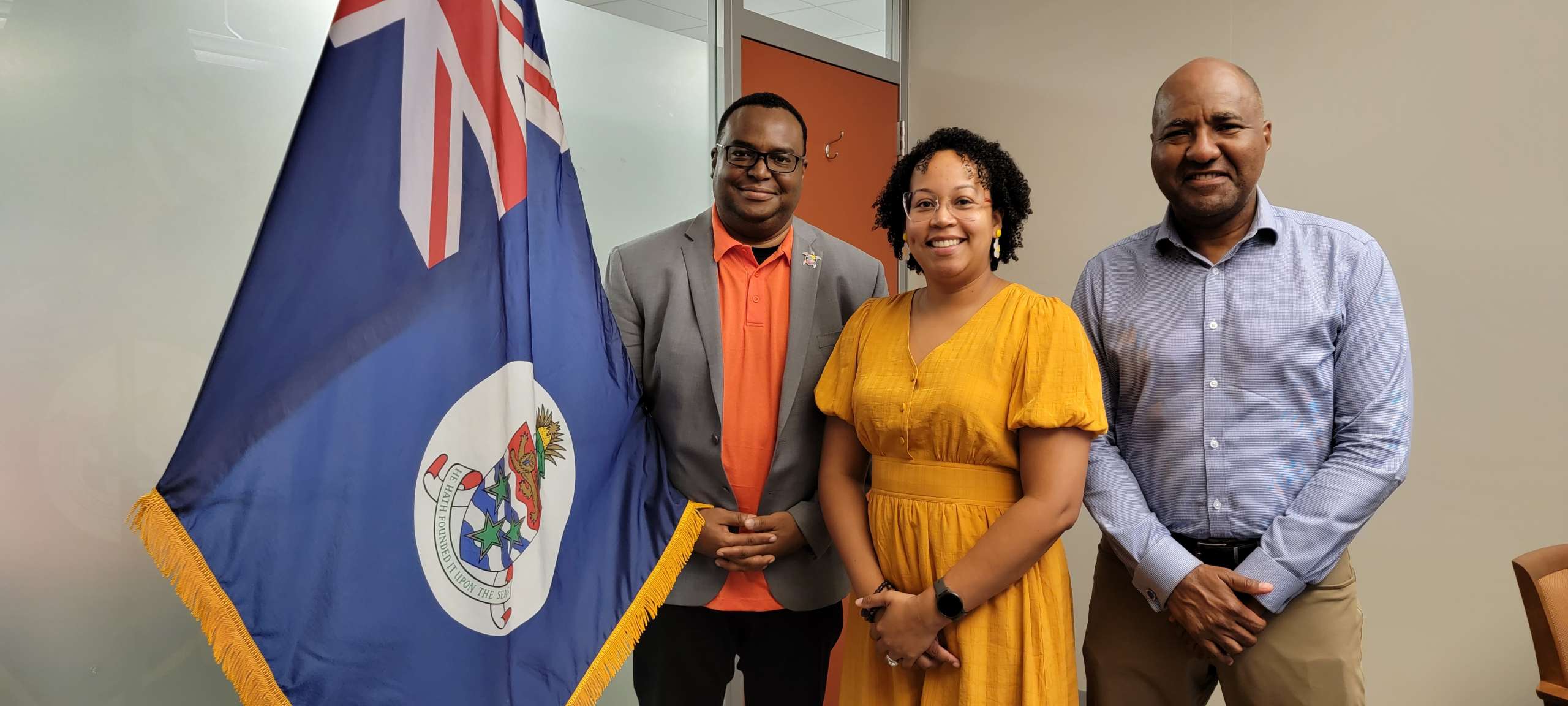
Deputy Premier Chris Saunders has pledged to make adjustments to local legislation to bring Cayman’s employment benefit regime, including maternity and paternity leave entitlements, in line with international standards.
Saunders, who met last month with members of the Parental Entitlements Working Group that has been pushing for increased maternity leave, told the Cayman Compass Tuesday that work is ongoing to address concerns about all existing employment benefits.

“Recognising that we are a service-based economy operating a global village, it is important that, in terms of our service delivery, we have got to be world class and meet global standards but, equally, the benefits that we pay our employees must also reflect world-class or global standards,” he said.
He added that’s it is not simply a matter of looking just at maternity leave, but “literally every leave across the board”.
Saunders, who is also the labour minister, said any changes will incorporate the business community’s input as government does not want to impose any undue hardship on local business-owners in the current economic climate.
“We are drafting already, in terms of papers to present my colleagues in caucus and in cabinet, to start looking at some of these [issues], but as with most things, because they do involve a cost of the business and we have to be conscious that many businesses are still feeling the impact of the COVID-19 pandemic. For some businesses, it’ll be very difficult for them to recover the two years of productivity they lost,” he said.
Saunders said the question is not just whether government will implement these legislative changes, but when is the best time, “recognising, at the end of the day, that part of this government philosophy is that we must remain a private-sector-driven economy”.
Workers’ benefits
Cayman, he said, has an economic structure that’s tertiary based, which means it is primarily service-based, and as “95% of Caymanians or those who call Cayman home make their money from providing a service,” government has to look at issues affecting workers in general.
“This is the question that keeps me and my colleagues up at night… what happens when the breadwinner of a family or someone they are dependent on becomes sick, or in the case of a civil servant, becomes medically boarded. Can we afford to be living in a country where so many families are one medical emergency away from being bankrupt … when getting sick is also part of life?” he said.
While he said it is entirely laudable to promote wellness, and the Health Minister is “doing a pretty good job in terms of building the infrastructure necessary to promote more wellness, at the same time we also need to make sure that we have the safety net there to support our people when these things do happen.”
He said stress is one of the biggest things that impact people’s health.
“That’s why it’s important for us to take a real hard look … have the adult conversation on the issues that matter,” he said. “So you look at … how do we make sure we build a society where we can support the people, and part of that is making sure that they do have the proper time necessary after a child is born or even adopted. That they have sufficient time off from work to recharge batteries … and equally make sure that you’re properly compensated for a few day’s work.
“So it’s not just one issue, but it is a series of issues to make sure that we end up building a world-class infrastructure for the people of this country.”
The parental leave gap
Bethany Ebanks-Pacheco, executive member of the Parental Entitlements Working Group, welcomed Saunders’ commitment to effecting change as she believes increasing the length of maternity leave is a matter of urgent importance.
The group has pointed out that the current maternity entitlements in the private sector are 20 working days leave on full pay, 20 working days leave on half pay, and 20 working days on no pay, while government employees are entitled to 90 days maternity leave, with 30 days paid and 60 days unpaid.
In Britain, eligible employees can take up to 52 weeks of maternity leave, with the first 26 weeks being ‘Ordinary Maternity Leave’, and the last 26 weeks ‘Additional Maternity Leave’, according to the UK Statutory Maternity Pay and Leave: Employer Guide.
She said the group, which is being assisted by Paul Byles, director of FTS, economist and past Chamber of Commerce president, is compiling a report, which is expected to be presented to Cayman government in the coming month.
She said the report, which is 98% complete, will address not only maternity leave concerns, but also paternity leave.
Ebanks-Pacheco said there is no provision currently in the law for paternity leave, and the group is hoping to change that.
“It’s at the discretion of a business if they so choose to give a man paternity leave … we are making that recommendation because each family unit is completely different,” she said.
Back in March, Ebanks-Pacheco and fellow mom Lorren Stainton started a mission to change Cayman’s maternity-leave entitlements, which they say are wholly inadequate and below international standards.
They also launched a petition seeking the public’s support for their campaign, which has secured 3,259 signatures to date.
Speaking on her recent meeting with Saunders, Ebanks-Pacheco said it was really “successful and heartwarming”.
“It was very moving, in a sense that this is an issue that is at the forefront of not only his [Saunders’] agenda, but the overall PACT government. It is a part of the strategic policies that they put out in 2021 when they got elected. It says there they will do certain things by certain times,” she said.
In its Strategic Policy Statement, covering the period of 1 Jan. 2022 to 31 Dec. 2023, the government states that it will “ensure maternity, paternity and vacation leave policies are in line with international standards”.
Saunders has raised this issue in the past. In 2020, as a member of the Opposition, he brought a private members’ motion to the house to highlight the disparity in maternity leave allowance between government and private-sector employees.
Although there’s no specific timeline for changing the maternity leave allowance, Ebanks-Pacheco said the government is “looking to complete increased family leave. So I am happy to say that [Saunders] has said that it is [at] the forefront of his discussion and he’s happy with what we’re doing, bringing awareness to an issue that is long overdue.”
Ebanks-Pacheco added that the group will be meeting with the Chamber of Commerce to discuss the issue before handing over its final report to government.
Related Videos












Laudable to consider this and yet it ignores the elephant in the room.
In leading European countries (I do not include the U.K. in this, their maternity and sick pay lags) much of such pay is paid by the Government rather than the employer.
How does the government pay for this ? Income taxes.
It is beyond time Cayman considered a manageable level of direct taxation as this is essential to rebalance society to be fairer and more equitable.
With such funds this makes issues such as increased leave more palatable to the private sector as they are no longer 100% footing the bill.
Let’s eat that elephant in the room. How do you eat an elephant? One bite at a time. Let’s start the conversation on direct taxation, or as some are talking about renaming it in the U.K.: Civic Contribution.
I disagree on all points. Income tax will have wide and deep consequences, many of which are not even predictable, and will likely make everything worse, including to those it was meant to help. Next, “leading” European countries are going from bad to worse these days, so you do not want to be led by their example. And finally, the state should not be a nanny in any case, this is a slope we do not want to take.
There recently was a good article in The Australian titled “Enterprise deals leave little time for actual work”. Here’s an excerpt:
“The amount of paid leave in the agreement is considerable. There is 20 days of annual leave, 20 days a year of “exposure to family violence leave”, 15 days of sick and carer’s leave, 10 days’ gender transition leave a year for up to five years, seven days of special personal and family leave, three days’ special Christmas shutdown leave, three days of compassionate leave, three days of cultural, ceremonial and religious leave, three days’ union training leave (for union representatives in the workplace), plus four hours a week study leave.
Further, there are 10 days for public holidays, nine as gazetted, plus an extra bonus public holiday with no name. In total, excluding the study leave, staff can access 94 paid days off, meaning for 36 per cent of the 260-day working year people can be off work on full pay. Add to this 208 hours a year, or 26 days, of study leave and we are at 46 per cent. The mind boggles.”
Nobody would argue about the good intentions behind this call, but all actions have [often unexpected] consequences. Leave given to a small group will result in higher burden to everyone else. And it builds up. Unless this legislation has a sunset clause, it would continue building up forever, beyond reason. The employers will inevitably have to compensate for this in their pricing. Redistribution is never a good solution.
Fantastic news for mum’s, however Immigration has to step up and ensure that businesses can fill the gaps left.
It would also be helpful if they enforced the existing laws.