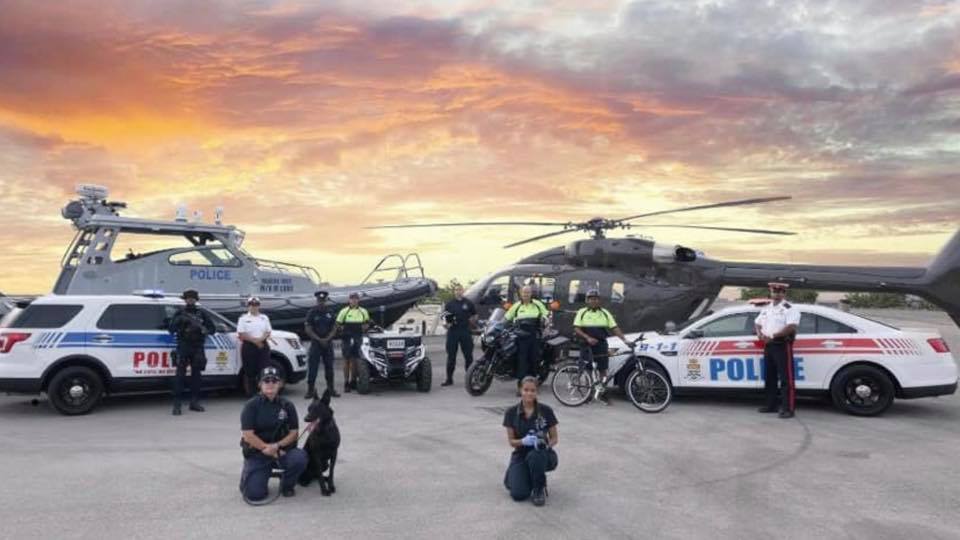
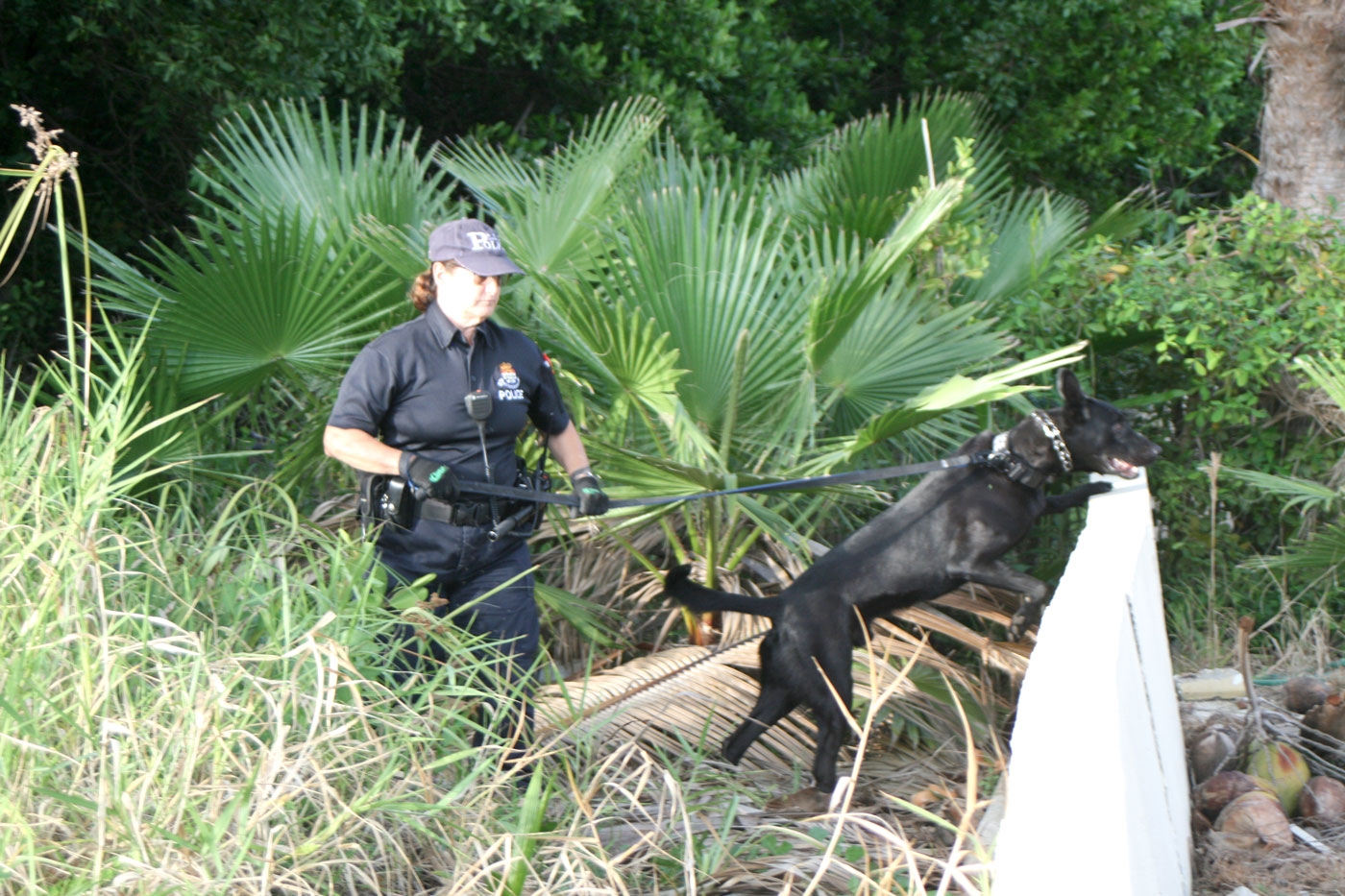
As a police service dog, Baron was fearless in the line of duty, helping sniff out drugs, track down property and chase down criminals. He was even used in a poster campaign celebrating the work of the Royal Cayman Islands Police service, that still appears as the main image on its website.
But the Belgian Shepherd is now at the centre of an independent investigation, led by the Ombudsman’s office, after being left to die in police kennels last month. The investigation will determine how the dog died and if negligence or neglect was a contributing factor.
Animal welfare charities have reacted with shock at the news and called for the findings of any investigation to be made public.
The dog’s former handler, Maggie Baldino, meanwhile, told the Compass she was “absolutely devastated to hear of Baron’s untimely and horrific death”, which she said should not have happened.
Police acknowledged the dog had died in kennels at George Town Police Station overnight on Saturday, 9 July, following questions from Cayman News Service almost a month later.
Responding to further inquiries from the Compass this week, an RCIPS spokesperson confirmed the death of the dog, adding that Baron was “a Belgian Shepherd breed dog who was a valued member of our K9 team, and had given five years of service to the RCIPS. We extend our deepest condolences to his handler, and the other officers in the K9 Unit.”
In a statement issued Thursday morning, the RCIPS said it was “aware of the public commentary regarding the death of Police K9 Baron”, and that the matter has been referred to the Department of Agriculture’s Animal Welfare and Control Unit for independent investigation, after which, a file would be submitted to the Director of Public Prosecutions.
“As this is an active investigation, no further comment will be made on the matter at this time,” the RCIPS said.
Meanwhile, Ombudsman Sharon Roulstone said her unit, which has responsibility for police complaints, is on the case and will make its findings public once the inquiry is complete.
“I confirm that the Office of the Ombudsman was notified by RCIPS of the death of K9 Baron on Saturday, 9th July,” she said in an emailed response to questions from the Compass.
“We immediately opened an own-motion investigation under the Police (Complaints by the Public) Act and instructed the Department of Agriculture to investigate K9 Baron’s death with our office supervising the investigation,” she said.
The Department of Agriculture confirmed that its Animal Welfare Unit is currently investigation Baron’s death following a referral from the Office of the Ombudsman.
Shock and anger
The news of the dog’s death sparked surprise and anger in the community Wednesday.
Baldino, a former police officer and member of the K9 unit who was Baron’s handler for two years between August 2018 and November 2020, described the animal as a “true working line dog” who was fearless and keen on his work.
She said he was a general purpose dog, one of four highly trained animals in the K9 unit, trained for tracking, criminal apprehension, property location and narcotic location.
“We had many successes together and he was a valuable member of the RCIPS,” she said.
Baldino said she was surprised to hear of the incident.
“I am not sure how this could happen, as the dog’s care should be monitored 24/7,” she said.

Details remain scarce and the circumstances or any details of the dog’s death have not been revealed by police. CNS reported that the dog was left in the heat without access to water.
Police dogs typically live at home with their handlers, though there are kennels and an outdoor run at the George Town Police Station.
Those facilities were initially used for temporary holding, for example, when dogs were between handlers, according to Baldino.
When she was with the unit, Baldino said, there was a strict schedule for caring for dogs that were in the police kennels.
It is not clear if the kennels had begun to be used more widely as housing for the animals since Baldino left the RCIPS in 2020.
She said Baron was a “good dog” who deserved better.
Though he had an “intense temperament” – needed by many police departments and military dogs – she said he was also a social dog “who could switch off from work and happily play fetch with a child”.
It is understood that there are three other dogs currently with the K9 unit – a Dutch Shepherd named Athena, a Belgian Malinois named Shadow, and Inca, a German Shorthair Pointer.
It costs between $12,000 and $15,000 to train a dog for police work, according to the US National Police Dog Foundation.
Calls for answers
The Cayman Islands Humane Society was among several animal welfare charities to react to the news.
Director Saskia Salden said it was a “sad situation” that needed proper investigation.
“We are obviously concerned as to how something like this could happen, and keen to see a thorough, public investigation,” she said. “Hopefully, this is something that they can learn from and ensure nothing like this happens again.”
Lesley Agostinelli, of Cayman Animal Rescue Enthusiasts, echoed those sentiments.
‘It is shocking to hear that something like this can happen to a service dog in police care,” she said. “It is imperative that an independent investigation takes place and that the public are made aware of its findings.”
The charitable sector has previously raised concerns about animal neglect and welfare issues generally on the island. The Department of Agriculture is the lead agency responsible for investigating reports, though police are frequently involved.
The DOA has previously faced criticism for the relatively low number of complaints that make it to prosecution.
According to data provided to the Compass as part of a special report, between January 2020 and June 2022, the Department of Agriculture’s Animal Welfare Officers investigated 224 animal welfare complaints, of which 13 were recommended for prosecution.
Related Videos