


Cayman’s long, ongoing issue with animal abuse and neglect is reaching ‘crisis point’, according to the leaders of multiple non-profit organisations.
The Humane Society shelter is full and cannot accommodate any more animals. A planned partnership with the Dart group for a new facility appears to have stalled.
And with hurricane season approaching, the shelter is ill-equipped to withstand even a minor storm.
Meanwhile, charity leaders warn that overpopulation among ‘companion animals’ is straining their ability to help.
Almost everyone in Cayman who can adopt a pet has already done so. Hundreds more have been shipped to new homes overseas. A smaller, but still significant number, are euthanised each month at the Department of Agriculture.
“This is the worst it has been for a long time,” said Saskia Salden, a director at the Humane Society.
“There are just too many pups, too many kittens. We can’t cope and there are not enough people on this island to adopt them all,” she said.
Pet population out of control
The root of the problem is the near exponential growth in Cayman’s pet animal population. Cayman Animal Rescue Enthusiasts, which funds spay and neuter operations for families who cannot afford the vet’s bills, has an extensive waiting list of cats and dogs that need the surgery to prevent them from breeding.
But lack of funds and vet capacity means there is now a waiting list of almost 800 pets, from all six animal charities on island.
At current rates, it would take more than a year to clear the backlog.
By that time, says Kiralee Harnett, director of CARE, many of those animals will have had new litters of pups or kittens, creating an endless cycle of need.
The COVID-era, when the charity’s operations were shut down and many people left the island, often leaving their animals behind, has made a bad situation worse.
National spay and neuter programme needed
Now Cayman’s six animal centred non-profits are urging government to step in to support a nationwide spay and neuter programme.
They believe the Ministry of Agriculture could provide funding, change legislation and cut red tape to allow mobile vets to come in on short-term work permits to help deal with the problem.
A proposal document, submitted to government, calls for a new licensing system for pets to help incentivise owners to get their dogs fixed and fund direct investment in spay and neuter clinics.
The document, seen by the Compass, describes “companion animal overpopulation” as “one of the most pressing animal welfare issues of our time”.
The ministry, in an emailed response to our questions, said it does not have the surgical facilities to support spay and neuter procedures. It noted it already provides $30,000 annually to the Humane Society to help support such procedures and stated it was “reviewing options” to provide further support to the non-profit sector.
The statement indicated talks with non-profits were ongoing and the ministry accepted that “uncontrolled breeding” of pet animals is a significant concern.
“Overpopulation is unfortunately largely driven by a lack of understanding and appreciation of the importance of having pet animals spayed and neutered and that, with the growth in population and changes in society, it is no longer acceptable to let pets roam and breed freely. The solution lies in education and a shift in cultural norms and views on pet breeding and population control,” it stated.

Social issues
Harnett said pet overpopulation is linked to a variety of other social issues. She believes the struggles of humans and their pets are interwoven. While there are problems with backyard breeders and some generational resistance to spay and neuter, she believes the biggest factor fuelling animal welfare issues is economic.
Rising cost-of-living and employment impacts in the wake of the COVID outbreak have snowballed into an unmanageable situation.
“Families are struggling and the animals are last in line when there are mouths to feed,” she said.
CARE actively goes into Cayman’s poorest neighbourhoods to offer spay and neuter services through its partnership with Island Vets. They often link impacted families with other support services to address wider concerns, she said.
Harnett said many people care deeply for their animals but simply don’t have the resources to get them fixed.
By assisting with that, CARE and its donors help prevent unplanned and unwanted puppies or kittens adding to the owners’ burden or from being abandoned and becoming a community problem. She added that enabling people to keep their animals and maintain the emotional connection and companionship with their pets was also increasingly important in today’s world.
“If we get spay and neuter under control, the neglect and abuse issues that go along with that will be alleviated,” she said.
Picking up the pieces
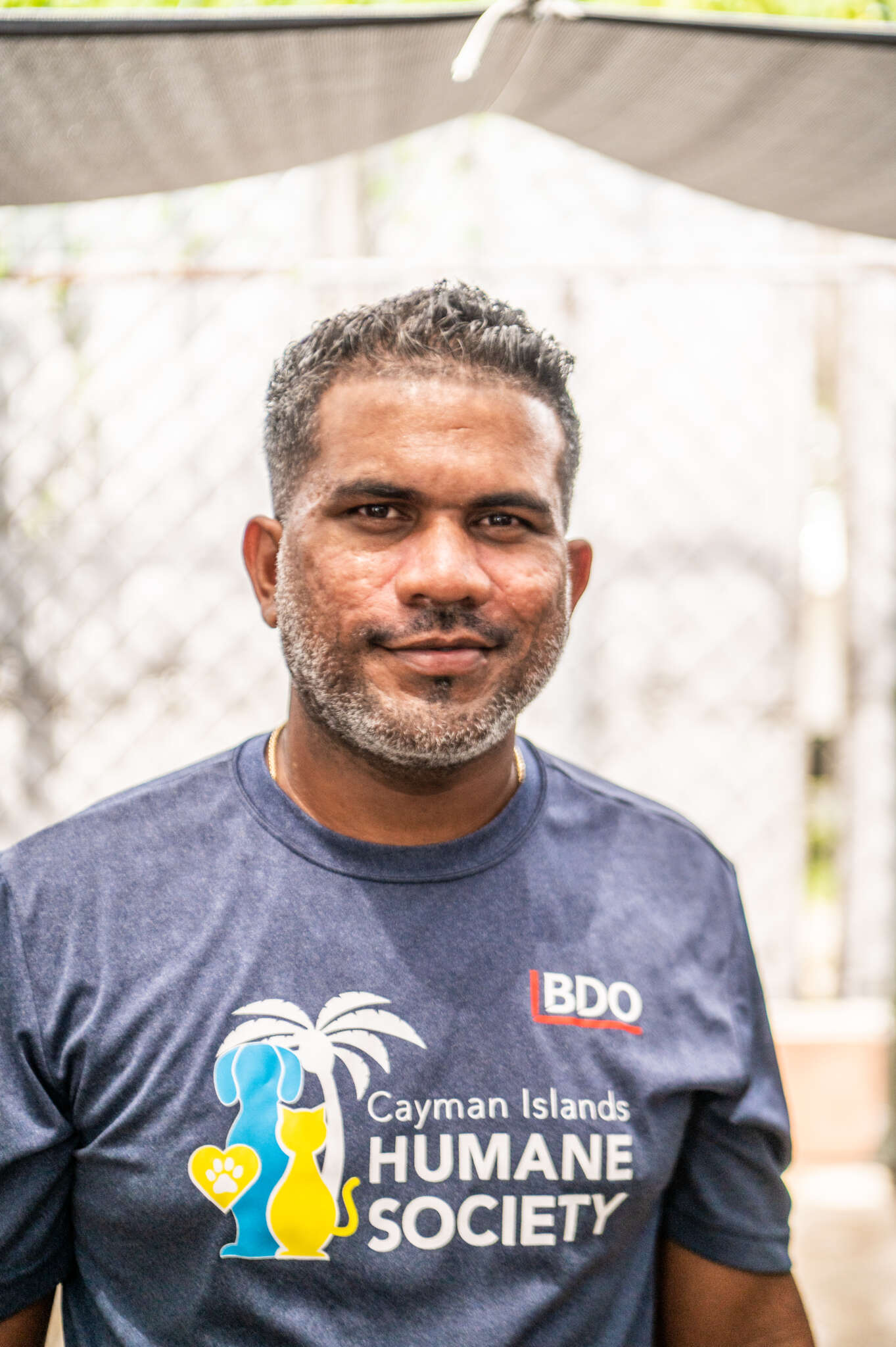
As assistant manager of the Humane Society shelter, Jason Jairam sees the other side of the problem.Unwanted litters are often dumped, abused or neglected, and he and his staff are left to pick up the pieces.
Earlier this month, a tiny puppy – less than a week old – was pushed through the open door of the shelter, riddled with maggots. Despite the best efforts of vets and support staff, it did not survive.
That’s an extreme case, but it is not uncommon for injured or otherwise unwanted animals to be unceremoniously abandoned at the shelter. The small reception area at the 40-year-old timber building on North Sound Road is wall-papered with the ‘mug shots’ of abandoned pets looking for ‘forever homes’.
The stories range from horrific to the depressingly prosaic.
Animals left tied to trees without food or water are the outliers. Many more are dumped because their owners change jobs, move house, have children or simply no longer want them.
“We wish people would consider their animals as part of their family,” said Salden. “Getting a pet is a 10 or 15 year commitment.”
There continues to be large numbers of animals fostered or adopted. Almost 300 dogs were rehomed by the Humane Society last year. But the supply line is seemingly endless.
“As soon as we get one out, a dozen more come in,” said Jairam.
No room at the inn
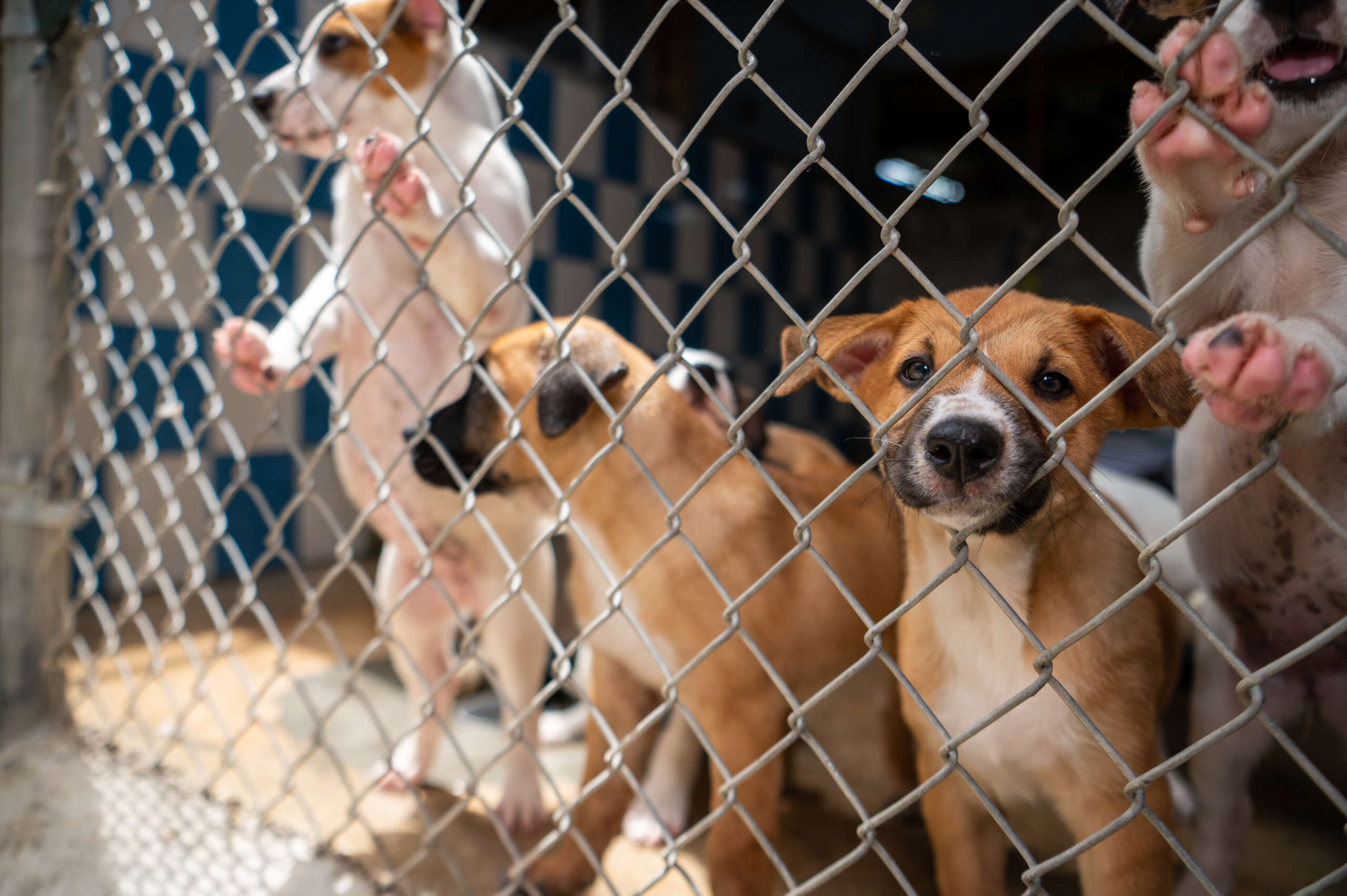
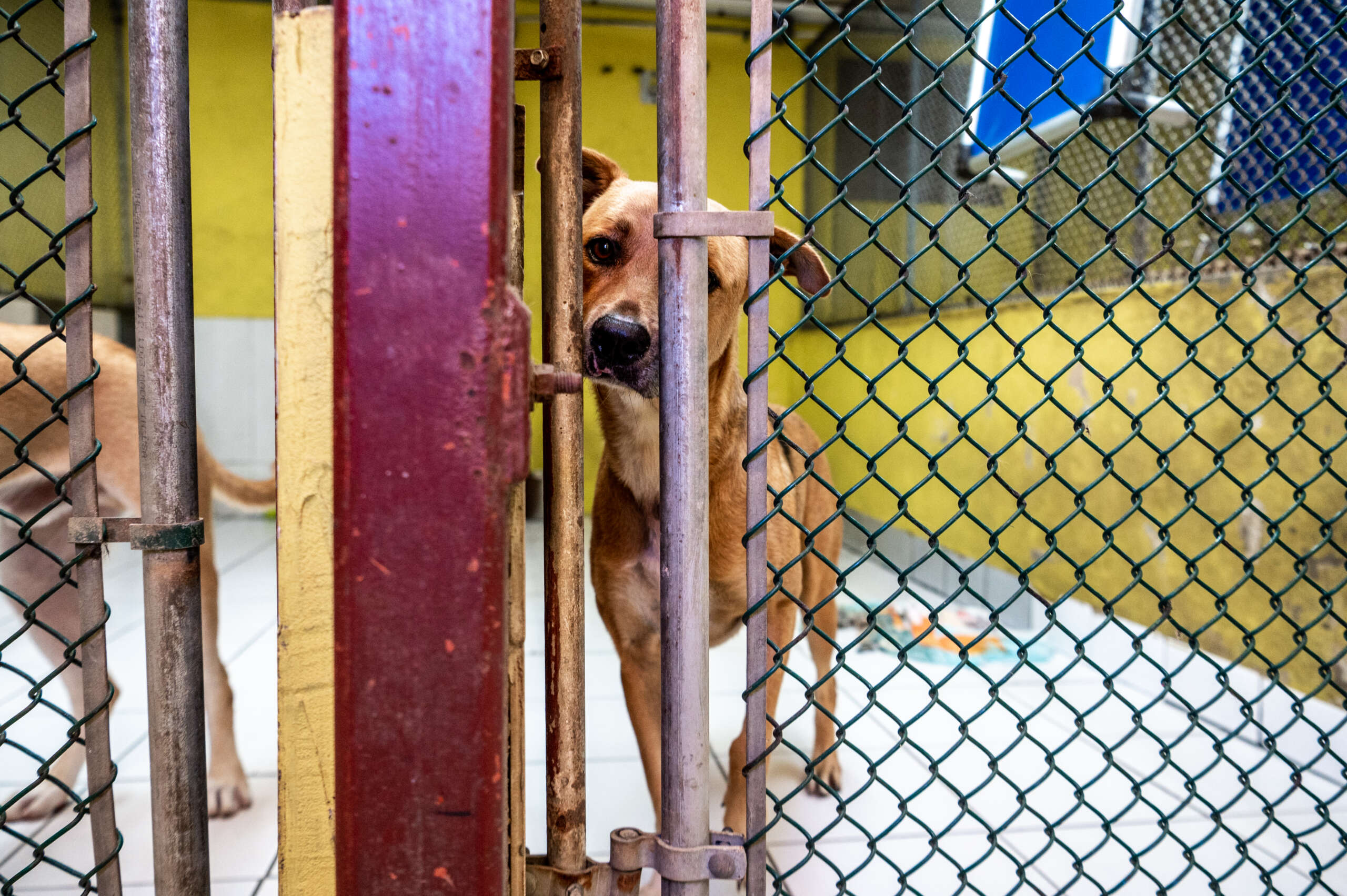
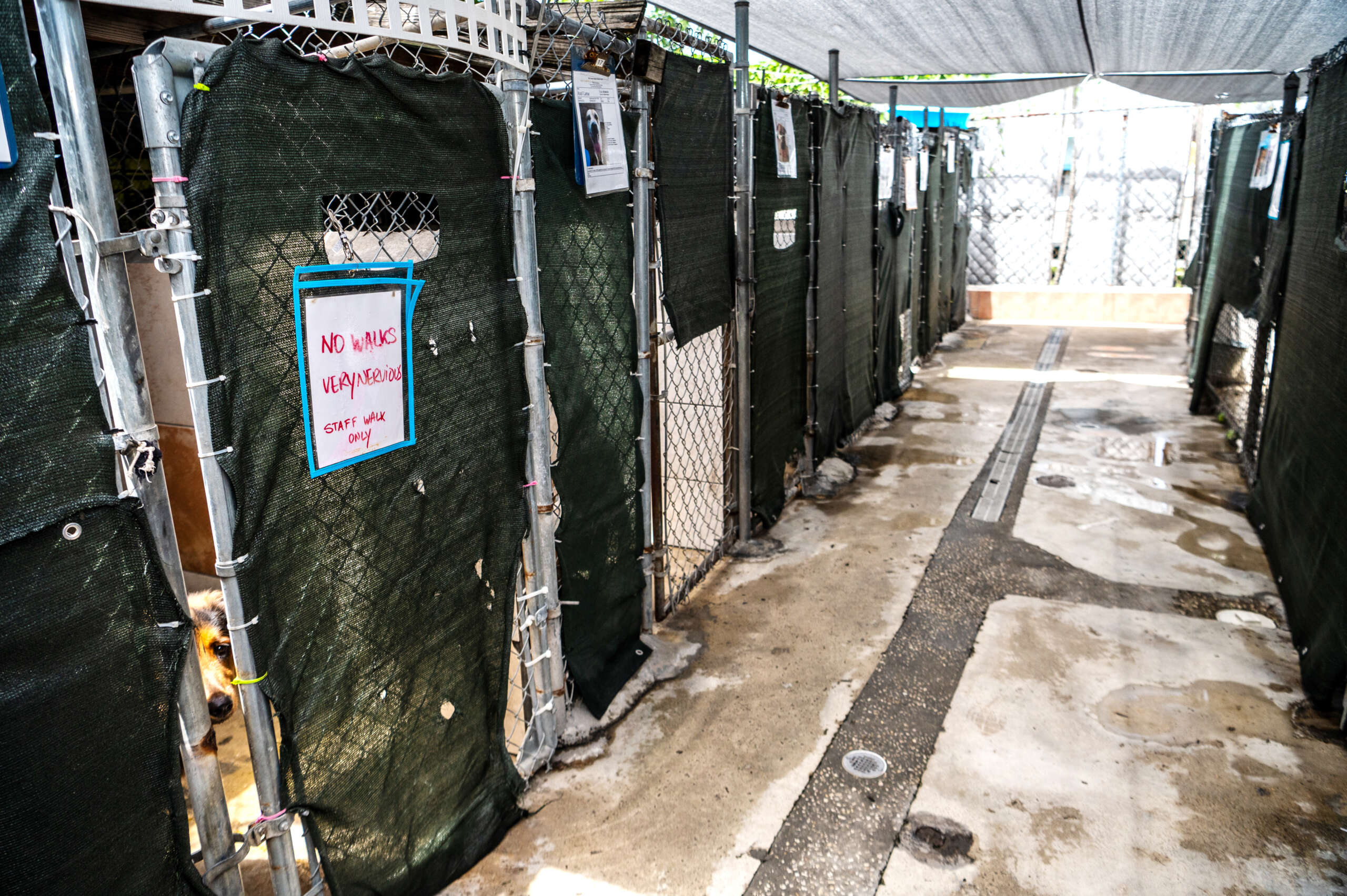
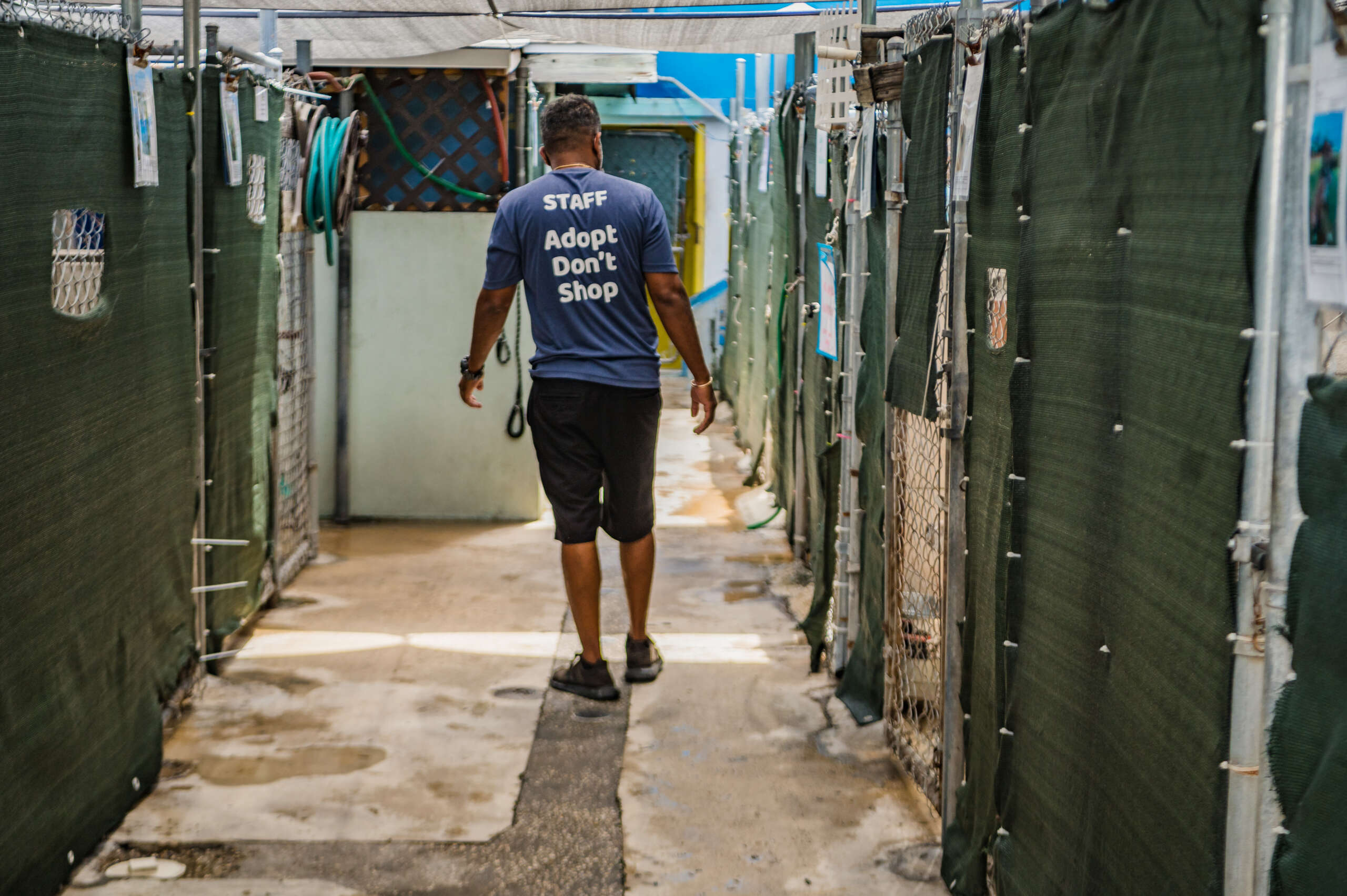
In the narrow corridors of the shelter, the yelping of excitable pups is accompanied by the drumbeat of wagging tails thumping against the walls of cramped kennels.
Dogs press their noses against the bars, eager for a treat or a friendly scratch. Others lie slumped and sullen or cower at the sound of approaching feet.
Some have lived here as long as five years without being adopted. Others are recent arrivals. A litter of white and tan mutts playfully chew the mesh of their enclosure.
There’s a play area and a roster of volunteer dog walkers, but with so many animals, time outside for the animals is limited.
In the cat room, every cage is full. Kittens snuggle together in bundles while their mothers roam around an open play area.
A black and yellow warning decal – like the caution sign for a toxic hazard – is plastered to the glass door of a second room, reserved for feral cats.
Wild cat populations exploded when spay and neuter operations shut down during COVID and the shelter is dealing with the fall-out. These animals will need training and acclimatisation before they can be safely homed.
In the office, a whiteboard indicates the current intake numbers: 81 cats, 66 dogs.
Almost 50 more dogs are being looked after in a network of foster homes and could, theoretically, be returned at any time.
There is no more room at the inn.
New shelter needed
Storms are another concern.
“If it rains for an hour, there will be water up to here,” said Jairam, raising his palm waist-high in the low corridor of kennels. “We will have to move all the dogs out.”
As another hurricane season begins, with no news on a new shelter, the situation is getting desperate.
“It is long overdue,” Jairam said. “That is one of the major things we have been dealing with for years. We really need to move from here.”
The Dart group said in 2019 that it would be providing two acres of land close to the National Gallery for a shelter, adjacent to new rugby facilities.
However, the plans for the sports facility fell through and the shelter project has also fallen by the wayside.
It is understood that Dart is still open to donating another piece of land but negotiations are on pause right now.
Another site was considered in George Town but that plan also fell through. Now the charity is looking to repurpose donated land in West Bay for new facilities.
A new shelter, if and when it arrives, will only deal with part of the problem, warns Salden.
“If we had room for 100 dogs, we would get 115,” she said.
Tip of the iceberg
The big issue comes back to supply.
The Humane Society intake represents only a fraction of the problem. Charities like One Dog at a Time also help find temporary and permanent homes in Cayman and overseas for unwanted pets. And animal lovers in the community fill their homes with more cats and dogs than they can realistically manage. Eliana Moya currently has 28 cats and four dogs – a situation which spiralled from more modest beginnings.
It is a little more than she can cope with, but there are few alternatives.
She said, “It would devastate me to have to put them in a shelter or give them away to someone who is not going to love them or take care of them the way I do.”
CARE recently funded spay and neuter operations for all her pets.
Without that support, she said, she would not have been able to afford it, and the brood would have continued to multiply.
Dealing with that fundamental overpopulation problem is the only realistic strategy to get the issue under control, said CARE’s Harnett.
She said the non-profit sector is anxious to work with government to find an answer. Suggestions include allowing an international charity like Pets without Vets to come in and help spay and neuter Cayman’s feral cat and dog populations, subsidising local vets to fix pets for free, and wholesale changes to the animal licensing and monitoring regime.
The Ministry of Agriculture said a comprehensive review of the Animals Law, that will eventually lead to proposed new legislation, is under way.
Related Videos









Hire people to visit homes b4 they adopt and ask for references and do check in on the animals that is what the SPCA does in the US . So sad.
Overpopulation is not the issue – neglectful and dysfunctional people are the issue
This is what they do in Panama–a great program! They bring in the vets, and then to keep the costs down, the whole community gets involved. They do everything except for the surgeries themselves. We need to do this! https://www.facebook.com/AmigosDeAnimales