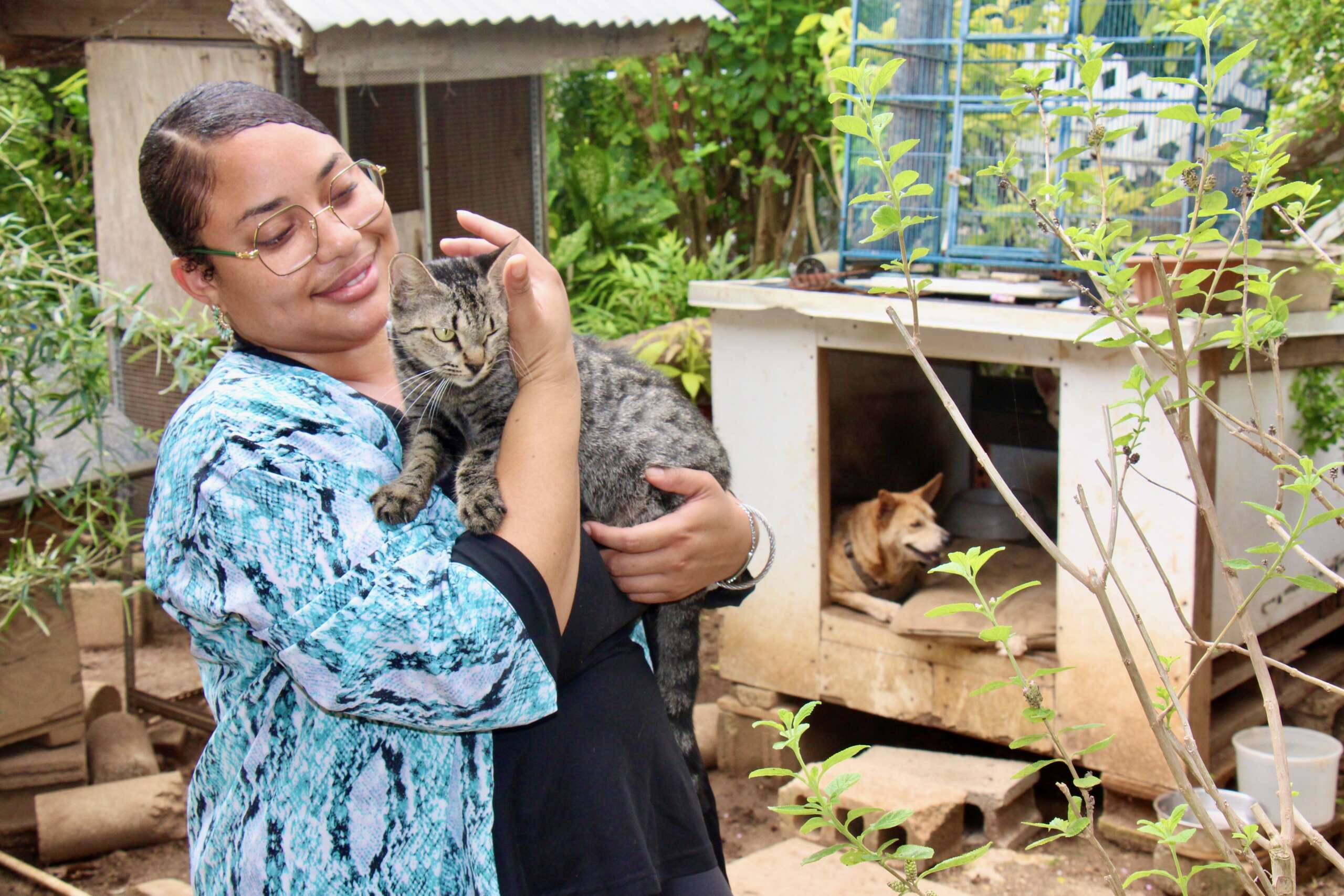
It started with Hero, a tiny kitten rescued from inside a car engine in the Foster’s parking lot in 2016.
He bit through Eliana Moya’s nail bed, when she dragged him out.
“I thought ‘He’s relentless, but so am I’,” she said. “So I had to keep him.”
It wasn’t until Hero had kittens that she realised he was a she.
“We just thought he was getting fat,” she remembers. “Then my boyfriend woke up one morning and said, ‘There’s rats in the bed.’”
The ‘rats’ turned out to be kittens, the first of many.
“Since then, they just kept multiplying,” she said.
At one point, Moya had 38 cats and kittens in the house, as well as her four dogs. Some have been given away to family and friends, but as of last week there were still 28 feline mouths to feed.
It wasn’t until her sister put her in touch with charity CARE that she was able to get them spayed and neutered.
“Thank God they were able to help,” she said.
“The cost of living is going up and up, I couldn’t manage to feed and look after all these cats and spay and neuter them at the same time.” She still has multiple kittens she would like to find new homes for.
Ideally, she would like to get the number of cats in her George Town home down to just the adults.
“I love them all,” she said. “It would devastate me to have to put them in a shelter or give them away to someone who is not going to love them or take care of them the way I do.”
The reality is that there is no shelter for them to go to.
And Moya is one of the more dedicated owners.
She rises at 5.30 every morning to clean the cat litters and begin the process of feeding her animals. She makes sure there is food and water and that the dogs have a little space to play in the yard. On Sundays, she loads the dogs into her dad’s truck and takes them to the beach.
She’s a great example, say CARE workers, of someone who loves their animals but needs some support to help take care of them.
The non-profit goes into communities across the island and provides funding and information to pet owners. Its constant mantra and its biggest challenge is to spay and neuter as many pets as possible.
Kiralee Harnett, director of CARE, said most of its clients simply couldn’t afford the cost of
fixing their animals and were often unaware of what to do or how to access help.
Uncontrolled breeding then leads to overpopulation problems and unwanted animals which
end up roaming the streets or in the hands of irresponsible owners.
She said CARE’s outreach helps bring some support to pet owners who have no relationship with a vet at all.
“We are going into communities that don’t know our programme exists. They see a poster on a lamppost and call us for help,” she said.
“There is some resistance to spay and neuter but it is mostly economic. The vast majority of the clients we see, say ‘Yes, help us, we don’t want more litters’.”
For Moya, the assistance from CARE, came as a huge relief.
Though she proudly calls herself a “29-year-old cat lady”, she is not sure she could cope with the continuous cycle of new litters.
“I want to stop at 14,” she said.
–
See also: Overpopulation fuelling animal abuse and neglect
Related Videos