

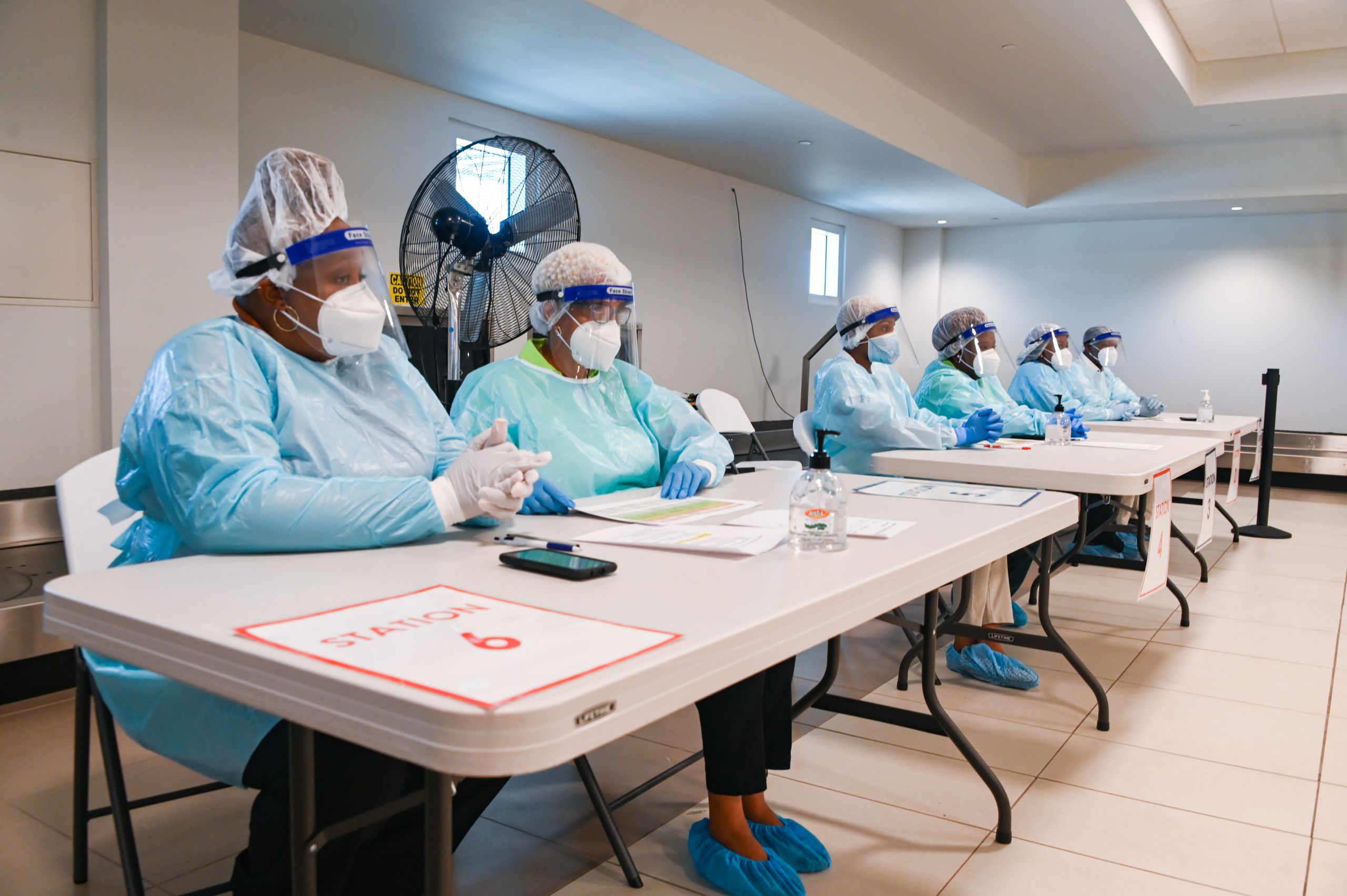
All but 15 of the 87 staffers of the disbanded Travel Cayman have been seconded to central government, according to Deputy Premier and Finance Minister Chris Saunders.
Speaking on the 31 Aug. episode of the Cayman Compass Facebook show The Resh Hour, he said, as finance minister, he has agreed in principle to continue to fund the Travel Cayman staffers when they are absorbed into central government departments.
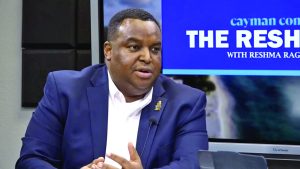
“We have a lot of vacancies within government [and] we think some of those vacancies they can easily fill,” he said, adding that he believes, based on the work that the staffers have produced in Travel Cayman, “they’re going to fit very well in once they’ve been given that opportunity”.
The staffers were affected when government disbanded the unit when all travel requirement were lifted last month, fully opening local borders.
Those workers will be paid at the same grade they were under while at Travel Cayman, Saunders said.
He credited Deputy Governor Franz Manderson and Ministry of Labour Chief Officer Wesley Howell for seeking positions for the Travel Cayman team to fill.
He said he believes all legislators, including the Opposition, will support additional funds to keep the workers employed when the request comes to Finance Committee.
Travel Cayman, he said, was costing around $1 million a month overall, but as some of the staff have already moved on, the costs will drop to “a few hundred thousands dollars a month”.
“I can tell you, for those people who have proven themselves and have delivered for this country, that’s a very small thank you note for them,” he added.
Caymanian under-employment a growing issue
Saunders also briefly discussed some of the latest findings in the the Economic and Statistics Office’s Spring Labour Force Survey, which will soon be released, and pointed to an area of growing concern: Caymanian under-employment.
He said the survey found that overall Caymanian unemployment dropped to 5.1%, but this, Saunders said, is “still too high”.
“It’s above the natural rate of unemployment for us, so we need to get that number down,” he added.
The deputy premier lamented that 905 Caymanians were under-employed, saying that has to be corrected through a system that provides opportunities.
When it comes to accessing jobs through avenues like the JobsCayman portal, Saunders said, Cayman is not where he wants it to be, “but we are getting there”.
Immigration, he said, is an “emotive” issue, but with the permanent residency point system review in progress and upgrades to the Workforce Opportunities and Residency Cayman application portal, the balance can be achieved.
“As I’ve often said, success of this country was never built on immigration. What it was built on was integration, people coming here and becoming a part of the fabric of the community,” he said.
However, he noted that there are “little pockets being built up”, creating an ‘us vs. them’ atmosphere within the community.
Population grows to more than 78,000
Cayman’s population now stands at 78,554, an increase of 10.5% over the number of people counted in the October 2021 Census, Saunders said.
He revealed the figure was in the upcoming Economics and Statistics Office’s Spring Labour Force Survey, adding it has given government “concern”, especially when looking at infrastructure demands.
He said Cabinet has authorised the release of the report, which shows that Cayman’s population has increased from 71,105 in October to 78,554.
“That’s an increase of 7,449,” he said, adding “that is a very big jump in a very short period of time”.
He said government recognises that there were seasonal contributory factors to the population increase, such as accounting firms bringing in additional staff for their busy period and tourism picking up following easing of COVID travel restrictions, leading to the hiring of extra employees to deal with the growing number of travellers.
Impact on housing
With more people on island, demand for housing has grown over the last few years, Saunders said, and Cayman has seen an increasing number of residences being converted from long-term rentals into Airbnb short-term accommodations, adversely impacting prices.
He said tourists utilising domestic room stock in the Airbnb market means fewer properties for residents to rent, and therefore less supply and more demand. This, in turn, leads to higher rental prices, he added.
Housing Minister Jay Ebanks is committed to addressing the pressure for accommodation, Saunders said, and Premier Wayne Panton has created a housing task force to have the “very difficult conversations” about how to increase the supply of homes.
This is happening in tandem with Tourism Minister Kenneth Bryan’s mission to increase traditional tourism room stock, like hotels, he added.
Saunders said hotels are “long-term sustainable development”, as they create jobs during the construction phase and then when they open for business.
“From an economic standpoint, that’s what we should be encouraging more of,” he added.
Related Videos









Train the others to work at Customs. I flew in on a Saturday and we were processed fast 30 mins in the resident line. But I feel so bad for all the tourists that had to wait 2 hours.
My wife and I spent time this summer in both France and Greece.
Hospitality workers in France were French and in Greece they were Greek.
Why are there no (or very few) Caymanians working in hospitality in Cayman?
Is it because welfare payments are too high, hospitalitywages too low or insufficient pressure for able-bodied people to get a job?
There is sufficient pressure for able-bodied people to get a good job, and the welfare payments are not too high. Hospitality wages, and the companies that pay them, are inhospitable is the problem. If you are a good working Caymanian you can pick, choose and refuse which job you will take. So we naturally gravitate to those employers who treat us best. Not most hospitality places. (Though a few are notable by the number of Caymanians there, starting right from the doormen at one place. These are the exceptions that prove the rule.)
In tourism there is also the added challenge that, if I’m a good worker and good with people I can start my own company with a relatively small outlay – think your one-vehicle taxi/tour driver or north sound boat operator and others – and make a decent living working for myself, with the potential that if I work hard & smart and friendly I then become the employer/owner and really see the dividends of tourism. Why do we want our people working in tourism for tips (so someone else can save on their wage bill) when we could be working for a better employer or working for ourselves and building personal/generational wealth?
Generational wealth? I refer you to the couple of north-sound operations where its multiple family members running multiple boats, traced back to one grandfather/father/uncle/brother/friend/neighbour who got the trip started. It can be done and is what we should want for our people. Caymanians in tourism is good, but how they are in tourism (and to what end, their benefit or someone else’s) needs to be rethought.
a) Is a hotel more ‘sustainable development’ than an individual owner renting their extra apartment themselves on Air BnB? Even just related to housing quantity (the putative problem, clearly not pay levels so that people can afford said housing) the hotel requires more staff, to build and to operate, thus more housing needs; while the individual ABB does not. The Minister needs to consider what “long-term sustainability” really means.
b) We need more Caymanians in tourism, they cry. Caymanians get into tourism as owners of Air BnB stays interacting directly with their guests. No, you misunderstood, we don’t want you in ownership and entrepreneurship and building personal/generational wealth, we want you working for tips at the hotel (so the hotel can pay you the lower tier of minimum wage). Methinks the Minister needs to rethink what social sustainability really looks like.