


An ongoing cruise tourism strategy for the Cayman Islands, while focussing on capacity management and sustainability, is unlikely to involve reducing the annual number of passengers arriving on local shores to below pre-pandemic numbers, Tourism Minister Kenneth Bryan says.
Speaking to media at the start of a Caribbean Tourism Organization regional conference being hosted in Grand Cayman this week, Bryan said cruise ship passengers typically make up 75% of tourist arrivals in Cayman.
“Our goal is to hold fast on that number and not grow much more than that,” he said, “because we recognise that our environment can only handle so much, and it starts to affect the experience of those who come here.”
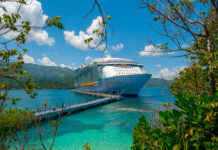
The PACT government repeatedly has given an undertaking that it will not be building a new cruise berthing facility capable of accommodating the types of mega cruise ships that can each carry more than 6,000 passengers – a development cruise lines have been pushing for over several years.
Bryan said Cayman was committed “to spend the necessary monies to facilitate the growth as [the cruise lines] grow, and as we grow, but to ensure that it’s not at the sacrifice of our environment”.
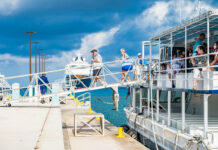
He said other steps could be taken to facilitate easier transfers from the ships to shore, for example, by potentially upgrading the tender process to make it more comfortable, buying more luxurious tender boats, and enabling easier docking at the ships.
Bryan said the Ministry of Tourism had commissioned a cruise tourism strategy “which can best be described as a roadmap for redesigning the current approach”, with the goal to focus on “quality, sustainability and capacity management”.
Since the cruise port reopened in March this year, within the first three months, there were 77 cruise calls, carrying close to 213,000 passengers, he said.
“This performance is encouraging and the feedback from the many Caymanian small businesses and entrepreneurs who work in this sector, has been positive. They are happy we have reopened, allowing their businesses to return to normal operations,” he said.
On target for stayover numbers
The tourism minister, in his briefing outlining the state of tourism in Cayman following the border closures, disclosed that the islands are on track to meet, and most likely surpass, its target to reach 40% of the 2019 tourism numbers by the end of this year – equating to more than 200,000 visitors.
However, if the current trajectory continues, he said, he expects more than quarter of a million visitors to arrive here by the end of December.
Between January and June this year, Bryan said, Cayman welcomed more than 114,000 stayover visitors, which represents 41% of the air arrivals recorded over the first six months of 2019.
In July, more than 32,000 visitors arrived on island – equivalent to 63% of the July 2019 numbers.
The minister pointed out that 2019 is being used as a comparison as it was the last full year of travel prior to the beginning of the pandemic. It was also a banner year for Cayman’s tourist numbers, with 502,739 passengers arriving by air, and 1.83 million arriving on cruise ships.
The revenue from tourist accommodation charges in 2019 was $36.5 million, according to Economics and Statistics Office data.
The Caribbean Tourism Organization conference brings together tourism ministers and officials from throughout the region. This is the first major in-person meeting that the organisation has held since the pandemic, and will feature discussions on regional matters relating to tourism and travel, including suggestions and proposals for airlift connectivity among islands in the Caribbean.
Related Videos











I suggest the Ministry conducts exit interviews with the cruise ship passengers to find out how much they really spend whilst ashore. With the large number of Carnival ships and the constant stream of passengers who can’t afford a $2 bus fare, walking to the Beach and Smiths Cove, I suspect it’s a lot less than Govt claims. We definitely do not need growth in this sector which will bring down the quality of overall visitor experience at the expense of losing some of our prime tourists, the stay over visitors who spend far more in the local economy.