

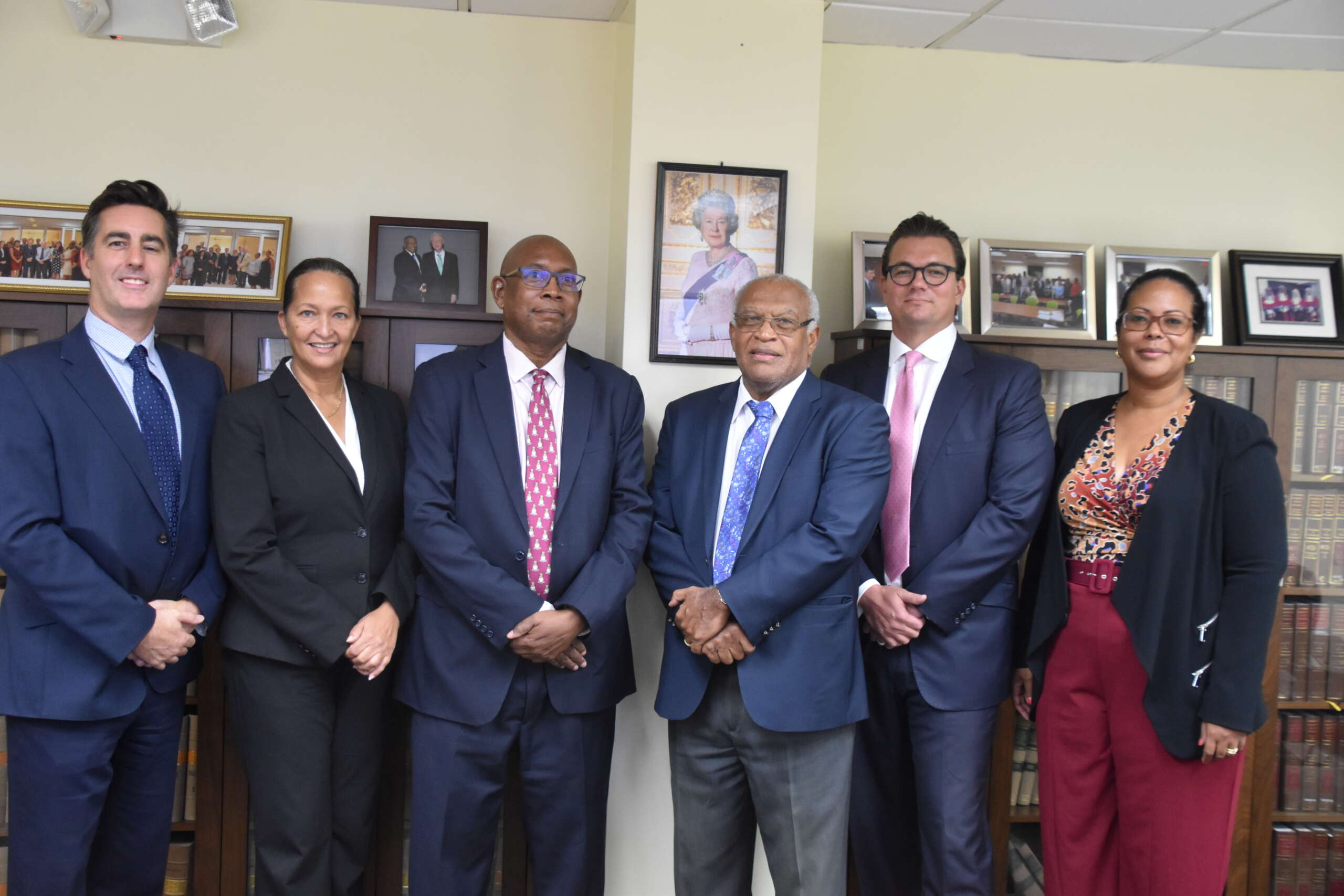
Chief Justice Sir Anthony Smellie has announced the launch of the Cayman Islands Judicial and Legal Education Institute, a foundation under which training and development of judiciary, legal fraternity and support staff will be centralised.
The chief justice said in a statement announcing the launch that the objective of the foundation is to promote excellence and efficiency in the administration and delivery of justice.
The institute broadens the scope of its predecessor, the Judicial Education Committee, both in reach and funding, in its formal involvement of the legal fraternity as a founding partner, the statement noted.
Emphasising the need for continuing professional development for the judiciary, support staff, and the legal fraternity, Smellie said that “the administration of justice involves ensuring proper outcomes which impact the lives, liberties, and properties of persons”.
He added, “Those responsible therefore have an obligation to encourage the highest standards of excellence across the board. This is what has propelled the launch of the CIJLEI as a joint initiative.”
By combining resources, he said, greater efficiencies can be achieved in training and development across all sectors of the delivery of justice to the public at home and abroad.
The incoming chief justice, Margaret Ramsay-Hale, who will be sworn in to her new role on Tuesday, as Chief Justice Smellie retires, also attended the inaugural meeting.
The membership of the foundation’s board includes the chief justice; Justice Ian Kawaley, who leads the programme from the judiciary’s point of view; Chief Magistrate Valdis Foldats; Cayman Islands Legal Practitioners Association president Erik Bodden, who leads on behalf of the legal fraternity; and court administrator Suzanne Bothwell.
Smellie said that the foundation had evolved from a process of extensive consultation with the Cayman Islands Legal Practitioners Association over the last several years, discussions for which were led by the Legal Advisory Council.
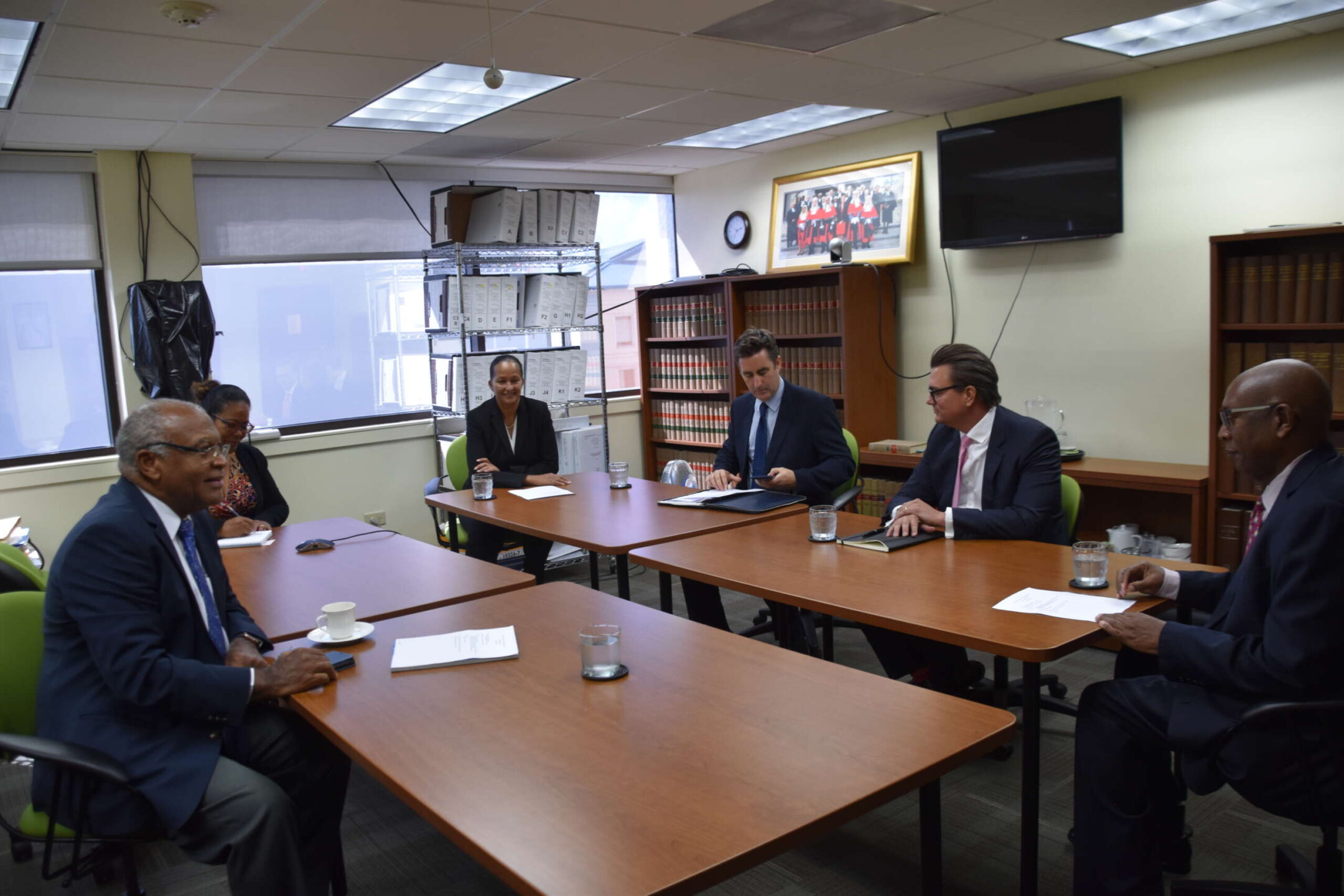
Members of the council include the chief justice as chair; Attorney General Samuel Bulgin; CILPA president Erik Bodden; CILPA council member Richard Barton; and director of the Truman Bodden Law School, Mitchell Davies, who serves as the council secretary.
The Legal Advisory Council is charged with responsibility for legal training and the regulation of the Truman Bodden Law School under the Legal Advisory Council Act.
The newly inaugurated Judicial and Legal Education Institute will be jointly funded through the training and education budgets of Judicial Administration and CILPA, and by fees generated by the delivery of programmes.
“The concensus coming out of the consultative process is that the most cost-effective means of providing training and development programmes is through a single body that would effectively eliminate the duplication of efforts,” Smellie said.
Efficiencies
He added that this would enable efficiencies in the pooling of resources, joint creation of curricula, the identification of faculty, and scheduling of programmes.
As an example of the collaborative nature of initiatives he envisages, the chief justice referenced a November 2021 workshop organised by the Judicial Education Committee. That workshop was designed and conducted for Cayman’s criminal bar and members of the judiciary by Justice Linda Dobbs, a retired High Court judge of England and Wales, and Justice Roger Chapple, a retired UK senior circuit judge. They both recently retired from service on the Cayman’s Grand Court Judges panel. Dobbs is currently the director of the Judicial Institute for Africa.
Commitments of support
Both had volunteered their services for the 2021 workshop and have committed to continuing support to Cayman Islands Judicial and Legal Education Institute.
In addition to Dobbs and Chapelle, several experienced legal and judicial professionals across the Commonwealth, including the Caribbean, have pledged their support, the chief justice said.
“There are all these wonderful resources that have already pledged support in assembling a core of faculty and administrators for the CIJLEI,” Smellie said.
As an example of local goodwill already extended to the Judicial and Legal Education Institute, the pro bono legal work for establishing the foundation was undertaken by Robert Lindley, of Conyers, Dill & Pearman.
In addition, CILPA’s president Bodden, as a founder of the education institute, has been designated a supervisor for the foundation, along with Smellie as the other founding member.
“The intention is for the CIJLEI to run as a centralized platform for legal and judicial education in the Cayman Islands, covering a wide variety of programmes throughout the year, including, for example, advocacy workshops and the Judicial Clerkship Programme,” Bodden said in the statement.
“It is also hoped that, further down the line, the CIJLEI will play an essential role in the regulation and provision of the yet to be finalised continuing professional development and legal education requirements, anticipated to impact all Cayman attorneys, following the commencement of the Legal Services Act.”
The first initiative under Judicial and Legal Education Institute is set for this November – a refresher workshop in mediation for the judiciary previously trained in Cayman by UK Mediation, pioneers in mediation training.
While previous mediation training had focused on family mediation, November’s workshop will cover all civil matters. Acting Grand Court Judge Alistair Walters will lead the staging of this workshop in collaboration with the rest of the judiciary and senior court administration staff.
Related Videos









Brilliant. You couldn’t find a wiser or kinder human than Justice Kawaley. I worked with him once so know this first-hand. Sounds like a much needed initiative. Well done!