

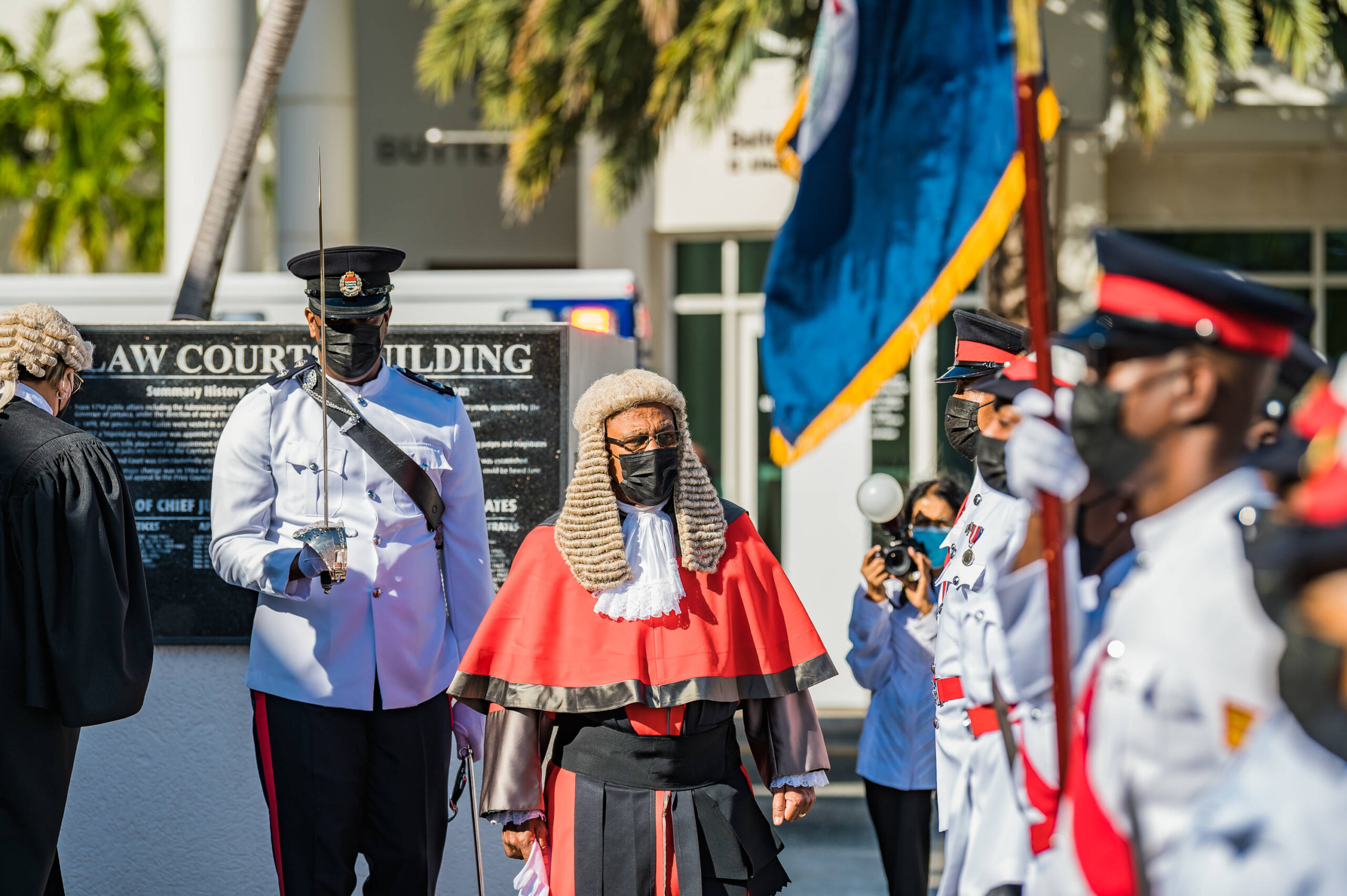
Chief Justice Anthony Smellie on Wednesday presided over the annual Grand Court opening for the last time before his retirement later this year.
Smellie, who will retire in the last quarter of the year, has served on the judicial bench in Cayman since 1993 and as chief justice since June 1998.
He replaced former Chief Justice George Elliot Harre, who passed away in France in October last year, at the age of 93. Harre’s passing was acknowledged at the court opening, with both Smellie and Attorney General Samuel Bulgin paying tribute to him.
In his comments, prior to moving the motion for the opening of the court for 2022, Bulgin said Smellie’s retirement would “mark the end of a historic tenure of some 24 years as chief justice”.
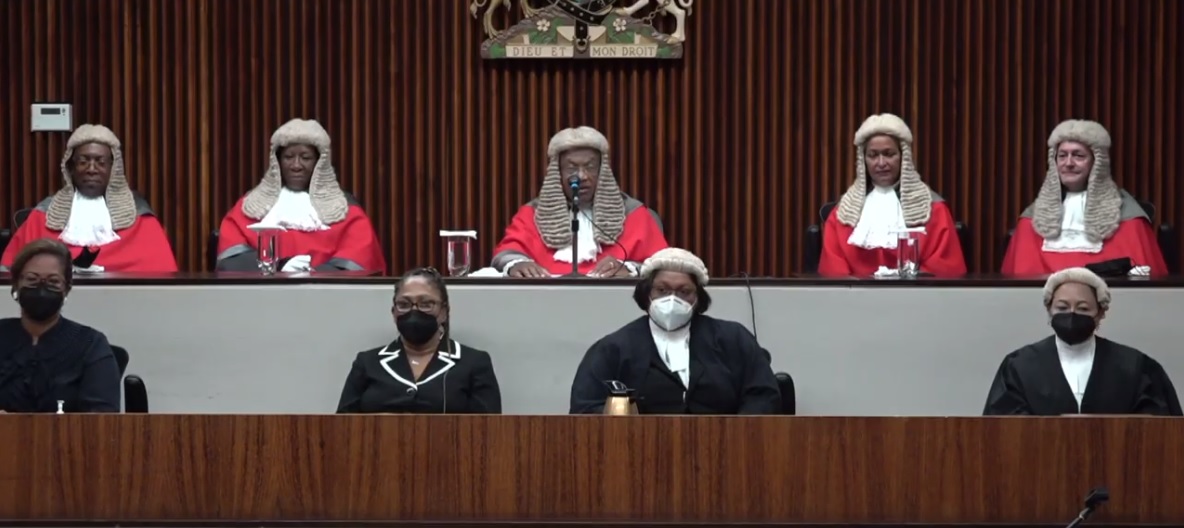
He told Smellie that, during his nearly quarter of century as chief justice, “these halls of justice, the jurisdiction, the region and, indeed, further afield, have all been enriched by your scholarly and illuminating judgments… Your tenure as chief justice marks a period during which you have brought glory and honour to the jurisdiction, and done so without any orchestrated fanfare, but rather in your characteristic unflappable and phlegmatic manner, and with visionary and transformational stewardship.”
COVID impacts pomp and ceremony of opening
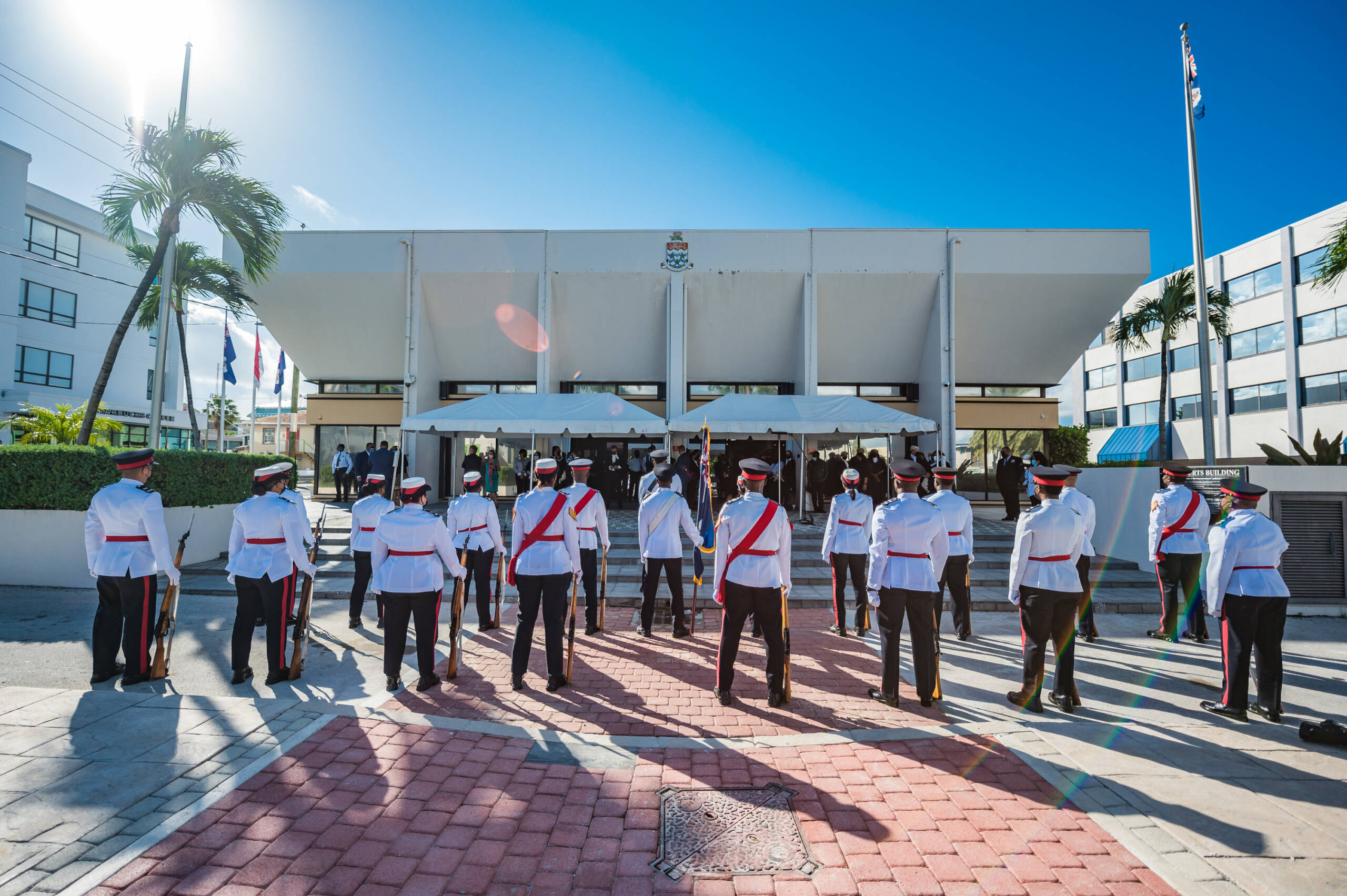
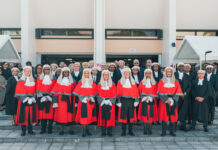
This year’s court opening was a less lavish affair than usual, in light of COVID-19. It was broadcast live on CIGTV and Facebook, and the number of people allowed to attend was limited. Following a brief inspection of the guard in front of the courthouse, Chief Justice Smellie and other senior judges filed inside the court building for the speech-making part of the morning.
The proceedings were delayed after a police officer taking part in the inspection of the guard passed out from heat exhaustion. The chief justice, in his comments inside the courthouse later, assured attendees that an ambulance had arrived and the officer was doing well.
In what Smellie described as a “hybrid format”, officials made brief statements in person in the courtroom, followed by pre-recorded speeches which were shown to attendees and also broadcast. During the presentations, each department head gave an update of the work that had been done over the past year and what could be expected over the coming year.
In his comments, the chief judge noted the growing number of cases being dealt with by the courts. He said that in 1982, there were 257 civil cases and 13 criminal cases before the Grand Court. By 2019, that had grown to more than 1,000 civil cases and 116 criminal cases.
As well as an increase in quantity, the courts had also seen an increase in the size and complexity of cases, “as a result of the financial services’ global reach”, he said.
Smellie said this was perhaps best illustrated by the AHAB v SICL and others case, which involved seven years of interlocutory hearings, followed by a hearing that lasted a full year, and resulted in a 1,300-page judgment.
The growing work of the court over the decades has meant that many more judges and magistrates are required to deal with it. Smellie pointed out that back in 1989, there were three judicial personnel in the court – a chief justice, a magistrate and a clerk of the court – and there are 39 today, including a panel of 18 acting judges and magistrates.
“This increase in judicial personnel, while consistent with the rapidly increasing numbers and complexity of cases, is also the consequence of a deliberate arrangement to ensure that the judiciary can fulfil its responsibility to administer justice in a timely and efficient manner, and consistent also with the Bill of Rights, which mandates the fulfilment of that responsibility in relation to the individual rights of persons,” he said.
The chief justice also addressed the importance of mediation in cases. He said that more than 200 cases, mostly matrimonial disputes, had been successfully mediated since 2016, after several members of the judiciary, senior legal officers and administrative staff, were trained and certified as mediators by the London School of Mediation. Smellie said that this year, those mediation measures would be extended to the civil division of the Grand Court and Summary Court, “where, from experience, a similar high rate of success as with family cases is to be expected”.
Announcing upcoming judicial events for the coming year, Smellie said, “if all goes well”, Cayman will receive the Privy Council, the final appellant court, for a special sitting here.
For several years, a recurring theme during the court opening has been hopes that more courtrooms could be made available to help deal with case backlogs.
At Wednesday’s proceedings, Court Administrator Suzanne Bothwell said this was “now becoming a reality” and two new courtrooms were expected to be completed in the first quarter of this year. She added that work on a new permanent home for the Court of Appeal would begin in April this year.
Various judicial departments, at the event, outlined how they had continued to operate safely during the pandemic, with the use of internet technology and electronic payments, that meant that face-to-face contact was not necessary.
Related Videos












I wish Chief Justice Anthony Smellie all the best luck in the world for his happy retirement. He is a great man whom I have known and respected for over 30 years !