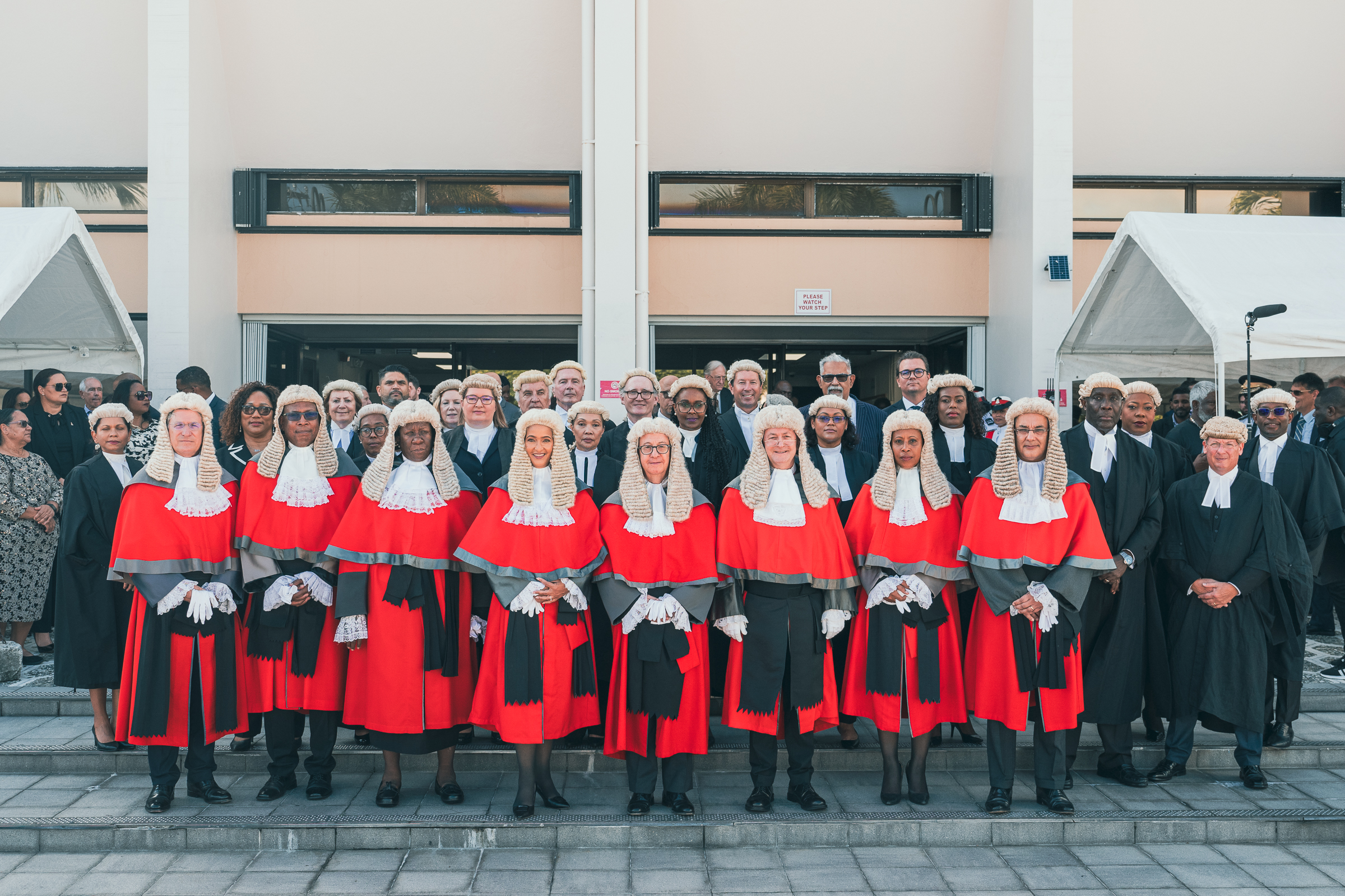
Chief Justice Margaret Ramsay-Hale, echoing her predecessor’s annual and oft-repeated appeal, is asking government to provide funding for a new courthouse, as she listed a litany of shortcomings in the existing court buildings.
At the official Grand Court opening on Wednesday, 10 Jan., she pointed out that the jury room could only comfortably accommodate eight jurors, that the lawyers’ robing room is now in the judges’ former library, and the courtroom used for complex international financial cases is outdated.
The former chief justice, Sir Anthony Smellie, whom Ramsay-Hale replaced in October 2022 following his retirement, was present at the official opening in his new capacity as a Court of Appeal justice.
“New chief, old speech,” Ramsay-Hale said, as she made a direct appeal for a new courthouse to legislators, including Premier Juliana O’Connor-Connolly, who were sitting in court as invited guests.
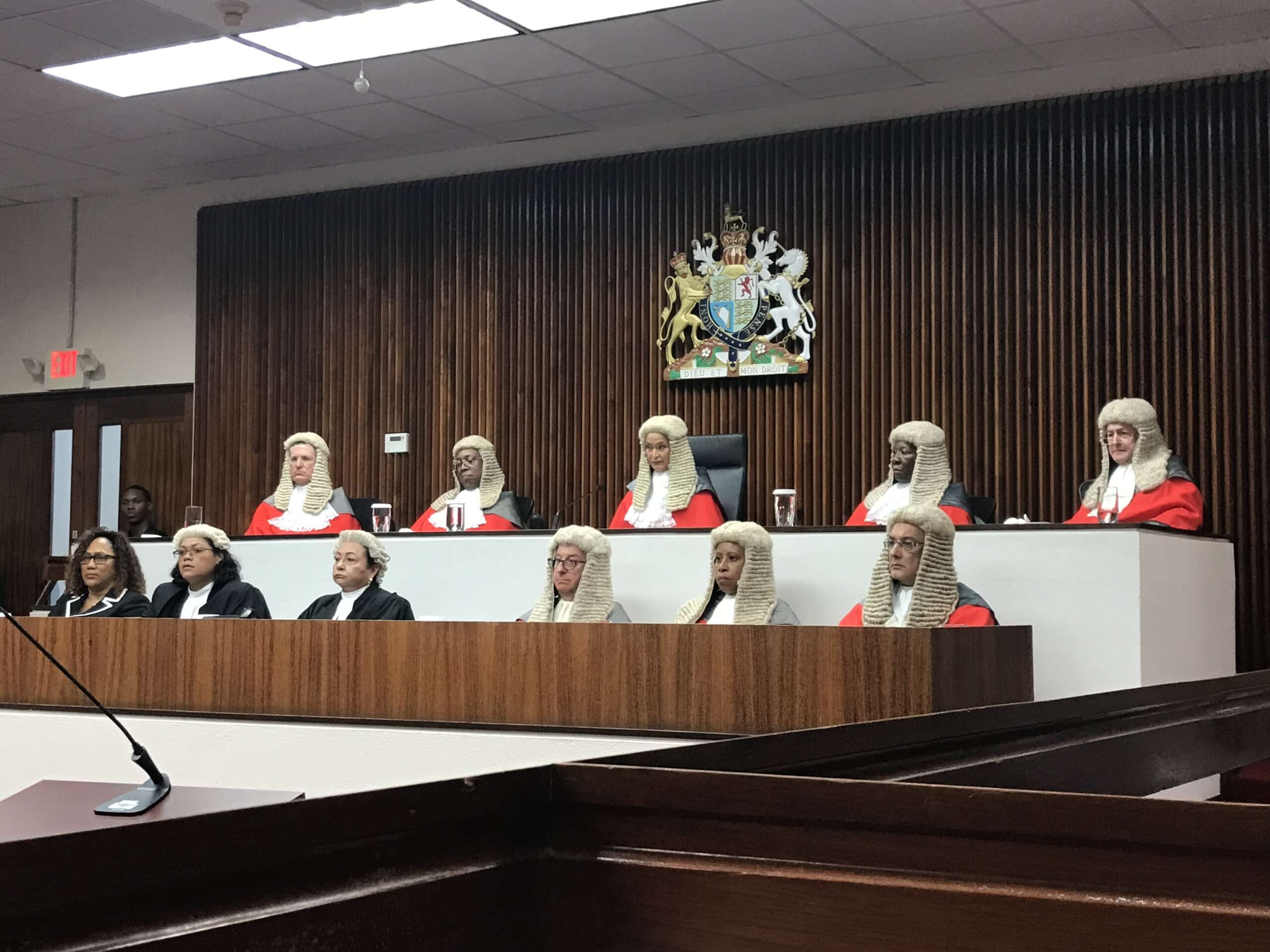
Not a ‘single dollar’ for courthouse in government budget
The chief justice pointed out that government’s latest budget had included large quantities of money for capital projects, but a new courthouse was not among them.
In its budget released in December, the United People’s Movement government announced it planned to spend $1.2 billion on infrastructure projects.
Prefacing that she did not want to “trespass” on the legislature’s domain, she said, “I have to note there was an ambitious capital projects plan expounded, which did not include a single dollar for the modernisation of the judiciary through the provision of a modern, technologically-enabled court.”
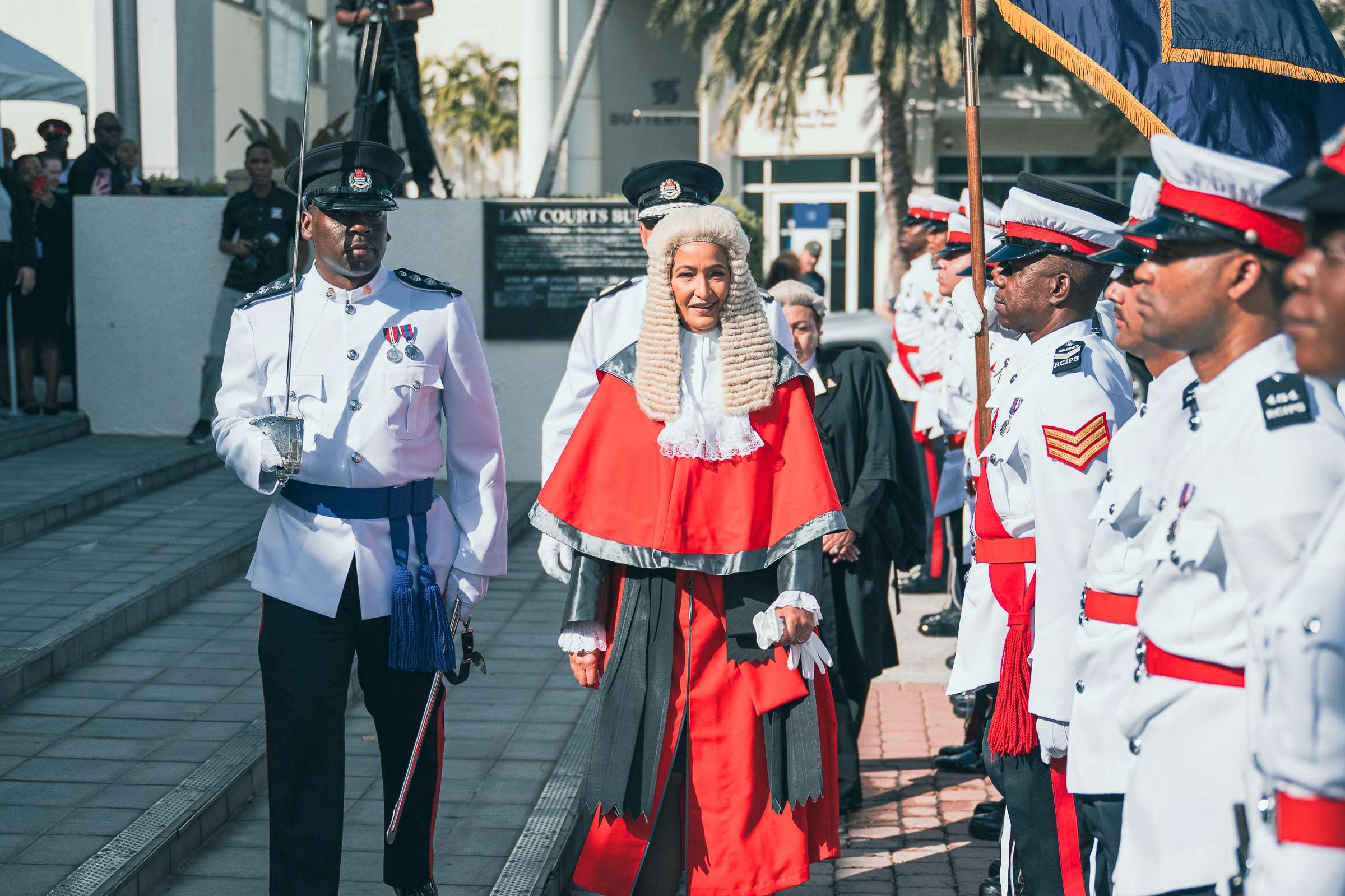
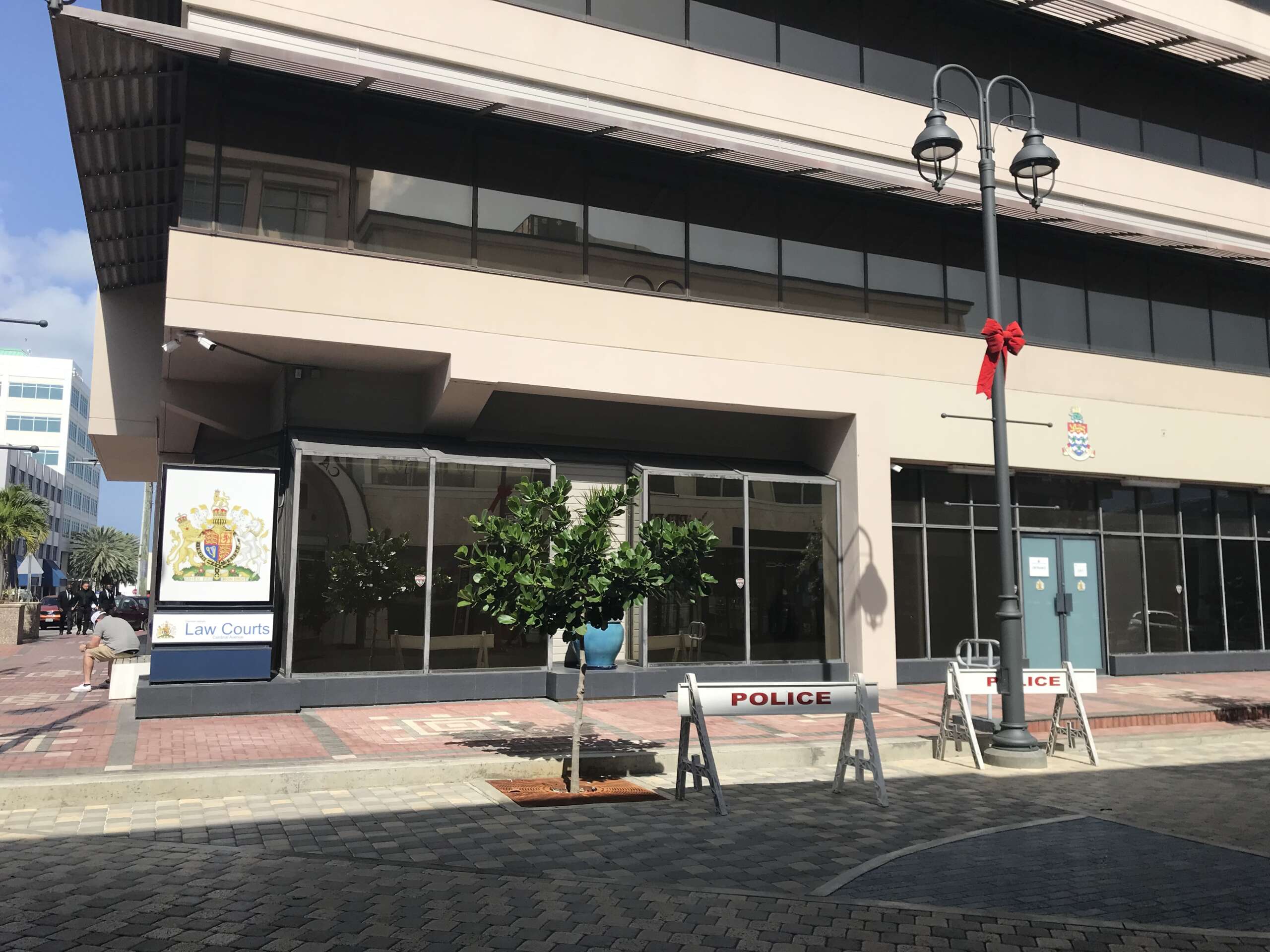
Acknowledging that the “court campus” now has three buildings – the main courthouse, Kirk House and the former Scotiabank building on Cardinall Avenue – she said, “They are still not enough to meet our needs.”
She noted the difficulties that had been encountered in retrofitting a bank building into a workable courthouse.
She told the lawmakers that none of these buildings is appropriate for a “modernised, technology-supported judiciary”.
Describing the shortcomings of the Financial Services Division court, which last year dealt with 414 financial services-related civil cases, Ramsay-Hale painted a picture of facilities that were outdated and not quite fit for purpose in the modern age.
“We say we are a premier financial services jurisdiction, and we are, but I should take you on a tour of the premises so you can see where 2,000 lawyers attend our courts, with their $15 billion clients.
“And it is only because we have such excellence on the bench, that the meanness of our facilities hasn’t played against us. If you were to see the courts of the Dubai International Financial Centre… these are our competitors, you would have to come back home and say that at the [Cayman Islands Financial Services Division], we should at least have courts that are modern and technologically enabled.”
She pointed out that, for example, in a current case in the Financial Services Division court, involving 40 to 50 lawyers, “all the equipment, apart from the screens on the walls and a few microphones, have been provided by the Bar”, rather than being standard issue in the courthouse.
Challenges for juries
The courtrooms in which criminal matters are dealt with also need to be technologically enabled, she said.
“I wish I had something to demonstrate what the jury goes through,” she told the assembled politicians, judges, magistrates, lawyers, clerks and other court staff in a packed Courtroom 1.
She described how jurors are having to balance two or three large bundles of court documents “on their laps”.
“Can you imagine jurors sitting in the jurors’ box, balancing bundles on their legs, trying to follow complex fraud trials, or worse, a murder trial where the court is relying on telephone records and photographs. All of these records are being put on screen, and you’re sat there in the jury box and they’re inviting you to look at that screen and make out the fine writing,” she said, pointing to a television screen mounted on the courtroom wall.
In most modern courtrooms, she said, “every juror has a screen”.
Ramsay-Hale noted that under modern evidence management systems, every document to be relied on in court can be put on the jurors’ individual screens.
“This is not science fiction,” she insisted, saying such systems have been around for at least a decade.
But she said, “We cannot introduce any more innovation in terms of software and technology because these courts are almost impossible to retrofit. Where would I put a monitor for these jurors? The jurors love to take notes. Cayman jurors love to take notes of everything… We have to prepare for the fact that, even if we have screens, I cannot retrofit this jury box.”
Moving parts
Last year, there were 104 new indictments before the Grand Court, and 928 cases were initiated in Summary Court, while more than 1,000 cases were sent to Traffic Court. Overall, the Office of the Director of Public Prosecutions filed approximately 4,200 charges. In 2022, 102 indictments were filed in the Grand Court and 872 in Summary Court.
Ramsay-Hale described a Tetris-like shifting of rooms and courts within the existing buildings over the past year, to make room for hearing the growing number of cases the courts are dealing with.
The courthouse had been lacking ‘witness care rooms’, where vulnerable witnesses can wait before giving evidence. It was while carrying out a walkthrough of the courthouse to find a suitable place to put a witness care room that she realised, she said, that the jury room table could only accommodate eight people.
To find a bigger room for jurors, she said, she turned the lawyers’ robing room into a jury room – one that still is not big enough to comfortably fit 12 jurors, however. As a result, the lawyers are now robing in the old library, which is within the judges’ area of the courthouse, and where normally lawyers would not have access.
To create a witness care room, she had to displace the court reporters. “Where are they going to go?” she asked. “The court reporters report in these courts. They can’t be too far away. Should I hire them premises down the road? Should I send them across to Cardinall Avenue? How much can this building achieve?”
Meanwhile, the Summary Court has been displaced from Court 2 in the main courthouse, as that is the only court building with custody facilities, so cases involving remanded defendants in criminal prosecutions can only be held there.
“As I said, ‘new chief, old speech’. I cannot stress enough that we need new court facilities,” Ramsay-Hale stated. But she added, “We will continue to make do,” recalling holding court in an airport hangar following Hurricane Ivan.
“We are prepared to sacrifice, but should we be asked to?” she said. “And what about the people who are not paid to judge, like our jurors, what about the litigants who come here seeking our assistance? Should they be subject to conditions which are not only unpleasant but, in fact, unsuitable for the purposes for which they have come to this court?”
She added, “I make this public plea for consideration to be given to the establishment in the budget of capital projects for a new courthouse.”
Related Videos