The Cayman Islands government has gazetted two bills for the creation of a digital identity register and the issuance of ID cards to improve how residents interact with the government and businesses and reduce red tape.
The Identification Register Bill 2022 and the Identification Card Bill will be debated at Parliament’s next sitting in December and the public is invited to comment on the pieces of legislation.
The proposed identity register will enroll all Cayman Islands residents, anyone born in Cayman and Caymanians born abroad.
It will also record changes to work permit and other residency rights, as well as asylum grants.
It is the first time government will have centralized identity information, reducing the amount of data collected and ultimately eliminating the need to submit the same documentation, such as birth certificates, to different government departments or multiple times.
It will also make it easier for Caymanians and residents to prove their identity and immigration status.
“The national digital ID and its underlying suite of systems and technologies will firmly launch the Cayman Islands into the 21st Century,” said André Ebanks, minister for Investment, Innovation and Social Development in a press release.
“It is an enabling innovation that will truly modernise governance and transform how Cayman Islands residents transact with Government and businesses.”
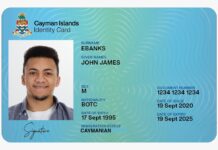
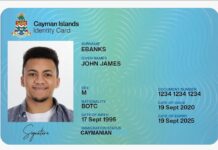
The register under the auspices of the Office of the Registrar will feature basic identity information such name, nationality, date of birth, sex and immigration status and assign a unique identification code to each individual.
The place of birth, physical attributes, contact information and residential address, physical signature and photograph and ID codes of parents can also be added, but are not mandatory. Under the enabling legislation, registered individuals can edit and update the information and will remain in control of how much information they want to share.
Any access to the information is timestamped and recorded.
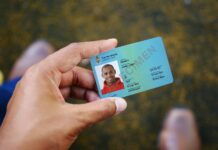
The government-issued photo ID card will be available to all residents at no cost to them. It offers physical and digital proof of one’s identity, can be used to verify identification online and enables the digital signing of documents.
Currently voter identification cards or driver’s licenses are neither available to everyone nor valid ID and the issuance of passports is costly. This has resulted in a significant number of unbanked people who are unable to open a bank account because they do not have the required identification documents.
For everyone else, government says the new ID will simply save time and make it easier to access government services.
Tamara Ebanks, acting chief officer of MIISD, said the digital identity will enhance government’s capability to serve its customers.
“Chief among the benefits of the national digital identity for individuals is the elegant simplicity of a single identification document, and the amount of time it will save and hassle it will reduce,” she said.
“We foresee a truly significant reduction in ‘red tape’ which will result from a person being treated as the same individual when transacting with numerous Government entities.”
The ID card will also offer benefits to the private sector.
As a verified identification, it has the potential to reduce know-your-customer data collection. It can also be used in combination with card readers or a cell phone app, developed by the government, to sign documents digitally.
Ian Tibbetts, director of the eGovernment Unit for the development and implementation of the digital identity initiative, said the digital signature meets the highest industry standards, but unlike comparable commercial solutions will be free of charge.
He likened government’s commitment to the national digital ID to its investment in physical infrastructure, such as roads, bridges, telecommunications, airports and public safety.
“Similar to Government’s investment in physical infrastructure, its investment in digital infrastructure will be a catalyst for creating a truly connected, modern and dynamic Cayman Islands,” Tibbetts said.
The public consultation period on the proposed legislation ends 4 Dec.
The two Bills and other information for public awareness, education and consultation/feedback are available at the Ministry’s website: https://imagine.egov.ky
Related Videos