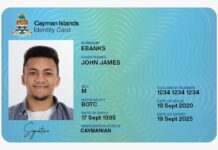
The government has announced plans to begin issuing ID cards to the elderly and youngsters in Cayman as part of a pilot programme before the end of this year, followed by a rollout to the entire population in 2025.
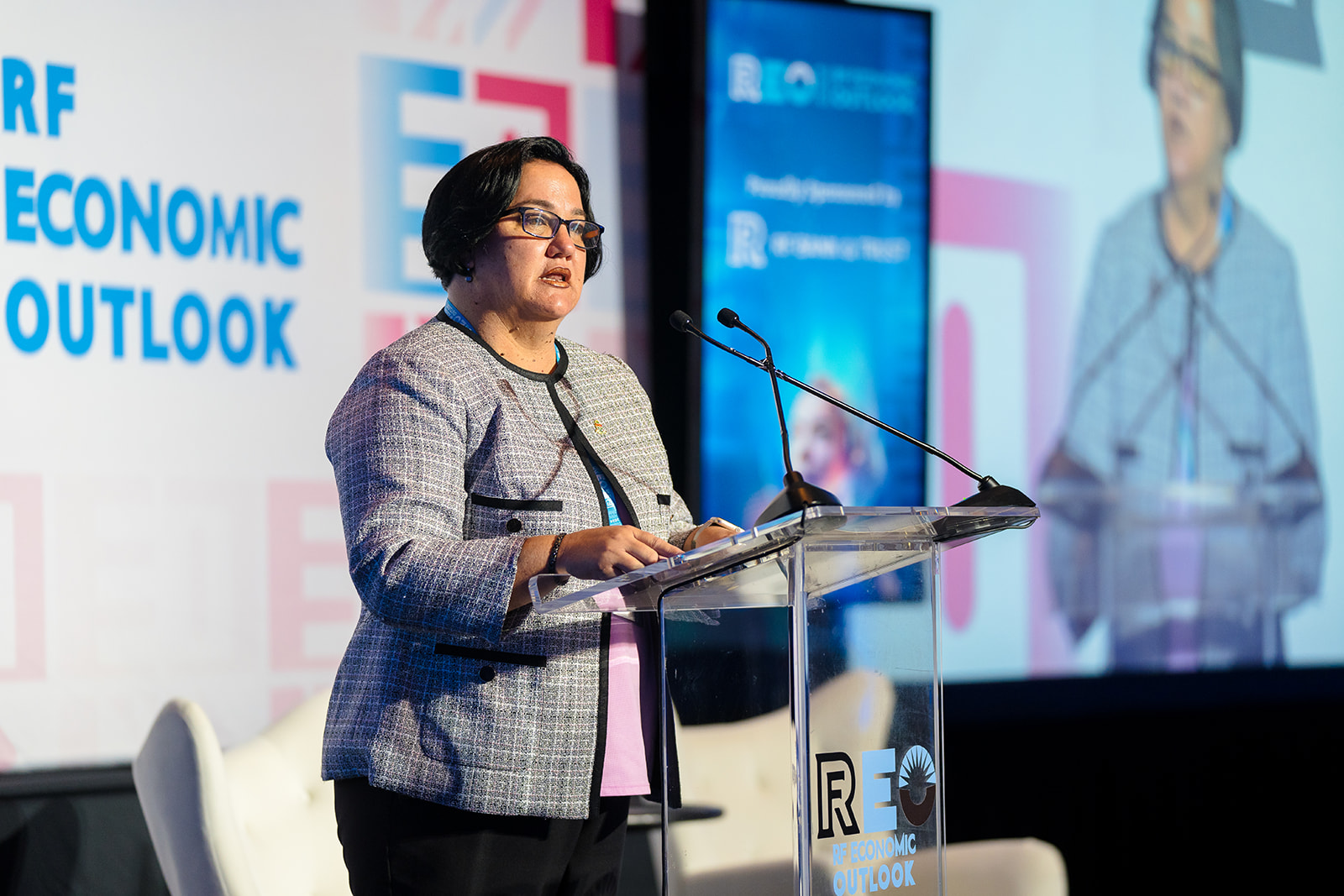
Tamara Ebanks, chief officer in the Ministry of Investment, Innovation and Social Development, speaking at the RF Economic Conference on Friday, said the pilot programme for the electronic identity cards, or eIDs, is expected to begin in the last quarter of 2024.
“This phased introduction will see the rollout of physical eID cards, initially targeting young and older members of our community who often lack alternative forms of identification, beyond passports,” she told the audience at the Kimpton Seafire resort conference room.
“By targeting these specific groups, we aim to address a critical gap and lay the groundwork for introducing the eID cards to the wider community in 2025,” she added.
In December 2022, the government passed two pieces of legislation paving the way for the creation of ID cards and a digital identity register.
Under the legislation, the ID card scheme is voluntary, and the information collected by the digital registry does not contain any information that government does not already have.
Young and old
Charles Brown, deputy chief officer in the Ministry of Investment, Innovation and Social Development, speaking with the Compass at the RF Economic Conference on Friday, said children and the elderly were “the two groups that really need an ID, and who, sometimes for whatever reason, can’t get it”.
He noted that the IDs would be useful, for example, to students who need to prove who they are to sit certain exams, or for elderly people who can no longer drive and therefore don’t have driver’s licences they can use as identity documents.
Exactly how those IDs will be issued to those demographics is still being decided, Brown said.
“Getting the cards out to the populace is not an easy feat,” he acknowledged.
He stressed that it’s a voluntary system and there are no plans to make the ID cards mandatory.
It’s envisioned that children of any age could be signed up by their parents for an eID, Brown stated.
“It could be a 2-year-old, or a 1-year-old, or a newborn, that needs to travel from Cayman Brac to Grand Cayman, and then, all of a sudden, you need a passport or some form of ID to actually get through our international airport…
“It’s simple things like that. “It could be a kids’ school group that’s coming down for sports. There’s always a bit of doubt when a parent puts a passport in a kid’s hand, and says to their 5-year-old, yes, off you go. Or you give a teacher 50 passports.
“It’s all about convenience. An eID is much easier to put in your pocket. It’s much easier to replace if you need to replace it.”
The eIDs of youngsters, Brown said, could be enabled with the emergency contact numbers for parents that would be accessible via a QR code on the card. Parents would have the options of turning that information on their child’s card on or off, he said.
“A policeman could scan that card and it would allow him to contact the child’s mother,” Brown explained.
Before the tech is rolled out to the initial users, it would be tested out by others, but “we have not yet decided who the pilots are going to be”, Brown said.
However, he added, that it may start out with Cayman’s politicians and some civil servants.
As well as acting as identity cards, the eIDs will also enable holders to access digital services and sign documents digitally.
The cards would also give bearers digital signing capabilities, he noted, as the eGov Department has developed an app which allows cardholders to use DocuSign, which can be used via the eIDs.
This means that forms or other documents, in PDF format, that need to be signed, can be opened up on a person’s phone, and by tapping the card, that person’s identity is verified after they enter a PIN. Then they can position their signature anywhere on the page, and email it back to the relevant party.
Making the ‘unbanked’ bankable
With the use of credit and debit cards and app-based monetary transactions increasing, and the decrease in the use of cash, making options available to the “unbanked” is a “real interest” of the department, Brown said.
Unbanked individuals are those who do not hold bank accounts, often because they do not have the necessary identification documentation, such as passports or driver’s licences.
“How do we make the unbankable more bankable? A basic ID card that says this is who they are is a cornerstone,” Brown said.
The cards, which will be available free of charge, will be printed on island and will provide both physical and digital proof of a person’s identity. . They are expected to include the cardholder’s photograph, name, date of birth, sex, immigration status and unique card ID number, with additional optional information available on the scannable QR code.
Related Videos