For people with disabilities already facing day-to-day challenges, being forced to navigate a web of red tape to seek vital support through the Needs Assessment Unit has proven to be a heartbreaking and frustrating reality for a number of Caymanians in need.
One applicant, 70-year-old Leah, who requested her name be withheld for fear of backlash due to her complaints, said the last few years have been a battle to get basic assistance from the unit.
“They treat us like we should be working. They treat us like… there’s no empathy,” she said in a recent interview with the Cayman Compass.
Painful process
For more than 10 years, Leah has been living with physical disabilities, resulting from back injuries that limit her mobility. She said she knows that many like her are treated with disdain when they ask for help.
“There is unfairness… they pick, choose and refuse. I know of at least 12 disabled people… who ask me to help them get help… Two of them are ex-firemen. They have letters to prove it and [the NAU] gives [them] the runaround, they just do as they please. They have no direction,” she said.
Though she said she gets some assistance with her rent and food, Leah said she requires additional help, such as with transport.
Mary, who also requested anonymity for fear of reprisal from the department, faces similar challenges. She has mobility issues after being left paralysed due to a back injury she sustained in an accident some time ago.
“It is so degrading… Where’s our dignity? That [unit] treats us like you wouldn’t even believe… if it’s not covered, you do without it,” Mary explained.
She said, as a proud Caymanian, it hurts her to see people like herself being treated as second-class citizens.
“Within the [department], it’s been particularly devastating to have to deal with delays, simple delays; they refuse to take accountability for when they’re wrong,” Mary said.
The hoops she has to jump through to get assistance leave her feeling defeated.
After finally receiving rental assistance, she said she’s getting the runaround as she tries to obtain other support, such as a clothing allowance.
“Why put the burden on a person who is making a valid claim… When you see that they’re eligible for it, why put them through all of that?” she asked.
“I don’t drive… I don’t have my driver’s licence. I have four collapsed spinal discs and I have some surgical clips in my back. So it’s difficult to get around,” she said, adding these are things the department should consider when approving assistance.
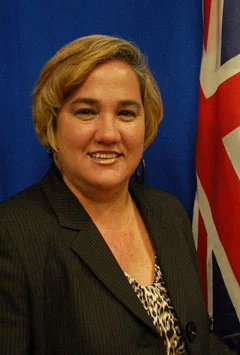
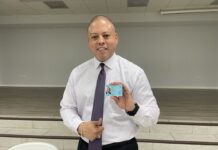
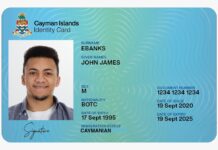
Tamara Ebanks, acting Chief Officer of the Ministry of Investment, Innovation and Social Development, acknowledged there have been issues with NAU, which is slated to be renamed the Department of Financial Assistance in January, under recently-passed legislation.
In a statement responding to Cayman Compass queries on the women’s complaints, she said the ministry “has taken a holistic approach to re-imagining social development. This entails delivering meaningful and measurable changes to the Needs Assessment Unit – including many deficiencies that prevented the NAU from functioning as effectively and efficiently as it can.”
She pointed out that these deficiencies included “inadequate resources – which was addressed in the 2022-23 Annual Budget Statement – and the absence of directional legislation, which has been changed as of the most recent session of Parliament in October 2022”.
Though the recently-passed Financial Assistance Act has been welcomed, those in the system argue the emphasis should be on fixing the issues within NAU.
Mary said the reality is that fixing the framework is not enough, the inner workings of the department and how they treat clients needs to be tackled.
“These are permanent disabilities, and there’s no change in the long term. Why cause me to suffer? [Is this] a punishment or retaliation? That’s where I find the inhumanity is, because they know I cannot do anything without them,” she said.
Efforts to streamline
Ebanks said the ministry is re-imagining the way that the Needs Assessment Unit operates to “modernize its services, and make the process more effective and efficient for people who need to access financial assistance”.
The ministry and the department have completed some work, while efforts are underway to streamline processes for clients, she said. This includes hiring more staff, and Ebanks said recruitment and onboarding had already started.
“This now includes a dedicated financial assistance officer in Cayman Brac. Upgrades to the NAU’s physical premises where clients are served are also underway,” she added.
Ebanks said the vast majority of complaints received relate to incomplete applications, where insufficient documentation or information was supplied.
“As the legislation commences, in January, it will provide further accountability and transparency for individual clients,” she stated.
Ebanks said the department will be required to provide a decision on a complete application within a defined number of days.
Hearing grievances
She added the creation of an appeals tribunal will “transform the process”, allowing grievances to be “formally heard, and decisions reconsidered, by independent tribunal members”.
The new law seeks to provide broader support for families in need and replaces the out-dated legislation which currently underpins the islands’ welfare system.
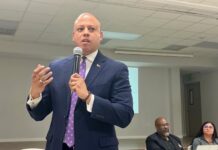
Social Development Minister André Ebanks, in a previous statement said, the new law “provides a 21st century legislation for eligible Caymanians who are in need of Government’s financial assistance, while building in accountability and legal recourse”.
Currently, 1,419 families receive some form of support from the department. This includes temporary rental payments – ranging from $1,200-$1,800 per month, depending on family size – food vouchers and a $950 stipend for qualifying elderly people.
Self-assessments
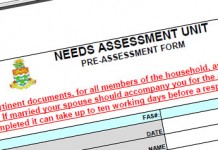
The acting chief officer said that, at present, potential NAU clients should review a self-assessment form to determine if they may be eligible for financial assistance based on the current policy, which also outlines the documents required.
The NAU’s District Days, held every month on Fridays in East End, North Side, Bodden Town and West Bay, provide an opportunity for potential clients to apply or to check on the status of their application without having to attend NAU’s office, Ebanks said.
She also pointed out that, in July, the ministry introduced a renewal policy for older persons and people with disabilities which are permanent in nature, allowing them to complete a ‘Continuation Certificate’ if their circumstances have not changed.
“This policy change reduces the burden on existing NAU clients who continue to need the financial assistance,” she added.
Related Videos