It is a truth (almost) universally acknowledged that small islands stand on the frontline of climate change.
Whether it be threats posed by rising sea levels and increasing global temperatures, or the risk of more severe storms and beach erosion, a single jurisdiction in possession of a good fortune, must be in want of some action in the face of the existential threat to our shores.
With that in mind, many across Cayman dutifully take their ‘bags for life’ to the supermarket, trade in their gas-guzzling trucks for Teslas and collect rubbish once a week at the beach.
Unfortunately, this is a literal and figurative drop in the ocean when it comes to meaningful action to shore up our defences against the climate crisis.
Hot air, not consequential action
Frustration has been boiling over for some time about the long-delayed solution to the landfill crisis in the Cayman Islands.
Dismay gave way to outcry as Cayman suspended its glass recycling programme at the start of this month – one of the islands’ futile and fragile attempts to deal with its waste, shattering at the very moment the world’s leaders gathered at COP27 to address the global emergency.
There was a backlash against Dart who have been responsible for managing our glass recycling efforts for the last 10 years. But should the onus be on a private company to take ownership of the problem?
Shouldn’t we expect an organised system of waste management for the island to be up and running by now – almost ten years after government first began working on it.
It seems there is more hot air than consequential action. The furore over the glass recycling issue is one example.
Glass bottles are cleaned using desalinated water, created using power from diesel generators. People then drive to bottle banks or recycling centres to dispose of them. There, they are collected by a diesel-powered truck (most of which would surely fail acceptable global emissions tests given the volume of acrid smoke they belch) and taken to be processed by a diesel-powered crusher. Next, the product gets buried or inefficiently used – there is no meaningful recycling of glass locally.
The same issue is apparent with any material that can’t be composted – it all goes back to the landfill.
We, in Cayman, need to ask ourselves seriously: Who are we recycling for? Is it for the planet? Or is it for us, to maintain a veneer of control and sanity as the world around us burns?
Cayman unthinkingly imports green policy in response to social pressure. It is trendy and inures us against the rage of the eco-warrior brigade.
You cannot fault people for trying to make a difference – especially as the crisis gets worse and report after report warns of a code red and implores us to act now. But there is a risk that recycling in Cayman has become a performative ritual that confers a sense of virtue on the recycler, without making a dent in the problem.
Distraction from the problem
Many of us are guilty of talking a good game on climate change without being prepared to make real sacrifices that might actually make a difference.
This is true on a global scale. The hypocrisy was evident in the number of private planes disgorging delegates at the Sharm summit. The negotiations to achieve ‘net zero’ were made a little harder by the choice of transport many participants chose to get there.
The recycling predicament closer to home mirrors the same futility.
If the process costs more than it achieves from an environmental standpoint then recycling is simply distracting us from the problem by making us think we have done enough to solve it.
We refuse to accept – nor does government want to acknowledge it – that if we all took one fewer flight per year, we’d make more difference to the planet than recycling all the islands’ glass bottles.
If we start to ask our own people to make these kinds of sacrifices, we have to ask the same of our tourists, too.
And then we threaten the golden goose.
Thus, the concept of ‘every little helps’ becomes a damaging smokescreen that allows us to feel good without doing the lot that is required.
What is going on in Cayman now is just posturing.
But ours is not the diatribe of a nihilist. There are efforts that can – and will – make a difference.
Action plan for a genuinely greener Cayman
Let’s get on with the dump remediation and get the landfill deal sorted.
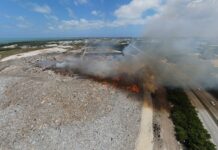
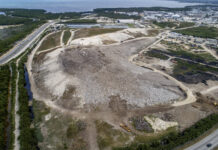
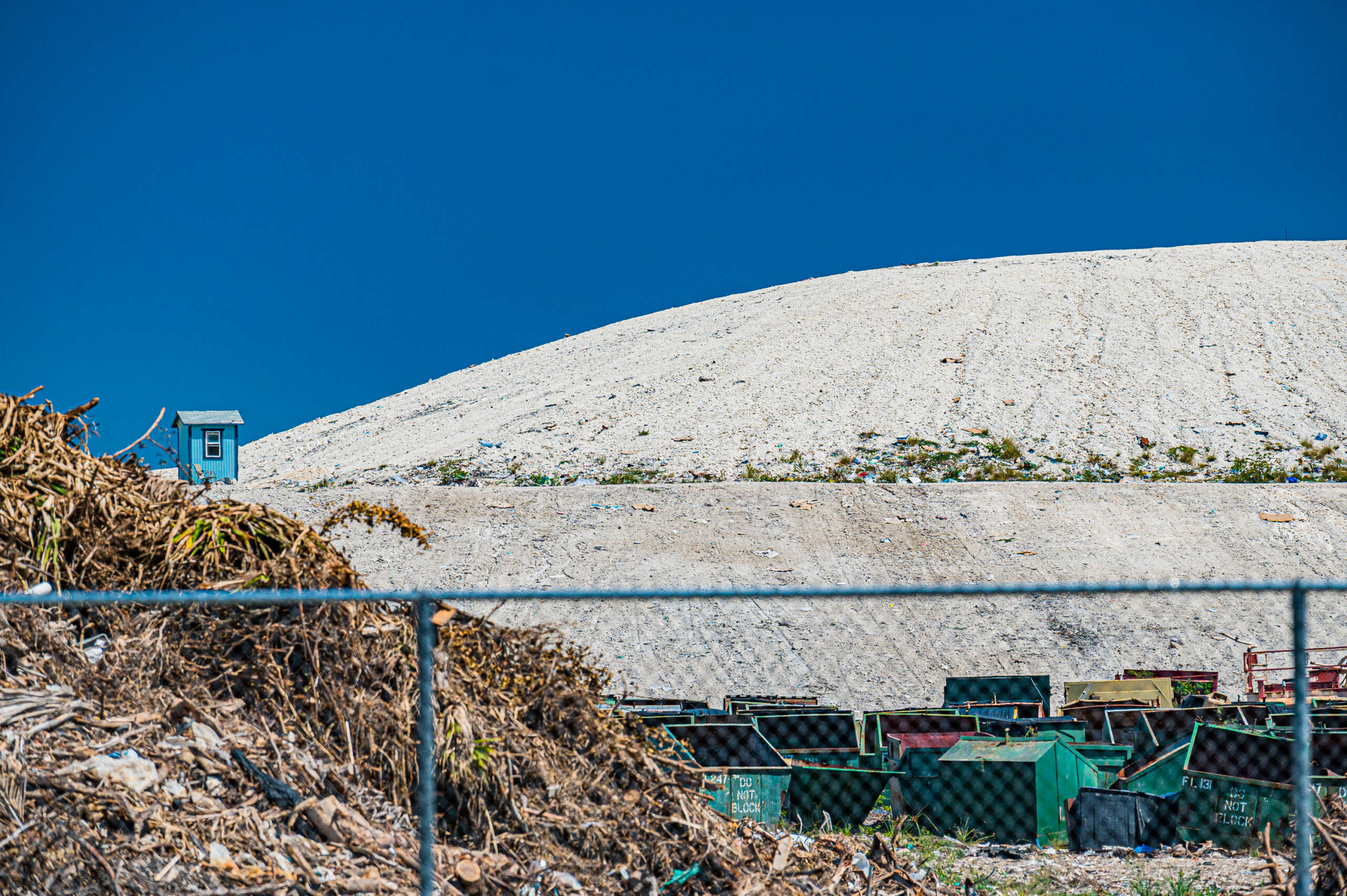
If ever there was a visceral reminder that we are not thinking things through, it is the distended carbuncle swelling a stone’s throw from beaches we tout as among the most beautiful on Earth.
Replacing ‘Mount Trashmore’ with a waste-to-energy machine that needs as much fuel as possible to generate a stable electricity source will find an ample supply of trash we can turn into power.
Hopefully the stalled deal will include a coherent recycling component that actually benefits the environment.
Alternative energy sources need to be accelerated as a viable means of powering our islands. The Isle of Wight has become a renewable energy powerhouse; Cayman has set what feels like an unattainable and unrealistic goal of achieving 70% of electricity generation from renewable sources by 2037 and has little progress to show for it. It is time to renew efforts – and hopes – that the islands could become fully self-sufficient from renewable energy sources.
Efficient and affordable public transport – the panacea for so many ills from the traffic problem to drink driving – is a key part of this action plan, along with implementing a development and infrastructure plan for sensible and organised land use.
Cayman doesn’t need to send anyone to Egypt, by plane, boat or biodegradable cardboard sailboat, to find that out. These problems have been staring us in the face for three decades.
It’s beyond time for action over words. Anything else is just greenwashing and it’s as transparent as the clear Caribbean Sea.
Related Videos