


In Kurt Tibbetts’ kitchen, a strong pot of turtle stew was coming to a healthy boil.
After a fiercely contested election in 2000, the key players had gathered to break bread at the home of the avuncular George Town legislator. As the broth simmered, ministerial posts were debated, mooted, vetoed and decided.
A ruthless decision was made. McKeeva Bush, the pugnacious West Bay representative, who had helped depose former leader Truman Bodden, was out. After an interlude, during which Tibbetts and newly minted East End legislator Arden McLean apparently went to procure breadfruit, a proposal was made that Tibbetts would be the leader.
A glass was raised to the new government. But there was no time for cigars. The alliance barely lasted as long as the supper.
A disgruntled backbencher, denied a Cabinet position, went over to the other side and negotiations began afresh, culminating in an uneasy alliance that put Tibbetts and Bush in joint charge of the islands.
That partnership lasted a little longer, falling apart the following year in a coup that put Bush’s newly formed United Democratic Party in power and led Tibbetts and Alden McLaughlin to form the Progressives.
Roy Bodden, a legislator at the time, was deeply involved. The abstemious scholar didn’t partake in the meal but was close enough to smell the turtle meat.
“It’s a very unsophisticated way of choosing a political directorate,” he said.
Fast forward 20 years and the locations have changed, the menus might be different, and there’s another system of voting in place, but Bodden sees the same modus operandi in play.
Key decisions about important roles for Cayman being decided long after the vote, in the absence of the electorate.
The run-up to the last election was even more opaque, argues Bodden. Even once the results were in, the race to decide who would be premier, who would manage Cayman’s education system, who would lead the post-COVID comeback, were all up in the air.
Ministerial posts, he says, are not decided on who is the best qualified for the role, but traded as bargaining chips in the quest for power.
Local versus national issues
He believes single member constituencies have made the matter worse, favouring candidates who focus on parochial issues like road-paving or rubbish collection over broader national agendas.
The result, Bodden fears, is that important long-term issues are neglected and a kind of local ‘strong man’ politics emerges, where an individual with family ties is hard to unseat.
“Cayman is sufficiently small, why don’t we have national elections?” he asked.
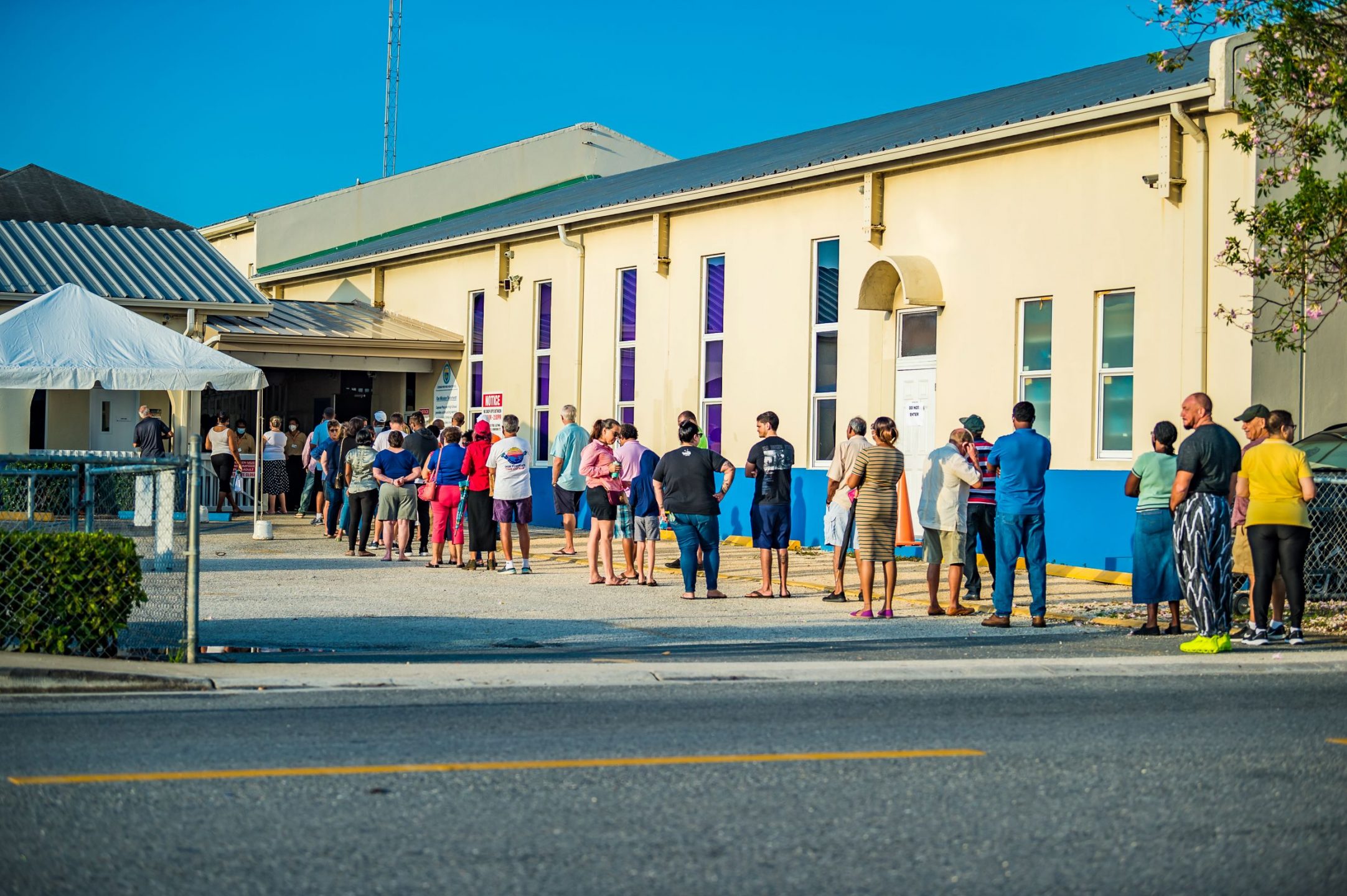
Ideally, he believes candidates should declare which Cabinet position they are running for and show some knowledge and interest in that area.
“It would eliminate all this horse-trading and all these negotiations that take place after the vote, and it would mean politicians have to run on a national policy platform,” he said.
One person, one vote
For Bodden, the reforms that brought about single member constituencies dealt with a different problem.
The campaigners who sought equality of franchise achieved their aim, helping rid Cayman of an unbalanced and outdated system where George Town voters selected six representatives while East Enders picked just one.
But he argues that Cayman should have opted for more wholesale changes.
Mirroring the British Westminster system in miniature has created other challenges, not least the minuscule size of some constituencies.
East End’s Isaac Rankine needed just 348 votes to take the seat. Sabrina Turner required only 353 in Prospect.
The impact, says Bodden, of such small voting pools, is that parochial issues tend to dominate and dictate elections.
And a strong position on a handful of neighbourhood issues, like potholes in the roads, garbage collections or playgrounds, can be decisive.

Bodden argues that these would be better left to well-run district councils.
Anyone running for national office, he says, should have a much broader plan for the country.
Equally, a few powerful voices in a district WhatsApp group can end up swaying policy decisions.
“A lot of people were disappointed once they realised how it would work,” he said of the new system put in place for the 2017 general election.
“In a small constituency, a few hundred votes could win it. If you have a large family and a lot of friends and relatives in the district, you could be in there for life.”
A national vote, where everyone has a say in who their leaders are, would ensure candidates had to present a vision for the islands and seek election on a mandate to take Cayman forward, said Bodden.
OMOV ensures direct accountability
Ezzard Miller, a former independent representative for North Side and one of the key campaigners for the reforms that led to single member constituencies, is adamant that the system is not the problem. He believes the transition to one person, one vote, has been a success, because it has replaced an electoral system that was basically unfair.
Noel March, one of a handful of non-political citizens who led the public campaign for a referendum on the issue in 2012, agrees. He said the changes meant every political hopeful had to win in their own right, rather than being swept into office on the campaign.
“We were just trying to figure out a way to achieve better representation and force the participation of more qualified candidates instead of some people coming in riding someone’s coat tails. Every candidate has to carry their own weight.”
He said it also created a tangible link for every voter with their representative. If you have a problem in your district, you have someone to go to.
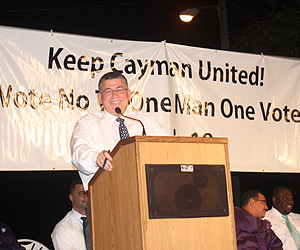
If the new electoral system hasn’t yet led to better candidates, both Miller and March suggest this is not necessarily the fault of the system.
Miller believes a more involved electorate and more public education would ameliorate some of the issues highlighted by Bodden.
“People have to understand, it is a vote for the country, not just for North Side or whatever the constituency is.
“Candidates should have an understanding of local issues but they need to demonstrate they understand the economy and have the experience to run the country. It is about the people making an informed choice, and you can’t design any system to make that happen.”
Equality of vote?
Miller doesn’t support a national vote, arguing that those local issues are significant. Cayman’s districts need strong representation in parliament, he says, so their needs are considered at a national level. He also opposes any attempt to make the districts equal in voting size, as proposed by observers from the Commonwealth Parliamentary Association.
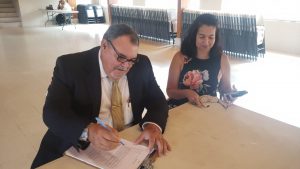
The observers noted Bodden Town East, for example, has twice as many constituents as North Side and East End, effectively making a vote in that district worth only half of a vote in the neighbouring eastern districts.
The report recommends a redrawing of the boundaries and questions whether the current system achieves the stated goal of the reformers to bring equality of franchise.
Miller argues against this logic.
“Numerically, East End and George Town are small, but geographically they are the largest areas.”
He highlights important issues, such as land ownership and development rights in the districts.
“It is easy for people in George Town who have already extracted economic benefit from their land to go out and say ‘no developing in the east’.”
Party politics
An independent for the bulk of his political life, Miller may seem an unlikely advocate for the party system. But recent experience has made him a convert.
While he believes there is room for a couple of “genuine independents”, he believes a more clearly defined party system will need to emerge. Pointing to PACT’s independent coalition, he said they would be judged collectively on their record, and will inevitably be viewed as a quasi-party when it comes to the next election.
That’s a good thing, he says, arguing that it would be better if the alliances, prospective leadership and ministerial preferences of candidates were known prior to the public vote.
“If you had clear parties, you would know who the premier and ministers would be and what national platform your candidate was aligned with. You don’t need a national vote.”
March acknowledges challenges with politicians running on local issues and then being nominated to deal with large national problems. He would like to see the electoral system develop further, to the point where people could have a say in the election of ministers, but he’s not sure how this could be achieved.
“It’s just like life, brother, there is no perfect solution.”
Campaign finance
Bodden argues for a wholesale review of the electoral system, examining who can vote and who can run for office, as well as issues like campaign finance.
Acknowledging it was a “controversial position”, he expressed support for allowing people who had been born outside of Cayman and acquired Caymanian status to run for office.
He also argues for fuller transparency on campaign financing – another recommendation of the election advisors.
But he is cynical about the likelihood of change.
Too many people, he says, benefit from the current system. He’s not just talking about politicians, but donors too – who, he says, make quiet contributions and seek to pull strings from behind the scenes.
Ultimately, he believes the end goal must be to bring out candidates with a clear vision and platform for the islands’ future and full transparency over who is supporting them and why.
He added, “You can’t have an election and you don’t know who you are voting for and then you have a pot of turtle meat on the stove and the government is founded.”
Related Videos










Good article and keep posting.
Great article. I believe that elected officials, no matter their platform, face the inertia that is entrenched civil service. The people who actually run the infrastructure of our Country are hired and not held to the same standard as an elected official. That is to say, they do not view their countrymen as their employers. We need to address how we can make Civil Service accountable to the same standards. The elected officials must run on a platform and compete. They then must try and serve constituents and help them. Why aren’t all of our Public Servants required to do the same.