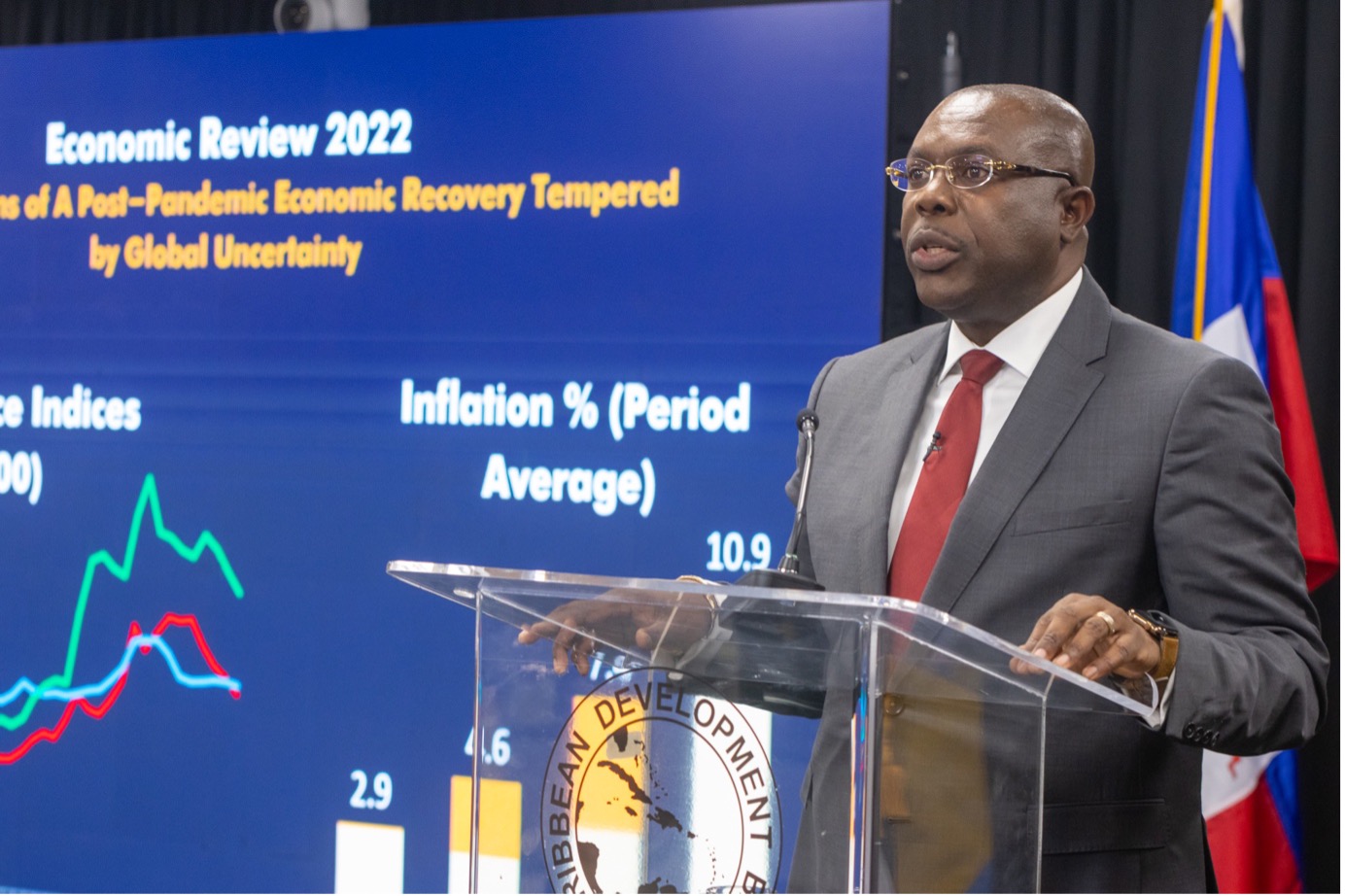
Following a 10.3% increase in GDP in 2022, the Caribbean economy is expected to grow by 5.7% this year, according to estimates by the Caribbean Development Bank.
Regional growth forecasts are based on the continued recovery of tourism arrivals and investments in the energy sector.
They are, however, subject to certain risks related to the economic performance of advanced economies which are all predicted to register lower growth than last year.
“For 2023 we project that, despite facing multiple challenges, borrowing member countries’ (BMCs) economic performance will continue to improve over the medium term,” said CDB’s vice president (operations) Isaac Solomon, at the development bank’s annual news conference on 18 Jan.
“While cautiously optimistic about the near-term outlook and recognising the uncertainty regarding the war in Ukraine, it is difficult to estimate growth with a large degree of certainty.”
Last year, regional economic growth averaged a strong 10.3%, largely based on increased energy production in Guyana, and Trinidad and Tobago, higher international oil prices in commodity-exporting countries and economic growth of 4.6% in tourism-dependent countries.
This performance, Solomon said, supported government revenues and improved fiscal positions.
But, he added, the challenges associated with past economic performance and global conditions place the region at a critical juncture, with the impact of protracted shocks compounding the region’s socio-economic difficulties.
The CDB is a lender to its 19 borrowing member countries with a wide range of loans and grants.
Last year, the bank disbursed US$292.5 million and approved another $158.1 million.
There are currently more than 65 CDB financed projects under implementation regionally.
The CDB believes that the region’s gross financing needs (GFN), pushed up to $10 billion in 2020 by the COVID pandemic, will remain elevated until at least 2030.
The GFN measure considers a country’s balance between revenues and expenditures, as well as any funds needed to repay existing debt.
CDB president Hyginus Leon said because of the outlay needed to address vulnerabilities exposed by the pandemic and the resources necessary to achieve the sustainability development goals, the bank’s members would require extensive financial support from international finance institutions.
Leon cautioned that several years of consecutive shocks, the prospect of a slowdown in the global economy, and continued price pressures in 2023 could derail the region’s development trajectory.
Related Videos