


Youth disengagement across the Caribbean is emerging as one of the region’s most pressing development challenges – and one that higher-income territories such as Cayman are similarly affected by.
Speaking at the 2026 Caribbean Development Bank Annual News Conference in Barbados on 3 March, the organisation’s president, Daniel Best, identified youth as the first of three strategic priorities in the bank’s new 10-year plan, alongside infrastructure and climate change.
Best noted that the issue spans the region, affecting countries irrespective of income classification.
“We know Cayman is not unlike other Caribbean countries where we have challenges with our youth and young people,” Best said, highlighting what he described as a troubling statistic.
“We have discovered at the bank an acronym called N.E.E.T – not in employment, education or training. Twenty-four percent of the region’s young people are not in education, employment or training. That’s almost one in four,” he said.
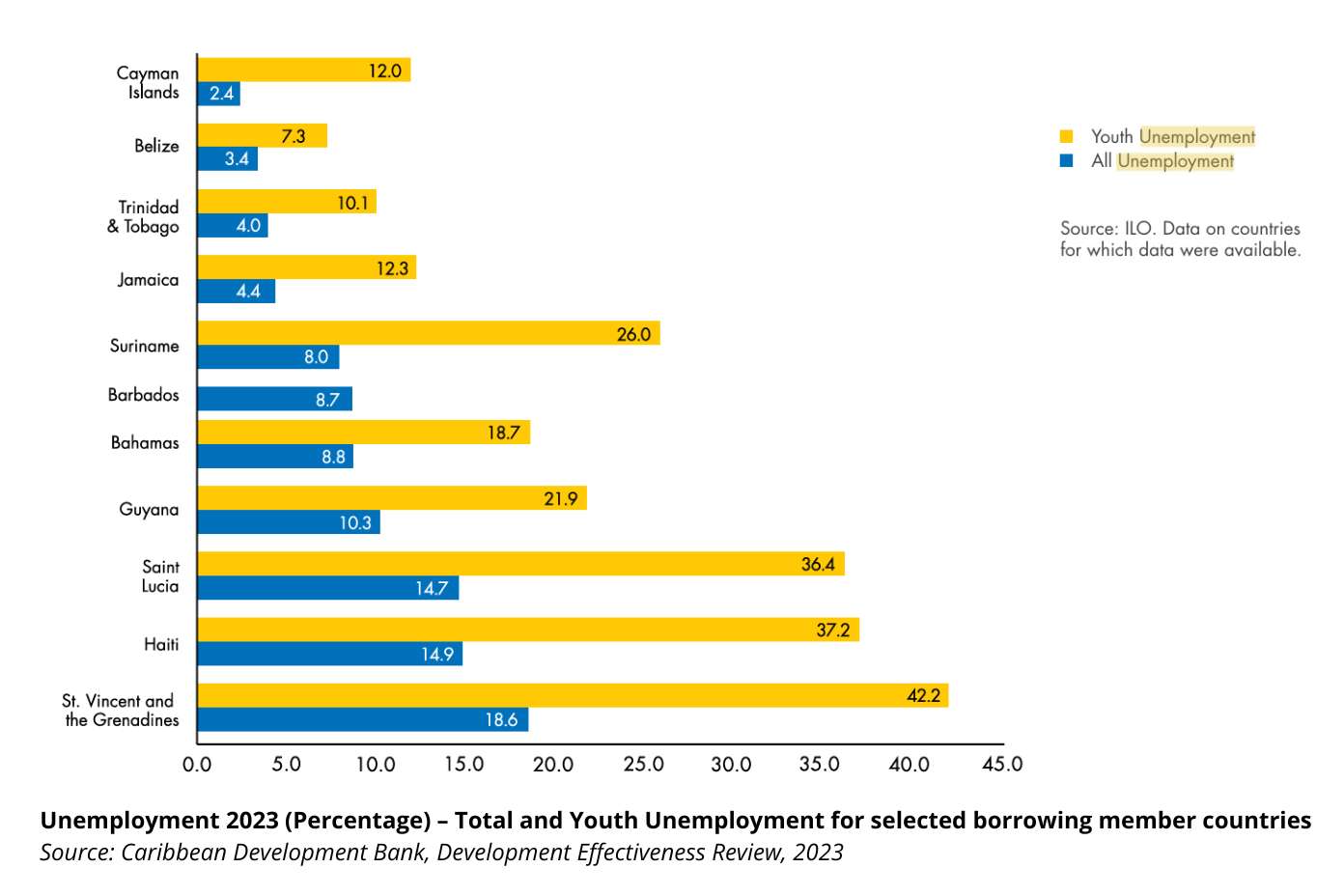
Figures from the Economics and Statistics Office show youth unemployment at 12.2% in 2024, rising to 18.1% among young Caymanians. Of the 1,048 unemployed Caymanians, 760 had a high school education or lower, underscoring the link between qualifications and job prospects.
Young people in Cayman most frequently cited a lack of available jobs as the main reason for unemployment, followed by studying, family responsibilities and discouragement.
While overall unemployment in Cayman remains relatively low, the data point to ongoing pressures facing young Caymanians, particularly those with more limited formal qualifications. Cayman’s youth unemployment rate is broadly comparable with, and in some cases higher than, those seen in other Caribbean jurisdictions.
 Best also highlighted structural concerns around talent retention, pointing to outward migration or “brain drain” as a growing issue for jurisdictions such as Cayman.
A previous Compass report echoed those worries, finding that many high-achieving young Caymanians are opting to live overseas, citing limited career prospects, a perceived “concrete ceiling” for locals, the high cost of living and the challenges in being able to afford to buy a home.
Despite millions spent each year on scholarships, graduates said they struggle to secure roles at home that match their qualifications or overseas earning potential, fuelling questions about long-term opportunity and affordability in Cayman.
“We know that youth in Cayman also see moving to other countries outside of the Caribbean – even after they have been educated in the region – as a path for which they can grow and raise a family,” Best said. “How do we get them to stay?”
Best noted that in some Caribbean Development Bank member countries, as many as 70% of university graduates ultimately build their careers outside the region, describing talent as the Caribbean’s greatest export and stressing the need for policies that help retain educated young people.
The bank, he added, is focusing on entrepreneurship, grant programmes and capacity-building initiatives to support youth-led businesses and micro, small and medium enterprises across the region.
In 2025, the Caribbean Development Bank provided nearly $80,000 in grant funding to support a new national small business policy in the Cayman Islands aimed at expanding opportunities for youth and women entrepreneurs while strengthening the country’s micro-, small- and medium-sized enterprises.
Best also pointed to a range of regional initiatives supporting young entrepreneurs and women-led businesses, as well as programmes designed to connect Caribbean producers with international markets.
The goal, he said, is to build competitive enterprises grounded in three fundamentals: “price, quality and reliability”.
He also linked youth opportunity to the strength of public institutions, identifying institutional development as the second major pillar of the bank’s strategy.
“Everything you want to accomplish … is on the other side of an institution,” he said. “We can have all the financing we need, but if there’s a blockage in the institutions, we’re not going to get too far.”
Best added that reversing the outflow of young talent will require more than rhetoric. “Young people have to see this region as home – a place where they can live, raise a family, work and enjoy the cultural experiences that this region has to offer,” he said.
Related Videos













Mr. Best’s alarming statistics on youth disengagement are exactly why we cannot afford to introduce a national lottery or decriminalize drugs.
When Cayman’s youth are already struggling with unemployment and the high cost of living, offering them the escape of drugs or the false hope of gambling will only deepen this crisis.
We should protect our moral foundations and focus on providing genuine career opportunities, not destructive distractions, so our youth can build stable lives, and home ownership, right here at home.