


When retired police officer Manny Brown was killed in a boat collision on the North Sound in 2019, it sent shockwaves through the community.
The incident, which also claimed the life of 70-year-old John Turner and left a third victim in a coma, was among the deadliest accidents in the islands’ waters in living memory.
It also spotlighted a growing safety hazard in Cayman – reckless and unregulated boating.
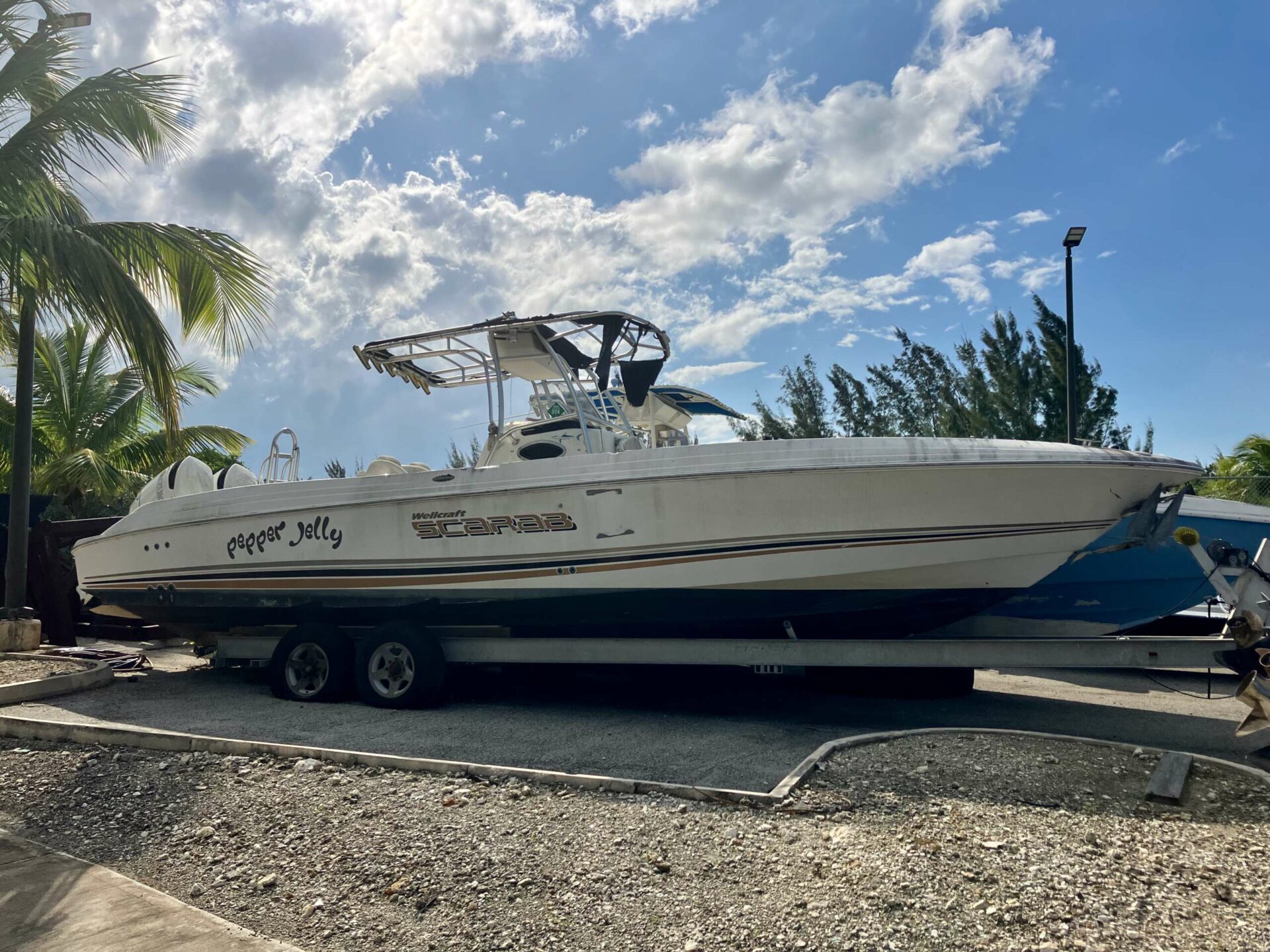
The driver of the other vessel, Sean McDonald, sped through a no-wake zone, hitting speeds of up to 50 miles per hour before the collision occurred in August 2019. He was sentenced to seven years in prison in January this year after being convicted of manslaughter in the deaths of Brown and Turner.
During his trial, it was determined that, as well as speeding, he had not kept a proper lookout and had defective lights on his 32-foot powerboat, Pepper Jelly.
Yet, until the moment his boat collided with Brown’s vessel, it would have been difficult for law enforcement to bring any meaningful sanction against McDonald.
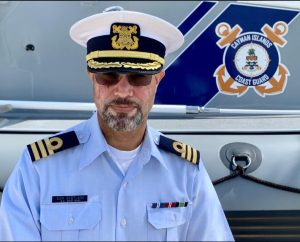
“What happened to Manny is tragic, but we are seeing that type of behaviour from boaters every weekend at Cayman Kai and on Seven Mile Beach,” said Coast Guard Commander Robert Scotland.
Though strict rules govern the conduct of motorists on the roads, Cayman’s waterways are a relatively lawless zone.
While being intoxicated in charge of a vessel is an offence, current legislation does not contemplate proactive policing on that front. It is something that officers typically only address after an accident has occurred. With the exception of coastal no-wake zones, speed and driving standards are not regulated. There is no licensing requirement to get behind the wheel of a boat and no skill or experience is necessary, so long as you are over 15 years old.
Applying rules of the road to the sea
Now the Coast Guard is working with the Port Authority on a proposal to tighten up outdated regulations and make them fit for purpose in modern Cayman.
That includes plans for new ‘boating under the influence’ regulations that would potentially allow Coast Guard officers to breathlyse boaters and prevent them from helming vessels while intoxicated.
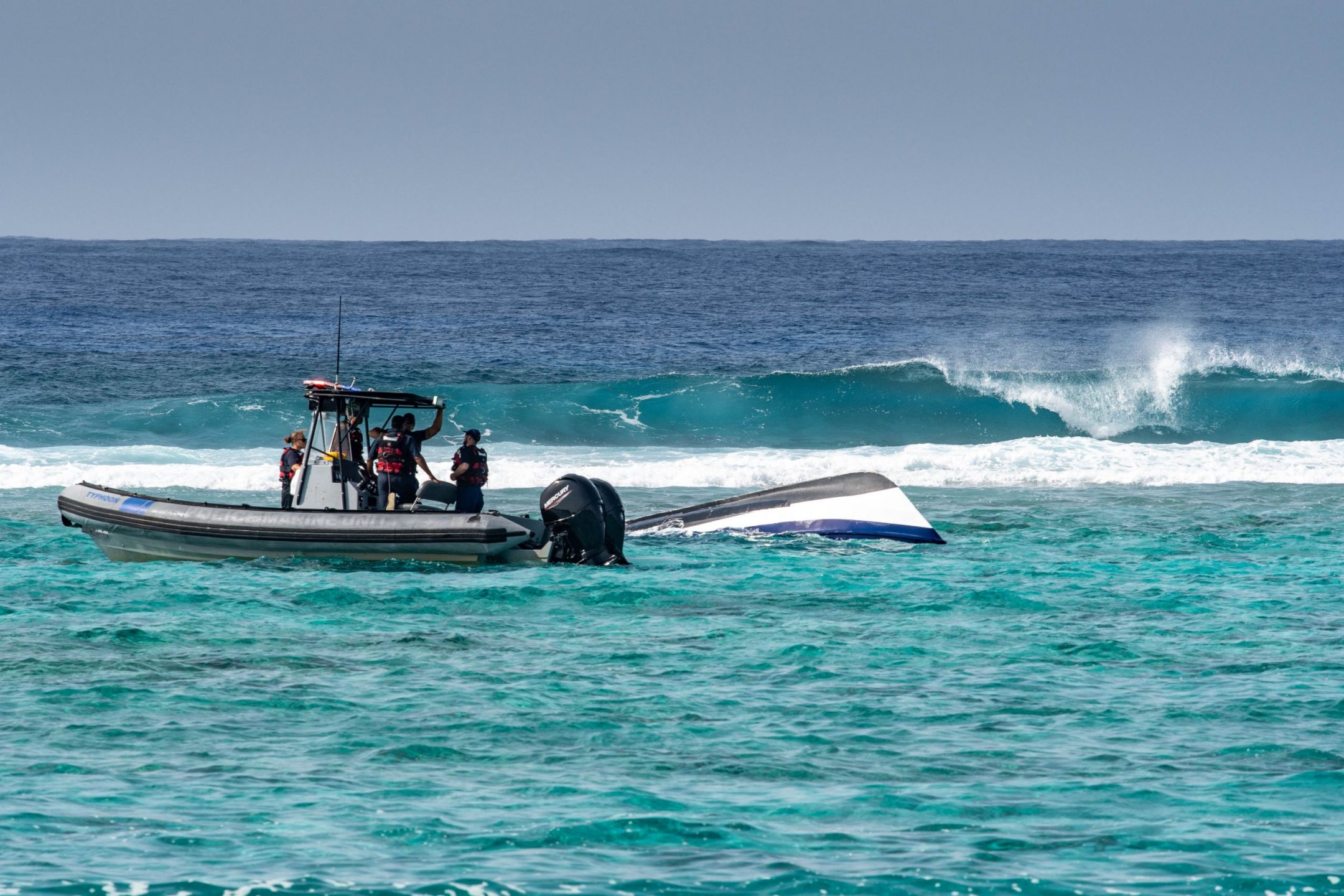
“Our intent is to look at all of the regulations under the traffic law, and where they’re practical and applicable for the maritime domain, we’re pretty much looking to replicate it. There’s no need to reinvent the wheel,” said Scotland.
“You have careless driving, reckless driving, so you can have careless boating, reckless boating,” he added.
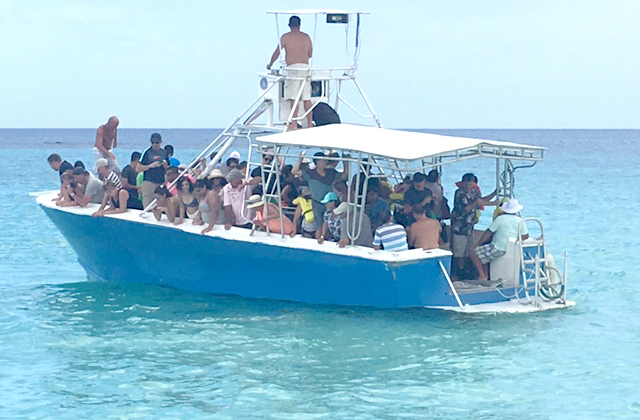
The Department of Environment is also supportive of changes to legislation to better regulate vessels in the wildlife interaction zone, which are often overloaded with passengers. Scott Slaybaugh, deputy director of the DoE, said registration of watercraft would also make it easier for enforcement officers to follow up on complaints.
The Coast Guard also supports licensing for boaters – similar to the driver’s test – a development which could also be used to ensure anyone at the wheel of a vessel is informed about no-fishing zones and other marine park legislation.
A growing problem
Leo Anglin, lieutenant commander of the Coast Guard, said the growth of power boat and jet-ski ownership in Cayman over the past decade in particular had made the islands’ waters a more hazardous environment.
The pandemic pension holiday also contributed to a rise in watercraft ownership, says Scotland.
Inexperienced and untrained boaters, liquor, music and a party atmosphere, with hundreds of people in the water at weekends, is a dangerous mix, he argues.
There have been discussions for over a decade about the need for tighter regulations. But the conversation has accelerated through the observations of the Coast Guard and following the tragic death of Brown, a respected former law enforcement official.
While broader changes – such as the introduction of boat pilot licensing – would require legislation, some of the immediate fixes could be relatively simple.
Port Authority regulations currently set out requirements to carry life jackets, flares and other basic safety equipment.
The Coast Guard and Port Authority plan to bring recommendations to Cabinet to tweak those regulations to cover boating under the influence, and additional no-wake zones around anchored vessels and anywhere that swimmers are in the water.
Handling those two issues – liquor and careless boating around other water users – would be a big step forward, Scotland believes.
“If you’re behind the wheel of a vessel and you’re coming into Cayman Kai, where there are 40 or 50 people in the water and you’re not paying attention – factor in a little bit of liquor, a little bit of music, a little bit of distraction – the likelihood of you hitting somebody and causing serious damage with the hull of your vessel is is extremely high,” he said.
Clinton Jackson, senior harbour patrol officer with the Port Authority, confirmed it supports changes to the regulations to better manage offences like boating under the influence.
He confirmed the authority also supports a broader legislative move to have a licensing system for boaters, similar to a driver’s licence.
Scotland said this could be a relatively simple requirement to take an established qualification, such as the Royal Yachting Association’s certification.
Ultimately, he believes boaters should demonstrate some competence and knowledge of the ‘rules of the road’ before being authorised to helm a vessel.
He said this would also allow for a more manageable system of sanctions for boaters, with the ultimate threat of losing a licence acting as a deterrent to reckless behaviour.
More stringent testing could be considered for commercial operators, he said.
The Department of Environment also supports licensing for those operators.
Slaybaugh, who helped create a draft ‘local vessels law’ around a decade ago, said, “A change that would assist our work – especially with enforcement and marine pollution – is vessel registration.
“Currently, there is no way to identify or contact the owner of a vessel if it is sinking on a mooring or discharging fuel from the bilge, or observed from a distance fishing in a marine reserve.”
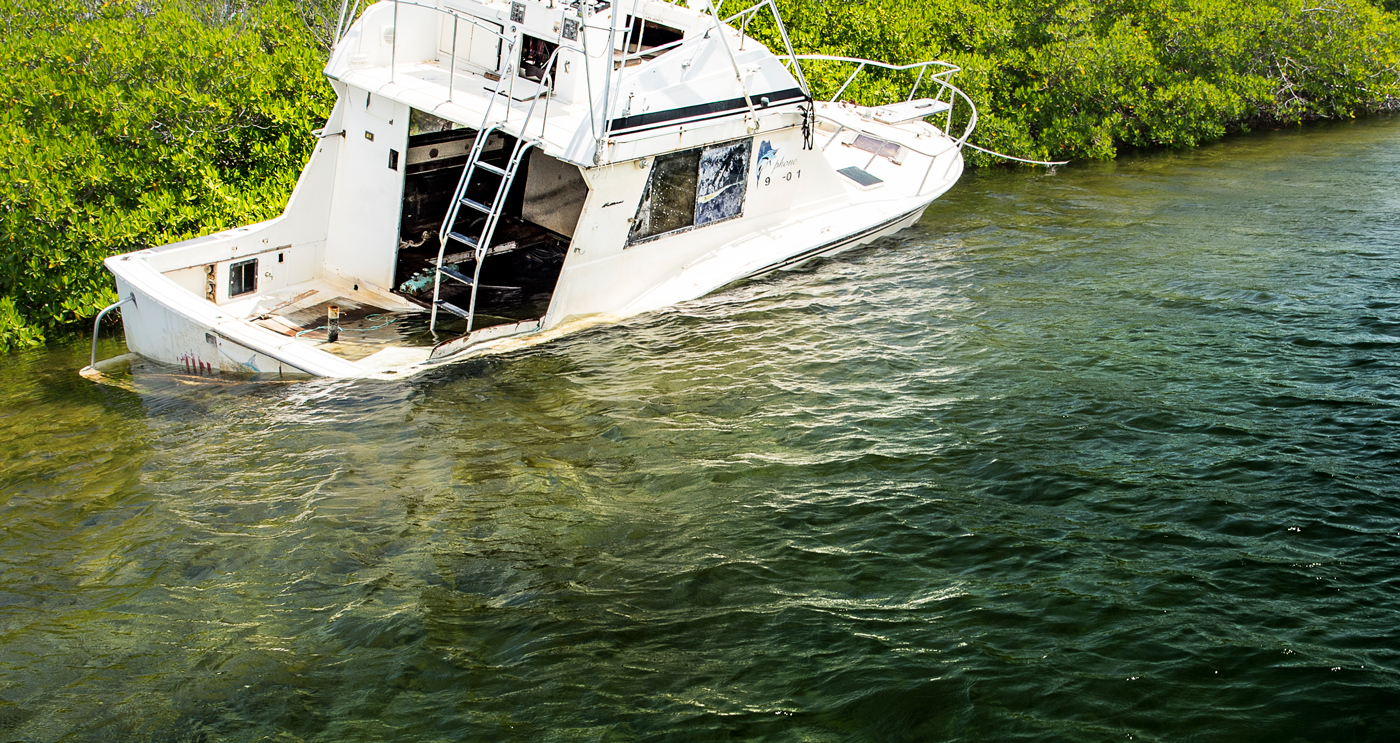
He said it is currently impossible to prove who owns a vessel, meaning courts often refuse to order forfeiture of boats involved in poaching incidents. Equally, derelict vessels that have been abandoned are difficult to link to an owner, and can become an environmental hazard.
Related Videos








It should not be hard to introduce a system of boat registration decals for all power boats and all sailboats over, say, 20ft.
The marine police do little or nothing to enforce the No Wake zones. We regularly see waverunners and jet-skis along with commercial boats going to Stingray City ignoring the posted No Wake zone.
The commercial boats are often well overloaded.
Time for laws with teeth that are actually enforced.
Please introduce this new or enhanced legislation urgently BUT please also ensure that you have the resources to ENFORCE it! I fear that we have not seen anything yet, just wait until the ganja/marijuana rules are liberalized, and SOME boat operators, their patrons, and jet-ski operators etc. are potentially “high” (under the influence) and their motor skills, vision, and judgement are all compromised. Just wait and see the folly of their ways!!
JetSkis operating at high speed inside the 200 yard zone a long 7 mile beach is a constant problem for snorkelers and swimmers. Most of the 200 yard buoys are missing and there is no enforcement.
Its not rocket science to implement boating laws take the same laws add a few that pertain waterways and you have it solved. Introduce boating licenses, to all no one under the age of 16 to operate a boat with a motor larger than 20hp. Canada and the United States has had this for many years now and it wasn’t hard to get it to law either. I have always said in order to make a law a fatality usually happens to get a process started. This isn’t a process its reality and the Law makers need to step up and put it in action now
Commander Scotland is well suited to address this problem…With his illustrious career in the RCIP who better to have at the helm of the CICG in regards to safety on the seas…You are fortunate to have him…Dr. Finley
If CIG are looking at the traffic law and how to port it over to boats they should look at creating a single law for all ‘vehicles’; at least for the basics. Something that covers cars but also mopeds (now electric bicycles) and scooters; boats but also jet skis and even small boats. One category would basically be ‘anything with an engine’ using any public area (road, sea, etc.) needs to meet X criteria (vehicle safety inspection & licencing, insurance, operator training and conditions, i.e., licence yes drugs no) and any mode of transport in a public area needs to meet Y criteria (no licence or inspection but safe use rules). Y means pedestrians, cyclists, kayakers, swimmers, snorkelers and divers. We all know that all of these road & sea users need to use the public roads/sea properly or its bad for everyone so lets stop hand-wringing and put in place proper broad-spectrum rules for everyone one time and be done with it.