Eight months after signing up for new courses on sustainable industries at the University College of the Cayman Islands, dozens of students are either already enrolled or on track to start internships and work placements at offices, construction sites, and hospitality establishments.
Students like Krysten Martin, a hospitality student, who is interning at a store in George Town where she interacts with tourists daily, or Joseph Clarke, an information communications and technology student, who has been getting work experience at UCCI’s own IT department, are among the more than 50 Caymanians who joined the free courses that began last year.
The courses – in renewable energy, sustainable construction, information and communications technology (ICT), and tourism and hospitality – were funded by a $405,000 grant from the European Union’s RESEMBID funding programme.
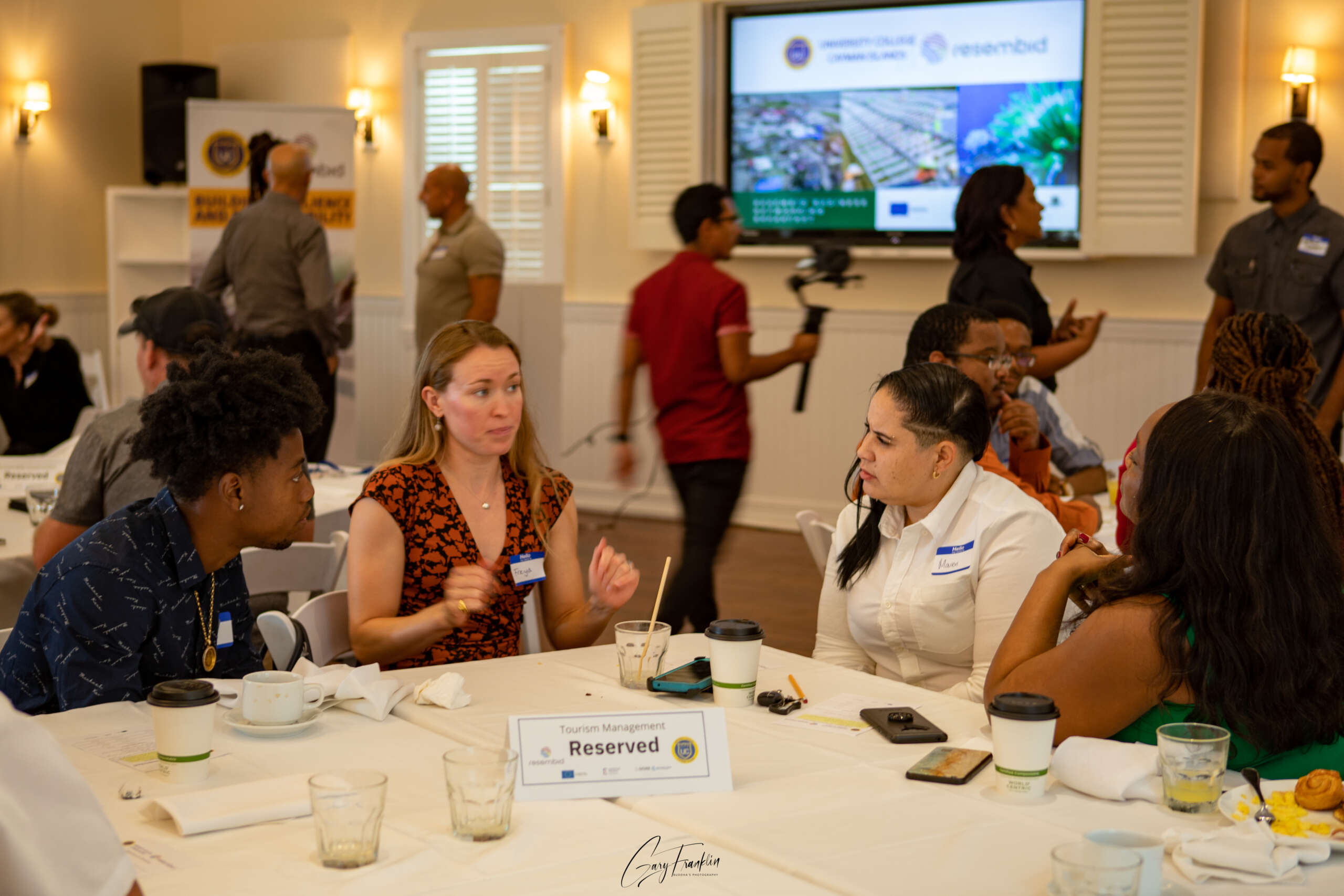
Short, accredited courses with recognised certifications
University president Robert Robertson, speaking at a breakfast event at the George Town Yacht Club on Friday that enabled the students to network with potential employers, said the practical, certified courses that were offered by UCCI made the students very employable as the certifications are widely recognised within the various industries.
Students on construction-related courses are getting internationally recognised NCCER certifications, from the US National Center for Construction Education and Research, while IT students are receiving CompTIA certifications from the Computing Technology Industry Association.
Citing reports that show a global widening skills gap, Robertson said there was clearly demand among employers for staff who already have vocational training and who can bring skills they have learned in third-level education, adding that, particularly in the United States, “you’re seeing a de-emphasis on the academic track and more emphasis on skills and competencies”.
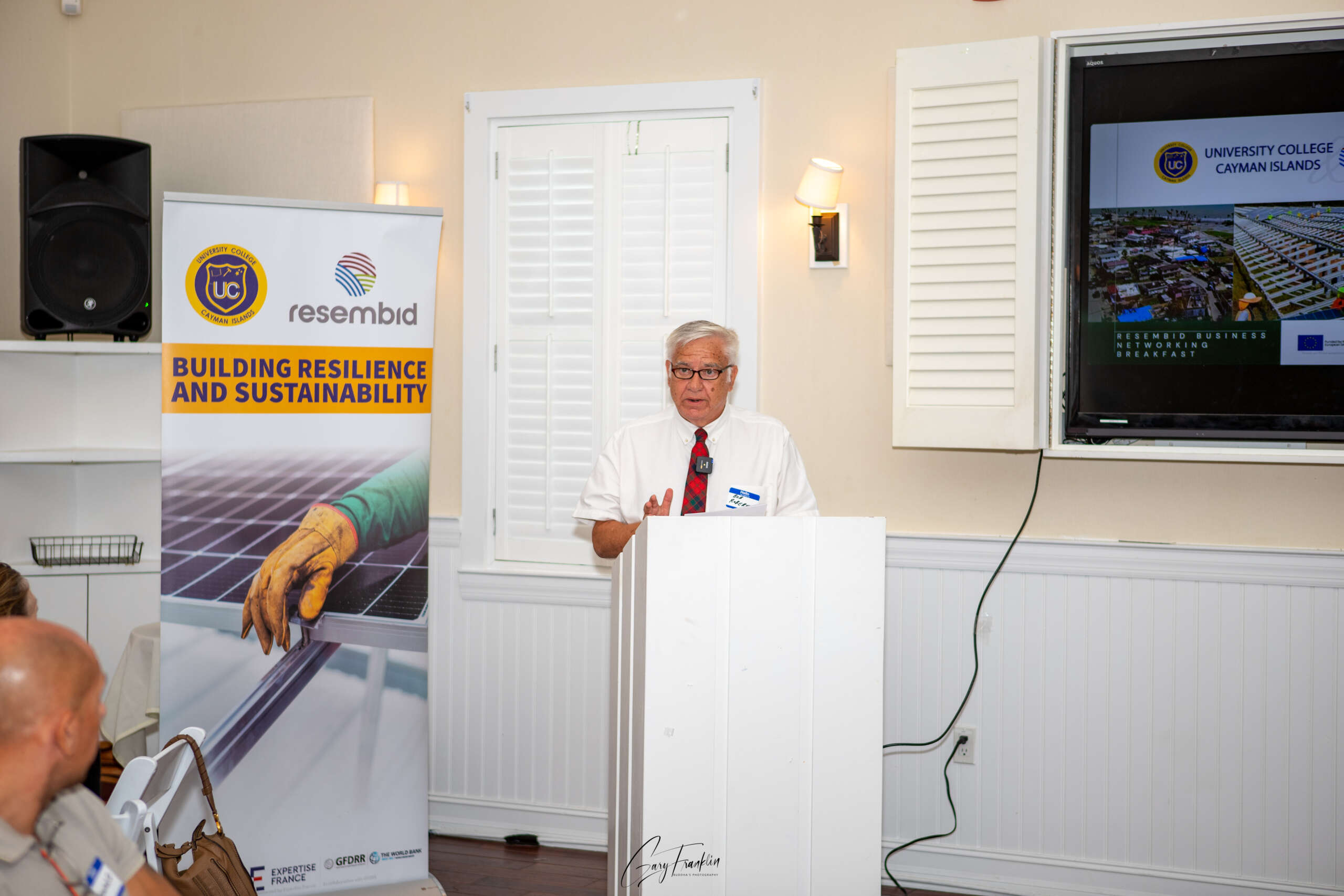
He said UCCI is working to narrow that skills gap locally, with “more focus on short, accelerated, industry-recognised certifications”.
“Investing in training young individuals for jobs, not just for today but jobs of tomorrow, should be a key focus for all of us,” he added.
Pairing students with potential future workplaces, where they can get on-the-job training, not only allows them to apply the technical skills they’ve learned, but it also helps teach “soft skills”, such as punctuality and how to effectively communicate with supervisors and peers, Robertson said.
There is also a benefit to internships for employers, he said, telling the attendees at the networking breakfast, “You can think of it as a long interview, to get somebody there and see if they can really do the job that they say they can.”
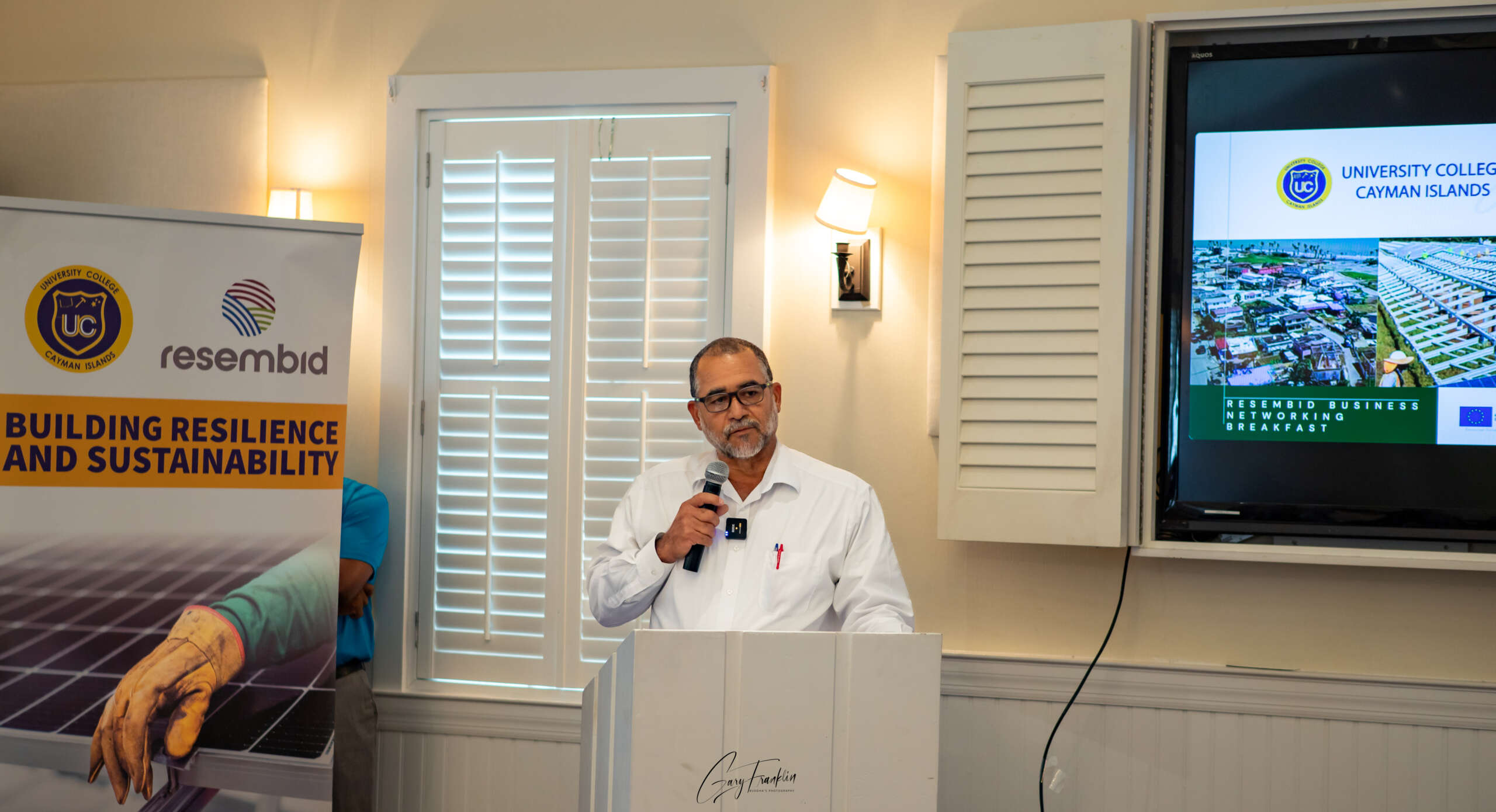
Joel Francis, deputy chief officer in the Ministry of Education, who also spoke at the event, noted that technical and vocational education and training, known as TVET, is often not respected in the way academic education is, despite the fact that, in Cayman, there has long been a demand for such courses.
“Every government comes and says they’re going to do it,” he said, adding UCCI, with its current RESEMBID courses, has now established a foundation that can be built on.
“They have NCCER, they have CompTIA, they have the automotive certification, etc. We’re hoping, in the next budget cycle, to really capitalise on that, and the RESEMBID grant will aid us in that, and we want thank them,” he said.
Walton said there appeared to be “resistance on the part of the young people” to take up TVET. “I think there needs to be some more work to encourage them, to make it easier for them, to remove obstacles for them to take it up, but we find that part of it is there is a stigma with TVET … [being] dirty work or lesser work”.
‘Win-win situation’
Another guest speaker at the event, Elizabeth Gayle, assistant financial controller at the Westin, is one of the mentors of the UCCI programme.
She spoke of the catch-22 situation of new employees taking up jobs for which they have no experience, and therefore, no expertise. “So, this programme is very, very important to have, especially the internship part,” she said, as she invited the potential employers in the room to meet the students and discuss opportunities with them.
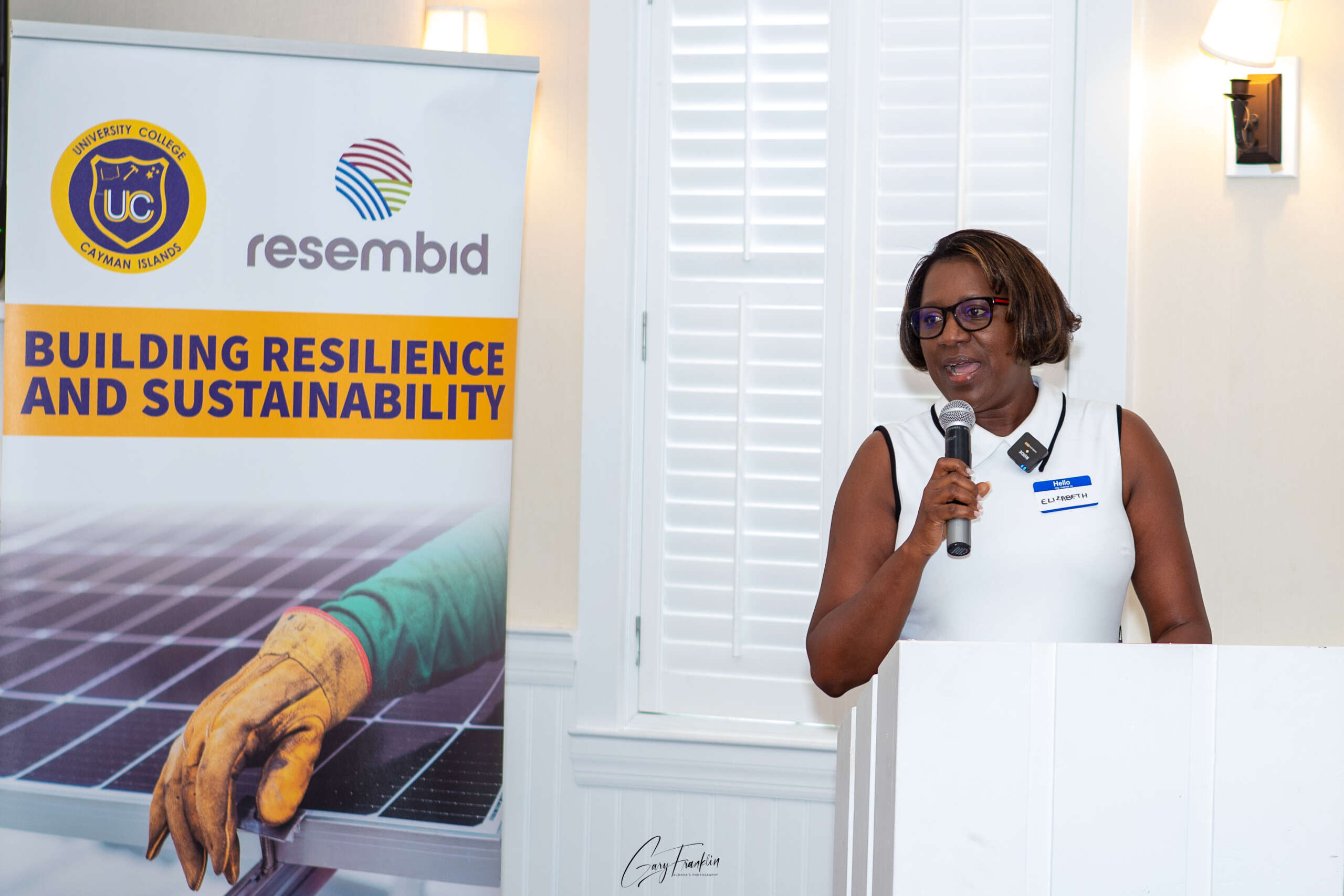
She described the programme as creating a “win-win situation”.
“We know that in Cayman we have challenges in terms of employment – getting people the right skill sets for jobs… and bringing people here to work,” she said. “In this programme, what we are trying to do is get the young people here on the island properly trained, so that, going forward, when they come to you … they can become valuable employees in your office. And that’s the ultimate goal.”
Student stories

ICT student Joseph Clarke spoke of what he had learned during the course and during his internship at the university’s IT department.
“My internship experience has taught me to use cutting-edge tools in technology to analyse data, develop software applications and manage complex projects. Through the experience, I have gained valuable skills in project management, teamwork and communication, which I believe will … help me in my future career endeavours.”
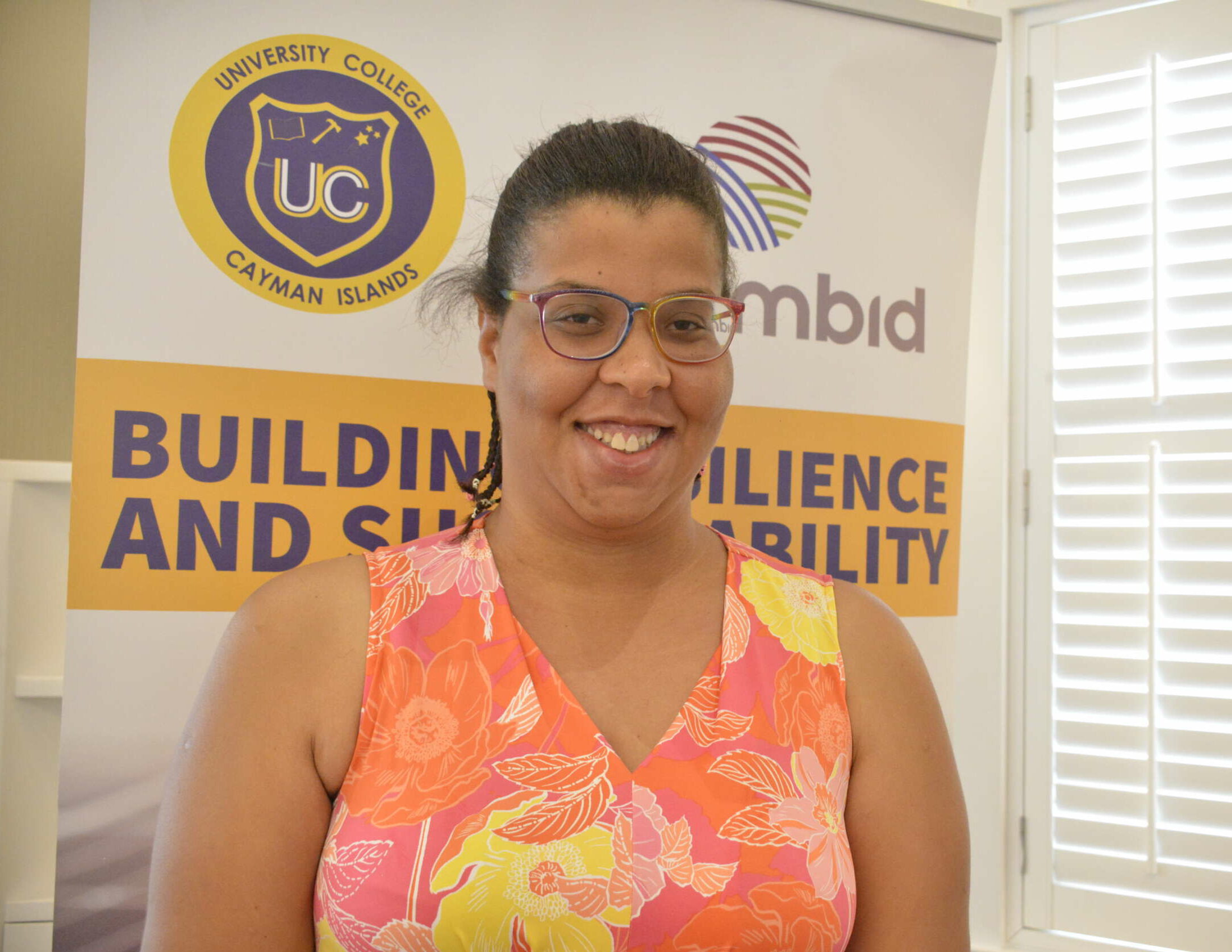
Another student, Krysten Martin, is currently doing an internship at Cellular Master Ltd., at the Waterfront Centre in George Town, where she assists with sales and customer service. She took up that internship after completing the hospitality course at UCCI, where she came out top of her class in her exams.
Martin, who also attends the Sunrise Adult Training Centre once a week, said the class had to “study a lot” during the UCCI course, but it was worth the time and effort, and she would recommend others to take part in the programme.
With her internship being based at a location on the waterfront, she encounters tourists daily, giving her an opportunity to interact with them and fuelling her ambition to work in the tourism industry.
These students and their peers are among the current generation of young Caymanians entering the workforce for the first time, and the UCCI courses and attendant internships is making that path easier for both them and their future employers.
Job-ready employees
Briannah Myles, from recruitment firm SteppingStones, was among those attending the networking breakfast. She’s enthusiastic about the UCCI programmes that are preparing a new generation of young Caymanians to join the workforce.
“Employers are looking for employees to be ready,” she told the Compass. “Not every employer is going to be patient and help with training and development for a particular person. One of the challenges that we find is that sometimes Caymanians, especially those coming out of high school, are not ready for the workforce. So, this is the missing piece that’s going to help build them up and give them exposure, and push them so they can effectively communicate,” she said.
Back in July last year, when the courses commenced, 55 Caymanians had been accepted and 54 began. Now, about 40 are still actively taking part, Cleveland Julian, who project manages the courses, says people had left the programme due to financial or time demands, but he intends to reach back out to them in the future to complete their certifications.
On Cayman Brac, 12 are taking the courses on the UCCI campus there.
By the end of the breakfast meeting Friday, four IT companies, one construction company and two HR departments from the tourism sector had expressed interest in taking on the students for internships or permanent work placements, Julian told the Compass.
RESEMBID – the Caribbean Overseas Countries and Territories Resilience, Sustainable Energy and Marine Biodiversity Programme – is funded by the EU and has been providing grants to islands in the region to help them recover from the COVID-19 crisis and to support sustainability.
Related Videos