

Residents of a West Bay neighbourhood are banding together to try to take action against a 192-apartment complex being built next door to them, about which they say they were never notified and is causing severe flooding.
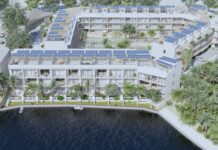
The Central Planning Authority in June 2020 granted Legoland Real Estate Co. permission to build the one-bedroom rental apartments on the Batabano Road site, opposite the Church of Christ. The clearing and raising of the land has worsened flooding of the already flood-prone area, according to neighbours who live immediately adjacent to the site.
At a public meeting attended by about 70 people at the Church of Christ on Thursday night, 27 April, residents said none of them received notification letters from the developer prior to the project being granted planning permission.
The planning hearing at which the application was approved was heard via Zoom on 10 June 2020, at a time when Cayman was just coming out of lockdown. The residents argue that as they would have been unable to get to their post offices during lockdown, they would not have been able to pick up or respond to the notification letters, but in any case, none ever landed in their post office boxes.
Legoland developer Eduardo Bernal says his company did send out notification letters regarding the project.
Director of Planning Haroon Pandohie, in response to queries from the Compass, said Department of Planning records of Legoland’s planning application indicate a registration date of 11 Feb. 2020 for the notices served, with the 21-day notification period ending at midnight on 4 March.
He noted that this date was several weeks before the 24 March 2020 implementation of COVID restrictions.
While it is too late for the residents to object to the construction via the Central Planning Authority, they are considering taking legal action.
Lawyer Kattina Anglin, who attended the meeting, advised the residents to review all the related documentation, form a committee and quickly decide if they want to bring an application for a judicial review which, if successful, could at least lead to a temporary injunction on the Legoland project while a court deliberates on the matter.
She said that if the notification letters were sent out when COVID restrictions prevented their delivery, then, taking into account the size of the project and its potential to affect so many neighbours, “perhaps that was a time when the government should have taken more diligence, more prudence, before passing the planning application that had been submitted, because the mail service had been so interrupted”.
She advised the residents, “First, have the planning department provide the information about the notification process” and then decide if their case has the necessary merits to embark on an injunction and judicial review.
Notification letters
Legoland owner Bernal insists that his company adhered to all the necessary planning requirements and sent out notices about the project to the neighbours within the notification area of 500 feet from the site.
“In fact, we sent two rounds of notifications,” he told the Compass this week.
The only objection to the application, he said, was by a neighbour who was against the project on the grounds the development affected her right of way through the Legoland property.
“We have been modifying the design to make sure we respect her right of way,” Bernal said. “We’re simply being good neighbours.”
The matter is scheduled to go back before the CPA on 10 June, he said.
Notification letters from Legoland, dated 22 March 2023, regarding the modifications to the project, were received by several of the affected neighbours.
Concerns have been raised at Central Planning Authority meetings over the years about non-receipt of notification letters.
Kenneth Ebanks, a former director of planning who spoke at the West Bay meeting, said developers seeking planning permission get the addresses of neighbouring property owners from the Lands and Survey Department. If those addresses are not up to date, then the registered letters sent by the developers are not received.
Ebanks urged property owners to ensure their contact information is up to date, and to check with Lands and Survey what address they have on file. Updating that information costs $50.
After a planning-permission applicant sends out a registered notification letter, the recipient has 21 days to respond.
Flooding problems
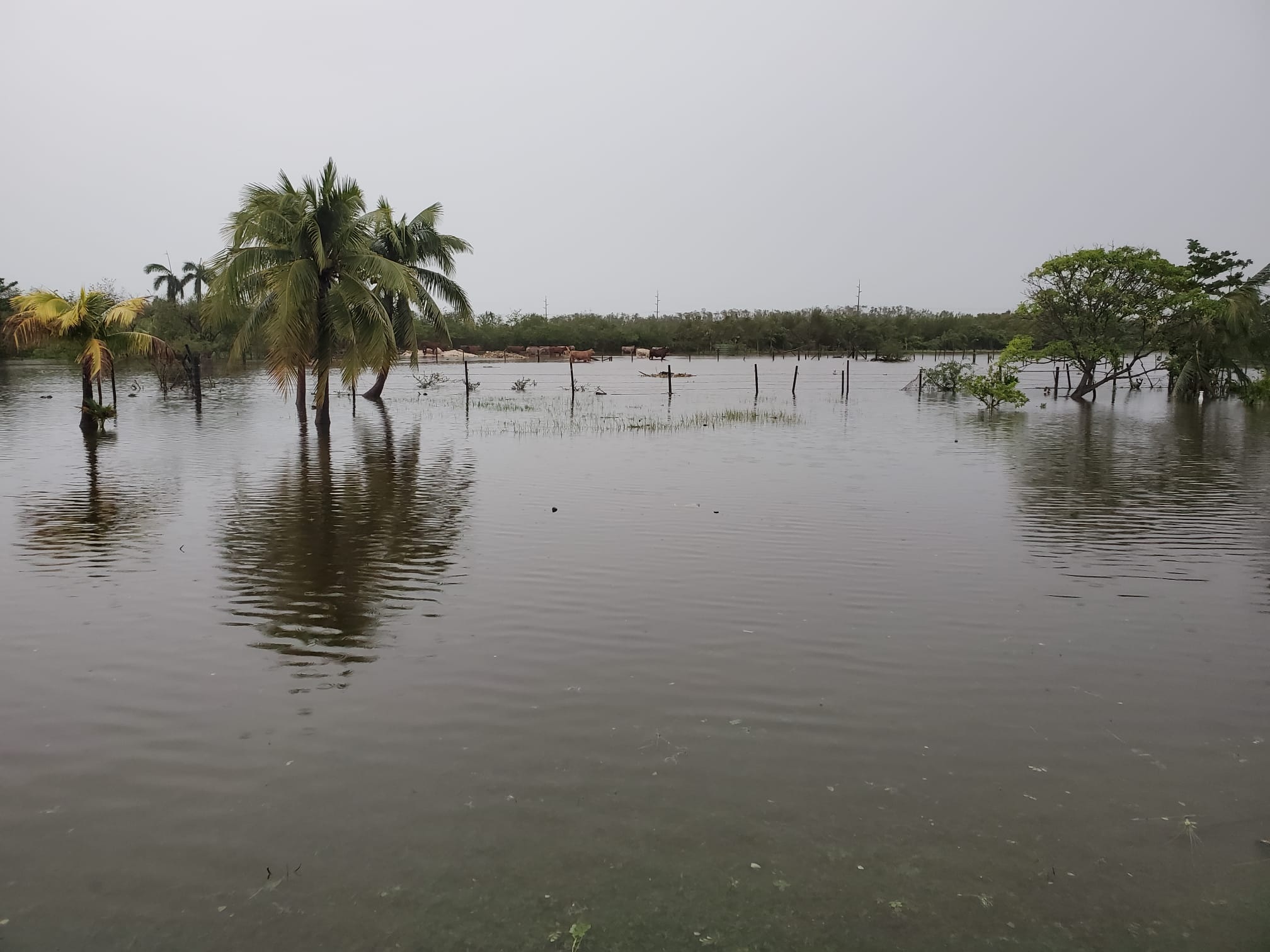
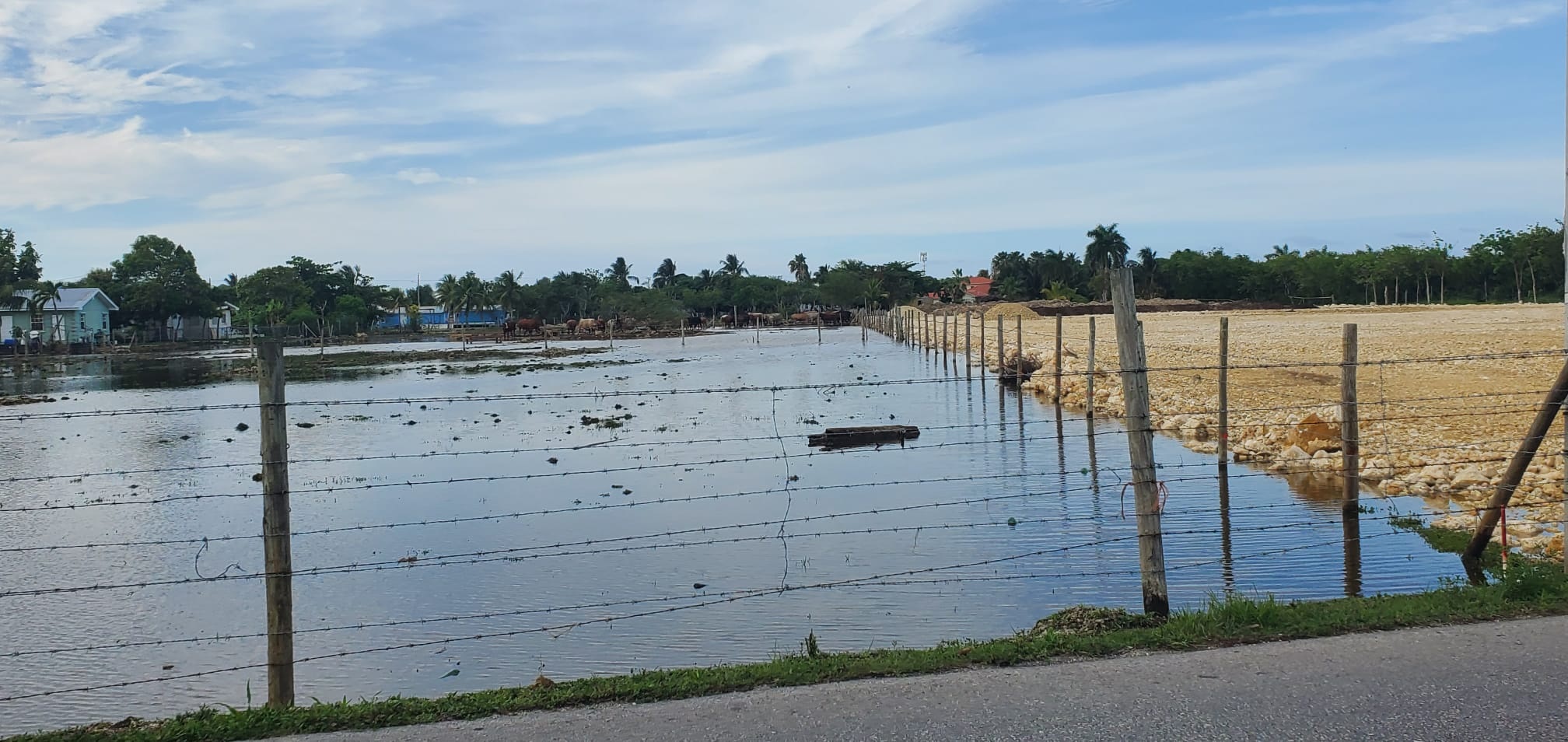
Several members of the audience noted that the area is already prone to flooding, and say elevation of the Legoland project has worsened the situation.
Eziethamae Bodden, whose property abuts the site, held up a photo that resembled a lake, saying, “This is my back yard from the last storm that we had.”
Bernal said the area is prone to flooding, and has been for many years.
“It is an area that always floods,” he said. “Now that someone is trying to develop something, they are trying to blame the development.”
“The flooding will be better after the development is finished,” he added, saying the deep wells Legoland will build will help alleviate the flooding.
“We have to comply with all the regulations in terms of a design of a storm water management plan which has to go to the (National Roads Authority),” he said. “The NRA makes us do all the necessary deep well and drainage work, to ensure that no water will come out from our land to any of the neighbours. That is what we are doing.”
He added, “That area is super low. That is why we are going to take every precaution necessary and do everything that needs to be done.”
He said Legoland had demucked and raised the land, as per the planning approval granted in 2020, but insisted that, according to the planning requirements, all water on the Legoland property “must be contained within our property boundaries”.
Also at the meeting was Edward Howard, NRA director, who told the audience that as Cayman does not have any storm water or drainage ordinances, each development has to engineer its own water-management for its specific site.
“What the Legoland development would have to do is put in enough storm drains so when the water falls on their site, there are enough drains to drain it,” he said.
Howard added that what is routinely ignored when it comes to the consideration of new projects, “is the fact that when you alter the terrain, when you change the elevation of the property, you alter the overall natural drainage pattern”.
“That is what keeps happening,” he said, noting that, invariably, when the NRA gets complaints about flooding in areas where there previously had been none, or flooding worsening in an area, there is almost always a new development nearby.
Related Videos










Wow, sounds like CIG should have required proper environmental assessment of this development proposal. Makes me really confident the East-West Arterial won’t cause similar problems. (See the NRA comments in this article about changing drainage patterns.) Pity there wasn’t a transparent process that CIG could follow to reassure the public that things are being done right.
With Grand Cayman being so low-lying, with alot of wet or swamp land used for normal water containment/ settlement prior to evaporation, and a very high Water Table (as near as 3-4 feet from the land surface), Deep Wells are really not an effective means of stormwater management.
As the NRA Chief said, we do not have a proper stormwater “ordinance” or Regulations/Plan. That is where we need to start.
It would be easy to learn how many notifications were returned with owner signatures and how many were returned “return to sender” because they were undeliverable.