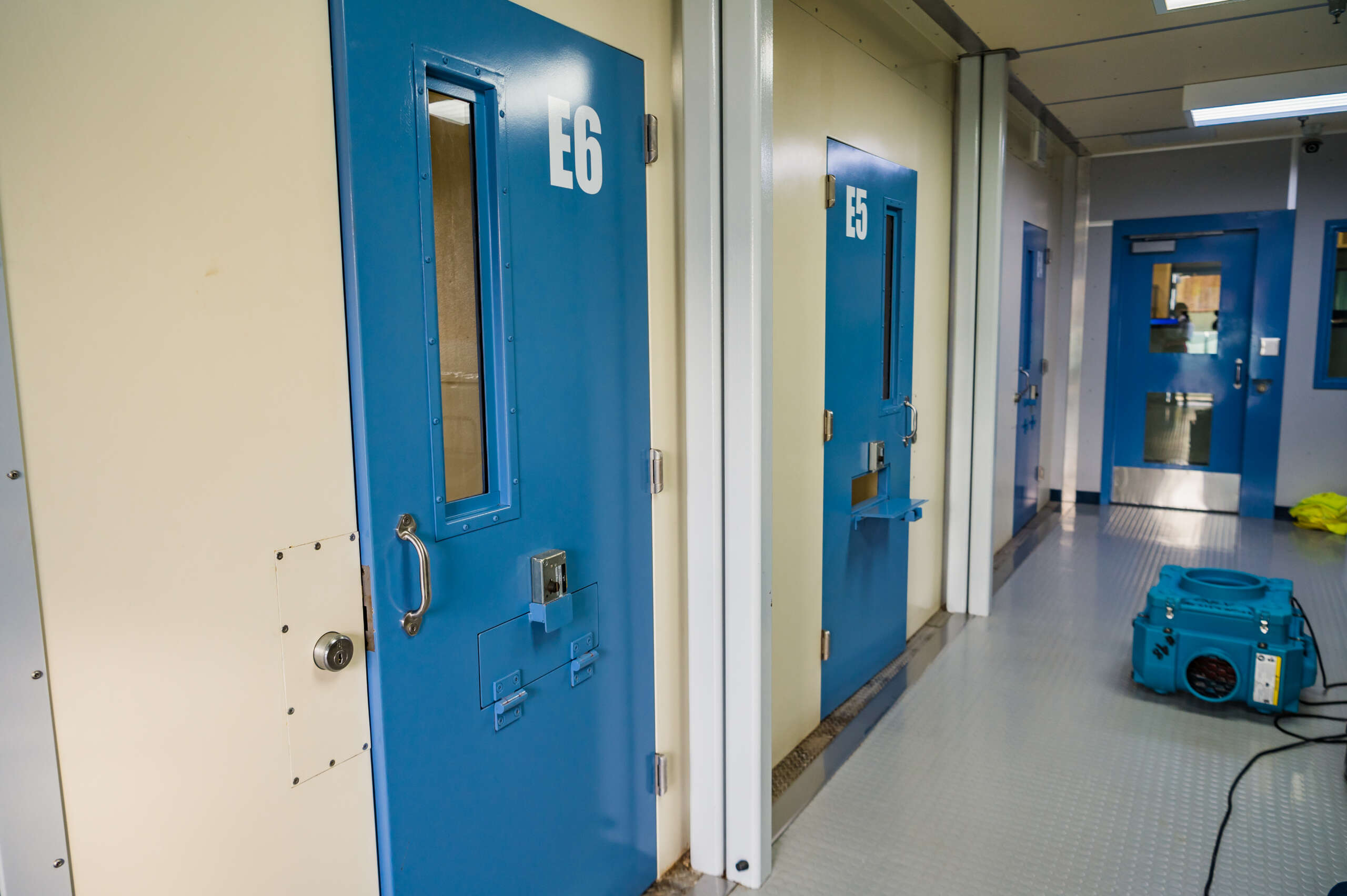
Cayman’s prisons have become ‘indeterminate holding areas’ for inmates with serious mental health issues, according to a consultant’s report which recommended ‘transformational change’ across the system.
Changes to the law, new facilities and significant investments in staff – including crisis teams that can respond to community emergencies – are needed as part of a root-and-branch overhaul of the islands’ mental health support infrastructure, the report states.
The recommendations were made by consultant Dr. James Hard following a visit arranged by the Governor’s Office in late 2019.
His proposals included:
- A secure mental health unit to be included in the design of the new prison.
- Outpatient treatment orders to be considered as alternatives to custody for mentally ill patients.
- Review legislation to consider how and where mentally ill prisoners can be held.
- Review the use of ‘governor’s pleasure’ to add more transparency.
- Crisis teams with relevant expertise to respond to mental health emergencies in the community.
- Cease the outdated practice of having prison officers administer medication to mentally ill inmates.
- Expand the nine-person capacity halfway house, known as the Enhanced Reintegration Unit.
- Invest in new psychiatrists and community mental health nurses.
- Invest in training for police, prison officers and others.
The findings were not made public but the report was obtained by the Compass under the Freedom of Information Act as part of our reporting into the case of Travis Webb, who is detained indefinitely in an inpatient ward at Cayman Islands Hospital after being found ‘not guilty by reason of insanity’ on an attempted murder charge.

Webb’s case brought to light numerous challenges within the system. His family says they had nowhere to turn for help when he began displaying erratic behaviour months before the incident that landed him before the courts.
And the absence of a secure mental health facility or clear procedures for his eventual release left him languishing, initially in Northward Prison and now in the hospital’s acute mental health care unit, with no idea if or when he will be released.
Hard’s report raised concerns about many of the same issues highlighted in the Webb case, and made a number of ‘high priority’ recommendations to improve mental health provision in the community and in the prison service.
Concern over indefinite detention
Chief among his concerns were gaps in legislation and infrastructure that can result in mentally ill inmates being detained indefinitely in prison.
Current laws allow for anyone who is accused of a crime, and is either not fit to plead or is found not guilty by reason of insanity, to be held ‘at governor’s pleasure’, meaning they can’t be released other than by order of the governor.

Such prisoners must be held at a ‘place of safety’ – either Northward Prison or, in some rare cases, the acute mental health care unit at the hospital.
Hard’s report cautions that inmates with ‘serious mental impairment’ are being detained in a prison setting for ‘extended periods of time’ with no clear mechanisms for their eventual release.
He recommends legislative changes to designate alternative options, including community supervision orders, to prevent “the prison system inadvertently providing an indeterminate holding area for people with serious mental health issues”.
Longer term, the consultant wrote that Cayman will need to invest in a secure mental health care unit, either as part of a planned new prison facility or as a separate project.
This would be distinct from the long-term residential mental health facility planned for East End, he said.
“The key considerations for such a facility would be that it would need to be commissioned as a ‘health’ provision rather than as part of the punitive custodial setting,” his report stated.
No 22-hour lockdown
In the interim, Hard wrote that the practice of housing mentally unwell prisoners in the high-risk unit should cease.
“It appeared that prisoners were admitted to the unit either for punishment or because their needs could not be met elsewhere in the prison,” he wrote in December 2019.
A number of prisoners in the unit had “significantly deteriorating mental health issues” and locking them down for 22 hours a day only served to make those conditions worse, he noted.
Crisis teams
Addressing concerns around the reporting and diagnosis of mental illness in the community, the consultant outlined issues around a lack of psychiatrists, mental health nurses and other key personnel.
Compass Investigation: Travis Webb
He proposed that a mental health nurse be hired to support police custody provision and that ‘crisis teams’ be set up to respond to community emergencies.
Such teams could respond to the needs of “an acutely deteriorating mental health sufferer in the community to reduce the risk of escalation to the point of offending”, the consultant wrote.
The report added, “It was highlighted on several occasions that the current workforce provision of Community Psychiatric Nurses was severely under-resourced and could not meet the various demands that they were responsible for, which appeared to include monitoring of patients who were being seen and followed up for ongoing mental health treatment under the psychiatrists; the monitoring and reporting to the Mental Health Court for the people on Assisted Outpatient Treatment Order; as well as some ad-hoc crisis management.”
It also cautioned that general practitioners’ recognition of mental health issues was variable, and training was required for doctors, as well as for police, teachers, social workers and prison officers, among others.
Related Videos