


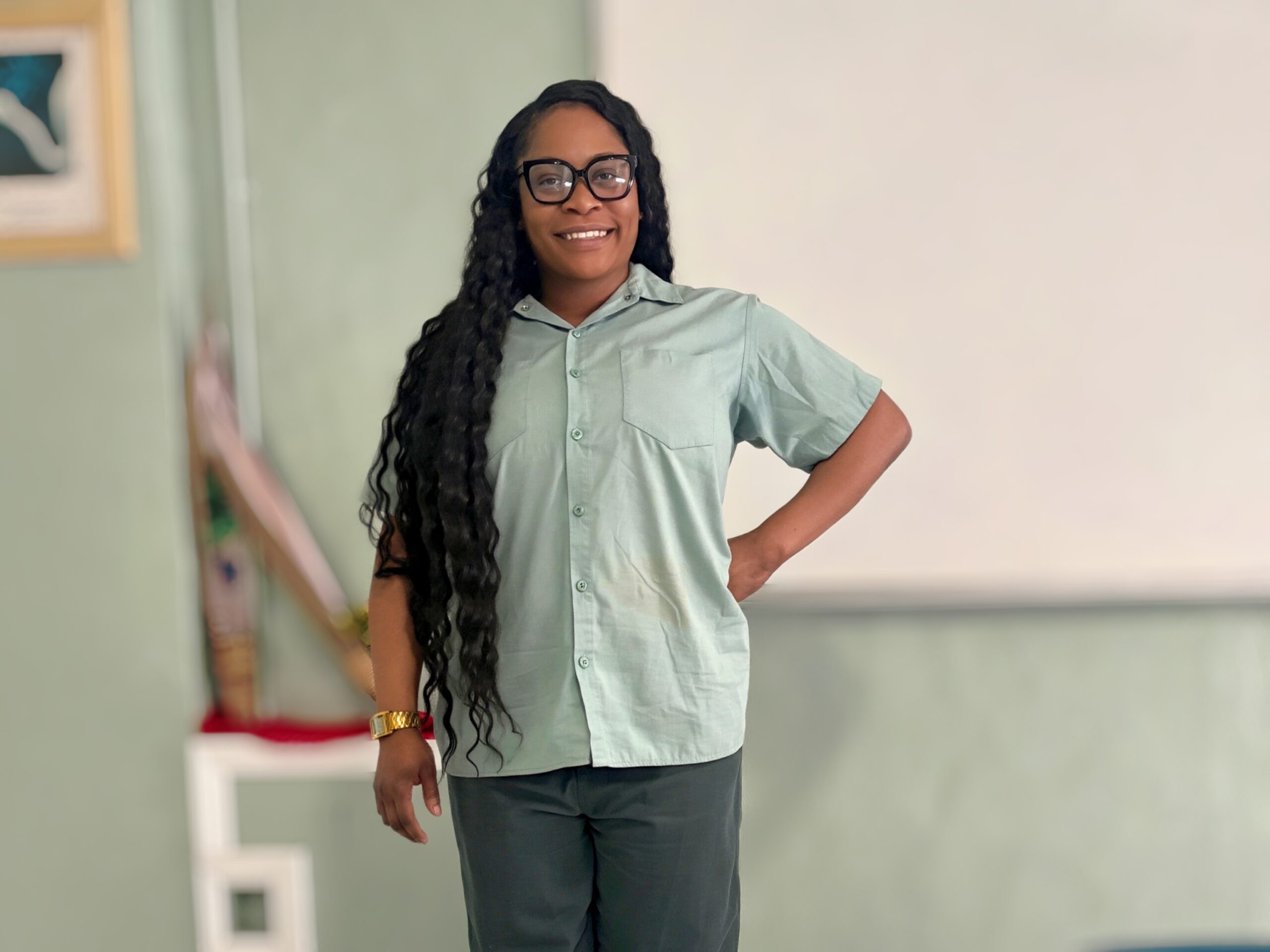
By 6.30am each morning, the four dorms at HMP Fairbanks, the women’s prison in Grand Cayman, come to life.
For inmate Kasnique Cupid, the morning starts in stillness. She sits with headphones on, a CD player resting in her lap, breathing slowly and with intention. “I do my breathing exercise just so I feel nice and vibrant,” she says.
The ritual is one way that she has tried to regain a sense of control after four years in prison.
The routine that follows is all too familiar. Breakfast is simple – a hot drink and fruit – followed by the same question each day about lunch.
“Chicken or fish, chicken or fish, chicken or fish” she says with a sarcastic drone.
By mid-morning, the yard opens. Some women go outside immediately, drawn to the heat and the brief sense of openness. Others stay inside. Motivation fluctuates. Prison life has a way of flattening it for many.
On rare occasions, there are rehabilitation programmes, behavioural therapy sessions or educational offerings.
On most days, however, the hours just stretch.
“You just sit down,” Cupid says. “Because the classroom is closed … no rehabilitation is going on … you sit down in the fish tank, but there’s just no water.”
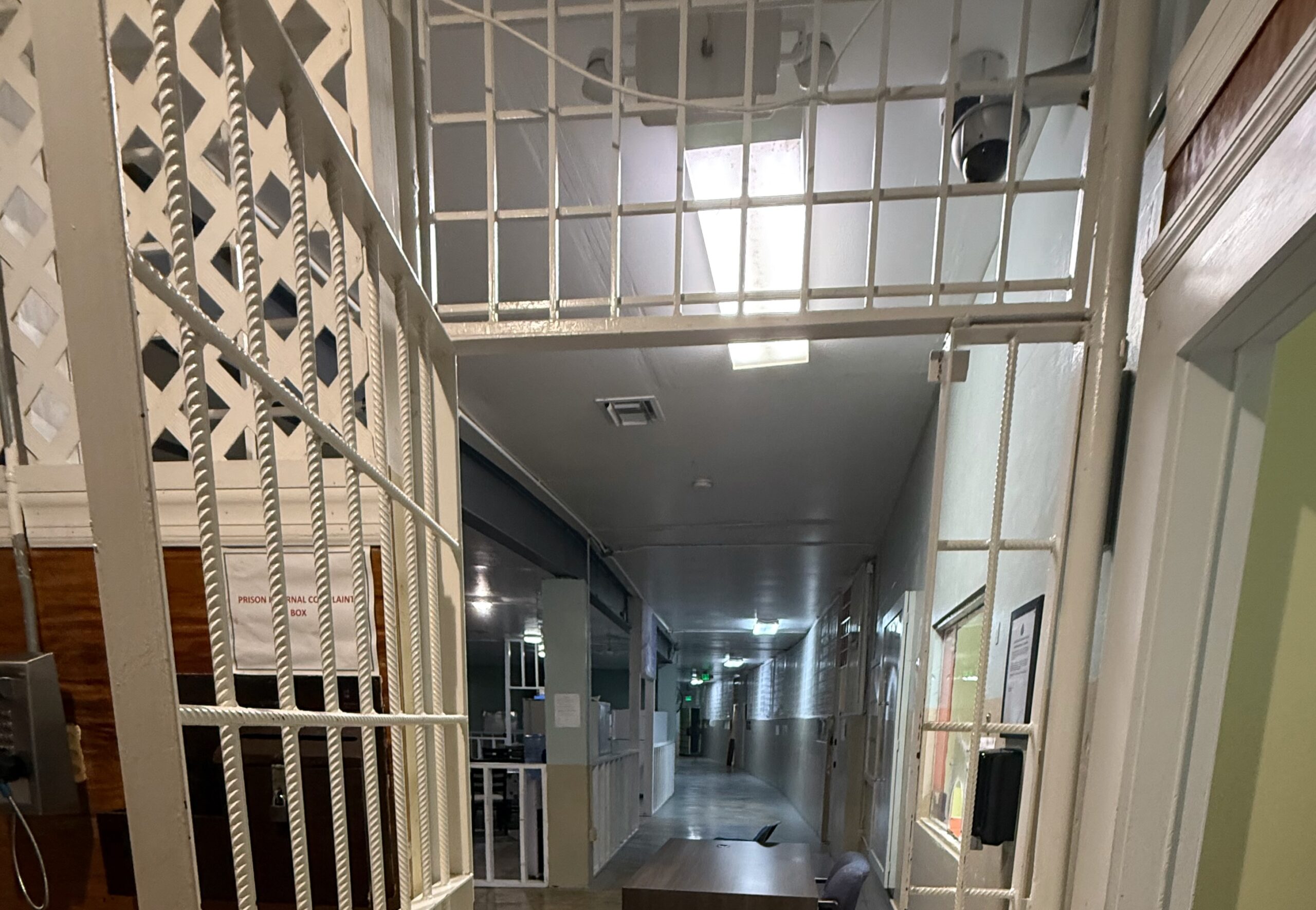
The prison itself is unmistakably institutional – tight dorms, shared bathrooms, practical lighting. But over that, there is a visible effort to humanise the space.
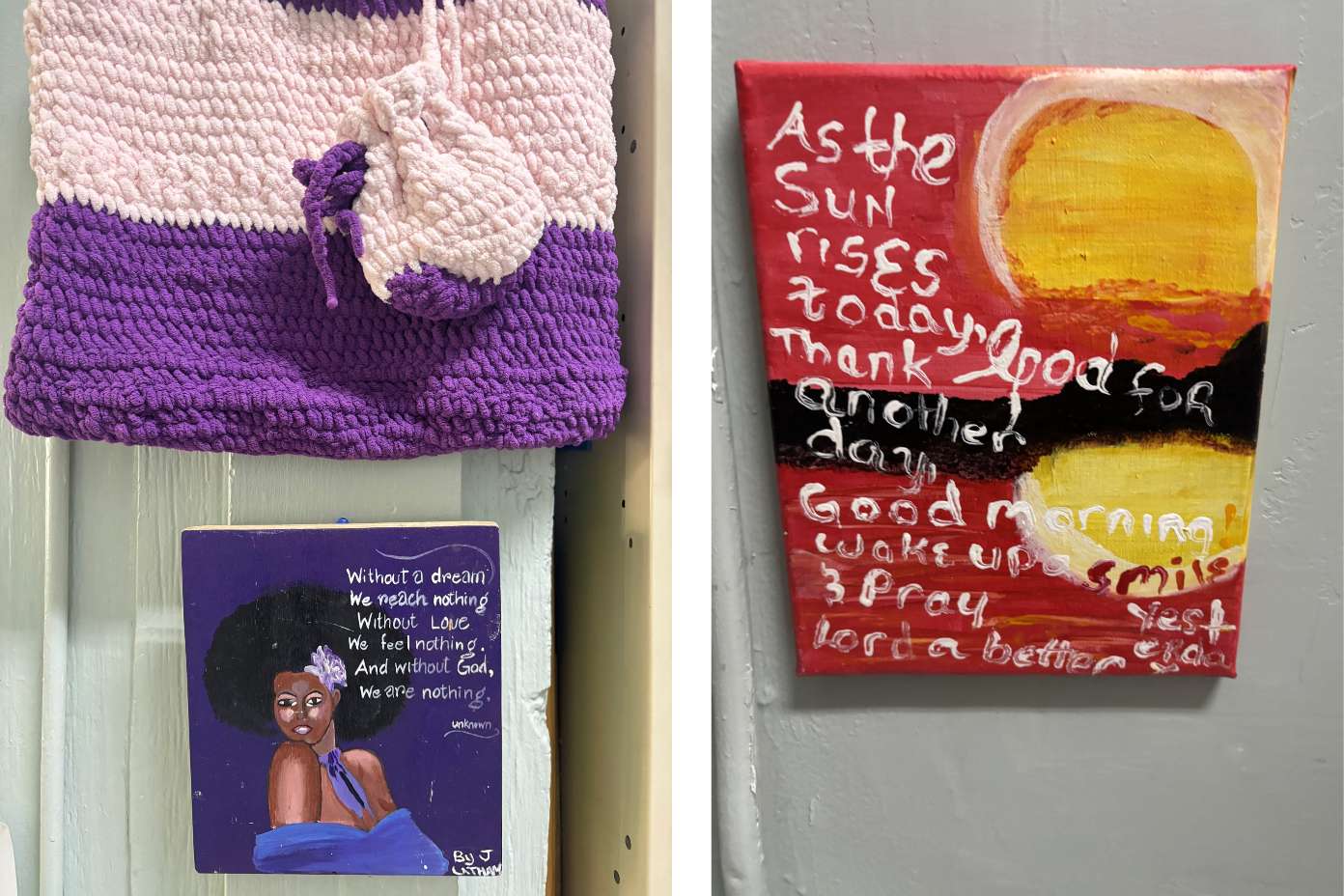
The walls are lined with hand-painted canvases carrying messages of faith, patience and self-worth. One, written in uneven white script against a red sunset, reads, “As the sun rises today thank God for another day … good morning … smile … yesterday is gone.” Another, in blues and purples with a shoreline, bears the scripture, “For with God all things are possible.”
In dorms, photos of children are taped together in collages. Beds are neatly arranged, softened by blankets and small personal items. Fabric curtains are used to create privacy where architecture does not.
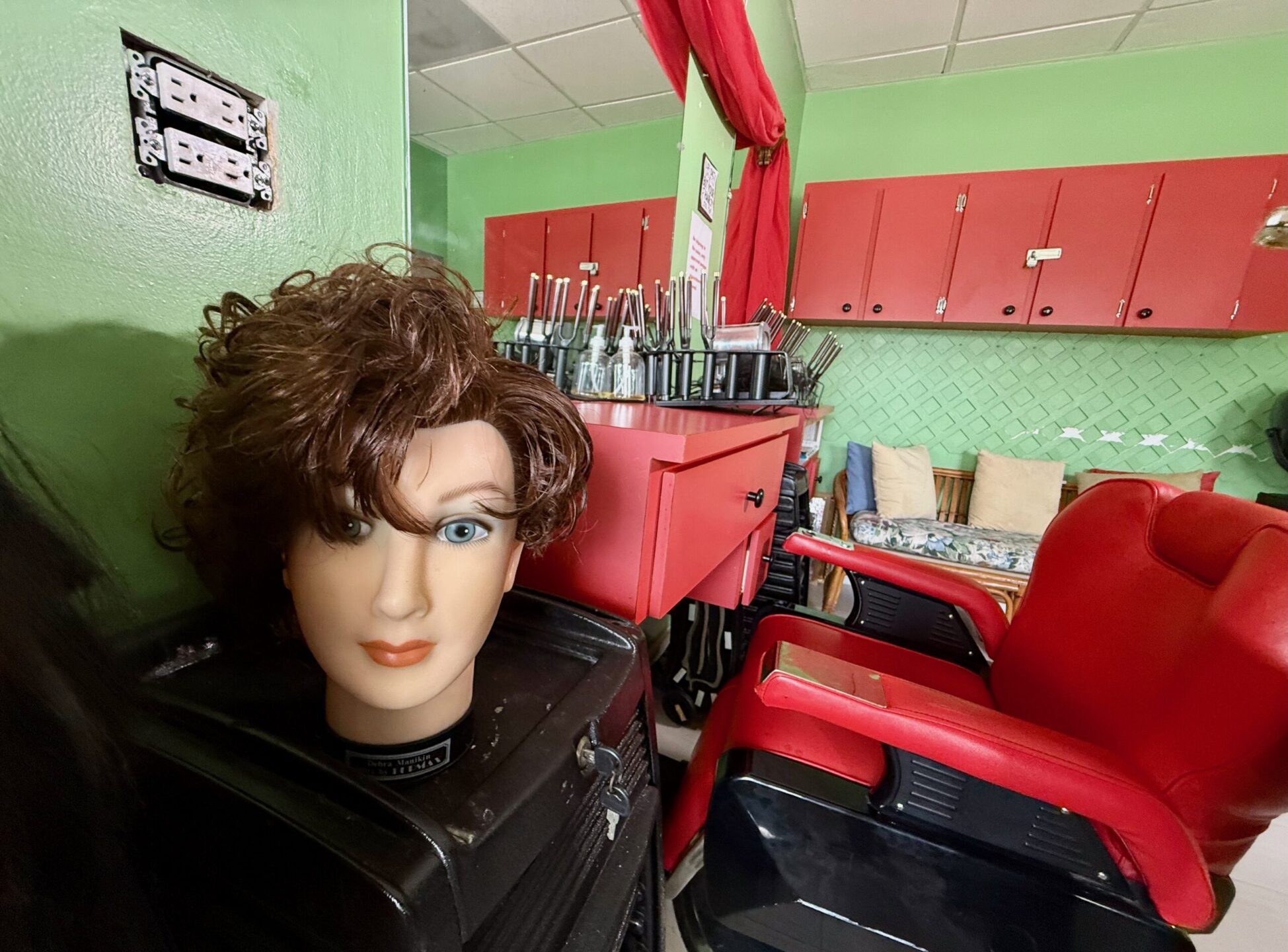
In one room, a hairdressing station stands out – bright counters, mannequin heads, tools in containers. It was once a classroom, a space for learning and imagining a life beyond confinement. For years it has remained unused.
Staff say it comes down to scale; there are too few inmates at Fairbanks to sustain regular, consistent programming.
The big picture
Set against the global picture, the profile of Fairbanks broadly aligns, though the proportion of women is slightly higher than average. Of the 253 people in custody across Cayman, 20 are women, roughly 7.9%, compared with a global figure of about 6.8%.
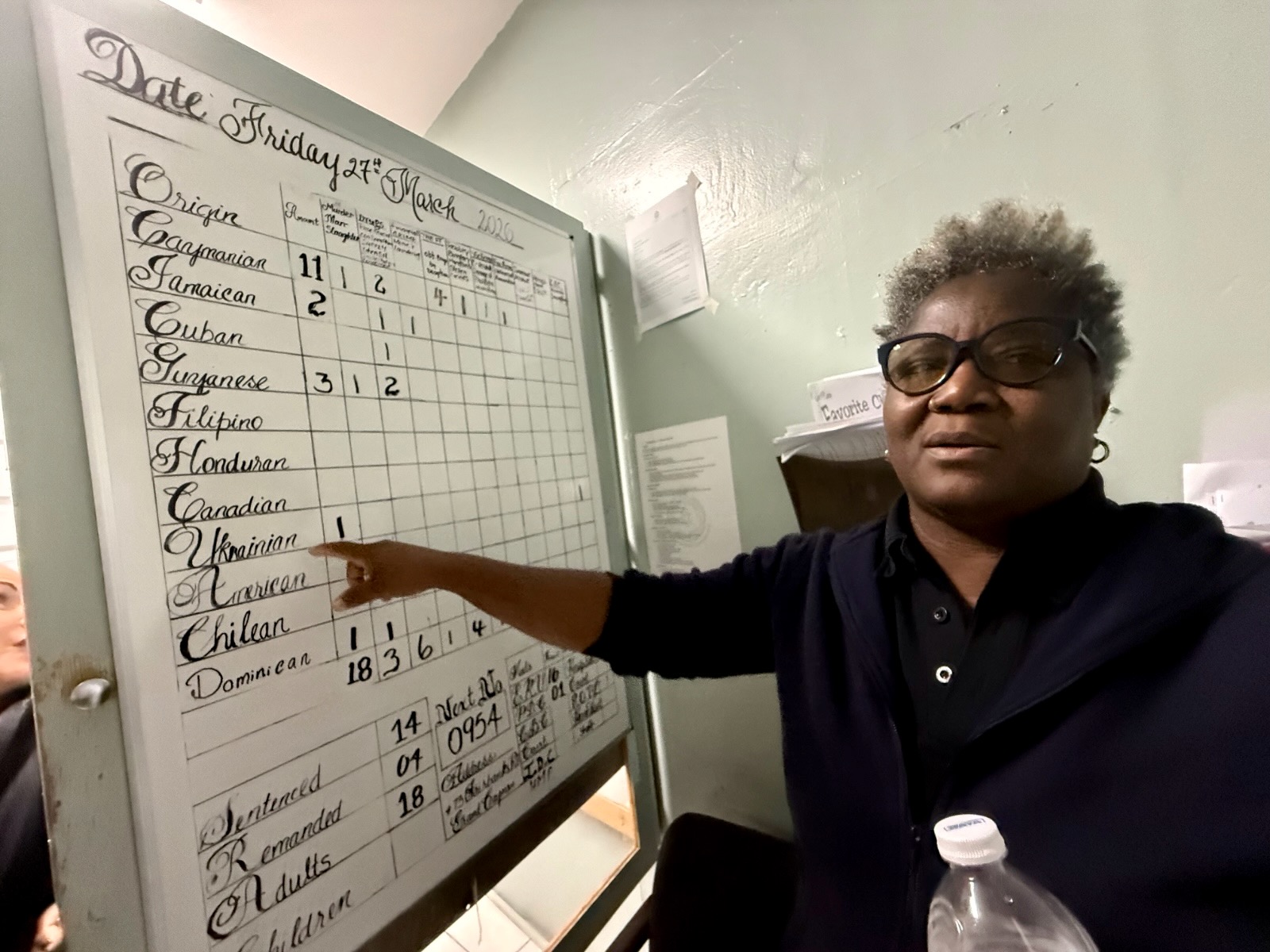
The Compass visited the women’s prison at Fairbanks in March and April 2026. During that period, the population rose from 19 to 20. Twelve of the women were Caymanian. The remainder included two Jamaican nationals, three Guyanese, and one each from Cuba, Ukraine and the Dominican Republic.
The offences fell into a relatively narrow range of categories. Drug-related charges were the most common, with six cases involving possession, supply or intent to supply. Theft and burglary accounted for another six.
More serious violent offences were present but less frequent, including three cases of murder or manslaughter and two involving violence such as assault or wounding. The remaining cases included one financial crime, one firearms-related offence and one linked to human trafficking.
Taken together, the data points to a population shaped primarily by drug and property-related offences, with a smaller but significant number of more serious crimes.
Staff say that dynamic is reflected in behaviour inside the facility. Female prisoners are not typically violent or aggressive.
“We hardly have physical confrontations,” says prison supervisor Karen Dixon. “They tend more to bicker.”
That pattern is not unique to Fairbanks. It reflects a broader profile of women in custody that has been observed across different systems and jurisdictions.
Catherine Heard, director of the World Prison Research Programme, has noted that women are often incarcerated for offences linked to poverty, including theft and low-level drug crimes, rather than for serious threats to public safety.
The road to prison
Within Fairbanks, the stories that lead women into custody differ, but they often converge around a common set of pressures and experiences.
The Office of the United Nations High Commissioner for Human Rights says that women’s incarceration is closely tied to gender inequality, violence and discrimination. More than half of women in prison report experiencing abuse in childhood.
Researchers describe this as cumulative victimisation – trauma that builds over time rather than arriving as a single, isolated event.
Keehon Moore, acting supervisor in the Re-Entry and Rehabilitation Unit of Cayman’s prisons, says those patterns are visible within the local system.
“The data shows that people who commit offences tend to have some type of trauma, whether that happened while they were children or as adults,” he says.
Cupid’s story reflects that pattern, though it is more often framed through the official account of her offence.
In February 2020, two masked men entered a Tortuga Liquor store in Governor’s Square, assaulted an employee and left with cash. The court found that Cupid had played a role in planning and facilitating the crime. She was sentenced to 10 years and six months.
At the time, she was known publicly as ‘Eve High Voltage’, an event promoter and a controversial figure.
What is less visible are the circumstances that came before. Cupid describes a childhood in Kingston, Jamaica, shaped by her father’s incarceration when she was 4, and a home environment defined by poverty.
Her mother, a teacher, supported the family, while they lived in a community marked by instability, where gang activity and violence were common and nights were often punctuated by gunfire.
“I used to hear a lot of gunshots,” she says. “I would jump off the bed and go under it.”
By her teens, she was living with chronic anxiety. “My heart would just start racing,” she says. “I was living on Xanax for many, many years.”
Around that time, she began gravitating toward the streets. Financial constraints meant her mother could not afford for her to complete her CXC exams, and she left school without sitting them, narrowing her options early.
She describes hustling to make money. She trained in cosmetology and became a first-time mother at 18. In her early 20s, she moved to Cayman, where she built a client base, but struggled to earn a stable income.
What followed was a patchwork of opportunities – bartending, temporary jobs and periods of instability. She married a Caymanian, had two more children, and continued working but, as she puts it, was “barely earning”, at times relying on support from the Needs Assessment Unit, now known as the Department of Financial Assistance.
Staff at Fairbanks say these trajectories are not uncommon.
“Most of the ladies that we get – if you check their history … they were problematic teenagers,” says Dixon. “So many entities fail them. … I think if they had gotten early intervention, then probably they would not be here.”
Within the facility, inmates describe overlapping experiences – financial instability, strained family relationships and ongoing mental health challenges. Studies suggest that up to 82% of women in prison report mental health problems.
Some offences appear directly linked to these pressures, including small-scale drug involvement, theft and financial crimes.
For many of the women at Fairbanks, these realities do not affect only them. They extend into another central part of their lives: motherhood.
The agony of motherhood
Almost every woman at Fairbanks is a mother.
During one Compass visit, five women sit together and speak about their children. “My son is 10,” one says. Another adds, “I have a teenager. She’s 13.” A third speaks of “a 1-year-old and a 6-year-old”. Around the room, the ages trace a map of lives interrupted at every stage of childhood.
Family visits are limited – typically once a week, and often no longer than 30 minutes.
Cupid understands that disruption from both sides. Her father was imprisoned when she was a child. Now, as a mother of three, two of them still minors, she finds herself on the other side of that divide. Luckily, unlike many of the women around her, her children still have a parent at home.
For most women at Fairbanks, that stability is absent. Many were raising their children on their own before entering custody.
“All of us here are single mothers,” one woman says, referring to the others in the room. “We’ve been raising our kids on our own.”
Their sentences extend beyond them, punishing children who are left to navigate their absence. One woman describes her special needs child crying through visits, asking why she cannot come home. Cupid speaks of her daughter being teased at school. Many rely on extended family to step in and provide care.
One former prisoner recalls the moment her son first saw her inside. “My boy was 3 when I went into Fairbanks,” she says. “It was hard. I became depressed. My son had separation anxiety. It affected my boy really badly, to the point where he got really sick.”
She remembers the visits as something almost impossible to put into words. “It was very emotional. For your child to come and see you in that horrible green prison uniform … I have no words to express what it was like.”
Others face separation across borders. One woman has not seen her children for four years because they live in the Dominican Republic and she cannot video call with them because the facility does not offer internet access to inmates.
Even where visits are possible, the rupture is felt. “The incarceration is that much more magnified because you don’t bond your heart with your children,” one woman says.
Supervisor Dixon describes the emotional distress of some of the younger children when forced to leave their mothers at the end of weekly visitation. “It’s touching seeing that,” she says. “It’s really touching. But our hands are tied. We can’t do anything.”
Globally, an estimated 1.45 million children have a mother in prison, and advocates say the impact can be profound.
“When a mother goes to prison, the family usually falls apart and the children have to go to social services or other family,” says Olivia Rope, executive director at Penal Reform International. “It’s a much bigger impact [than a man going to prison].”
For some, the strain deepens over time. “Their hugs get tighter and tighter,” Cupid says of her children, describing goodbyes that grow more difficult with each visit.
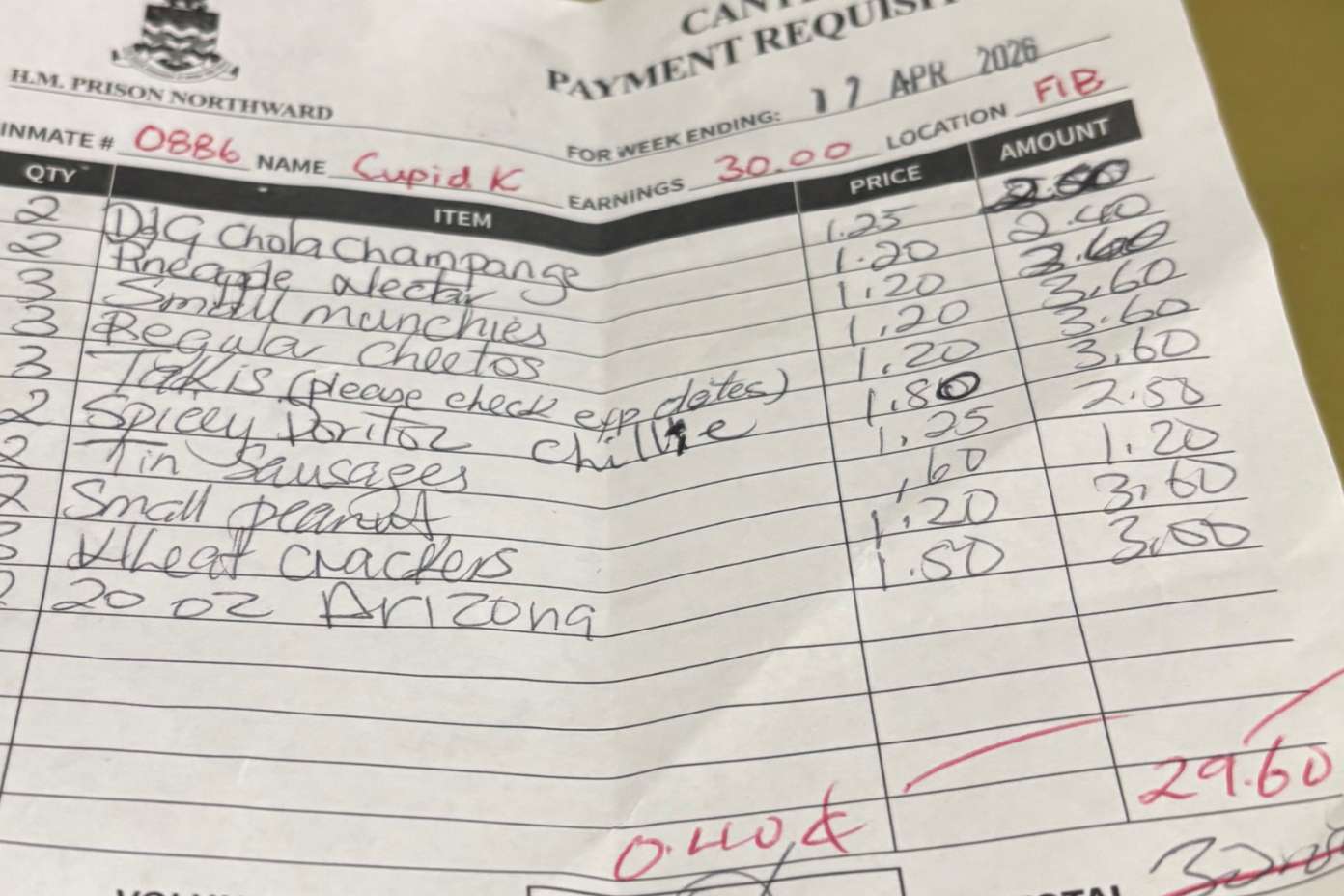
She uses the $30 she earns each week doing prison chores to buy them snacks – a small way, she says, of remaining present in their lives.
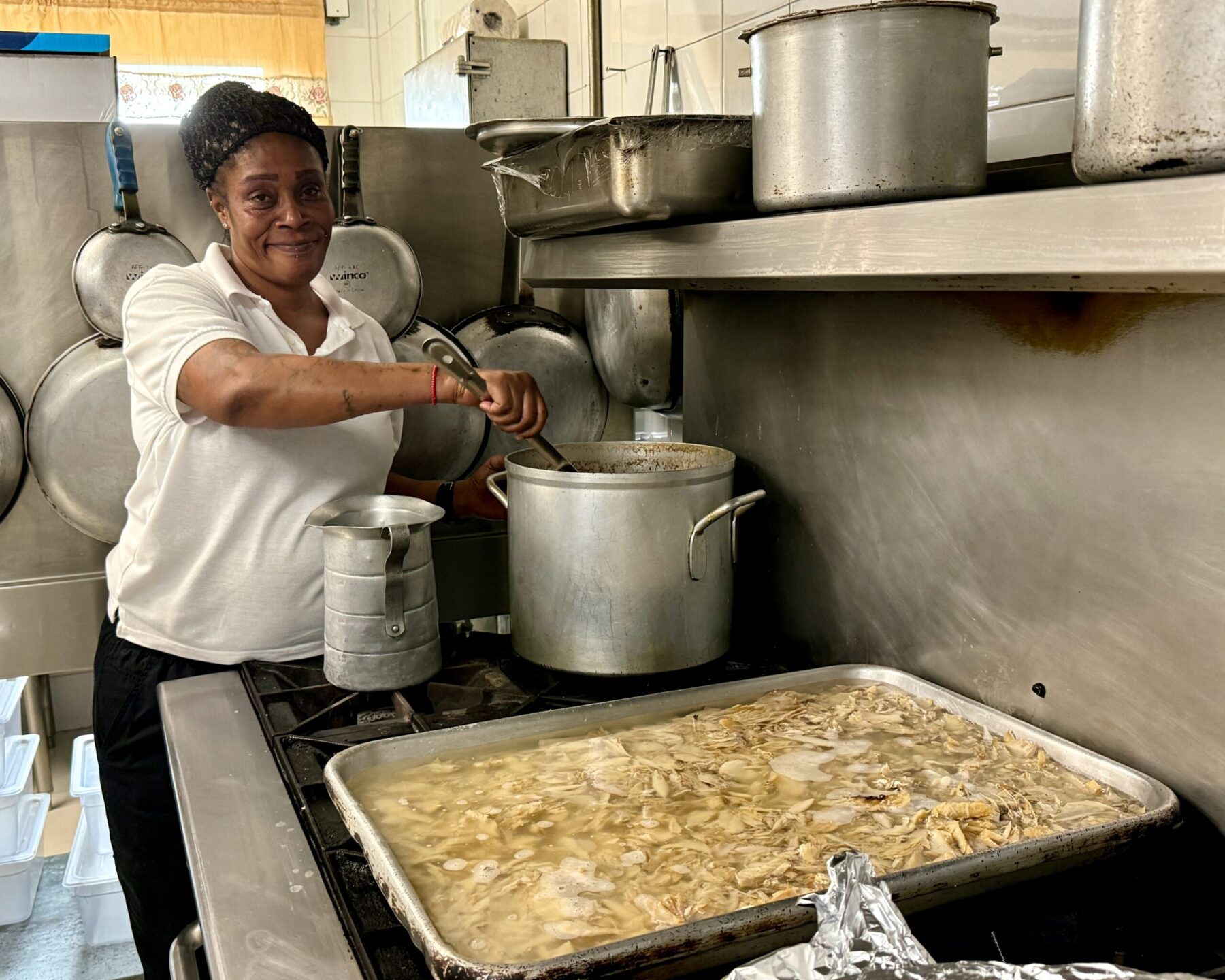
Cupid fills the hours where she can – braiding hair, working at the facility’s only functioning sewing machine to mend clothes or make new ones from donated fabric. She saves fruit from breakfast to make juice and prepares sweets for women in drug or alcohol withdrawal, small gestures to ease the strain of the day.
And the next morning, again, at 6:30, it begins.
A way forward … on pause
Education has become central to Cupid’s plans. She has completed more than 20 rehabilitation courses, earned a distinction in English and a merit in mathematics through City & Guilds, and passed Caribbean Secondary Education Certificate subjects, including English A. In August 2023, she was formally certified in both English and mathematics.
She finally received the exam certificates that kept her from formally graduating as a teenager, when her mother could not afford the fees.
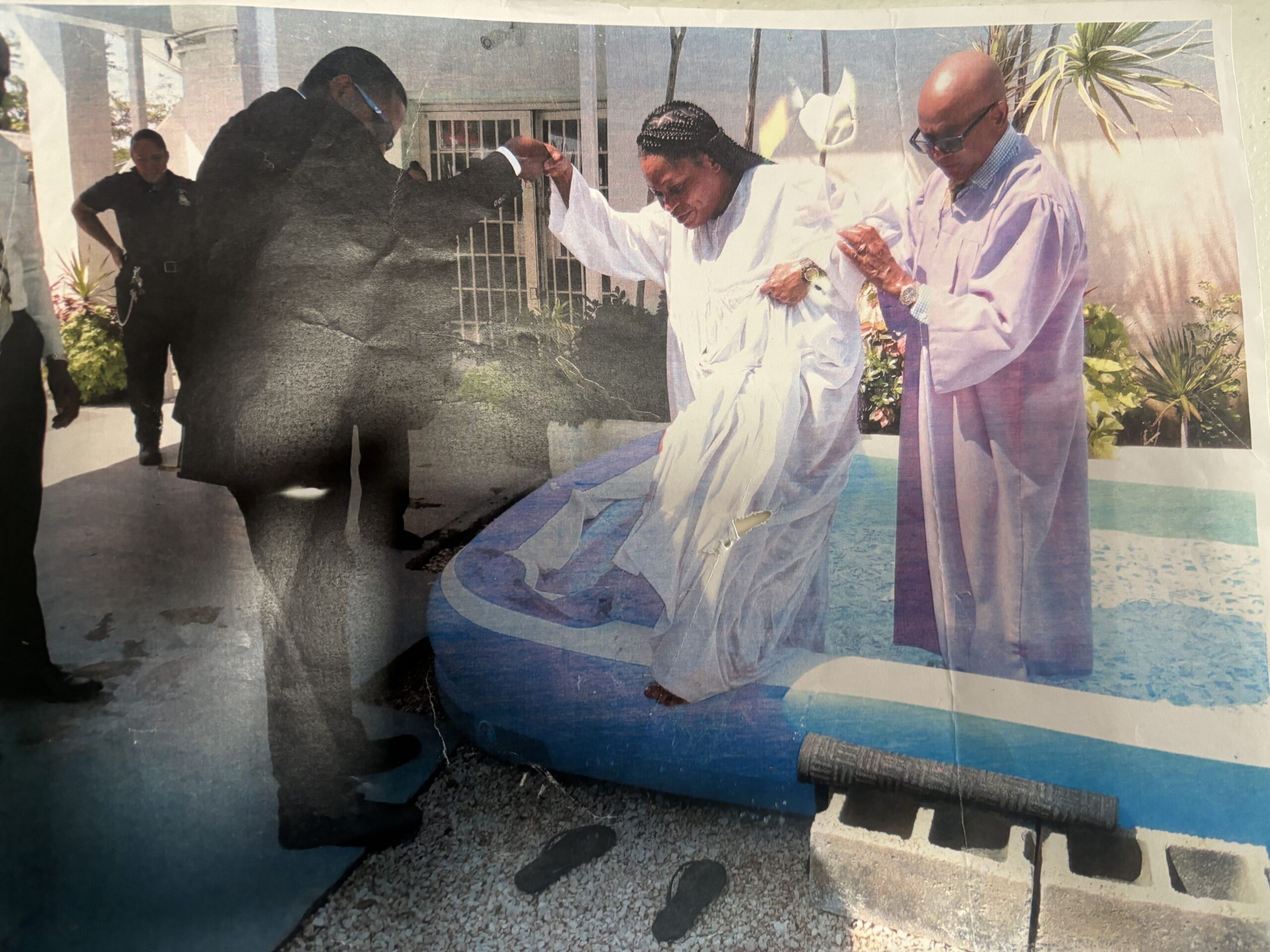
Her progress has been noted within the system: no infractions, strong academic performance, consistent engagement with her case plan. Her security classification has been reduced, and more recently, she was baptised.
In January 2025, Cupid was accepted to the University of the West Indies Global Campus to pursue a degree in social work, with a minor in youth development.
But, for now, that pathway remains out of reach. She does not have security clearance to attend classes off-site, and there is no internet access at Fairbanks to allow her to participate remotely. The opportunity exists but cannot yet be realised.
Asked whether he would support Cupid’s efforts to earn her degree, Minister for District Administration and Home Affairs Nickolas DaCosta said the system should enable rehabilitation where possible.
“We are doing all that we can to provide second chances: those who are committed to rehabilitating, those who want to do better and give back to their communities,” he says. “But it starts first with bettering themselves. So, if there is someone in prison that seeks an opportunity, I think that we should do everything that we can to facilitate that – obviously under strict monitoring, strict guidelines. But we need to be the place that offers those opportunities of rehabilitation.”
Cupid’s trajectory is shared by others within Fairbanks. Many of the women are first-time offenders. Many are mothers. Many describe lives shaped by circumstances that began long before their offences, and are making efforts to change direction within the limits of the system.
“A mistake in a moment doesn’t define a person for their entire life,” one inmate says.
Up for parole in 2028, Cupid has begun to think about what her life and legacy might look like beyond the confines of prison.
She speaks about a plan for a ‘Girls to Women Foundation’, focused on reaching young women earlier, before risky patterns take hold. She imagines bringing her work into schools, addressing factors that surface repeatedly in the lives of women on the inside.
“I want to give back, help others heal, and inspire future generations,” she says.
Related Videos








This article seems designed to emotionally manipulate the public into supporting more government spending on prisoners.
While rehabilitation is a noble personal goal, law-abiding Caymanians and residents are already struggle with a high cost of living and paying for their own children’s education.
It is not the responsibility of hardworking taxpayers to fund university degrees, internet access, or expensive new rehabilitation programs for those who have broken the law. We must prioritize our fiscal discipline over emotional stories.