

After two years in the making, Cayman’s first government-backed safety and quality certification programme for local egg farmers is now up and running, which is welcome news for Bodden Town farmer Harvey Stephenson.
The experienced farmer said he is hopeful this will see local eggs flying off the shelves.
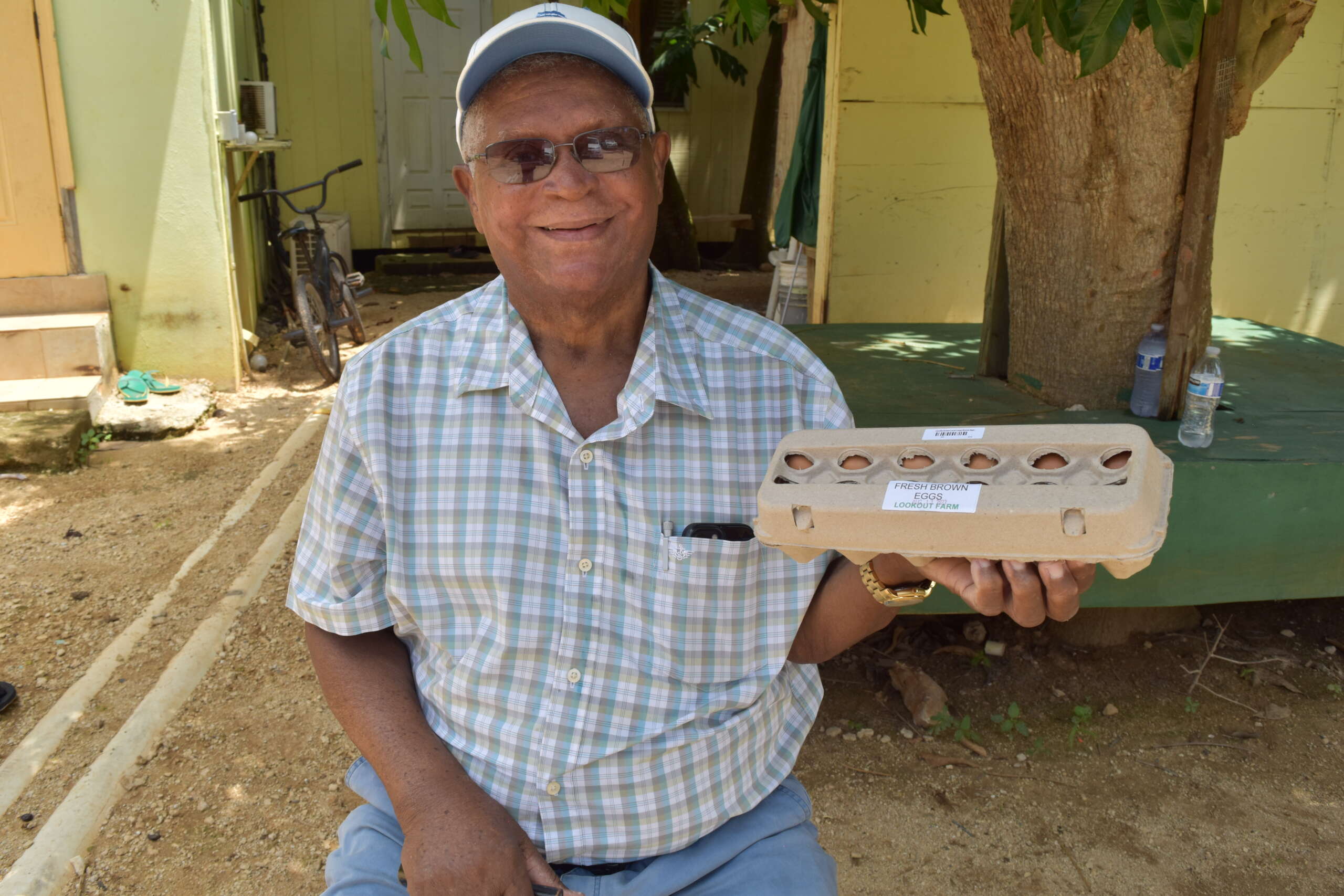
“They want everything to be perfect and to be better eggs than the imported eggs. In my opinion, that’s where we are heading,” said Stephenson, the owner of Lookout Farms and one of the first egg producers to be certified under the National Egg Strategy (NEST) pilot project.
However, he said, it will take support from the community for Cayman’s egg producers to grow into an actual industry and that means getting a fair price.
“The different supermarkets pay different prices, and that depends on the prices of egg overseas. When the eggs overseas come down, the supermarkets offer us a lower price. When the prices go up in the states, we get a better price, so we have to work with the supermarkets to be able to stay in the egg business because egg production can be profitable if we do it right,” Stephenson said.
Raising standards

A Ministry of Agriculture statement to the Cayman Compass explained that NEST is a key component of government’s plan to address the development of the domestic egg sector and it has moved into operational mode to increase the safety and quality of local production.
Agriculture Minister Jay Ebanks says the vision of the programme “is for a food- and nutrition-secure Cayman Islands and a key part of making it a reality is to strengthen and grow our domestic supply of table eggs”.
The aim of NEST, he said, was to increase market share of local eggs, improve market access for all table egg (for human consumption) producers and certify egg farms across the Islands.
“After two years of significant progress in laying the foundation for a National Egg Strategy, we are ready to begin operating this vital programme. Our goal is to improve the market share of local egg producers by 40% in 4 years, and a 100% increase in egg production over the same period,” he said.

Stephenson, who has 38 years of experience in farming, said he has learned some tools of the trade to increase his production.
“When I started, we were doing just about three to five dozen eggs per week and now we are up to just past 900. I’m looking forward to do a 1,000 dozen eggs per week, and I’ll see how the market goes from there,” he said.
He is encouraging young Caymanians to consider agriculture as a career.
“Anyone with a small plot of land like one or two acres can do a lot for agriculture… I maintain greenhouses where I grow spinach, callaloo, patchouli, along with the eggs,” he said, adding, “we all have to do it, but you must love it. You can’t do it as a chore. I love what I’m doing and that’s why I succeed. I make money from agriculture.”
Aiming for self-sufficiency
With 2,000 chickens in his Bodden Town farm, Stephenson is one of Cayman’s largest table egg producers, which is why he was one of the best farmers to test drive the NEST programme, Danny Palcu, ministry egg strategy officer, said.
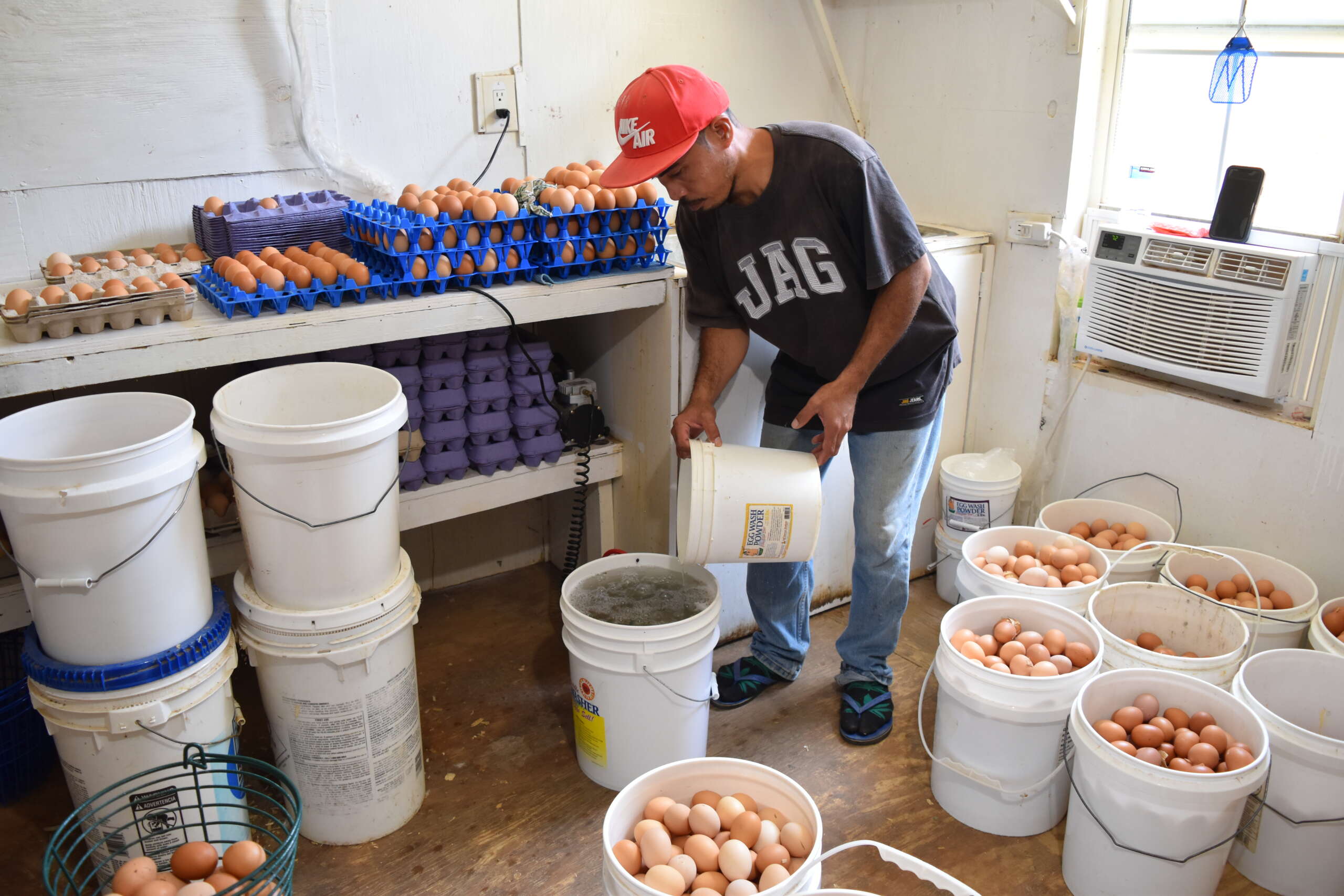
Palcu, who is leading the NEST programme, said the aim is to support local farmers to improve their efficiency as well as the safety of the eggs.
The goal, he said, is for the island to be more self-sufficient and “not to rely too much on the egg imports, and to produce more local eggs”.
Cayman, he said, is making strides towards building a local egg industry through the NEST programme and farmers are given a helping hand through equipment and materials to clean the eggs and to store them safely.
“It’s a long-term project. It’s not something that we can do overnight. It will not be possible without the dedication of the farmers who are willing to embark on this journey because sometimes investments are needed, changes are needed, in order to achieve certain standards,” he said.
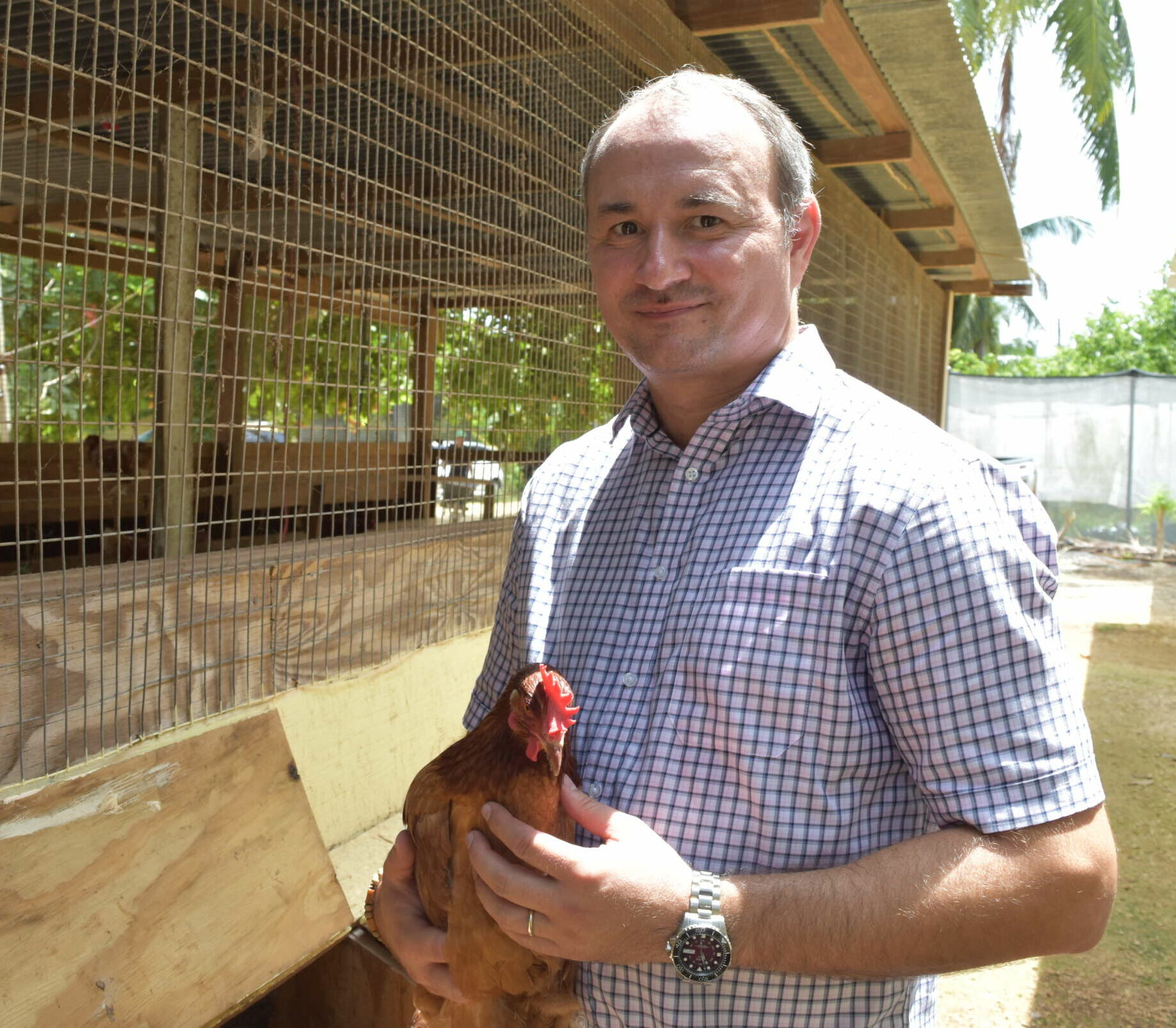
Those standards, Palcu said, include guidance on the proper welfare of the chickens, conditions in which they are kept, and hygiene standards for the eggs.
“We try to implement [this to] raise the confidence of both consumers and supermarkets that our local eggs are basically premium eggs and safe products for consumers. For that reason, we implemented the health hygiene standards with the proper procedures for egg collection, for egg washing, for egg storage,” he said.
At Stephenson’s farm, the chickens are spread over six coops, which are cleaned daily, and a separate building houses the eggs.
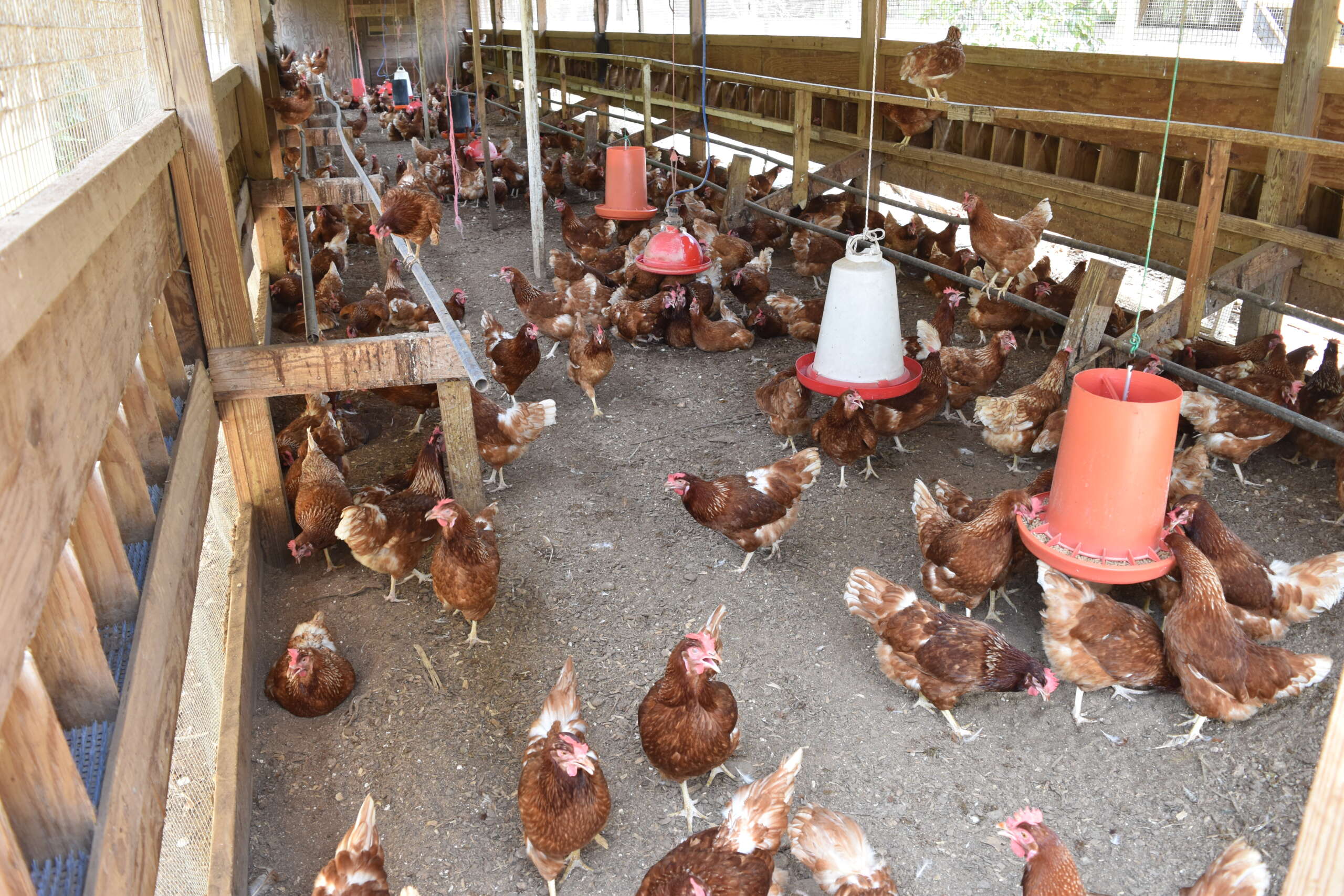
The chickens are cared for by egg production manager Elejandro Develleres, who also collects, sorts and runs the eggs through an egg-washing machine.
He said the entire washing process, during with a special egg detergent is used, can take about 15 minutes per batch.
Develleres, who has been with the farm since 2019, said he is happy to see the operations grow. He said initially he collected 300 eggs a day; now he collects 1,500 eggs daily.
“I’m just happy what I’m doing,” he said, adding that he would encourage the community to support local eggs because it takes a lot of hard work to produce quality supplies.
New egg cartons have been designed and purchased to enable the national egg quality certification components of the programme, the ministry has said.

Demoy Nash, senior policy advisor (agriculture), said the plan is to increase local egg production by at least 40% over the next four years.
“We believe that this is a realistic target, it is measurable, and based on the system that we have in place on the ground, we believe that this is attainable,” Nash said.
Related Videos










This is great. I will buy local eggs with this certification over imported eggs every time.