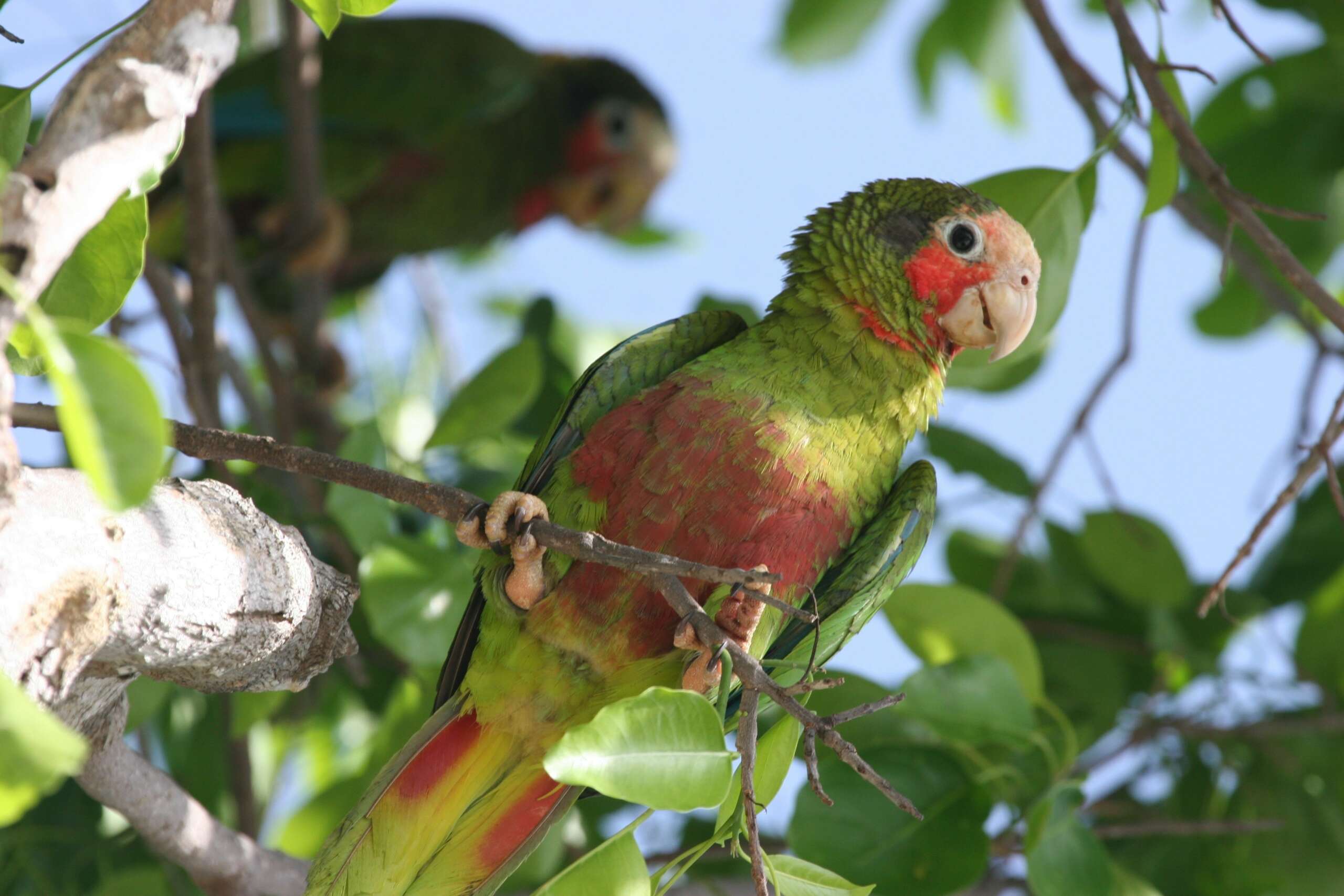
The long-term future of the protected Cayman Brac parrot could be at risk if a large area of its habitat is cleared to build a new high school, according to the Department of Environment.
The warning comes after the Ministry of Education submitted plans for a large school building, gymnasium and two staff housing buildings on Cayman Brac to the Development Control Board.
While the department does not recommend halting the project, it says that, if approved, land clearing should be limited and as much native vegetation retained as possible.
This will not only help to protect the parrot, which is not found anywhere else in the world, it said, but it can be used to provide privacy and sound buffers, low-cost landscaping and shading.
Mature dry forests
Architect plans for the nearly $50 million project were first submitted to the Department of Planning for public viewing in August.
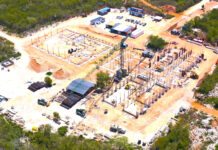
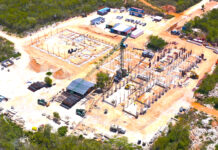
The drawings show a large school campus on the west side of a 59-acre Crown-owned plot which is bisected by Sunshine Drive, and staff housing on an 18-acre plot near the Cayman Brac Sports Complex and Public Pool.
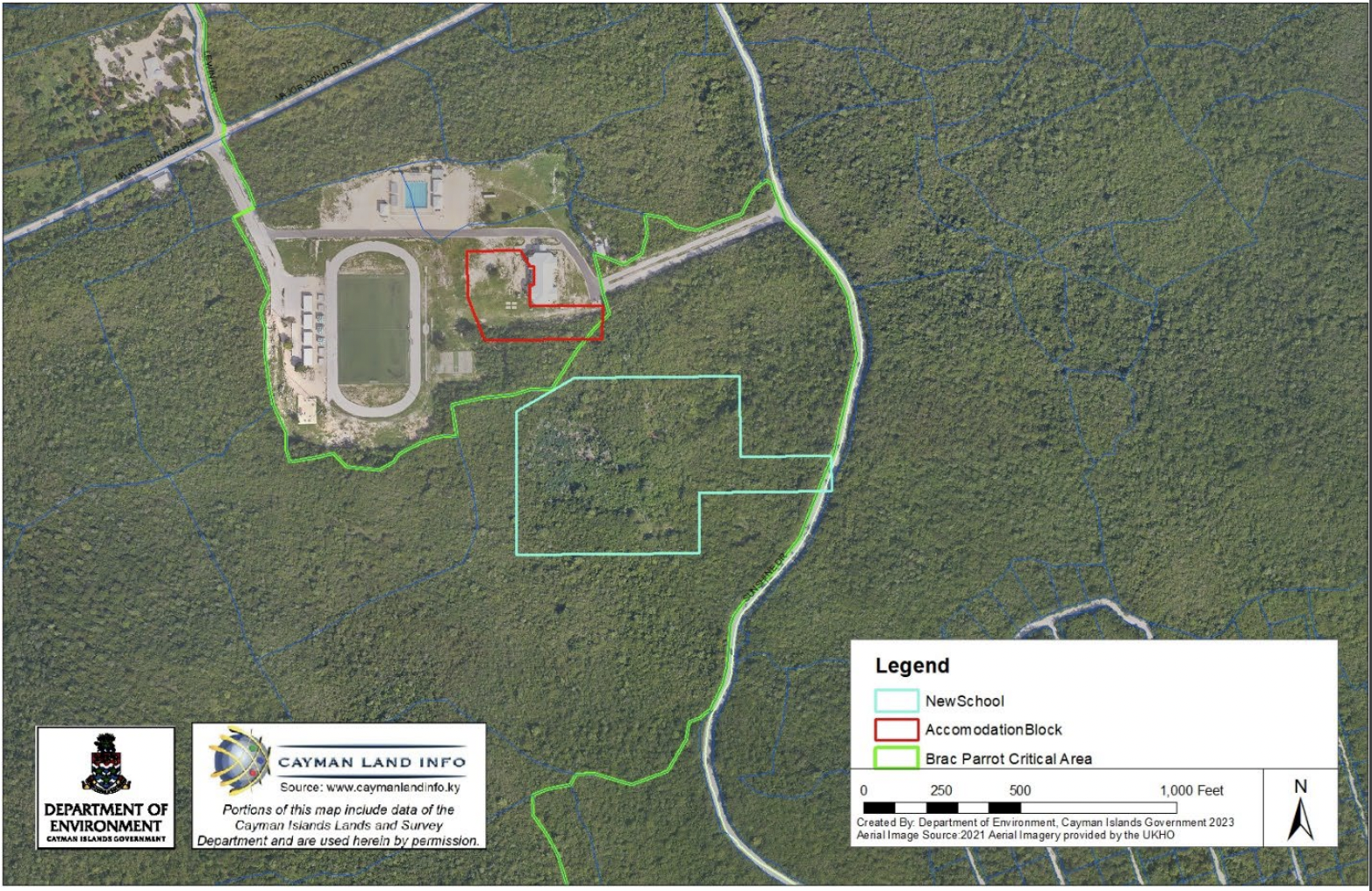
In the agenda for the Development Control Board’s 11 Sept. meeting, the DoE explained that the accommodation building has been planned on man-modified land.
However, the school building and gymnasium are set to be located in the middle of mature dry forests where the Cayman Brac parrot exclusively nests and breeds.
Preservation needed
Cayman Brac parrots have iridescent green feathers all over their body, a white eye-ring, red cheeks, black ear patches and brilliant blue wing feathers, which are only obvious when in flight.
They are distinctive from the Grand Cayman parrot because they also have a white forehead and a large maroon area on their abdomen.
The parrots are frugivorous – they feed on fruit, but also forage on young leaves and flowers.
They require large, hollowed-out spaces in trees to nest, which means they are dependent on a limited supply of existing cavities in forest trees, the Department of Environment said.
“Wholescale clearing of sites removes the possibility of any vegetation providing continued parrot habitat, nesting sites and food,” the department added.
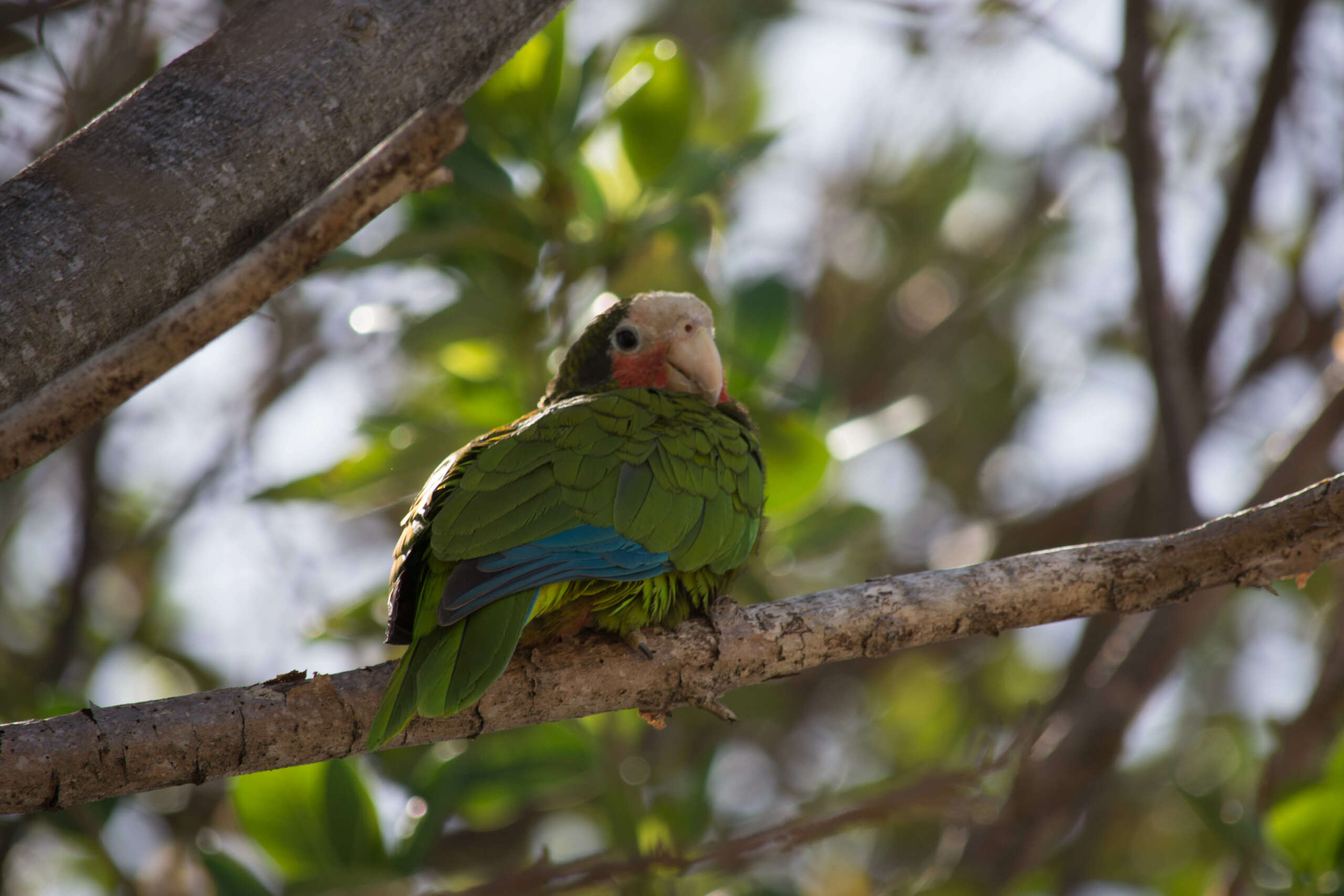
It stressed that the parrots are an important part of Cayman Brac’s natural and cultural history.
“Together with the Grand Cayman Parrot, these birds serve as a symbol of national pride and natural resource conservation,” the department wrote.
It went on to say that while parrots are a resilient species, their small habitat range is at risk from climate-change pressures and the increasing conversion of land for human uses.
This means that the long-term future of the birds depends on the preservation of old-growth forests and sustainable building.
Uses of native vegetation
The DoE suggested the Ministry of Education should retain as much native vegetation as possible and incorporate it into the landscaping scheme.
This primary habitat can be retained along parcel boundaries and between buildings to serve as privacy, noise and sound buffers, and screening.
It can be incorporated into the plans as low-maintenance, low-cost landscaping. “Native plants are best suited for the conditions of the site, including the temperature and amount of rainfall,” the department said.
It can serve as an amenity, providing green space and shade for those who live nearby or on the property. This can also help to lower cooling demand and utility costs.
The vegetation can remain as a habitat for endemic wildlife such as anoles, birds and butterflies, the department said, and allow for the creation of wildlife corridors.
It can assist with drainage, directly by breaking the momentum of rain, anchoring soil, and taking up water, and indirectly by keeping the existing grade and permeable surfaces.
And it can help reduce carbon emissions by leaving the habitat to act as a carbon sink and allow natural processes to remove carbon dioxide from the atmosphere.
“It is important to retain native vegetation so that students have an opportunity to learn about their native species and their natural and cultural heritage,” the department concluded.
Design plans
The architect plans reveal a T-shaped two-storey school building to the south of the site, containing classrooms, offices, storage, bathrooms, a library, a kitchen and a dining hall.
Speciality classrooms include a design-and-technology workshop, a home economics kitchen, and a technical and vocational education and training workshop.
There is also a visual arts studio, several science labs, information and communications technology rooms, a steel pan room and a music practice room.
To the north, a rectangular single-storey building contains a large gymnasium, lockers, bathrooms, kitchenette, first aid room, laundry, storage, offices and a dance hall.
Two more single-storey staff accommodation buildings are connected to an existing multi-purpose hall to the east of the Cayman Brac Sports Complex.
They contain 38 rooms with private bathrooms, laundry, social rooms and kitchenettes.
The drawings, on the Department of Planning website, also include two outdoor sports courts, plantings, driveways and more than 130 parking spaces.
The agenda for the planning meeting says the staff housing will be constructed first followed by the rest of the campus. There have been no public objections.
If approved, the entire build is expected to be completed by December 2025, a Ministry of Education spokesperson told the Compass.
Related Videos