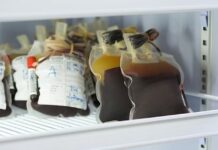
The Cayman Islands government has lifted a decades-old ban on blood donations from former residents of countries affected by bovine spongiform encephalopathy, commonly known as ‘mad cow disease’.
Previously, anyone who had lived in the United Kingdom between 1980 to 2001 for a period of three months or more, or who had received a blood transfusion whilst in the UK from 1980 onwards, was not allowed to donate blood at Cayman’s blood bank.
Following a change in policy, as of Friday, 22 Sept., they are now allowed to donate.
The ban had been lifted in several countries over the years, most recently Australia and the United States in 2022.
A statement from Cayman’s Ministry of Health and Wellness, issued on Friday, read: “An assessment of the current risk, along with existing controls for blood donors, allowed several countries to revisit similar policies. While humans cannot contract BSE, eating beef from a cow that has BSE can trigger variant Creutzfeldt-Jakob Disease, or vCJD, which causes progressive and ultimately fatal brain damage.”
A donor eligibility test on the Cayman Islands Blood Bank website had previously screened out donations from anyone who lived in the UK from 1980 to 1996 for a cumulative period of three months, or who spent five years or more from 1980 to the present date in a European country. That test has now been revised to exclude these restrictions.
No new UK cases
Chief Medical Officer Dr. Nick Gent said Cayman’s blood donor policy restrictions had been necessary for the “safeguarding of public health in the 1980s and beyond”.
He added, “However, there have been no new cases of vCJD diagnosed in the UK among people born after the introduction of strong dietary protection measures introduced in 1989. This strongly suggests that the zoonotic transmission pathway was effectively closed in the UK over 30 years ago.”
The ministry said a clinical sub-group of the Health Services Authority had considered the evidence available, which also included secondary risk through transfusion-transmission, and based on that evidence, had recommended the ban be lifted.
Health City Cayman Islands and Doctors Hospital, the two hospitals apart from the HSA’s Cayman Islands Hospital that mainly use blood and blood products on island, were both in favour of the ban being abolished, the ministry said.
“This change in blood donor eligibility is a game changer,” Health Minister Sabrina Turner said in the statement.
“By significantly increasing our local blood donor pool, we are reducing Cayman’s dependency on importing blood from the US and strengthening local resilience. This will be especially beneficial in times of personal and national emergencies where there may be a great demand for blood products.”
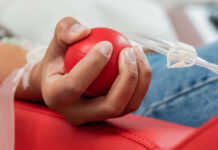
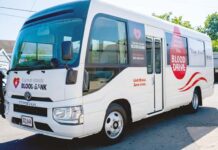
The Cayman Islands Blood Bank, which is currently running an urgent appeal for blood type O-negative donors, also welcomed the policy change.
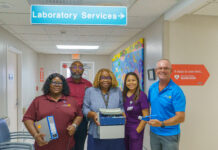
“We have always appreciated the strong donation culture of UK and European citizens, especially those residing in the Cayman Islands,” Dr. Lundie Richards, HSA haematologist/oncologist and head of internal medicine, said in the release.
“Our staff have had to defer volunteers in the past due to concerns about transmitting vCJD through blood transfusions. However, we are extremely pleased that we are now able to accept more donations without compromising safety. And, as always, the Blood Bank will continue to prioritise safety by screening and thoroughly testing all donated blood.”
Decades-old ban
Over the years, many local residents who had previously lived in the UK called for the lifting of the ban in Cayman.
Now that they’re allowed to give blood, the donor pool for the blood bank is expected to rise considerably.
According to the Cayman Islands Blood Bank, each year, more than 500 residents require blood transfusions, and this need is rising as Cayman’s population continues to grow.
Sixty percent of transfusions are used to help medical conditions, such as anaemia, or for dialysis or cancer treatments; 30% are used in surgeries; and 10% in maternal cases and deliveries.
Mad cow disease was first recognised in the UK in 1985 and subsequently spread to many European countries and worldwide. A human version of the disease, variant Creutzfeldt-Jakob, which is believed to be caused by eating beef products from infected cattle, was first detected in the UK in 1996.
The blood-donation ban was introduced in 1999 after it emerged that 18 of the 178 vCJD cases in the UK had donated blood that was subsequently used in 67 blood transfusions. Three deaths from vCJD were linked to blood transfusions between 1996 and 1999 that involved blood from two donors who died from the disease within one to three years of their donations, according to the US Food and Drug Administration website.
According to the FDA, as of April 2021, there had been a total of 232 cases of vCJD worldwide – with 178 in the UK, 28 in France, four in Ireland, four in the US involving former residents of overseas countries, and 18 cases in eight other countries.
The UK is the only country where the disease has been found to be transmitted via a blood transfusion, the FDA noted.
The last reported case of the disease being transfusion-transmitted in the UK occurred in 2006.
How to help
Donations can be made Monday-Friday, 7am-6:30pm, and Saturday 9am-5:30pm at the Cayman Islands Blood Bank located at the Cayman Islands Hospital.
Some basic requirements for donating blood are in place, including:
- New donors between the ages of 18 and 60 (existing donors up to 70).
- Weigh at least 50kg (110 pounds).
- Be in good health at the time you donate.
- Cannot donate if ill/unwell (cold, flu, sore throat, cold sore, stomach bug or any other infection).
- Tattoos and piercings: cannot donate within 6 months from the date of the procedure.
- Meet the minimum haemoglobin level for blood donation (a test will be done prior to donation to determine this).
- Temporary deferral if the donor has travelled to areas where mosquito-borne infections are endemic, e.g., malaria, or active transmission of dengue and Zika virus infections.
Men can donate every three months, and females every four months.
For more information or to make an appointment, visit www.bloodbank.ky or call 244-2674. The blood bank also welcomes walk-ins.
Related Videos