

Members of Cayman’s Minimum Wage Advisory Committee have yet to settle on recommendations for the islands’ new standard wage and are still working to finalise the delivery of the report.
Committee chair Lemuel Hurlston confirmed on Wednesday that completion of the anticipated wage report, which was expected next week, has been pushed back to October.
He said a particular issue, which was “controversial… even within the committee”, has delayed delivery of the report.
Hurlston declined to elaborate further on what the issue was, only saying it will be revealed in the final report.
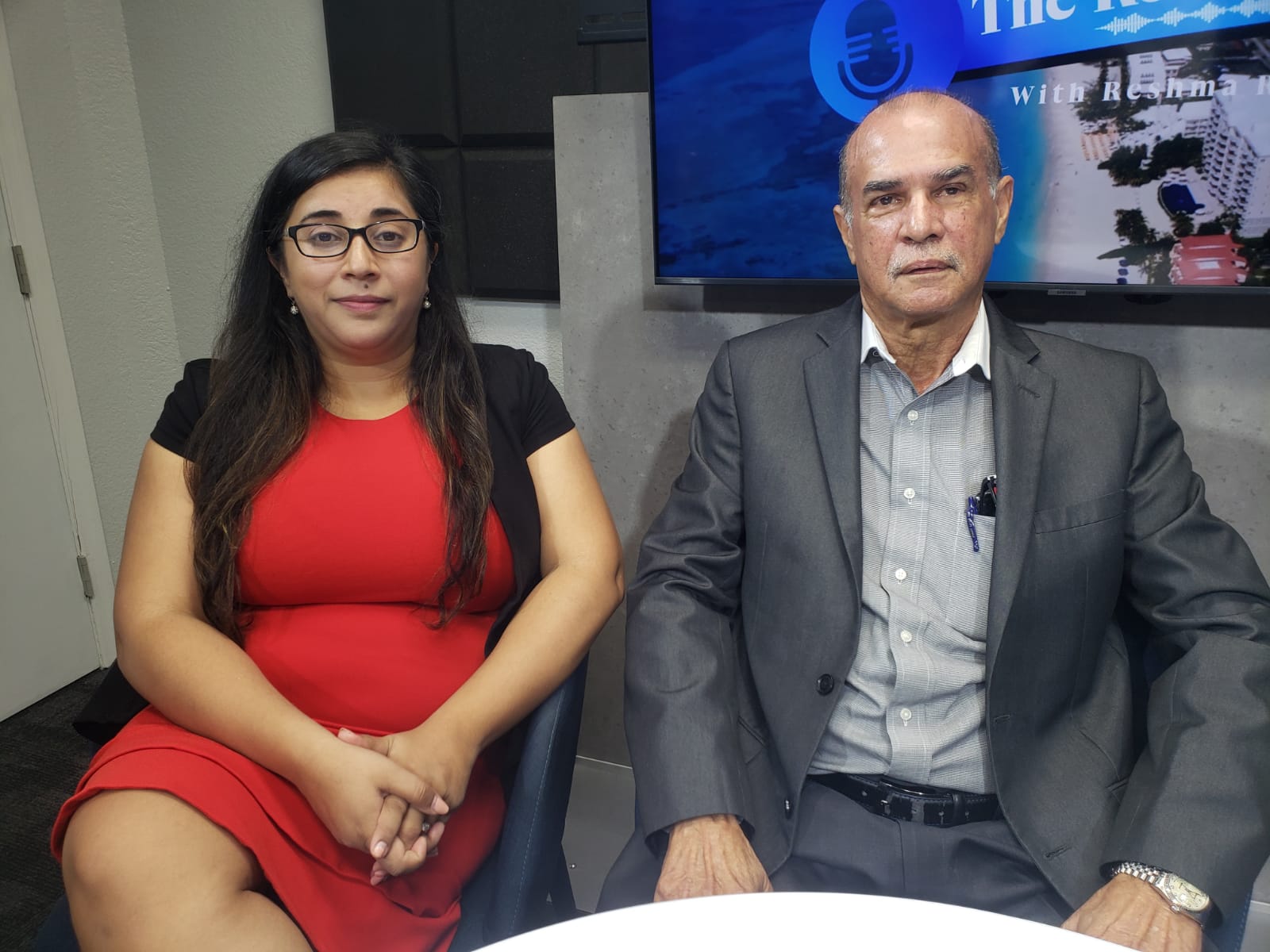
“I’d like to leave the topic unnamed at the moment, but when you read the report you will appreciate the reason why I’m not naming the topic,” Hurlston said, while speaking on the Cayman Compass talkshow The Resh Hour on Wednesday.
Hurlston added that the committee got off to a late start, which also led to a shift in the delivery timeline.
Panel member Mahreen Nabi, who also appeared on the show, added that the committee wanted to be sure that when the report comes out, it is very clear why the recommendations were made and that “everybody feels the information we’ve gathered over the last eight months has been reflected on appropriately, and included”.
Not an easy process
Hurlston said he was pleased that the committee is now on the “home stretch”.
When asked if there was consensus in the committee on the recommended wage, Hurlston reminded that the committee represents three groups – employers, employees and independent civil society individuals.
“We have tried to be consensus-driven, but, of course, there are times when polarisation will take place. This process is really a matter of trying to negotiate something that is affordable versus something that is desirable, and, in that negotiation process, there’s bound to be some tension, there’s bound to be some push back, and we certainly experienced a fair bit of that on this occasion,” Hurlston said.
However, he said, the committee has agreed that once a decision is made, “we’re all going to be united and supportive of that decision. So there’s no quarrel about that.”
Choosing a number
Nabi, who is head of the research subcommittee, and the representative for employees on behalf of the Business and Professional Women’s Club, said there were a number of suggested figures for the wage, including a high of $100 an hour, which came out of the public consultations and the committee’s online survey.
However, the average wage suggested by members of the public was $9-$10.
Hurlston said, while he could not share a definitive figure, the committee is looking at an average between a range that starts with $6.50, but he would not state the upper limit yet.
Though the committee looked at different wages for various industries, Hurlston said, there will only be one standard wage for all three islands and that figure will be applied across the board for workers.
Hurlston said the committee, in this current review, was not looking to a “living wage” that would be adjusted in line with the cost of living, but that this may be the process used in future reviews, while assuring the community would not have to wait another seven years to see changes to wages.
A minimum wage of $6 per hour was introduced in Cayman for the first time, in 2016, and this has not been revised since.
Hurlston said the committee will be using inflation projections from the Economics and Statistics Office in its calculation for future wage changes, when inflation hits a certain range.
“We’re going to come up with a formula that acknowledges that when inflation reaches a certain number, it will trigger a certain action, and that formula will be incorporated in our recommendations. We’re starting out with a minimum wage that will be subject to inflation in the future, and I think the public will also value that and appreciate that as well,” he said.
Hurlston said the report, when handed in, will still have to be actioned by government so he could not provide a timeline on implementation.
Additionally, he noted that the committee was advisory and, as such, it was still for government to accept or change the wage figure.
Both Hurlston and Nabi said whatever is decided for the minimum wage, the community must comply as it will be the law.
Nabi added that there will be recommendations for enforcement by the Department of Labour and Pensions.
Related Videos










Emotions aside, higher minimum wages will lead to price increase for most products, including hospitality. Higher hospitality costs will reduce attractiveness of the island for holidaymakers and lead to reduced revenues. And on and on… It is a very fragile economic paradigm here and MW is a sledgehammer. The unpredictable repercussions will be felt for years to come and make everyone worse off.
But in the end, it would probably settle around the same buying capacity of MW as we have today: higher wages vs. comparably higher prices = same picture. Such regulations only tend to increase bureaucracy, not solve the declared target issues, therefore IMHO it should not go ahead.
For any given person to effectively increase their buying capacity, the only practical way is to increase the value of their services: work better, or longer, or harder, get training and do a different job, etc. This is how most well-off people got there, not through some magical government edict. And if that value cannot be increased, the employers cannot be forced to pay more, that would be the definition of unfairness.