

Cayman’s new employment and immigration minister on Wednesday said the $2.75-an-hour increase in the minimum wage to $8.75 was just the start of a bigger plan to lift more people out of poverty.
Minister Michael Myles said a joined-up approach would include better education to ensure more Caymanians become eligible for more prestigious posts and improved planning to allow them to chase employment opportunities expected to come down the pipeline.
“The government is using the minimum wage not as a symbolic gesture, but as a tool to uplift individuals and families in real, tangible ways,” he said.
“This decision is about more than numbers. It’s about pulling our people out of poverty and into the middle class.
“It’s about ensuring that hard work results in basic economic security and dignity. It’s about ensuring that our guest workers are compensated fairly and have the financial ability to live in our country.”
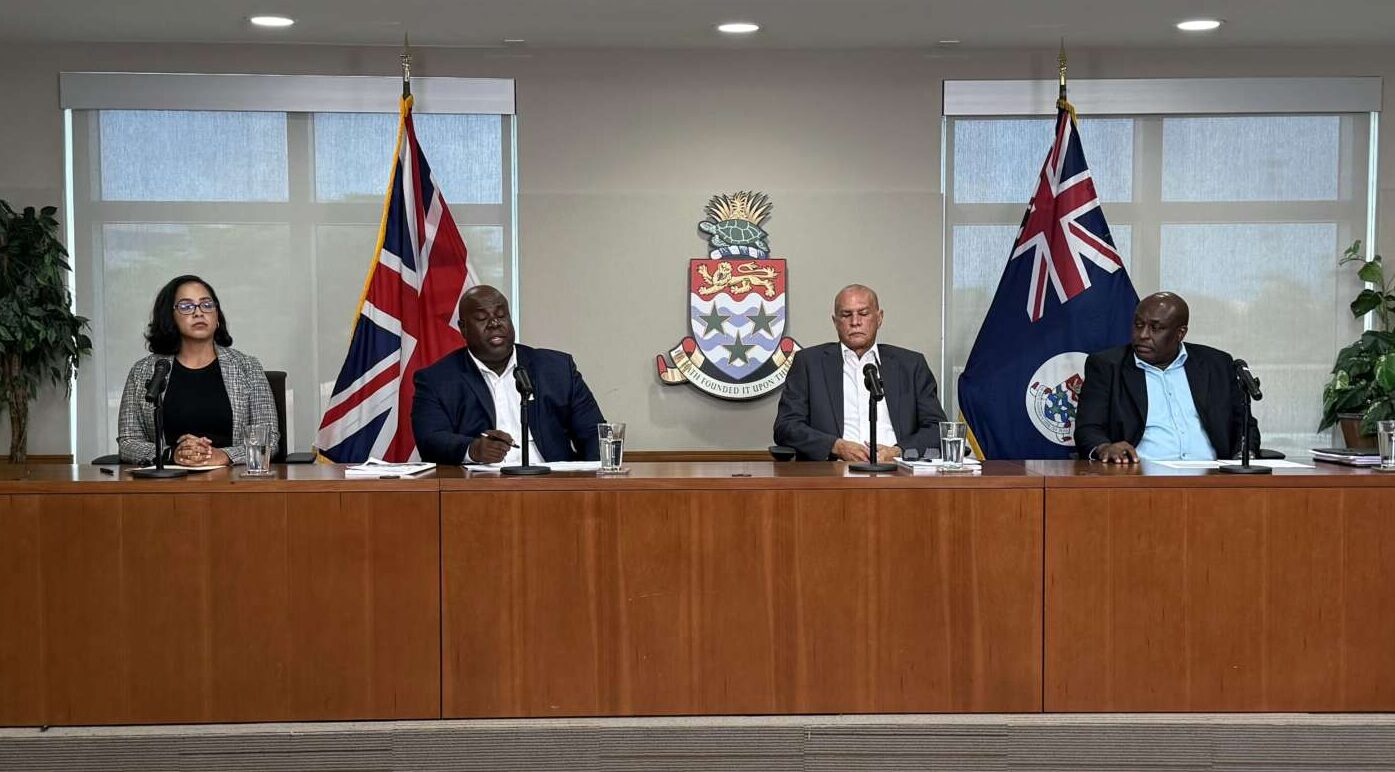
He was speaking as the package, estimated to cost just over $51 million a year, with $39 million coming from business and about $13 million from households, was officially unveiled at the Government Administration Building.
New minimum wage to launch in January
Myles said the measure, set to start in January next year, was also designed to ensure more Caymanians could afford to pay a mortgage and get their feet on the property ladder.
He added that government also wanted to make sure people could afford “basic living expenses, such as food, healthcare and utilities”, and were not forced to make a choice of what bills they could afford to pay.
Myles said, “This updated wage floor follows months of rigorous review by the committee and reflects the government’s commitment to fair, equitable and economically sustainable conditions for workers across the Cayman Islands.”
He added that the administration had also accepted the 2023 Minimum Wage Advisory Committee’s final report, which the previous government had not done.
“I have heard the arguments from political pundits who have said that the minimum wage only affects 2,000 Caymanians and only affects 8,000 guest workers,” Myles said.
“I’ve heard the arguments that guest workers will now be sending more money home. While I respect the contributions to this debate from all sides, our government is of the opinion and position that we will not allow 10,000 people to continue to live in poverty and not be paid a decent wage. This is simply not okay.”
Myles highlighted that previous generations of Caymanians had built the country through working abroad where there were more opportunities and sending money back home.
He asked, “Why would we deny our guest workers who take care of our elderly, our children, our disabled, who clean our homes, who provide security to our homes, commercial buildings and schools and who provide janitorial services, landscaping and construction … the right to earn a decent wage, even if it means they are using it to support their families in their own countries?
“This is not who we are as a people and it will not be who we become. Denying our most vulnerable populations the opportunity to live a decent life is simply unacceptable.”
He added that the new government would also take “a clear stand” and encourage Caymanians into labour market participation by “raising the wage floor and making work more viable and attractive” for the 1,700 families on financial assistance at present.
“This aligns with our work on the national workforce development strategy, which aims to strengthen the Caymanian labour force through better access to training, career pathways and employment opportunities,” he said.
“Raising our minimum wage is one part of a larger vision to build a stronger, more inclusive economy that benefits all who contribute to it.”
Myles added that the government would also maintain the maximum 25% in-kind credit for accommodation and utilities for live-in domestic staff and stick to a 25% cap on the amount of the minimum wage that could be made up of gratuities and commissions.
He said his ministry would examine other recommendations of the committee over the next few months, including a student minimum wage to encourage 14- to 17-year-olds to get work experience and on-the-job training.
‘Reasonable compromise’
Lemuel Hurlston, chairman of the Minimum Wage Committee, said it had held 37 meetings, reviewed government data and canvassed the public, government agencies and the private sector.
He said most households had backed a $10-an-hour minimum wage, but businesses had wanted a figure of no more than $9.
Hurlston added the final figure was “a reasonable compromise”, which would be reviewed every two years and linked to inflation, without the need to convene a full committee.
Adolphus Laidlow, director of government’s Economics and Statistics Office, said the committee aimed not to overburden small businesses.
He highlighted that people who were close to the new $8.75 level at present would benefit indirectly because their income would be likely go up.
Laidlow said that businesses had “overwhelmingly” said that anything over $9 an hour would lead to redundancies.
He added it had been suggested by the business sector that if $9 had been chosen as the minimum wage, up to 700 lay-offs would have been likely, mostly for work permit holders, but that an Economics and Statistics Office study came up with a “more realistic” figure of 200 redundancies.
Danielle Roberts, acting chief officer of the Ministry of Caymanian Employment and Immigration, warned that the new rate “was not a suggestion”, and that those who failed to implement the new rules would face penalties, back-pay orders and face “prosecution where necessary”.
Related Videos












Grandstanding, without merit, IMHO.
“and into the middle class”??? – really?
Let’s then think about the businesses employing those 10k people: would they survive? Would they continue to employ those people? Is there any return on this forced investment to the businesses? Why is this any business of the government anyway? And if the businesses are forced to pay more and naturally pass these expenses onto their customers, would everyone else be pleased to pay more? And would as many tourists be able to afford a holiday here now? – there’s likely more harm in this.
If minimum wage is going up, salaries need to go up to. Then fosters will raise grocery prices wiping out any increases in wages. CUC will eat up any wage increases by increasing energy costs, all the while they won’t commit hard to solar. A wage increase is smoke and mirrors.
It should have been $15 an hour like much of the U.S.
Free market should rule. What is ignored in this view is that people are willing to work for the wages offered. Another fact, people who perform are paid more. if not they go elsewhere. I think along with these changes what will happen is more downloading of Insurance contributions. As an employer I pay the Insurance for our team. Another issue: Mandatory Pension for Work Permit Holders who only receive that after they leave. Why take 5% of minimum wage work permits holders’ income? Why don’t we address other related issues: Electricity, Water, Fuel, Insurance costs, interest rates.
At least it seems we have come a long way from saying “they will work for nothing”.