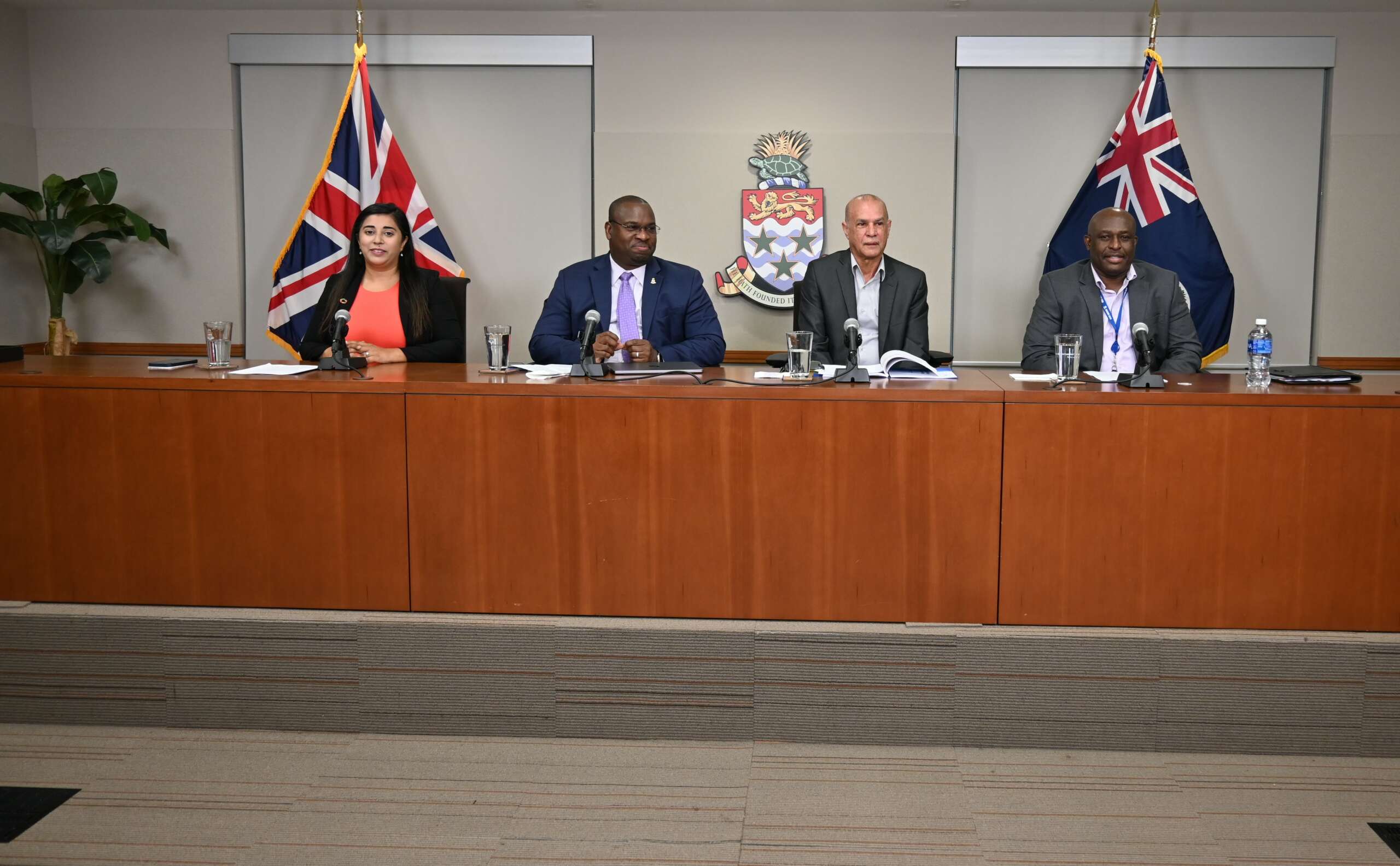
Labour Minister Dwayne Seymour, who is charged with taking the findings of Cayman’s long awaited minimum wage report forward, was noticeably absent from Wednesday’s media conference to address questions on the future of the recommended wage uplift.
Seymour, who has previously stated a lack of support for changes to the existing $6 an hour wage, is yet to formally comment on the recommendations, which were released on Monday.
The Cayman Compass reached out to the minister, who employs minimum wage workers in his businesses, for comment on his absence and whether he supports the recommendations; we are awaiting his response.
No clear position
When asked by the Compass about Seymour’s absence, Labour Ministry Chief Officer Wesley Howell, who was sat on Wednesday’s panel, said he was representing Seymour and the ministry.
He suggested that the briefing was more of a “listening exercise”.
“We really want to hear from the general public, the employers who now have a number that’s made public… While he’s not here, this work is really for his consideration and further consideration by caucus and Cabinet,” Howell said.
Pressed on whether it is government’s position that the minimum wage will be increased, Howell said Cabinet had “noted” the report recommendations.
Whether those recommendations will be acted upon, he said, remains “a political decision”.
However, he added that, with public pressure to move the needle and the fact that there have been no changes to the minimum wage for some time, “this has to be done”.
Timelines uncertain
When it came to timelines for changes, if any, Howell said that would be measured “in weeks, not months” and that feedback gathered will be considered, compiled and put through caucus and on to Cabinet.
The committee’s recommended timeline for implementation was July 2024, but with the report behind schedule and more feedback now being sought, this will no longer be possible.
Howell said, should there be legislative changes as suggested in the report, that would have to go through the parliamentary process of 28 days for public comment on proposed changes, and then onto debate in the House.
Some changes could be made administratively without needing parliamentary input, but this would depend on the direction that government chooses.
Even after the advisory committee held 37 meetings last year and multiple surveys to compile and then deliver its findings, chairman Lemuel Hurlston said he was not disappointed that another round of consultation was being done.
He stressed that the committee’s role was “to be advisory only”.
The new round of consultation, he said, was “just part of the governmental bureaucracy and process”.
Minimum Wage Advisory Committee member Mahreen Nabi, also speaking at the conference, said 10,000 people participated in last year’s exercise – from the town halls to virtual meetings and online surveys.
“Online surveys provided us with the largest set of data at over 5,000 responses, just under 60% of the people who responded indicated that they were Caymanian. There was an overwhelming support from the consultation for an increase in the minimum wage,” she said.
The committee stands by its recommended $8.75 per hour wage and the proposed phasing out of gratuities contributing to the base minimum wage for employees in the hospitality industry.
Price increases possible
Economics and Statistics Office director Adolphus Laidlow, speaking at the conference, said, should the wage be approved at $8.75, this will work out as an annual cost of $51.5 million for all industries – with an annual increase of $13.2 million for Caymanian employees and an annual increase of $38.3 million for non-Caymanian workers.
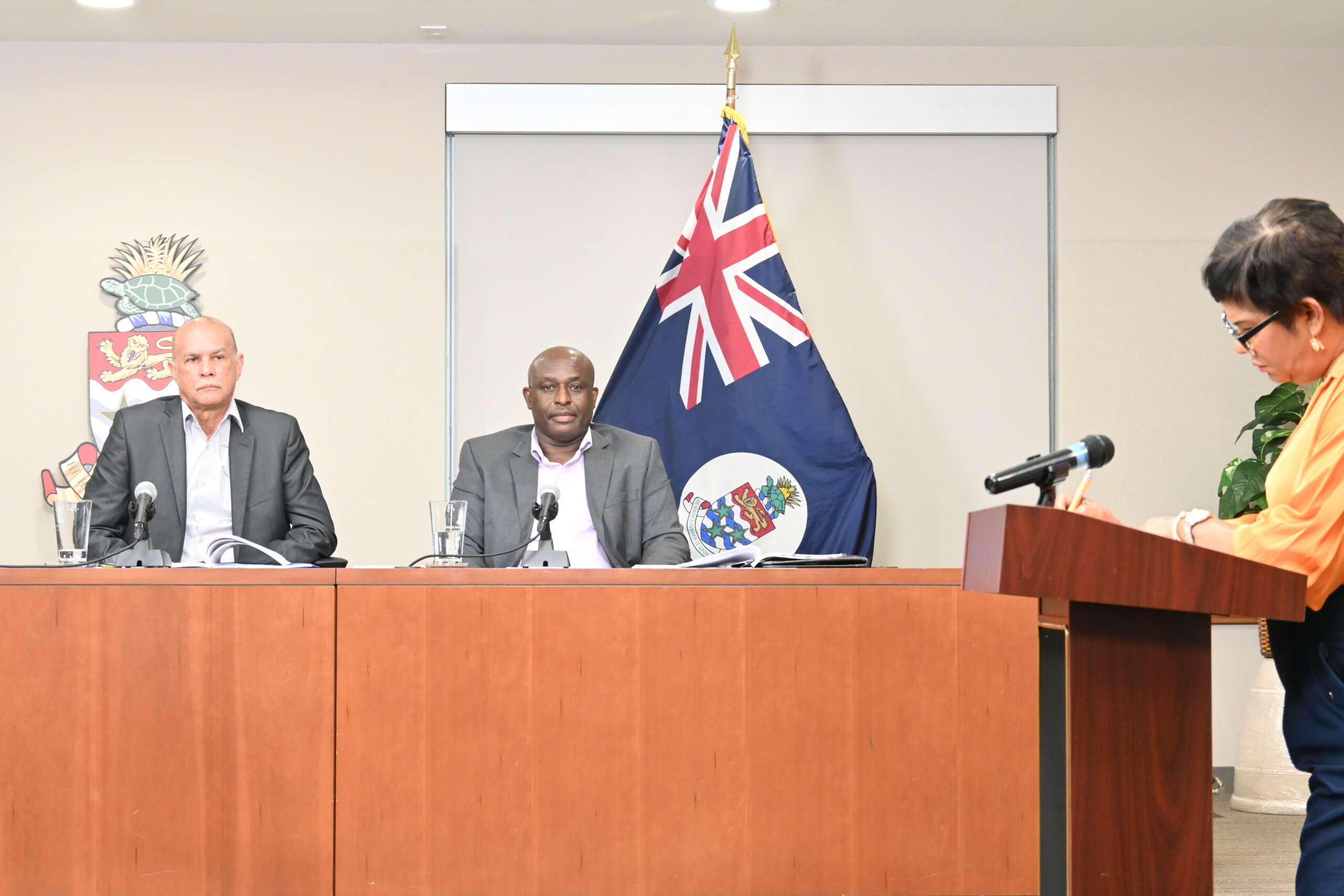
“The highest cost will be borne by households, paying an additional $12.9 million,” he said.
This is followed by wholesale and retail at $7.6 million, administrative and support services at $7.4 million, restaurants and mobile food services at $5.9 million, construction at $4.4 million, accommodation at $2.7 million and other services activities at $2.2 million, based on the numbers crunched to arrive at the new minimum wage figure.
Though businesses surveyed last year indicated that an increased minimum wage could result in the loss of at least 700 jobs, Laidlow said he believes that figure may be 200.
Caymanians, he said, will benefit from the wage increases in several ways, including increased spending power within the community.
The majority of those surveyed last year, from householders to businesses, suggested they could manage paying employees between $10-$12 an hour, which some have already surpassed.
Laidlow said this still gave the committee some “wiggle room” in its review and calculations.
Hurlston and Laidlow suggested the proposed gradual uplift would reduce the economic shock.
Feedback on the report and its findings can be emailed to [email protected] up until midnight on 9 April 2024.
Proposed changes breakdown
- Accommodation establishments – an additional $100.55 per person per week or $2.51 per hour.
- Restaurants and mobile food services – an additional $94.97 per person per week or $2.37 per hour.
- Households as employers – increase cost of $102.02 per week per employee to “domestic workers” or an additional $2.55 per employee per hour
- Administrative and support services activities sector, e.g. security guards, janitorial services – an additional $88.69 per employee per week or $2.22 per employee per hour.
Related Videos