

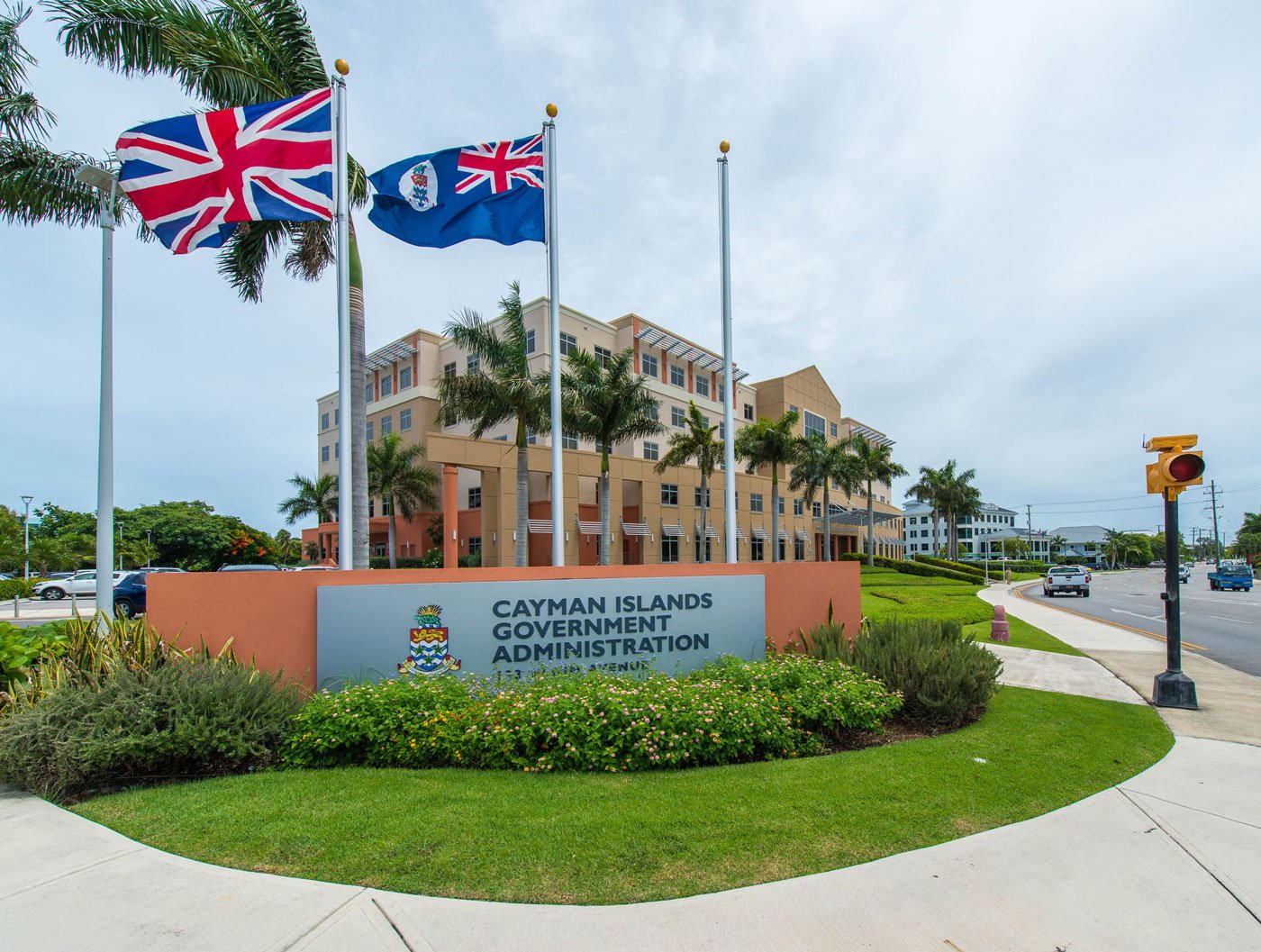
Government is now spending more than $700 million each year on salary and benefits for a growing public sector workforce.
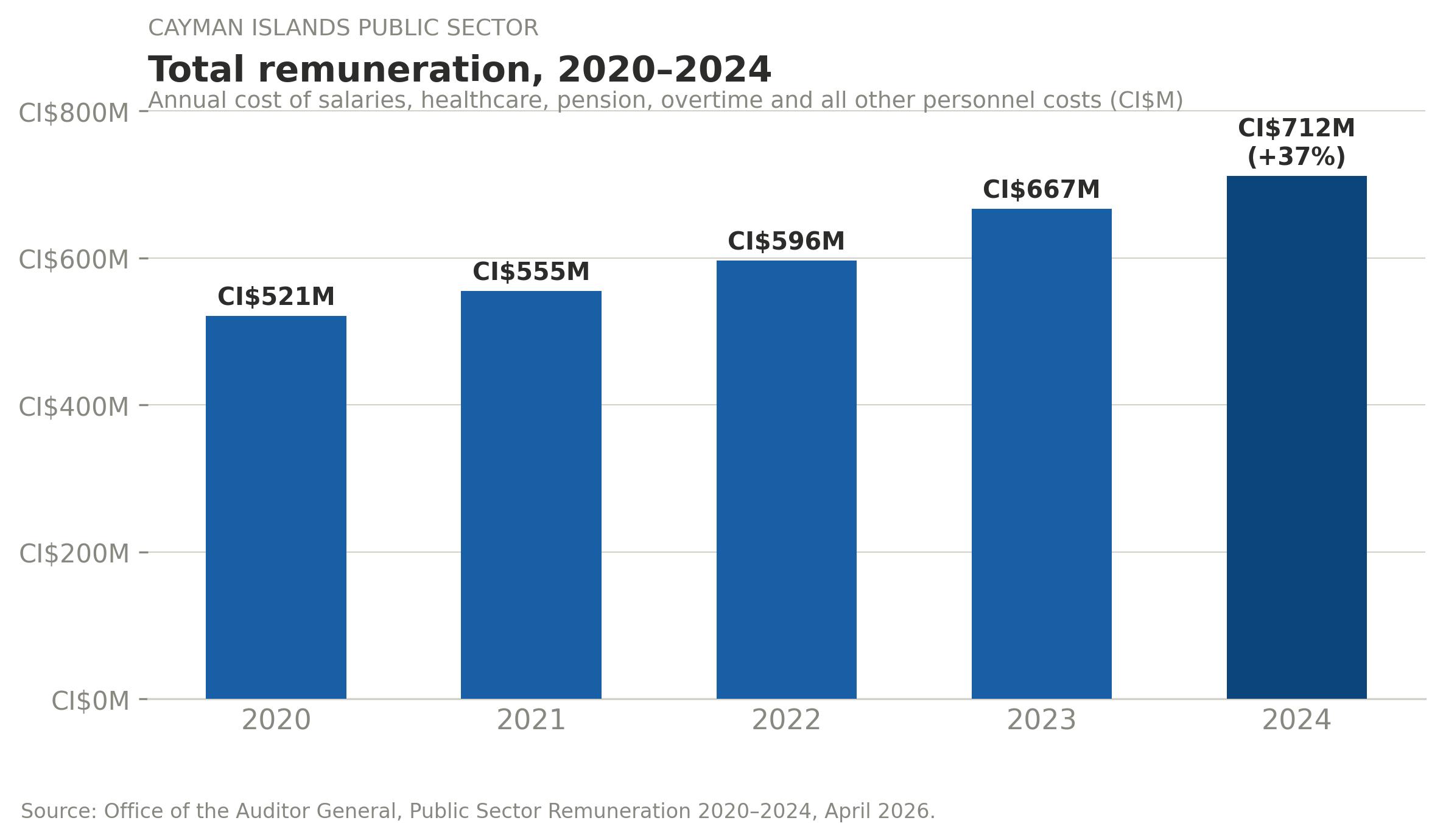
The cost of remuneration for the entire public sector rose from $521 million in 2020 to $712 million in 2024 – more than half the total budget of the country, according to an auditor general’s report tabled in Parliament this week.
The spike in spending has continued beyond the time frame covered by the report, with government adding hundreds of new employees and increasing pay across the board in 2025.
There are now more than 8,000 people on the public pay roll, according to a separate HR report from the Cayman Islands government also tabled in Parliament Wednesday.
The auditor general’s report indicates costs from increased hiring and cost-of-living pay adjustments have led to a surge in spending that has outstripped government’s revenue growth putting a strain on the country’s finances.
It also highlights increased spending on performance related pay from several statutory authorities and more than $1 million in spending on Christmas gifts for Water Authority-Cayman staff members over five years.
The report is presented as a fact-finding exercise and includes no specific recommendations.
Auditor General Patrick Smith said in a press release, “The public sector relies on its staff to deliver services. It is not surprising, therefore, that around half of all public sector expenditure is on staff remuneration costs.”
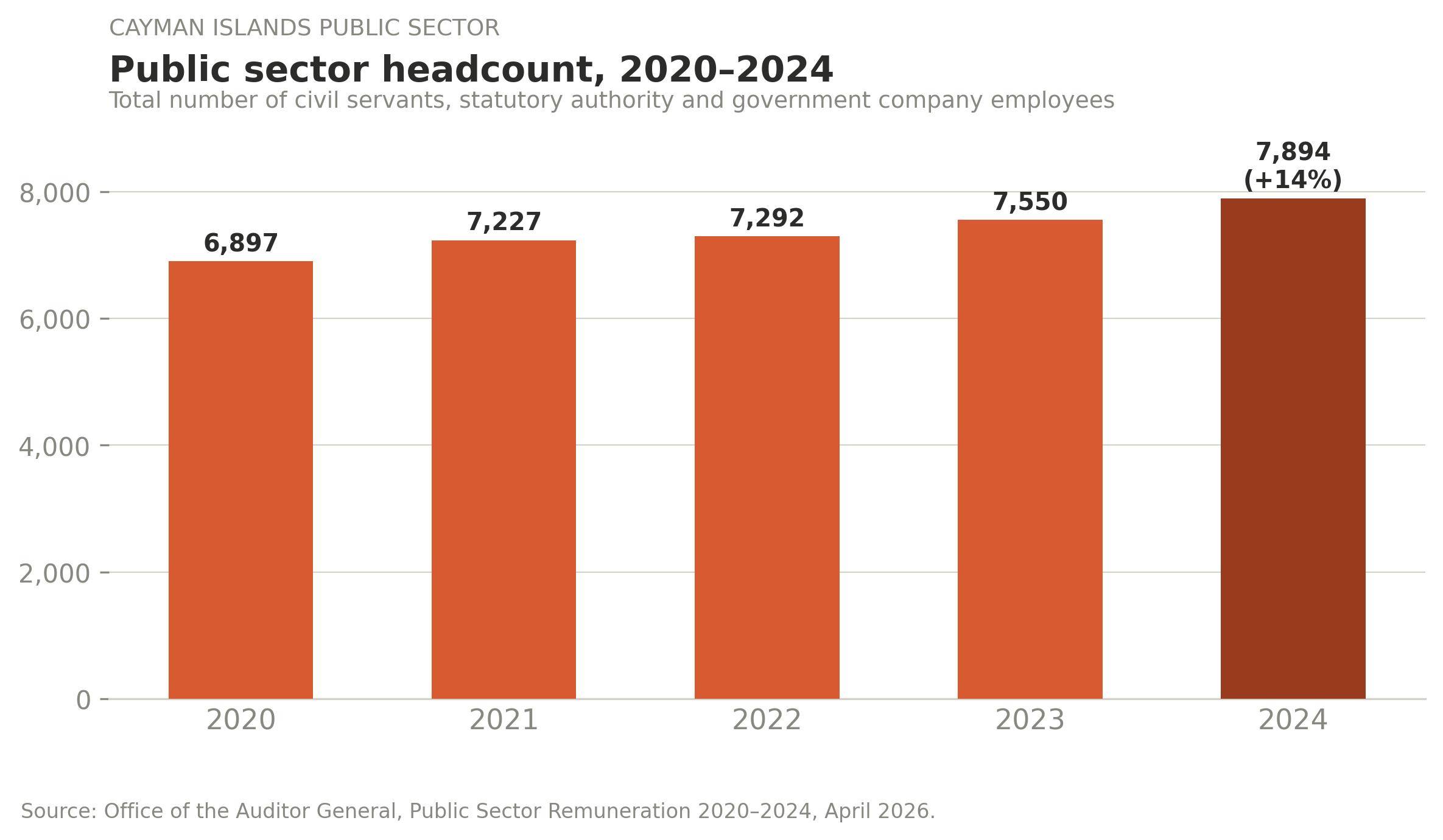
The number of employees across the civil service, statutory authorities and government companies rose from 6,900 in 2020 to just under 7,900 in 2024, the period covered by the report. Meanwhile the pay and benefits package for the average public sector worker increased by 20% to $90,000 annually, including the cost of healthcare and pension.
Government announced a hiring freeze in September of last year amid concerns that it would be in deficit by the end of the year. But that did not prevent headcount increasing by 3.6% in 2025, with the public service growing by a further 287 employees over the course of the entire year.
The pair of reports show that one in four Caymanians now works in the public sector – in a labour market where public servants account for roughly one in eight of all workers island-wide.
Spending outstrips revenue growth
The auditor general’s report makes pointed reference to the fact that spending increases, driven by pay and benefits packages and new hiring, are outstripping new revenues. In 2024, the report notes, more than half of government spending went on staff costs.
“Government expenditure increased by 26 per cent, from $1.1 billion in 2020 to $1.4 billion in 2024, and public servants’ remuneration increased by 37 per cent, from $521 million in 2020 to $712 million in 2024.”
The auditor goes on to point out that this pattern has continued, noting public sector expenditure increased by 51% between 2018 and 2023 – double the 25% increase in public sector revenues over the same period, “indicating a risk to the Government’s long-term financial sustainability”.
Pay increases and Christmas gifts
The government awarded pay increases totalling around 10% to all public servants between 2020 and 2024 through two cost-of-living adjustments, on top of $27.8 million in one-off honorariums, with a further 5% increase, costing an estimated $25.2 million annually, taking effect in January 2025.
Healthcare and pension, costs the government pays in full on top of salaries with no employee contribution required, are growing faster than salaries themselves. The report found that healthcare costs increased by 54% to $105 million over the five years, while pension costs rose by 49% to $53 million.
The report also highlights some unusual spending patterns.
The Water Authority spent $1.8 million over five years on staff benefits including approximately $1 million on Christmas gifts – around $1,200 per employee annually – as well as Christmas meals, corporate wellness activities, gift cards, honorariums and employee awards. The auditor general’s report noted the utility’s benefits bill alone accounted for more than three-quarters of the entire public sector’s staff ‘welfare spending’.
Performance-related pay also surged from $696,000 to $2.4 million. The increase was confined to three statutory authorities – The Cayman Islands Monetary Authority ($4.9 million over the five years), the Civil Aviation Authority of the Cayman Islands ($933,000) and the Maritime Authority of the Cayman Islands ($853,000). The auditor general’s report noted that despite civil servants being eligible for performance-related pay, no civil service entity paid any such awards during the entire five-year period.
Related Videos












Non-contributory direct service pensions (traditional pensions entirely funded by the employer) are failing because they place the entire financial and longevity risk on the employer. This model has largely become unsustainable due to changing demographics, strict regulations, and shifting labor trends.
Several factors explain why this model struggles today.
Shifting Demographics: Retirees are living longer, which dramatically increases the duration a pension must be paid. Concurrently, shrinking labor pools mean fewer active workers are available to financially support these legacy obligations.
Regulatory Burden: Stricter rules, such as those introduced by ERISA, increased the administrative complexity and required companies to keep massive cash reserves to protect promised benefits.
Investment Volatility: Because employers do not collect worker contributions to spread risk, the fund depends heavily on market returns. When markets underperform, the sponsoring company or municipality faces massive underfunding and debt.
The Labor Shift: These pensions were designed for employees who stayed with one company for their entire career. Today’s highly mobile workforce frequently changes jobs, making it difficult for workers to vest, which causes these plans to fail as a recruitment tool. As a result, most private companies and even many government entities have largely shifted away from defined benefit pensions in favor of Defined Contribution Plans (like 401(k)s), which limit employer exposure and offer greater portability.
Dr. Joseph Finley
So 1 in every 10 people in Cayman works for the government. Clearly they aren’t using AI to save on costs and they continue to send work out to companies like Deloitte to get a report on how to fix the public buses for $250,000 but take zero action and want to do another report. Make it make sense. Any private company can’t operate like that. They are burning money and then increase fees on private companies. Unbelievable….
Every dollar the government spends today is a delayed tax on Caymanians. Even if it is funded by debt or deficits, it must eventually be paid for by the public through higher taxes or inflation (a hidden tax). This inevitably drives up the cost of living for everyday Caymanians.
Furthermore, even if the government justifies this spending as being ‘within budget,’ that money could have been saved in a Sovereign Wealth Fund for the future of all Caymanians. Economist Milton Friedman famously warned, ‘the true burden of government is not how much it taxes, but how much it spends.’
When 1 in 4 Caymanians works for the government, we are crowding out the private sector and stifling free-market prosperity that drives higher salaries. Bringing the size of government back to 2020 levels and using those savings to fund a Caymanian Sovereign Wealth Fund would secure Cayman’s future for the next 150 years.
Franz Manderson’s legacy…a bloated, inefficient Civil Service, world-class in waste and unaccountability!
Government SAGC’s follow the same trend as Central Government.
AI was created to be implemented in Cayman’s public sector. Please do so!
These problems have always existed with the Civil Service, but funding all 8000 plus of them qn average of CI$90,000 pa is presumably justified as they are almost all sons of the soil. This home grown largesse is also extended to our M.P’s who have increased their own allowances in certain cases. This Govt has hit the private sector and non Caymanian workers with humungous fee increases, and interfered in how they run their businesses which are causing many problems. None of this would have been necessary if the Civil Service and other Govt related entities has been properly managed.
Government knows the CS is overgrown and it continues increasing expenditures to “dubiously dependent” persons. Salaries and support rank high on its spending list!
Until now, revenues are reaped by taxes in the form of fees of every sort, and increasing same. Government knows it’s becoming unsustainable to fund itself through fees alone. It’s approaching a point where traditional revenue streams are maxed out.
It refuses to consider potential new revenue streams like a national lottery because it’s too controversial. The surest alternative is income tax…talk about a hot potato!
Government knows it’s going to get there, hence the big, unspoken but evident, push to 100+K population. Heavily nudged by London. “Want to stay under the Crown, then manage your pocket better. Contingent liability, old boy “.
Government knows, but isn’t saying.
Note: all my references apply to at least the last 4 Governments and the present one.
While there may be several legitimate reasons for the sharp increase in public sector remuneration costs including population growth, increased service demands, cost-of-living adjustments, healthcare and pension obligations, and additional hiring the discussion cannot end there. The Auditor General’s report shows that remuneration costs increased from $521 million in 2020 to $712 million in 2024, significantly outpacing revenue growth and now accounting for more than half of government expenditure.
However, what many hardworking civil servants and taxpayers will find frustrating is that the debate often focuses on budgets and headcount while avoiding a longstanding accountability issue within the public service. There is a widespread perception that underperforming employees are too often shuffled between departments or ministries rather than being properly managed, that persistent attendance and productivity concerns go unchecked, and that disciplinary processes rarely lead to meaningful consequences other than the civil servant lawyering up against the Govt and then have the said Govt paid their legal bills. Whether entirely accurate or not, these concerns have existed for years and deserve serious examination.
The vast majority of civil servants turn up every day, perform their duties diligently, and provide essential services to the country. They should not have their reputation tarnished by a minority who may not be meeting the same standard. Equally, those dedicated employees should not be expected to carry the workload of colleagues who are not held to account.
If government is asking taxpayers to fund a public sector payroll exceeding $700 million annually and employing more than 8,000 people, then taxpayers are entitled to ask not only whether staffing levels and compensation are justified, but whether robust performance management and accountability systems are being consistently applied.
It seems that the Auditor General’s report may have been presented as a fact-finding exercise and did not make specific recommendations. However, when public sector remuneration has risen from $521 million to $712 million in just four years and now accounts for more than half of government expenditure, there comes a point when simply documenting the figures is not enough. Caymanians deserve answers as to whether the significant increase in staffing costs is being matched by corresponding improvements in productivity, performance and accountability.
If there is evidence that employees are chronically underperforming, failing to attend work as required, or are simply being transferred between ministries and departments rather than being subjected to meaningful performance management and dismissed where appropriate, then that issue deserves the same level of scrutiny as rising headcount and remuneration costs. The hard-working majority of civil servants who faithfully perform their duties should not be expected to carry those who do not, nor should taxpayers be expected to fund a system where accountability is lacking.
While the Auditor General must operate within the scope of his statutory powers, it may be time for a more searching examination of whether existing performance management, disciplinary and oversight mechanisms are functioning as intended. If deficiencies exist, they should be identified publicly and addressed decisively. The public has a right to know whether poor performance is being tolerated, whether managers are being held accountable for addressing it, and whether disciplinary processes are producing meaningful outcomes.
Ultimately, financial sustainability is not achieved merely by freezing hiring or limiting pay increases. It also requires a culture of accountability. If the Government is spending more than $700 million annually on salaries and benefits, then Caymanians are entitled to expect that every public servant is meeting the standards required of their office. Where that is not happening, there must be consequences. The time for avoiding this conversation has long passed; taxpayers deserve transparency, accountability, and, where warranted, decisive action.