

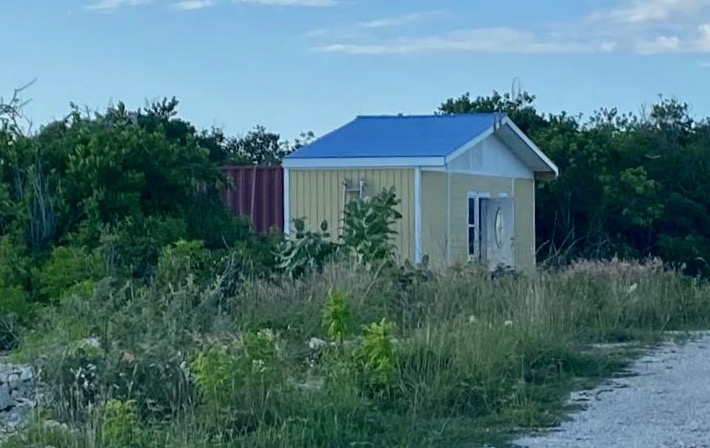
A landowner is asking the Central Planning Authority to allow him to keep his temporary home in East End which was built from a 20-foot shipping container.
James Sterling Ebanks has applied for ‘after the fact’ planning permission for the $35,000 house and two 40-foot shipping containers for use as storage.
The unique metal building is on a 0.81-acre beachfront plot of land near the Blow Holes on Sea View Road.
The applicant said the home “will not be materially detrimental” to anyone living or working in the vicinity, to the adjacent property, to the neighbourhood or to public welfare.
However, in June, the planning authority told another property owner they had to remove four shipping-container homes because they were “not an appropriate form of housing”.
Too close
In his application, which is in the agenda for the 11 Oct. meeting of the CPA, Ebanks explained that the foundation for the container home was built five feet too close to the road and apologised for the mistake.
“The front setback became an issue because the person setting out the foundations for the containers inadvertently used an assumed boundary point,” the application said.
He added that he will rectify this once he develops the property, which he plans to do after completing his research on development scenarios and financing options.
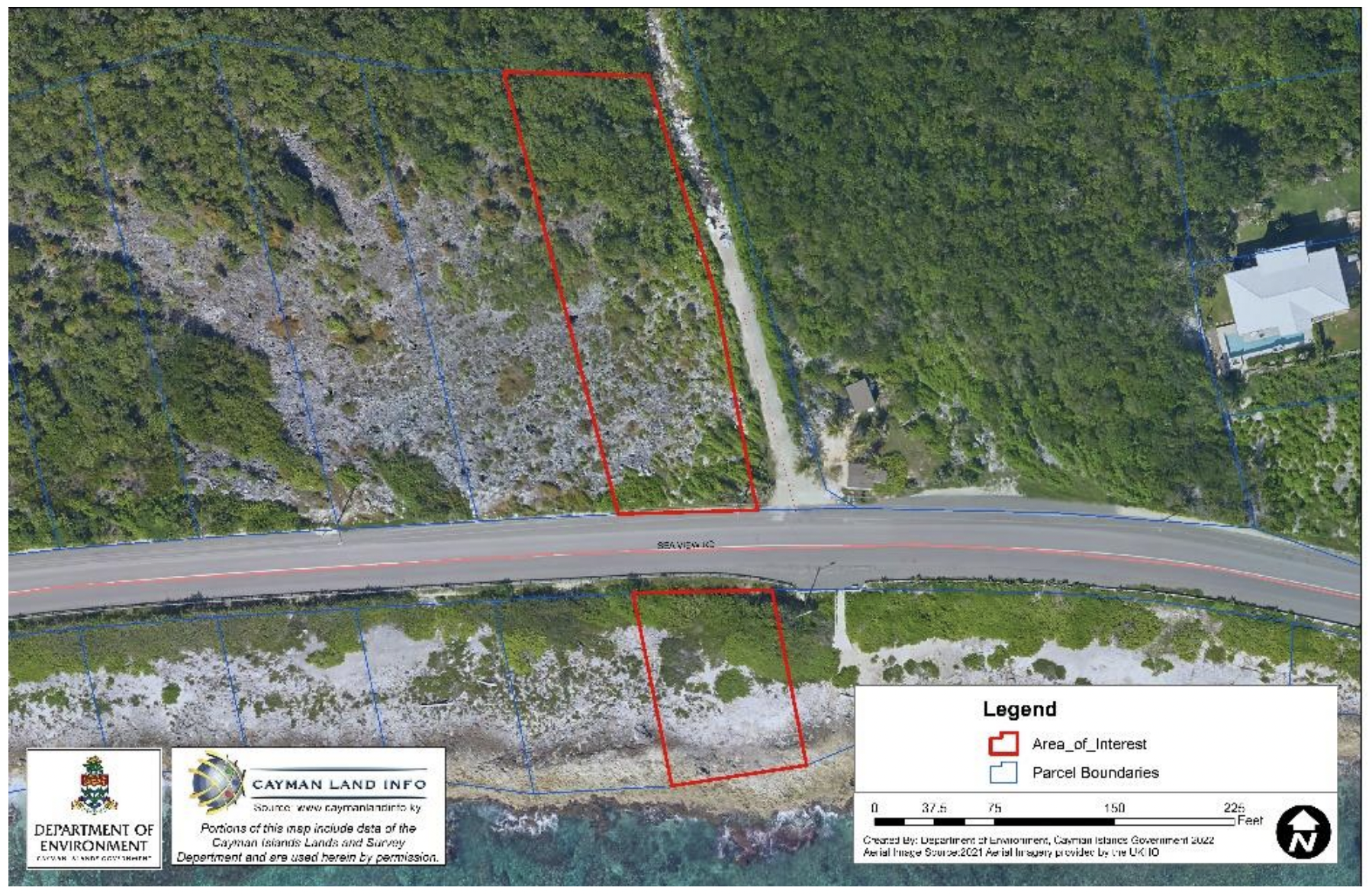
Neighbouring residents submitted an objection to the plans, saying the shipping container does not fit visually with the zoning of the land as low density residential.
“The plans for [the land] because of the rather small living space and the quite large size of the two container units give the appearance to be of commercial use,” they wrote.
The objectors were also concerned that the containers could move in tropical- or hurricane-force winds and damage their property or cause them physical harm.
They referenced the last planning application for container homes, which was rejected, pointing to the CPA’s reasoning about inappropriate appearance.
“We have been looking forward to meeting our neighbours and forming a sense of community,” they wrote in the letter published in the agenda for the upcoming meeting.
“We do not enjoy having to write this. In no way are our objections to the proposed plans personal or with malice.”
Suitability
In its analysis of the proposal, the Department of Planning brought up two issues – the suitability of the site and the front setback.
It asked the authority to consider if the design of the after-the-fact house in a metal storage container meets planning regulations for traditional building forms.
“Also, the authority needs to determine if it is suitable for two, 40-foot storage containers to be situated in a residential zone,” the department said.
It also suggested the authority look at the front setback variance of five feet from the road boundary – at a distance of 15 feet rather than 20 feet.
The application will be discussed in the 11 Oct. meeting of the Central Planning Authority and the decision published online in the minutes about three weeks later.
Past container homes
In June, the CPA ordered that landlord Cleveland Dilbert remove four two-bedroom container homes from his land at the end of Webb Road in George Town.
It said the rental houses were not consistent with the objectives of The Development Plan 1997.
“The use of metal storage containers for the purposes of human habitation would not enhance the quality of life for the persons residing in the containers,” the authority wrote.
“Nor would it safeguard the cultural, social and general welfare of the persons residing in the containers.”
It also said the site was in a residential zone where developments should be consistent with the architectural traditions of the islands.
The applicant argued that he constructed the homes due to a lack of available affordable housing in Grand Cayman. He charged the occupants just $650 per month including utilities.
Related Videos













These container homes don’t belong on beachfront property.
However they seem like a reasonable way to provide low cost housing; especially for single people and couples.
We have a dire shortage of low cost housing and I feel they should be allowed and even encouraged.
Let the market decide whether or not people are willing to live in them.