

Assessors from the Commonwealth Parliamentary Association are this week carrying out an exercise to determine if the Cayman Islands Parliament meets the recommended standards for democratic legislatures.
Among the benchmarks being assessed are the regularity of meetings of the House, the transparency of proceedings, and availability of records of parliamentary sessions.
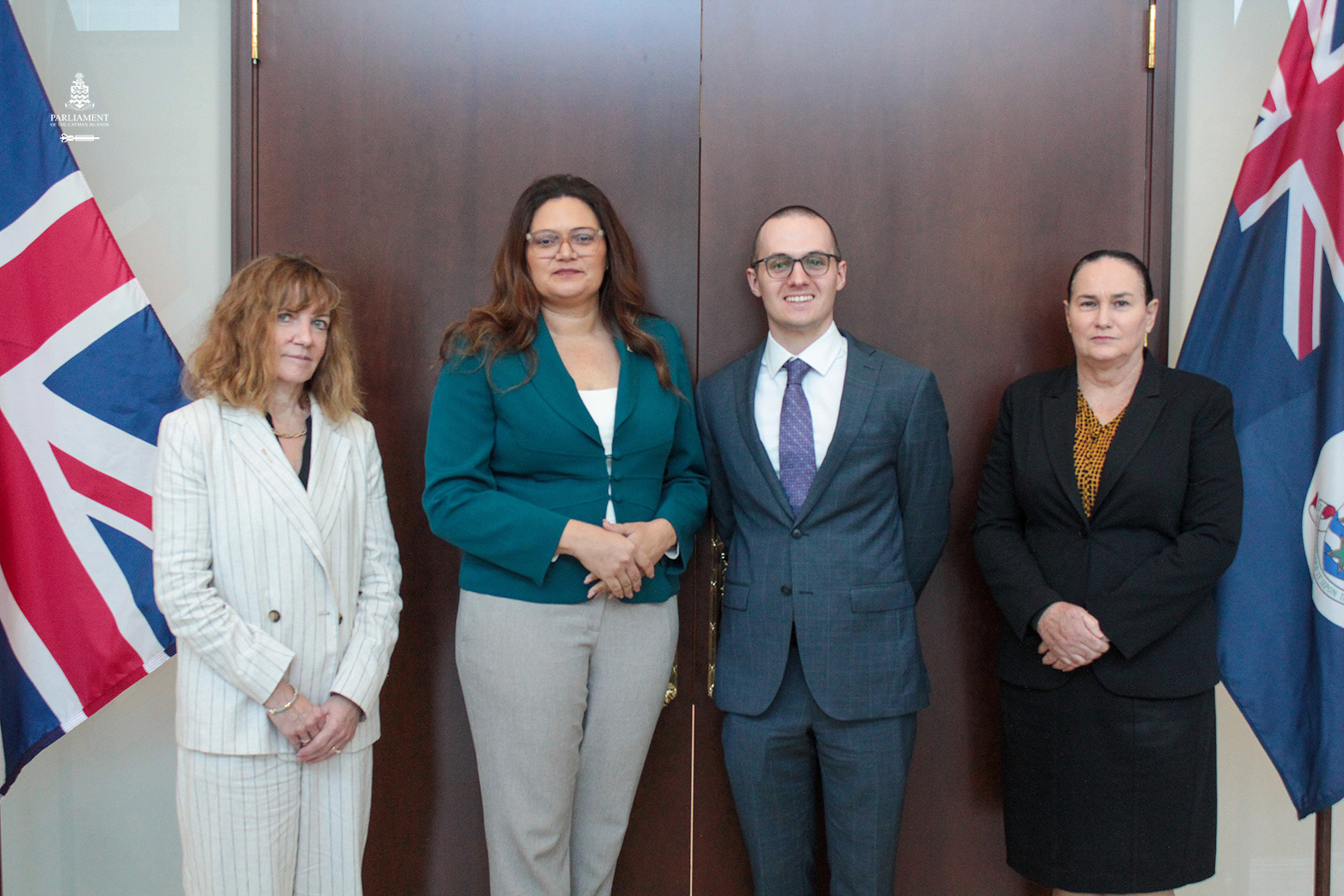
Clive Barker, from the association’s UK headquarters, and Shannon Dean, from the Legislative Assembly of Alberta, Canada, are spending the week – at the invitation of Cayman’s Parliament – meeting and interviewing MPs, parliamentary staff, civil servants, members of the media and the public as they determine how Cayman’s political system measures up.
Once the “self-assessment” is completed, the association will draw up a report outlining recommendations on how to improve parliamentary processes covered in more than 130 benchmarks. These reports are usually published on the Commonwealth Parliamentary Association website.
Under the benchmark of ethical governance and integrity, the assessors are looking at Parliament’s enforcement of codes of conduct and standards of accountability and transparency.
They will also be looking into the availability of records, including what is published on the Parliament website, which is the process of being revamped. The old Legislative Assembly website, on which the official Hansard transcript of every parliamentary meeting was published, is no longer being updated.
They are also going to be reviewing the scheduling of parliamentary meetings. The PACT government has previously come under fire from the Opposition for the apparent irregularity of meetings.
Barker explained that if there are certain benchmarks that are not met, the association would help to implement recommendations, such as providing training or funding.
Chance to improve parliamentary practices
“This is a great opportunity to see for ourselves where Cayman’s legislature is performing well, and where we need to improve our parliamentary practices,” said Speaker of the House Katherine Ebanks-Wilks in a press release. “I welcome this opportunity to gain a better viewpoint of our accomplishments, such as our improved communications, as well as finding solutions on how we can strengthen our parliamentary governance.”
The release noted that the “intensive assessment exercise” would involve reviewing the legislative and operational aspects of the Parliament against 132 indicators of good governance that the association developed in consultation with other Commonwealth legislatures between 2006 and 2018.
“I view this exercise as an opportunity for the Parliament to conduct an extensive review of how the Benchmarks can be used to improve the overall performance and management of the Cayman Islands Parliament,” Zena Merren-Chin, clerk and chief officer of Parliament, said in the release.
Among the issues the assessors are looking into are the local elections processes, the organisation of the legislature, gender representation, practices of committees, parliamentary staffing, public input, separation from the executive, financial oversight, and openness and transparency of the legislature.
Broad range of interviewees
On Monday, Barker and Dean began their interviews with Ebanks-Wilks and Merren-Chin, and also met with Governor Jane Owen. Throughout the week, they are scheduled to meet with Premier Wayne Panton; Deputy Governor Franz Manderson; Leader of the Opposition Roy McTaggart; Tourism Minister Kenneth Bryan; Auditor General Sue Winspear; Dr.
Annette Stephenson and representatives from the Disability Council; several chief officers; legal professionals; members of the media; and several Parliament staff.
“Meeting with stakeholders in the Cayman Islands Parliament for this CPA Benchmarks Self-Assessment will allow us to scrutinise their parliamentary procedures,” said Barker in the release. “We hope that the recommendations in our outcomes report we produce will help them to establish a roadmap to reforming the institution, with our help where needed.”
Other legislatures have undergone such assessments, including Anguilla in February 2020, and, most recently, the legislatures of Montserrat and Malawi.
Barker noted that the Commonwealth Parliamentary Association intends to facilitate assessments for 10 legislatures in the first half of 2024 with the support of the UK’s Foreign Commonwealth and Development Office.
“The beauty of being a member of the CPA is that we have access to resources that will enable our Parliament and Parliamentarians to advance. I am hopeful that at the completion of this assessment, we will have a clear development plan for our Parliament,” Ebanks-Wilks said.
“Additionally, with completing this exercise, we also have assistance in modernising our Standing Orders, which will include a schedule of regular meetings, and implementing a Code of Conduct that all Members of Parliament will be bound to.”
Related Videos







How about checking the attendance records of our Parliamentarians?.