

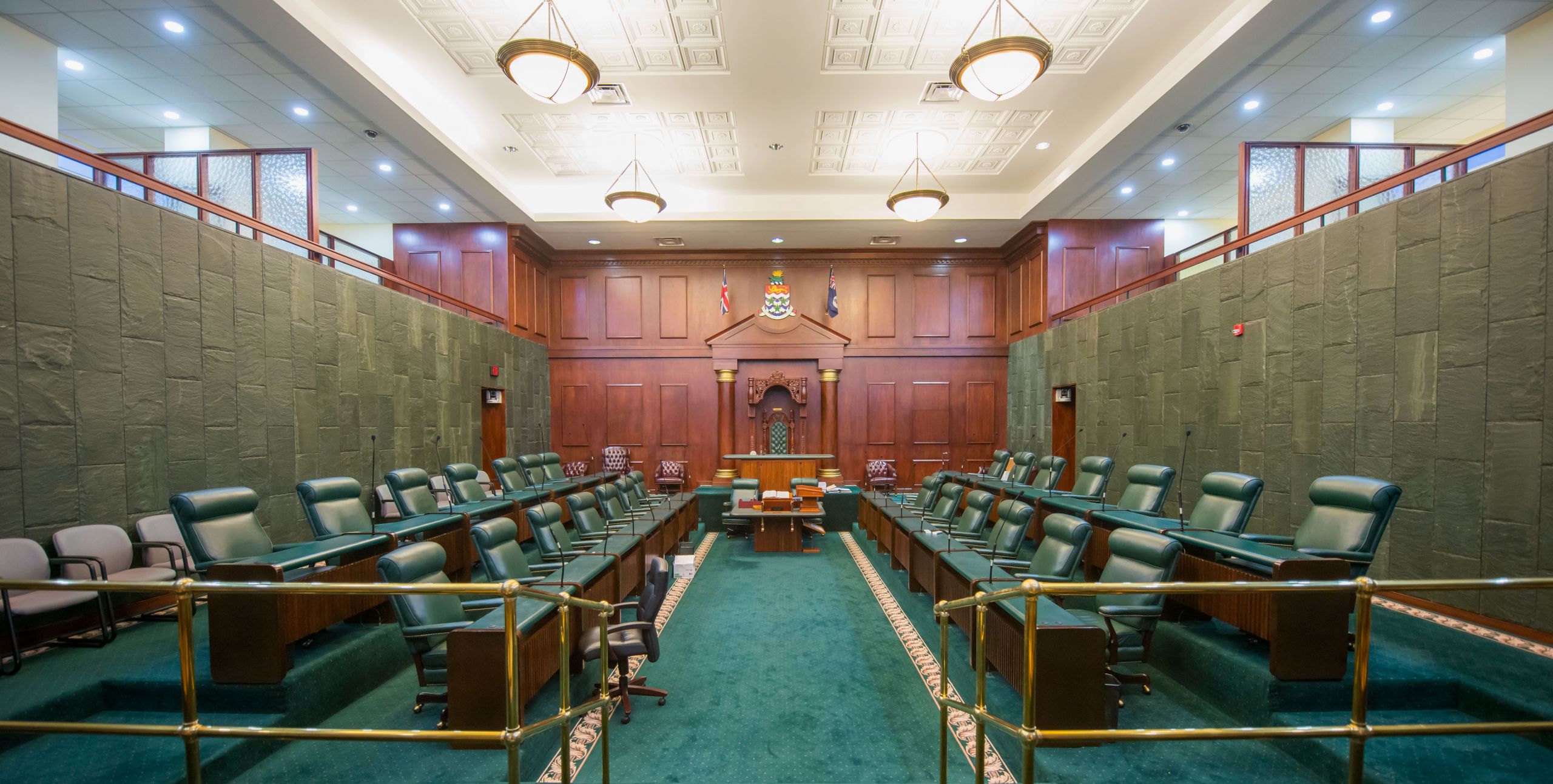
The PACT government is facing criticism for holding few parliamentary sessions and passing little substantive legislation since taking office last April.
The first full parliamentary year since the 2021 general election ended on 30 June. And veteran lawmakers and opposition legislators claim the new government has barely got started with any significant or new legislation.
PACT leadership had previously committed to advancing anti-bullying and sexual harassment laws within its first year and highlighted aims to transform the way welfare is handled in Cayman.
The government had also indicated it would move to reduce the cost of doing business, while a significant number of new bills are needed to help Cayman stay off international finance black lists.
Legislation to introduce a structure for development concessions or to support sustainability initiatives, part of Premier Wayne Panton’s policy agenda, have also yet to materialise.
In a press release issued on Monday, PACT outlined some of the significant policies it had introduced to combat cost-of-living concerns, including free meals for school children and a top-up scheme to support people with electricity bills.
The government also pointed to its continuation of the COVID tourism stipend through June of this year and extended pension holidays in the release which touted its action to address the impact of inflation.
But opposition and former legislators accuse the new administration of neglecting parliament and being slow to advance any major legislation.
Where is the plan?
Ezzard Miller, a veteran MP who lost his seat at the last election, believes this government will struggle to achieve anything in its four-year term unless it kickstarts its legislative agenda soon.
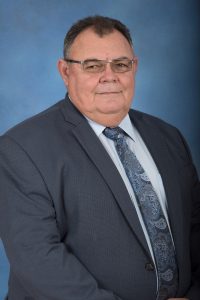
“I don’t know how they plan legislation,” he said in a recent Zoom interview with the Cayman Compass.
He highlighted the Pharmacy Law and Poor Relief laws among a list of legislation or amendments multiple governments had indicated they expected to pass, but said there was no sign of progress.
Former Premier Alden McLaughlin also raised questions about the absence of new laws to support the PACT government’s goals and agenda.
“In almost 22 years in Parliament, I have never seen such an unproductive legislative year. It makes one wonder what the government does in its caucus and cabinet meetings,” he said.
The men also took issue with the low number of meetings of parliament held in the legislative year.
Although five meetings were held during the year, two were special meetings that were limited in one case to announcements on the Queen’s jubilee and in the other to the solitary issue of vaccination for work permit holders.
In the last meeting of the House, which was held over three sittings, six bills were passed. All were amendments to existing laws, no new legislation was introduced in the chamber.
What the law says
Though there are no hard and fast requirements for how many sessions should take place, Parliamentary Standing Orders and Cayman’s Constitution indicate at least four meetings are “usually” expected.
Veteran lawmakers and opposition legislators claim departure from this norm is a sign of disrespect for parliament and limits opportunity for MPs that are not on the government bench to represent their constituents.
They also believe the lack of meetings is leaving key issues unresolved and long overdue legislation pending.
Miller added that too many decisions are being taken directly by Cabinet without public debate involving the wider house.
“What seems to be happening is the continued erosion of the authority of parliament and the opportunity for parliament to have some control over the executive,” he said.
Without more regular meetings, he said, the Opposition didn’t have sufficient chance to question the government.
‘Spectacular non-achievement’
McLaughlin was more direct in his critique, claiming the absence of meetings was a sign of a government that had no coherent plan.
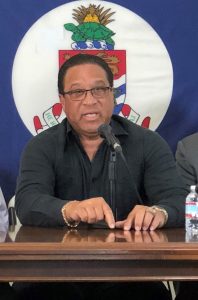
Accusing the PACT government of 14 months of “spectacular non-achievement”, he said, “There are too many premiers and too many agendas. They cannot seem to agree on any of the substantive issues facing the country, hence the lack of policies and the legislation to underpin them. There is no real leadership.”
Premier Panton did not respond directly to requests for comment.
A spokesperson for his office said recently in an emailed comment that while the Standing Orders and Constitution do indicate that there are “usually” four meetings in a parliamentary session, they do not state that there “shall” be four meetings.
Questions on the legislative direction and concerns raised were not addressed.
Critics of the government accept that they have not broken any law or regulation by holding so few substantive meetings, but they suggest the departure from custom, if it continues, will erode the influence of Cayman’s primary democratic institution.
Speaking at a recent media briefing via Zoom, Opposition Leader Roy McTaggart said the lack of meetings has proved difficult.
“The members’ motions and questions is the one opportunity we have as an opposition to elicit information from government with regard to what truly is happening … what the populous is concerned about,” he said.
Parliament needs proper schedule
A count of the Order Papers posted to the parliament website found that, in the last 14 years, there were four other occasions when three meetings or fewer were held. However, those meetings were significantly longer, including more days in the house, than those over the past 14 months.
In the 2020-2021 session, only one meeting was held.
Former Premier McLaughlin blamed this on the COVID outbreak which shut down the country for much of 2020. Then there was the impasse over McKeeva Bush’s position as speaker, following his common assault conviction, which also curtailed house business in the early part of 2021 ahead of the general election.
Miller said four meetings is the normal and expected standard.
“There is full authorisation to be more than four, but the expectation is that there should be at least four,” he suggested.
Miller, who lost his North Side seat at the last election, argues for a return to the era when there was a set calendar for parliamentary sessions, rather than ad-hoc meetings.
“Every year we met in February, June, September, and November,” he said.
Miller also voiced concerns that an increasing number of decisions were being made in Cabinet behind closed doors rather than through public sessions in parliament.
He claimed, “It is part of a deliberate process of eroding the authority of parliament which has been going on now for the last decade in this country and it is a big threat to our democratic process,” he said.
Miller was also critical of the current opposition’s performance at Finance Committee, which he said is also an opportunity to question policy and expenditures.
Having a three-day-long Finance Committee meeting, he said, was no reason to celebrate.
“I think that’s a terrible moment in our history and I put the blame solely on the shoulders of the opposition, who obviously did not take the time to prepare themselves and to interrogate the government and make sure that government’s funds were being properly protected and adequately controlled,” he said.
Related Videos









This picture above is my idea of the perfect government. An empty room devoid of politicians.
Four bossy, busy women could run Cayman (or LA for that matter) like a Swiss watch.
One can only surmise this is the result of voting for a person and not an organized party.