


Several former legislators are among the surprise inclusions in a totally revamped National Conservation Council after the minority government axed half of the existing members.
Among the new appointees is former lawmaker Gilbert McLean who will be the new chair of the council. Ezzard Miller, Arden McLean and Captain Eugene Ebanks, all former legislators, as well as lawyer Steve McField, are also joining the board.
The changes to the council were confirmed Wednesday night in a press release from the Ministry of Sustainability and Climate Resiliency.
Sustainability Minister Dwayne Seymour said in the release, “I believe that the changes will establish a better balance for the community on a whole and be seen to be fair for all. The members bring a vast array of experience and expertise, as well as the vigour and passion necessary to serve the Cayman Islands in this capacity.”
Government had wanted to amend the National Conservation Act through legislation, but pulled a draft bill at the last minute after recognising it would not get support to pass in Parliament.
Now Cabinet has used its powers to reshape the council, appointing multiple former legislators and revoking the appointments of six members: chairman Stuart Mailer, ornithologist Patricia Bradley, climate policy expert Lisa-Ann Hurlston-McKenzie, Ocean Frontiers founder Steve Broadbelt, Lucille Seymour and Pierre Foster.
The news came through in a series of emails that pinged on the phones of various members as they convened for a meeting yesterday.
By the time they had finished reading their messages, there was not enough people left on the committee to hold the meeting.
“I have no idea how I survived this purge,” said Ian Kirkham, the only Cabinet appointed member to remain on the council.
He said he was concerned that the shake-up was retaliation after a series of court decisions sided with the conservation council in litigation against the Central Planning Authority, which clarified the scope of powers of the two bodies.
“I feel the move to revoke the membership of these skilled and experienced environmentalists was a vengeful act,” he added.
Kirkham said he was worried that political appointees without relevant technical expertise could create “mayhem” on a “sensible board” at a time when he believes misinformation is rife about the council and its role.
Departing president Stuart Mailer said he was “surprised and disappointed” at the extent of the changes to the council.

He accepted he held his position at the “request and goodwill” of the government and said it had been an honour to serve.
He acknowledged controversy over the legal battles, suggesting this may have been a motivation for the reshuffle.
But he insisted the legal remit of the council under the law was to protect Cayman’s environment including its natural resources and keystone species.
“The council has a very important job to do and we were doing our best to do it,” he said.
“We are required to look after the natural resources of the island for both present and future generations.”
Progressives ‘surprised’ but not alarmed
The reshuffle of a Cabinet-appointed board or council is not in and of itself controversial – although such sweeping changes are more commonly made after a general election rather than just before it.
Progressives leader Joey Hew said the timing of the changes was “surprising”.
However, he said, it was not a decision that went so far as to breach the agreement for the Progressives to prop up the seven-member United People’s Movement government to continue to the next election.
“I could try to play politics and say that but I don’t think that would be true,” he said.
“We are surprised because it is unusual for wholesale changes of boards, except usually after an election or at the end of the term.”
Whatever party, or combination of parties, is elected on 30 April will be entitled to reshuffle the council or any other board as it sees fit. However, one area of contention in terms of the make-up of the new council is the requirement under the National Conservation Act that at least four of the eight Cabinet-appointed members have “relevant technical or scientific expertise”.
Any opposition to the appointments would hinge on how strictly that clause is interpreted.
Hew said he was unaware that any of the incoming members had specific scientific credentials. But he said the changes would have been made in Cabinet and it would have been open to the Governor or Attorney General to intervene if they felt the appointments were out of step with the legislation.
“I can say they (the former legislators) know their districts just as well or better than anyone. As former legislators they would also understand that they have to follow the law – and the law is still intact.”
Hew added that he felt the legal battles between the council and the CPA were “unfortunate”. In some respects he said he was surprised the council had “lasted this long”.
Miller: ‘I have always believed in conservation’
Despite concerns that some of the new members had not shown a track record of expertise commitment to the environment, former North Side MP Miller said they were an experienced group who respected the rule of law. He said he had been approached earlier this month and was happy to be able to serve.
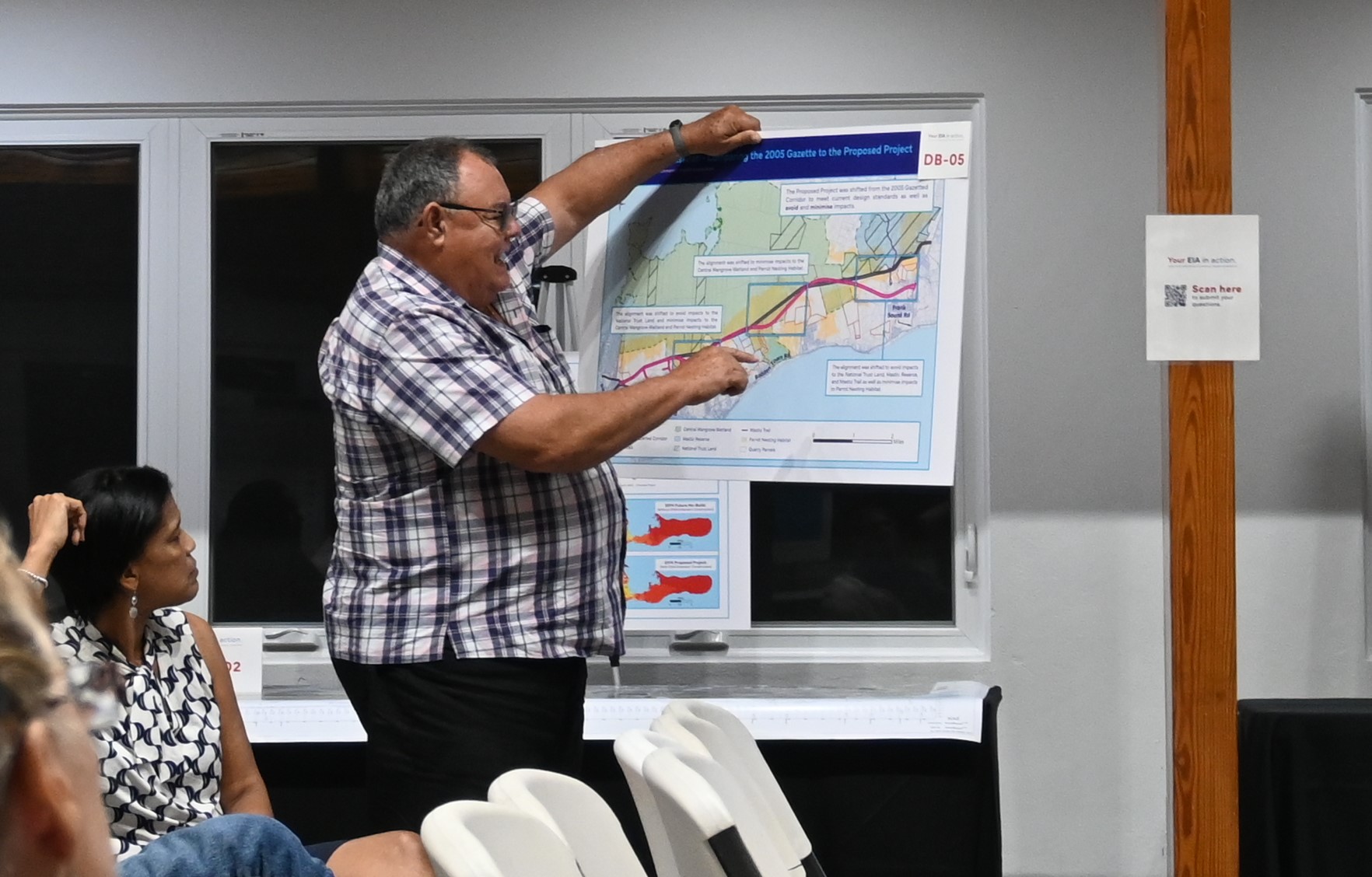
He said people should not have preconceived notions about how he would operate on the council.
“My record shows that anything that is put before me I will analyse carefully and consult widely and give a very considered opinion,” he said.
Miller said he supports conservation but not necessarily through government ownership of land or zoning overlays that prevent people from getting economic value from their property.
“I have always believed in conservation. The reason we have areas in North Side left to protect is because people like me and my family have used the land in a sustainable way.”
As a former legislator who helped push through 30 committee stage amendments to the National Conservation Act, he said “I probably know the law better than most”.
Despite recent court judgments to the contrary, he said he believes the council was intended to be advisory.
And he added that it was “bordering on ludicrous” that two public bodies would be going up against each other in court.
He said none of the new members were “destroyers of the environment” adding “I believe in balance. We should be able to sit down as adults and come to an understanding on the best way forward.”
The National Conservation Act states that the role of the council is to promote the “biological diversity and the conservation and sustainable use of natural resources”.
According to the legislation, the council should consist of five statutory members, representing the Departments of Environment, Planning, and Agriculture, plus a member representing the National Trust for the Cayman Islands; and eight members appointed by the Cabinet, of which at least four must have relevant scientific or technical expertise.
Asked if he believed the council would remain intact after the next election, Miller said much would depend on the result.
“Elections have consequences so I don’t predict anything in that regard. The new government will have the same right as this one to come along and put in a new board.”
The Cayman Compass sought comment from new chairman Gilbert McLean for this article but received no response by press time.
The Caymanian Community Party did not respond to requests for comment by press time. Minister Seymour did not respond to further questions beyond the press release issued by Government Information Services.
Related Videos










Any voice that balances our environment with the need for Cayman to evolve is positive. We need to build big projects that are good for our Country. We need ports for commerce and trade, tourism and security. We need a replacement landfill. We need arterial roads that move our people and improve their quality of life. We can’t get to a place where nothing gets done because we are afraid of harming every tree or mangrove. We need courage and visionaries who are brave and willing to offend some of the population in the short term, to balance the infrastructure we need against envirnomental good. The future is coming whether we like it or not. We need to build today so our grandchildren can have a good, clean, safe and happy life here. We can do it.
Our grandchildren will not want to live in a concrete jungle, developed countries all provide for national parks and other areas unique to the environment. What we need is a national plan setting out areas that need to be preserved, at present we are way behind other countries in the percentage of our land that is protected from development. Profit should never be the overriding motivation.