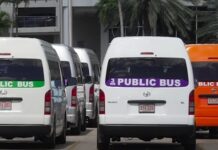
A multi-million dollar investment in a network of district depots, serviced by a ‘semi-express’ bus service in partnership with community shuttles is one of the key options under consideration for the future of Cayman’s bus service.
That option – expected to cost at least $25 million to initiate over the next two years – is the more extreme of two possible futures for the public transport system, outlined by Deloitte in its strategy report for government.
The two scenarios are:
Option 1: An enhanced version of existing system
The first option on the table mirrors the approach on several small islands around the Caribbean, and is closest to what exists already in Cayman.
This involves an ‘enhanced community bus service’ operating from a central depot. It would involve new, larger buses working to an enhanced timetable that provides increased service to all districts in Cayman, and operates late into the night to provide service for shift workers – considered a key market for an improved system.
“The addition of several new routes, or modifications to the existing routes, by the Public Transport Unit with adequate and transparent scheduling with increased operating hours would complement and enhance the existing routes that are known and used by the current bus travellers on the island,” it states.
Option 1, proposed by Deloitte, also includes scope for a limited second set of ‘community routes’ utilising the smaller omnibus vehicles, to operate within the districts. The plan envisages ‘loading locations’ in districts where there is enough demand to allow passengers to link between their neighbourhood and the main arterial roads where the buses operate.
This option would involve investment in new buses, a new operating structure and enhancements to the central depot in George Town – which would need to be enhanced and possibly relocated from its current site next to George Town Library.
The proposal – the cheaper of the two – also includes scope for a limited number of new community routes, linking with the main bus routes through ‘loading areas’ in the district. This however, would only be considered for districts that meet certain demand criteria.
Option 2: Express buses from district depots
The second option on the table involves a more expensive and far-reaching reform of the bus service.
It involves investment in creating a series of depots on government land in each district that could operate as park-and-ride facilities and focal points for neighbourhood shuttle routes.
Passengers would drive or shuttle to the community depot and then take a ‘semi-express’ bus – which stops only at other district depots on the route – to get to the central depot in George Town.
A case study example of how this would work, included in the report, envisages a fleet of 30 buses of 60 feet for the ‘District-to-District’ semi-express service, operating at all hours, seven days a week.
Onward travel to home or work would be facilitated by smaller buses operating on neighbourhood routes.
The first and most important of these shuttle services to be established would be around George Town. The report suggests 10 40-foot buses could shuttle passengers from the depot to key locations in this area around-the-clock. Similar shuttle services in each district could be rolled out on a longer timetable, it recommends.
“The connector bus network within the core tourist and business and employment district, consisting mainly of the George Town and the lower Seven Mile Beach Corridor area, would need to be effectively functional as to enable passengers to still have the ability to get to where they need to go throughout the day, without any significant added expense and reduction in convenience.”
The cost of this option is expected to be at least $25 million, and would take at least two years to implement. That price doesn’t factor in the cost of developing the district depots, which it suggests should be done on government land.
Related Videos