

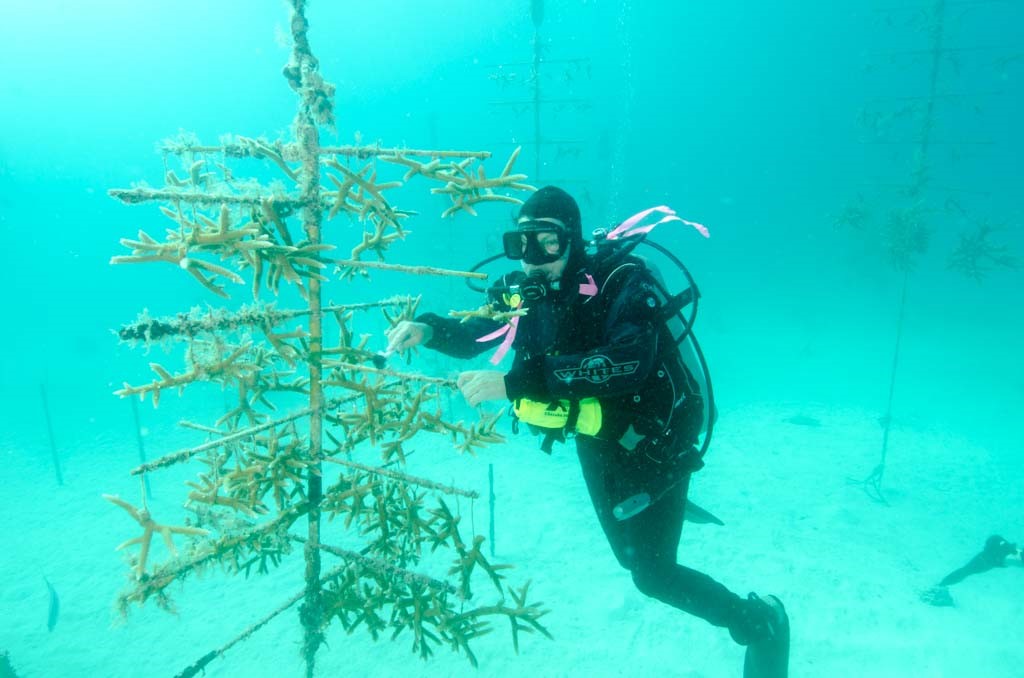
Marine conservationist Lois Hatcher, who has been working on trying to restore endangered corals along the east coast of Grand Cayman, has seen much of her work wiped out over the past year, as bleaching killed off most of the corals she transplanted.
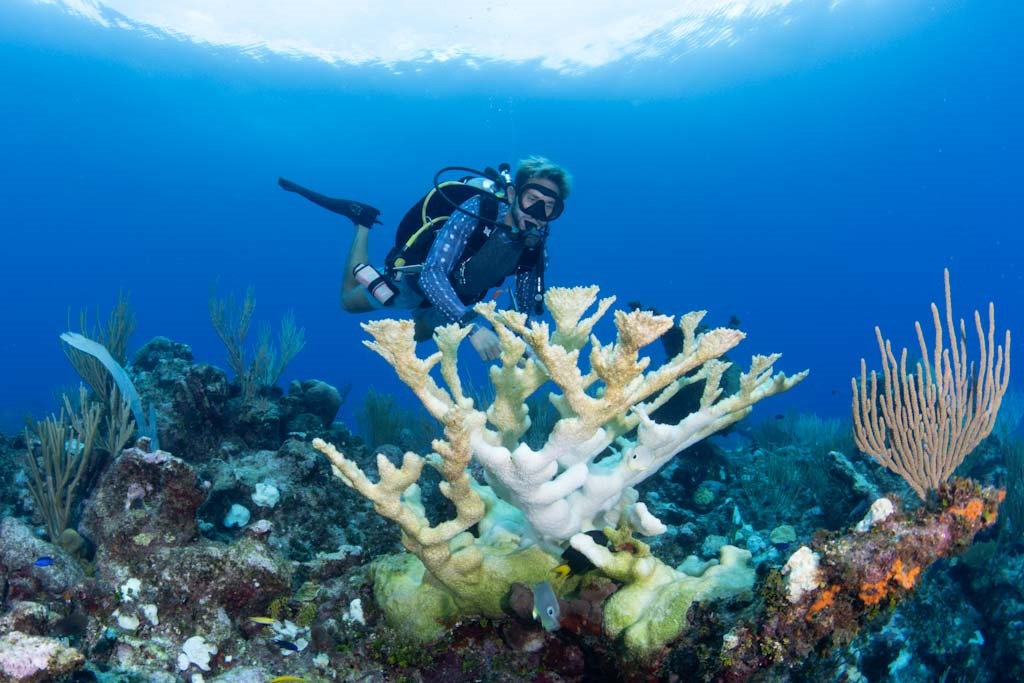
“Over 95% of the staghorn and elkhorn coral died,” she said.
Of 2,500 fragments of coral she had transplanted to artificial coral trees and local reefs, only 34 have survived.

The bleaching die-off of the coral fragments, already battered and struggling from the outbreak of stony coral tissue loss disease that hit the island in 2020, was the latest of the many challenges she’s seen in her work.
Somewhat battered and struggling herself from the frustration and disappointment of seeing years of effort end up as dead, white pieces of coral, and from what she describes as a lack of support for coral conservation efforts generally in Cayman, Hatcher says she likely has “ecological grief”.
She has decided to take a respite from both her restoration work and from Cayman.
Ecological grief, or eco-grief, is described in the International Journal of Environmental Research as the “grief felt in relation to experienced or anticipated ecological losses, including the loss of species, ecosystems and meaningful landscapes due to acute or chronic environmental change”.
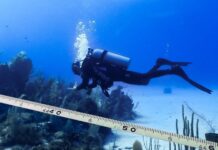
Hatcher has been involved in coral restoration work in Cayman for years. She was instrumental in organising clean-up and coral replanting efforts after the Carnival Magic cruise ship dropped its anchor and wrecked 16,000 square feet of coral off George Town in 2014.
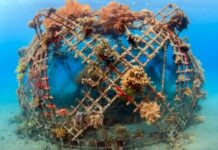
In recent years, she has been spearheading efforts in East End to transplant fragments of endangered elkhorn and staghorn coral onto artificial coral tree nurseries, made of PVC piping. Once the fragments, suspended from the ‘tree branches’, grow big enough, they are then transferred to the reef where they are ‘planted’.
This work had been going well, but then, disaster hit.
“For me, I hated the fact that I had to do coral restoration,” Hatcher said, “but I liked the fact that we were doing something about it. I loved being in the nursery and working on it, and seeing the successes we were having. Well, after last summer, all that died.
“We had some outplants that were really, really successful. They had spawned, they were growing, and now they’re dead.”
She said it was disheartening to see that there seems to be little appetite in Cayman for the steps necessary to reduce stress on the reefs, such as curtailing coastline development, controlling runoff from construction sites or dealing with sub-par sewerage systems. This was especially disappointing, she said, given the efforts she’s seen being made by other places – like in the Florida Keys last year which involved hundreds of people and millions of dollars – to do something to combat the impact of coral bleaching on those local reefs.
“I just needed a break. I want to keep doing coral restoration if it’s supported, but I needed a break from Cayman,” she said.
“There are so many things going on, with sewerage and all the over-development and overfishing. Until those things are stopped, the reefs will continue to suffer. Yes, the reefs are affected by the heat, but there are many other stressors as well. If none of those stressors are removed, then they are going to continue to affect the reefs,” she added.
While Cayman’s reefs are still reeling and recovering from last year’s record sea temperatures, 2024 is looking to be as bad, if not worse.
“The biggest thing we had last year was that the bleaching lasted for so long,” Hatcher said. “And this year, it’s forecast to be even hotter. It’s been reported that in Miami and the Keys, they were seeing June-like temperatures in April.”
“Coral restoration practitioners are now moving towards land-based tanks. There are still hopes they will find those resilient corals that are more heat resistant than others,” she added.
“Cayman is at the tipping point. They are never going to get the reefs back to what they used to be. That has never been a possibility. All we can do is maintain them,” she said.
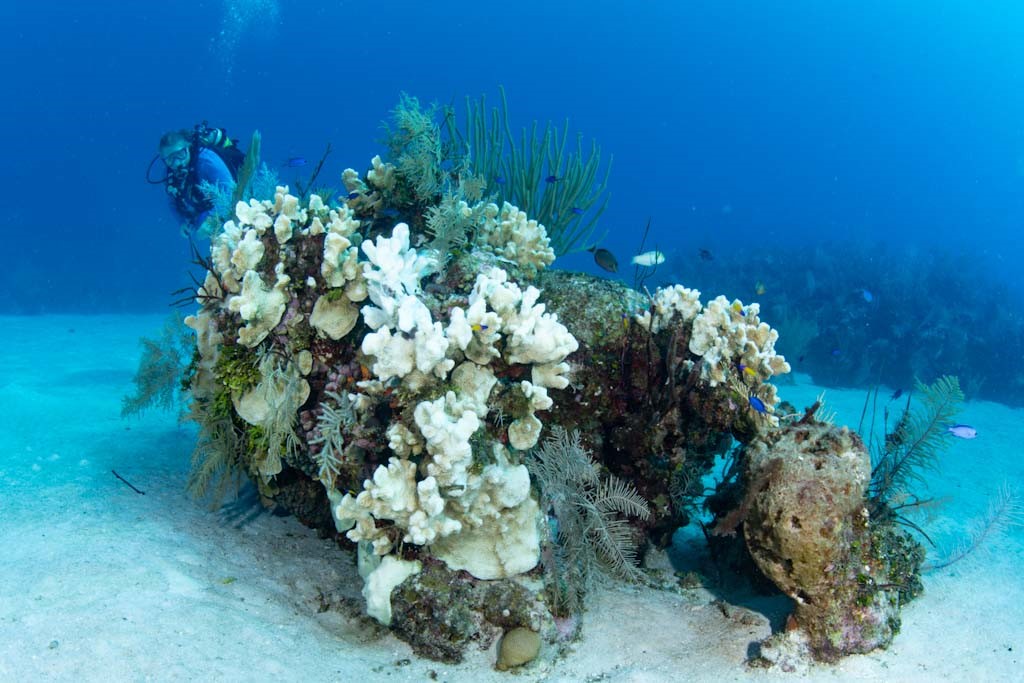
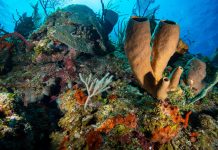
Hatcher says one of the most requested sites for divers in East End – Babylon – has become overrun with algae. “It is so sad,” she said. “Seeing this in places like Babylon is so disturbing.”
She said she’s also noticed this year, for the first time, “huge chunks of coral breaking off. I’ve never seen chunks that big before. Part of it is from ocean acidification, like if you put chalk in vinegar. The reefs aren’t building up, they’re eroding.
“The reefs absorb about 95% of wave action. You saw in February’s nor’wester, the effect of the waves on the coastal properties and developments.”
Related Videos







Parliament and citizens please take note. Oh Lois, as you know I’ve long shared your grief as I witnessed the demise of our reef fish populations and the reef itself. Know that your personal investment of time and expertise may yet offer helpful data and processes for other marine biologists who continue with this effort. The average citizen, especially Parliament ought to at least be taught and take to heart this truth about corals: Coral loss equals sand loss as well as habitat loss for fish and lobsters and loss of crucial storm protection for our coast. Our grossly depleted edible fish are in desperate need of restoration, made all the more difficult with habitat loss. The now sparsely populated parrotfish who once made most of our sand, did so by eating corals. Only recently made illegal to spear, parrotfish ought to have total legal protected. Grand Cayman’s marine resource protections have a consistent history of being too little, too late. Cayman’s best hope for a sustainable, renewable strategic food reserve is restoration of our reef shelf inhabitants. The DOE’s efforts and funding should be raised many notches on the priority ladder for Government spending. The Environmental Fund should be used properly for this purpose, as it was intended. Agricultural land is rapidly disappearing under asphalt, homes and buildings, all of which add to reef damaging pollution. We should all be sharing Lois’ grief, concern and desire to do all that we can through support for coral reef research and the battle against global warming. Support your local marine biologists, who have historically always been underfunded! We’re now seeing the result of ignoring scientists and only just beginning to pay the price. Woes be to future generations for whom the bell tolls. If any members of Parliament read this message, please comment and then act on the DOE’s recommendations. Therein lies our best hope.