


By Simon Cawdery, Compass columnist

Cayman’s government has decided it is sensible to research something called ‘Gross Domestic Happiness’. What utter nonsense.
Cayman already wastes money in immeasurable ways and now we want to devote resources to this. Perhaps utter nonsense is a little unfair.
At the right time, under the right circumstances, measuring the ‘happiness’ or ‘satisfaction’ of citizens might be sensible.
Statistics and governance
But Cayman doesn’t do the very basics of statistical reporting well enough right now, so moving in this direction before putting in place good statistical foundations is just a waste of time and money.
What Cayman needs is better investment in raw data so that we can understand empirically how people are doing, better investment in more timely data and better investment in more analysis of the data. Just one example: Go to www.eso.ky and download the latest GDP data in excel. It stops in 2022. We are in May 2024. Timely data enables good decision-making and analysis.
We need to resource our statistics department to produce data that helps facilitate good policies.
Wool over eyes
A bit of history.
The first country I am aware of to publish this type of ‘happiness data’ was Bhutan.
Another prominent country that highlights the happiness of its citizens is North Korea.
For those unfamiliar, Bhutan is an unelected kingdom where average income per person is just US$3,500 (according to the World Bank) and North Korea, well, I think we all know enough to understand the issues there.
One of the potential problems with a happiness indicator is that they are used by a country’s rulers to tell a story that simply isn’t true. It can be used to obscure the truth and hide the grizzly facts under a veneer of happiness. It’s a trait of non-democratic countries to focus on measures that support their rulers rather than conduct an honest assessment which provides for unsettling (and potentially rebellious) conclusions.
Why on earth then is Cayman going down this route? Perhaps there is a purity of intent. Which is fine and admirable. But good policy and good analysis are built on robust data. Before rushing in to measure the unmeasurable, Cayman should invest its limited resources in far more coherent, productive and valuable areas.
People can be happy whether rich or poor. But poverty, living in wretched conditions and having no job or prospects is unpleasant regardless of what a happiness indicator says. It’s true that there is good evidence that there isn’t a linear correlation between wealth and happiness amongst people (more wealth leads to greater happiness but the rate of improvement slows, meaning that it takes an ever-increasing quantum of wealth to increase the level of an individual’s happiness).
The fact remains, though, that without a basic income level, a basic standard of living, a basic standard of freedom and safety, and a basic level of opportunity, measuring or even claiming one’s subjects as ‘happy’ is a pointless and entirely self-serving exercise.
‘Lies, damned lies and statistics’ – attributed to Mark Twain
When contemplating using any new statistic, the crucial questions to ask are: “What will this tell us?”; “How will it inform policy-making?”; and “Why is it better than an alternative?”.
On the other hand, introducing statistics to obfuscate the obvious and disguise the problems isn’t the way forward; if the facts don’t fit the narrative don’t create new facts.
For a brief thought experiment, let’s assume Cayman does publish such ‘happiness statistics’. Then what? If we find that Cayman ranks 45 on the global happiness scale what’s the policy action?
I read in a news article that an elected representative thought that this could help inform policy on health or crime. Really? Reduce crime levels. That’s the solution to happiness with respect to criminal activity. Improve the cost efficiency and effectiveness of healthcare spending. That will improve happiness with respect to healthcare. Reform Cayman’s education spending and deliver better education outcomes. That will improve happiness with respect to education. Does anyone really need a happiness survey to tell them the blindingly obvious?
The irony is that Cayman very much needs better statistics and needs better research but, by better, I mean more investment in basic data collection, not surveys of happiness.
Who analyses the impact of government policy on debt levels – debt levels that aren’t properly accounting for future liabilities? Where is the data on cost of living for different income groups? Why don’t we have stratified data on Cayman’s economy? Such data would enable us to understand whether different income groups or different nationalities experience different outcomes in terms of health or education or law and order.
Imagine if we could identify that a certain income level was correlated with exceedingly poor life expectancy. Then we would surely enact policies to fix that. But we can’t because we don’t research these problems and study this data enough. It might be less glamorous than surveying ‘happiness’ but it’s far more important.
Better data and better supervision
What Cayman demonstrably needs is better supervision of its government budgetary policies. We have a sterling job done by the auditor general (albeit seemingly no one ever gets fired for consistent failures to fix recurring issues highlighted in such auditor reports) who assesses waste and good behaviour, but why do we not have a fiscal review body that properly costs, analyses, assesses and then publishes independent reviews on policy actions by the government, to ensure they will be effective in their outcome and are accurately accounted for?
There’s a huge amount of poor accounting in government coupled with a huge amount of inefficient spending. Just look at the massive and unfunded healthcare, poverty care and retirement provisions in Cayman. The liabilities are not properly accounted for, and the problems ignored, to the detriment of every living and future Caymanian. What Cayman desperately needs is a review body that can spend time and effort analysing government spending.
For those familiar with such bodies, the US has one which is called the Congressional Budget Office (CBO). Before policy is voted on, it is scored (analysed) by the CBO to say what effect it will have on the government’s budget and long-term finances. This is crucial work to ensure long-term fiscal sustainability is achieved. Cayman very clearly lacks such good supervision.
The UK has a similar body, called the Office for Budget Responsibility, which does a broadly similar job. It may seem as though I have selected two well-funded, well-organised and economically advanced countries which are materially different from Cayman in so many structural and cultural ways. They are large countries with well-resourced governments able to afford such luxuries. Except that’s not the case. Let’s look further afield:
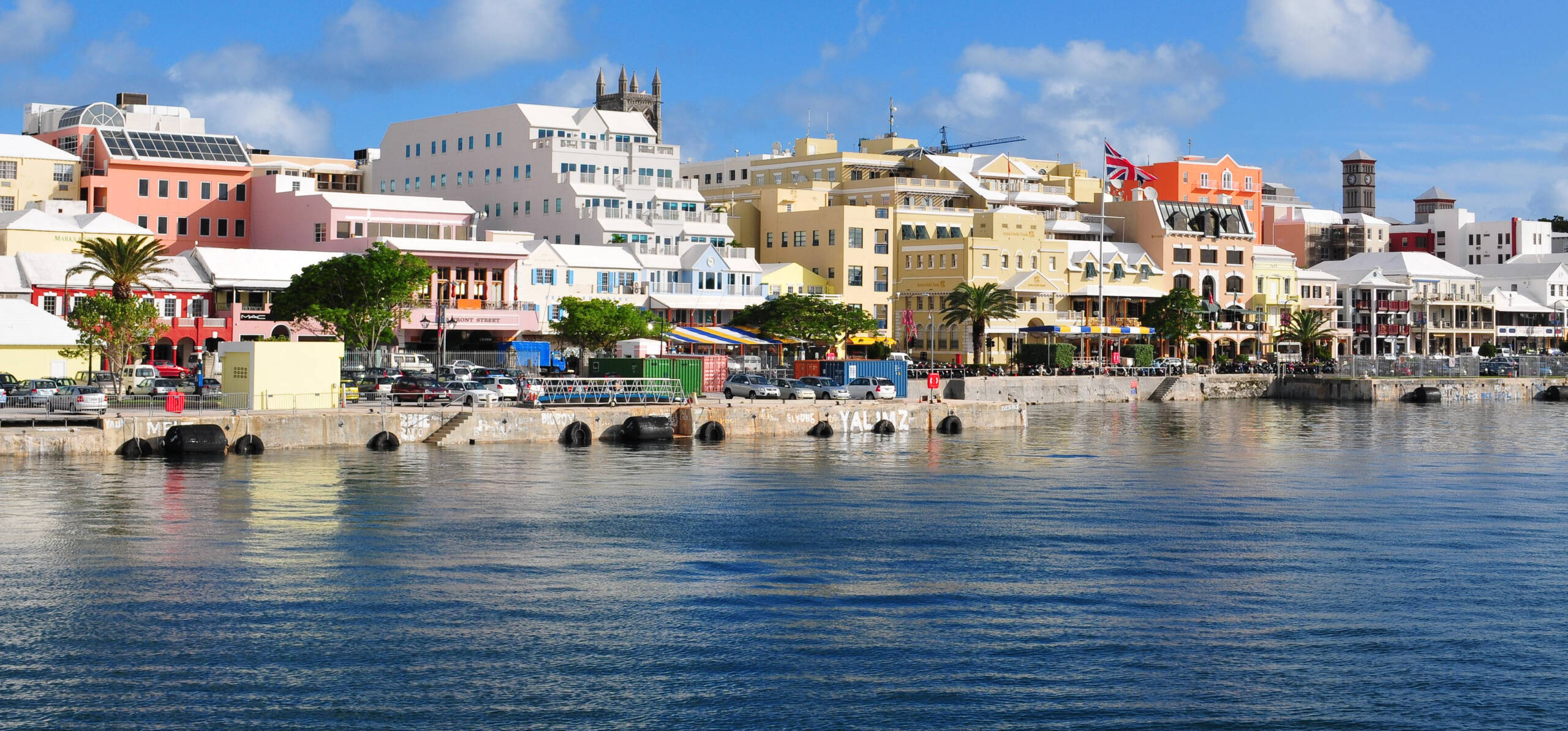
Bermuda (with a population of 63,000 people) has an independently run and administered Fiscal Responsibility Panel. This is a panel of economic experts who assess “the credibility of macro and fiscal assumptions underlying Government projections and the risks that could affect progress in meeting the territory’s fiscal goals”.
Perhaps one only needs to re-read that objective to understand why it might scare politicians. Their pet wasteful projects would now be subject to independent rigorous review. Quelle horreur!
Jersey (a crown dependency with a population of 103,000 people) has a Fiscal Policy Panel. This provides “Jersey’s Minister for Treasury and Resources with independent advice on (i) the strength of the economy, economic outlook and the economic cycle; (ii) the sustainability of public finances in the medium and long term and (iii) fiscal policy including the balance of tax and spend and the use of the Strategic Reserve Fund and the Stabilisation Fund.”
Do politicians generally like to have their efforts subject to serious and deliberative review? Probably not.
Do they like to establish such bodies? Probably not.
But do the people of Cayman deserve good supervision and oversight of the whims and sometimes hysterical policies of its politicians? Absolutely yes.
These are not bodies that can tell politicians what to do; the democratic mandate remains absolute with the elected persons. But such bodies can better inform citizens (and the politicians who care to be so informed), contribute towards improved debate and discussion and, therefore, through transparency and analysis, help, perhaps, to ensure Cayman gets to a place of long-term stability, economically wise.
A Cayman solution
Very few good things in life are free.
A fiscal responsibility body will cost money. But in the medium-to-longer term, if politicians and voters respect the voice of the independent body and listen to its reviews and make better, more sustainable policy decisions, it’s just possible that the economic trajectory of the Cayman Islands can be improved.
Tiny changes in long-term GDP growth have huge impacts on wealth for Cayman. Per the Economic and Statistics Office, in 2022, (see my earlier gripe!), Cayman’s GDP was US$5,174,402,000 (let’s call that $5.2 billion).
Imagine good analysis and review led to ever-so-slightly better policy-making, and such good policy-making helped raise Cayman’s annual GDP growth rate by 0.1%. That would increase Cayman’s GDP by $5.2 million per year.
And that’s if such good governance raised the potential growth rate by only 0.1%. Perhaps it could help improve it more, leading to even more meaningful economy-wide gains.
Costs vs benefits
How much would such a Fiscal Review Authority cost?
I have had conversations with people who participate, or are close to people who participate, in such bodies. They have given me this data on the basis that they operate in this space and although the numbers are estimates, they are realistic ones.
This authority would need three independent (likely from off island so no reasonable person could dispute their independence, impartiality and expertise) persons – a chair and two members. The chair will need a salary of about $75,000 and the independent members about $40,000 each.
They will then need a support team of likely three persons, who would be skilled in statistics, economics and data analysis. All in all, the budget would likely come to around $350,000–$400,000 annually.
This authority would work closely with the Economic and Statistics Office, which would be required to assist them in providing data. It would also be sensible to budget for additional resources for the ESO so that they may produce the data necessary to make good policy decisions. Putting everything together, the overall cost of running such a body would be around $500,000.
That may seem like a lot when printed in black and white. But set against the scope for long-term better management of Cayman’s economy, it’s a drop in the ocean. And, as already mentioned, there are plenty of areas from which wasteful spending can be diverted so it shouldn’t, on a net basis, cost the country anything.
Good governance and supervision of spending isn’t a free lunch, but it can produce benefits that far exceed its costs. A focus on good quality, granular statistics that lead to good policy-making is a far better use of resources than measures that seek to obfuscate and confuse.
Cayman deserves quality data to make good decisions and quality supervision to ensure we know what’s going on. At the moment, it has neither. It’s time for something to be done about it.
Making better decisions because we have better data would do far more to improve standards of living and happiness than surveys.
Simon Cawdery, CFA, is an investment manager and governance professional who lives and works in the Cayman Islands. He writes regularly for the Compass.
Related Videos













An excellent and well thought out analysis. Let’s hope some government officials take this seriously.
I suppose the level of happiness will be very high on the Brac where Govt are building a new High School at great expense for a small number of students, along with accommodation for the construction workers!.
Don’t mock Bhutan. Yes it is a country that measures its success by gross domestic happiness. But it was also the first country to be carbon neutral (actually only country to be carbon negative), ban plastic bags and control tourism so that any individual or groups entering the country had to have a formal guide from the country. It has incredible traditions and is rich in culture. We are so far from Bhutan’s model. Crime is ever on the increase and politics is currently a joke. We can’t even agree on any kind of plastic ban!
Bhutan is a landlocked monastic country in the Himalayas with a terrible history of banning religous freedom and enforcing policies of ethnic cleansing…They have hugh trade deficits (hundreds of millions) and India subsidises 25% of their debt…The per capita income is approximately $7,000. and the military and police are the enforcement arm of the governments oppressive “One Nation One People” policies…Thank heavens they take care of their plastic bags…Dr. Finley