A bid to help more people struggling with the cost of living get easier access to government financial assistance has been launched by the opposition People’s Progressive Movement.
Kenneth Bryan, acting leader of the PPM opposition, said he had submitted a motion to Parliament to increase the income threshold for people to be eligible for financial help.
“With the high cost of living today, the thresholds are too low – they need to be higher,” he said.
The threshold for assistance qualification was set almost two years ago at $3,000 a month for households of one to three people, $3,500 for those with four to six people, and $4,000 for households with seven or more people.
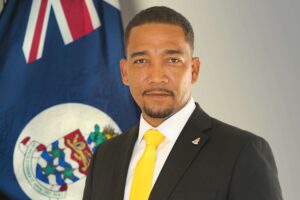
Bryan wants to see those figures go up to $4,000 for smaller households, $4,500 for medium-sized households and $5,000 for the larger households.
“The cost of living is totally different now,” he said. “They need to regularly assess the figures in order to help people.”
He highlighted that a single mother and child with a monthly income of $3,002 would not qualify for financial assistance.
Bryan said, “A one-bedroom apartment is just under $2,000. Light, food, other essentials, a car or other transport – you would never be able to survive on $3,000.
“You don’t want to create a welfare state, but $4,000 is far more realistic and I’m suggesting the same increases in each category.”
Cost of living still trending up
Bryan said, “There have been no adjustments to the financial criteria for people seeking help, although the government has acknowledged the cost of living has increased.”
He noted the ruling coalition government should already have acted, especially as the Economics and Statistics Office had predicted headline inflation would hit 5.3% in 2026, driven by a predicted increase in the cost of fuel and power.
The motion, tabled earlier this month, states that the cost of essential items, including food and non-alcoholic drinks rose by 3.8% in late 2025 alone and the cost of housing and utilities continued to “place an unsustainable burden on low to middle-income families”.
It asked the government to consider amending the Financial Assistance Regulations to the levels outlined by Bryan’s motion, which was seconded by PPM colleague Pearlina McGaw-Lumsden, the deputy speaker.
“If the cost of living is going up and salaries aren’t, the government needs to change the thresholds,” Bryan said.
The motion also stated that the government should look at the implementation of “a mechanism for the regular, annual review of these thresholds to ensure they remain tethered to the Consumer Price Index and reflective of the true cost of living”.
Bryan has also tabled the Financial Assistance (Amendment) Bill, designed to cut the amount of time returning Caymanians have to wait before they qualify for financial assistance.
He explained that, at present, Caymanians who had spent as little as four months overseas had to wait eight months before they qualified for financial assistance, but his amendment wanted to cut that to three months.
“The problem is if a person comes home and needs a job to get back on their feet, there is no social security net to help them for at least eight months,” he said.
High cost of returning
Bryan noted that if the government-set $3,000 a month for one to three people was used, that would mean returnees would need a minimum of $24,000 to get through eight months.
“If we tie that into the time it takes for a Caymanian to get a job, rather than eight months, it’s more reasonable to make it three months,” he said.
He pointed out that members of Parliament, particularly on the government benches, had voiced support for Caymanians to return home, but the present position made it difficult, particularly if “you don’t have lots of money”.
Bryan said, “This policy is removing the barrier.”
He also indicated that the opposition planned to use the tabling of amendments to bills more, rather than motions, because they could attract cross-party support and then get shelved.
“They like to approve these motions, but never really follow through on them,” he said. “The public gets hope, then you never hear anything about it.”
He added that amendments to legislation, where appropriate, were a more efficient way to bring about change because they were debated and voted on.
Bryan said the government only had to agree to “consider” motions and had no obligation to act on them.
Related Videos