The Cayman Islands government’s Unaudited Quarterly Financial Report, which was released earlier this month, boasts strong headline figures. Yet in their 14 May appearance on Compass TV’s Forefront show, Leader of the Opposition Joey Hew and Deputy Leader of the Opposition Kenneth Bryan argued that the report contains plenty of bad news for Cayman’s economy.
One of their core arguments is that while the report shows an increase in government fees, that money has come from coercive measures that have pushed up inflation in Cayman. So, the rise in government wealth comes at a cost to citizens.
“The government is celebrating a $328 million surplus, but when you take a closer look, the story is very different,” said Hew, referencing the report. “Government is collecting more, but at the same time Caymanians are paying more.”
Inflation increase
Bryan then referenced the Economics and Statistics Office’s recent upward revision of its 2026 inflation estimate to 5.3% from a previous estimate of 2.6%.
One of the key drivers for inflation has been rising global energy prices, which are driven by external factors beyond the government’s control. Yet Hew and Bryan believe that government actions late last year left Cayman exposed to the global events that unfolded when the US and Israel attacked Iran on 28 February.
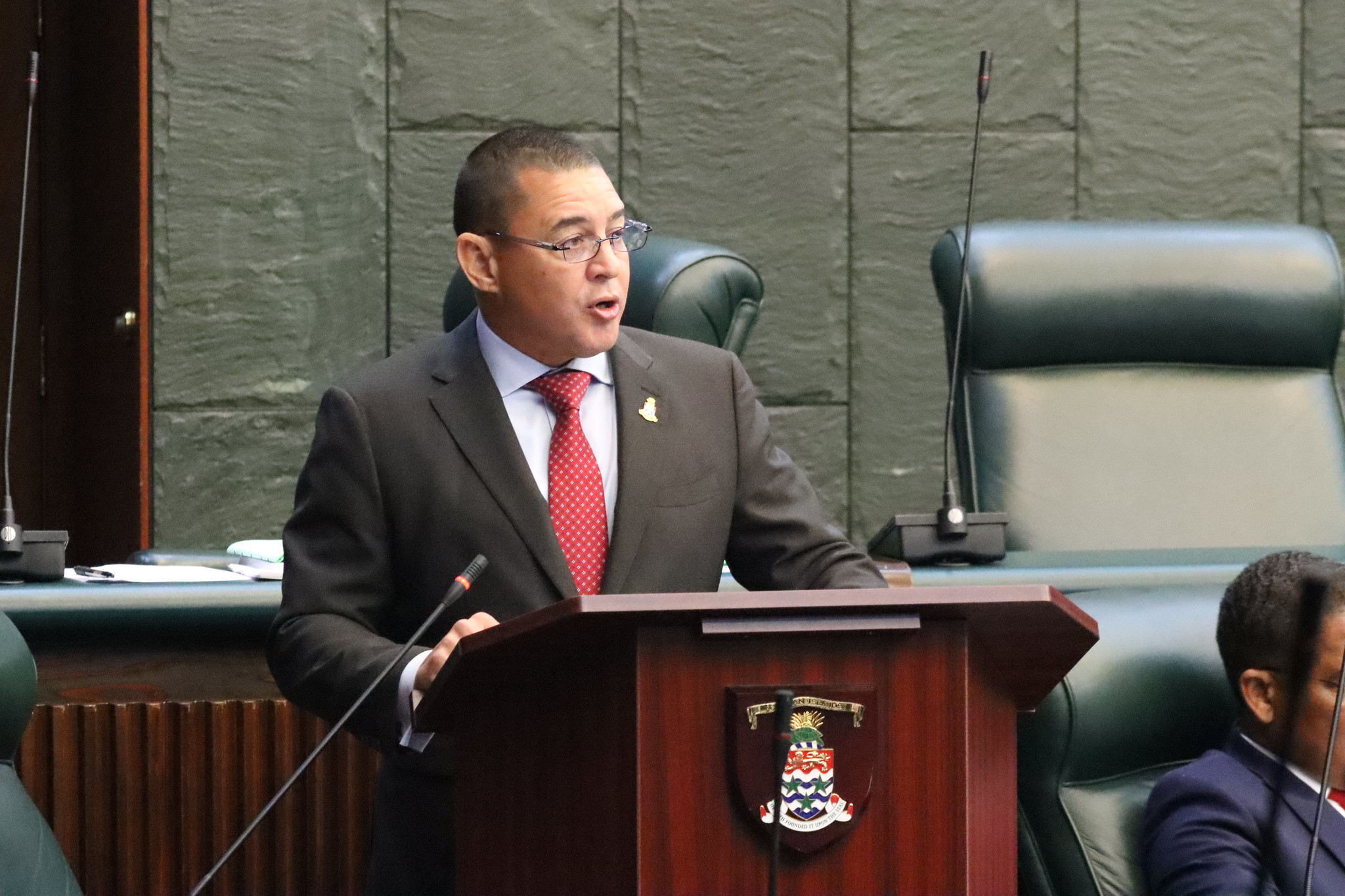
“We were making these projections and concerns in December and November of last year,” said Bryan. “This is not only because of the global circumstance, it’s also because of the tax increases and fee increases that the government implemented at exactly the same time that they increased the minimum wage.”
“When inflation goes up for the rich it goes up more for the poor,” said Hew. Economists generally agree that inflation has a disproportionate impact on lower-income households – that spend more of their money on daily consumption – than on wealthier households that hold assets such as property and equities that tend to rise with inflation.
A tale of two economies
Another key point made by the People’s Progressive Movement’s leadership is that revenue increases were focused on international aspects of Cayman’s economy, such as finance and high-end real estate, yet revenues related to domestic sectors actually came in lower than had been forecast in the budget.
Bryan cited figures from the quarterly report which show that in the first quarter financial report category ‘Other Import Duty’, $2 million less than expected was collected, while ‘Motor Vehicle Drivers Licences’ was $1.9 million less than projected and Work Permit Fees were $1.9 million lower.
“What that tells me is your regular local economy, outside of real estate and big finance, is slowing, is starting to cool down – that’s not good,” said Bryan.
Hew pointed out that fees generated from activity in the local economy are important for Cayman’s public finances because they recur throughout the year – unlike finance fees, which tend to be paid in the first quarter.
Related Videos