

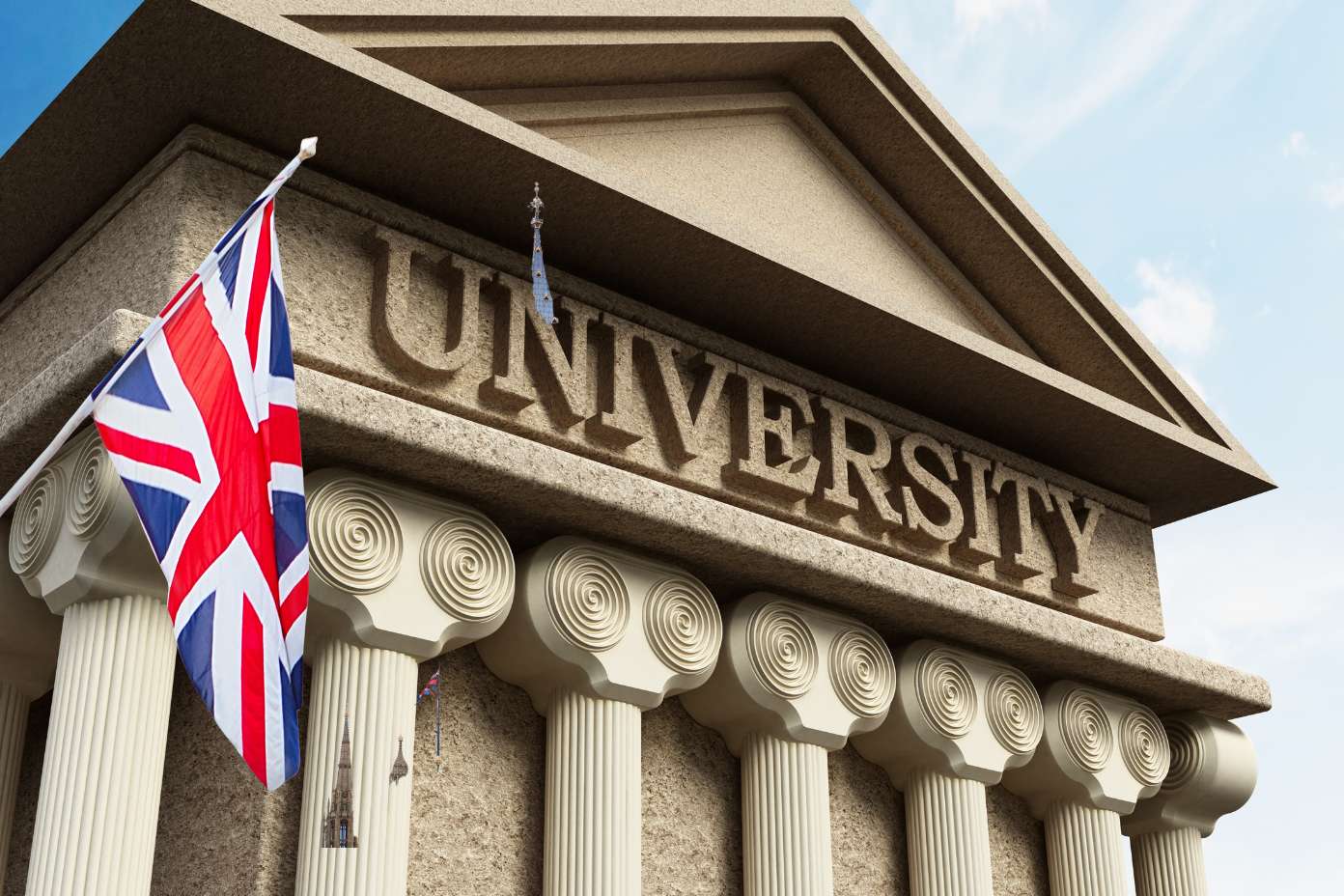
United Kingdom universities are facing growing financial pressure as new government data shows study visa issuance fell 32% in the first quarter of 2026. The UK remains a major destination for Caymanian students, with hundreds enrolling at British universities each year.
The figures, released by the UK Home Office on 21 May, showed study visa applications dropped 30% year-on-year between January and March, while refusal rates climbed to their highest level in a decade.
Between January and March 2026, roughly 13% of study visa applications were rejected – double the refusal rate recorded in 2025 and the highest level since 2015.
The downturn comes as Prime Minister Keir Starmer’s government pushes ahead with one of the most significant immigration crackdowns in decades, introducing sweeping reforms aimed at reducing migration and tightening border controls. The changes have coincided with a sharp drop in international student applications and visa approvals.
“The experiment in open borders is over,” Starmer said last year. “We’re shutting down the lab. We will take back control of our borders.”
Official figures from the UK Office for National Statistics showed long-term net migration fell to 171,000 in 2025, nearly half the previous year’s figure and the lowest level since 2021 outside of the pandemic period.
The measures are being rolled out at a time when universities are becoming increasingly dependent on higher tuition fees and international student revenue to remain financially viable.
Reports indicate that roughly 45% of British universities are now operating at a deficit, with institutions blaming years of capped tuition fees and falling international student enrolment for worsening financial pressures.
According to a recent Financial Times report, universities across Britain are cutting jobs, reducing research funding and scaling back academic programmes as international student numbers decline.
A survey by Universities UK found that 38% of responding institutions were carrying out compulsory redundancies, while 79% said they were implementing voluntary redundancy programmes.
Earlier this year, the UK government confirmed that university tuition fees in England will begin rising annually in line with inflation from August 2026 as officials attempt to stabilise university finances after years of frozen fees.
Universities are also increasingly cutting courses and research programmes, particularly in subjects including modern languages, English literature, history and chemistry.
Indirect impact on Cayman students
According to previous Compass reporting, there were 580 Caymanian students and about 1,420 students from Caribbean British Overseas Territories studying in the UK during the 2024-25 academic year, with roughly 80% enrolled at the undergraduate level.
The universities with the largest Caymanian populations included the University of Brighton and University of Leicester, each with 25 Caymanian students, followed by the University of Kent, University of Exeter and University of Essex with around 20 students each.
While Caymanian students are expected to remain largely insulated from the UK’s tightening visa regime because many hold British passports, the broader deterioration within the UK higher education sector could still have significant consequences for all students through rising fees, reduced course offerings, staff layoffs and weakened student services.
Related Videos












Many of the courses in British universities are not going to lead to a career, art history, ancient Greek, gender studies, media studies. Furthermore, the staffing is top heavy in administration. Just like the National Health Service.
The net immigration numbers are deceptive. A vast outflow of better off high taxpayers being replaced by a vast inflow of welfare dependents, who will never contribute to society.
Caymanians may be astounded to know that mostly Middle Eastern young men cross the English Channel every day having first destroyed their passports. Instead of being kicked out they are put in 4 star hotels at British taxpayers’ expense. Even if their asylum requests are denied, they stay on.