

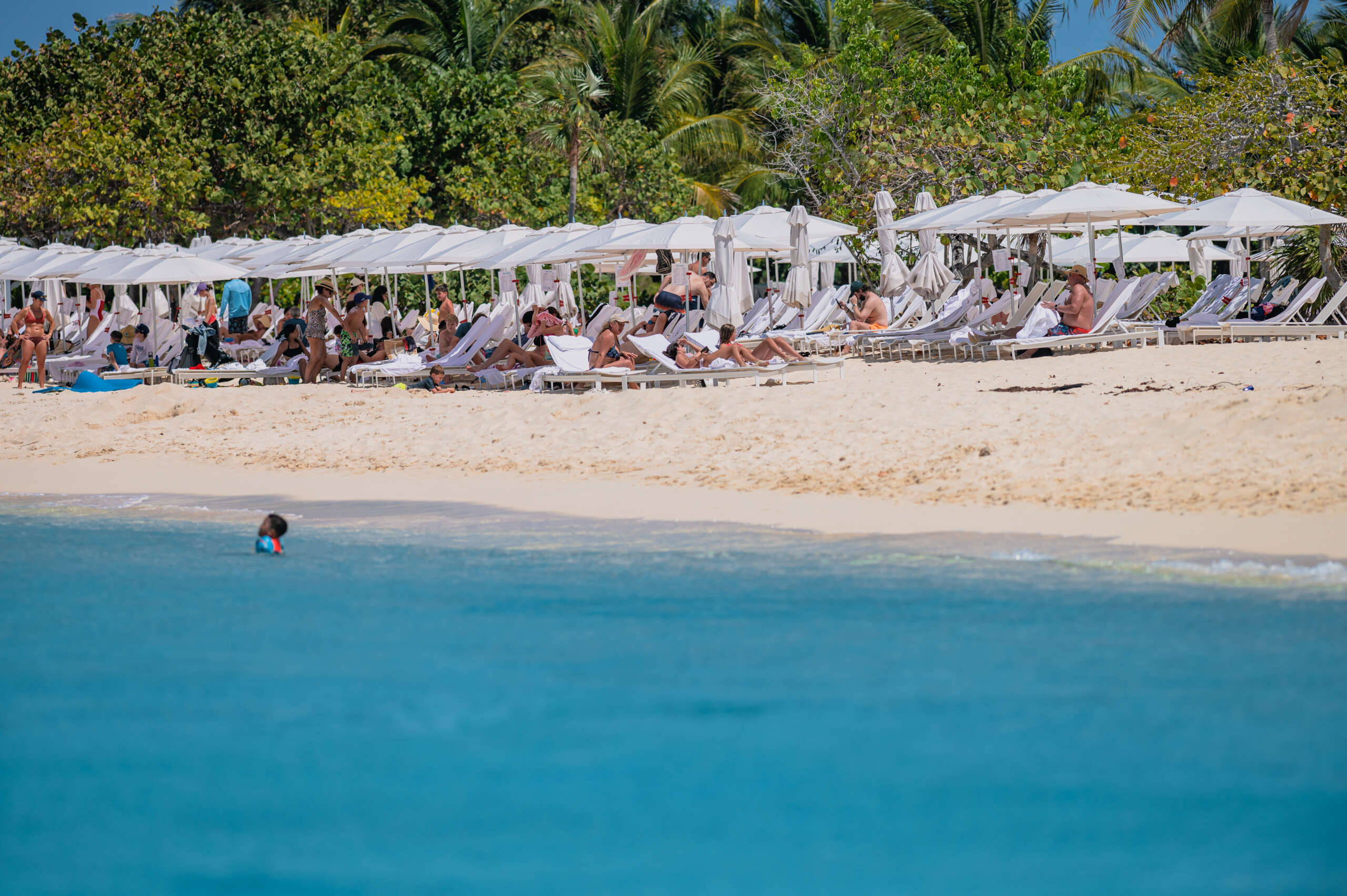
Tourism’s status as a pillar of Cayman’s economy has been up for debate in recent times. It’s an industry that comes with the potential for negative impacts, writes guest columnists Ernest Ebanks and Jasmin Siegle, the founders and principals of Cayman-based Aquilae Consulting Group.
But, done right, tourism can provide jobs and business opportunities, complement financial services and provide the impetus to protect and cherish our natural resources.
The good: tourism brings wealth and jobs
Tourism has become the world’s third-largest export industry, surpassing food and automotive products, and trailing only fuels and chemicals.
Tourism offers unique advantages over traditional exports, such as selling local products at a premium without the high transportation costs associated with exporting. From 1970-2000, the Caribbean region had a higher per capita growth than Latin America.
Tourism creates direct jobs in areas such as airports, hotels and restaurants; it also indirectly boosts other sectors like agriculture, fishing and banking. Moreover, tourism can enhance local arts, crafts, education, communication, medical facilities and overall community awareness.
The bad: more tourists are spending less money
The opportunities in the tourism industry, however, are currently suffering from having to put in more effort for similar returns, otherwise known as facing exhaustion.
This exhaustion results from a prioritisation on supply-driven strategies, as opposed to a more consumer preference/demand-based approach, which focusses on understanding and leveraging customer price sensitivities.
A supply-driven tourism strategy causes oversaturation and diminishing returns on tourism infrastructure. In contrast, a demand-driven tourism strategy is more focussed on customer preferences, sustainability and overall visitor experiences. This leads to a more competitive market with more variety of offers and growth potential.
At present, the tourism sector is attracting more customers who are spending less money.
The value generated by tourism is not retained within the country, exacerbated by a competitive strategy centred on low prices.
Small island developing states (SIDS), including associated territories like the Cayman Islands, must focus on export growth and integrate into the global economy to sustain economic development. Their economic structure typically involves one or two export-oriented sectors, which can be either capital or labour intensive, alongside a domestically oriented labour-intensive sector. Reliance on imports necessitates generating export revenue.
Tourism also poses significant environmental and social challenges. It can lead to infrastructure development, deforestation and the erosion of upland forests, impacting water resources and biodiversity.
Socially, the industry strains resources and exposes communities to health and service-allocation issues. Governance issues in many SIDS exacerbate these challenges.
Over-tourism leads to biodiversity loss, cultural commodification and exploitation of resources, as infrastructures struggle to balance tourist influx with residents’ needs. Examples like Boracay in the Philippines, labelled the “poster child for over-tourism” by Condé Nast Traveler, illustrate the environmental damage caused by rapid tourism infrastructure development.
The best: responsible tourism can be a win-win
Despite these challenges, a functional tourism sector presents opportunities, including employment and the promotion of natural resources through the blue and green economies. These economies emphasise sustainable use of ocean resources and environmentally friendly economic activities, respectively.
When managed responsibly, tourism can protect natural environments and biodiversity. For instance, a 2016 study by the National Geographic Society’s ‘Pristine Seas’ project found that marine-based tourism in the Galápagos generated over US$178 million annually and supported more than a third of the local jobs. Each shark was valued at $5.4 million over its lifetime due to tourism, compared to just $200 if caught by fishermen.
Sustainable industry practices, such as those implemented by resort chain Iberostar, which has banned single-use plastics and created coral nurseries, are crucial.
Initiatives like The Ritz-Carlton’s Community Footprints programme, which mentors local youth and provides educational sponsorships, can help alleviate poverty and create future opportunities.
Tourism helps financial services
Tourism, as a significant avenue for establishing a nation’s brand and identity, plays a vital role in the context of international financial centres (IFCs) aiming to maintain competitiveness through tourism integration.
The concept of destination branding is pivotal, as tourist destinations often embody a country’s image. Effective branding can shape perceptions positively, influence international soft power, and foster goodwill among nations.
Diversification into tourism and infrastructure alongside the financial services industry not only offers benefits but also underscores the impact of tourism on the financial sector, creating a beneficial feedback loop. This symbiotic relationship enhances the global positioning of IFCs.
Moreover, investments in infrastructure and tourism not only enhance the quality of life for residents and expatriates but also attract top global talent to the location.
By developing multiple sectors, synergies and cross-sector collaboration are fostered, leading to innovation, knowledge exchange and new business opportunities that consolidate the IFC’s global standing.
The expansion into diverse sectors generates varied job opportunities, attracting skilled workers, promoting economic growth, and establishing a resilient and sustainable economy. This strategic diversification presents the IFC as a multifaceted, dynamic global hub with diverse growth opportunities, ensuring long-term economic sustainability and growth.
Migrant workers are the norm in tourism
Migrant workers are a norm in the tourism industry, significantly contributing to destination economies.
The rapid growth of international tourism, reaching an estimated 935 million in 2010 according to the World Tourism Organization, has been widely studied.
However, the significant role of migrant workers in the tourism economy of destination countries has received less attention. In Organisation for Economic Co-operation and Development countries, the number of foreign-born residents has steadily increased, typically rising by 1.5 to 2 percentage points over a decade.
This trend is especially notable in the hospitality, restaurant and catering sector, where a higher proportion of migrant workers are employed. For example, an estimated 16% of tourism workers in the UK were non-British nationals (501,000), compared to 11% in other industries.
In fact, the United Arab Emirates’ economic rise was supported by migrant labour in construction and hospitality. Gulf Cooperation Council countries, hosting many foreign workers, contribute significantly to global remittances, with countries like India and the Philippines receiving substantial amounts.
Resorts, primarily located in coastal areas, significantly contribute to economic growth but also bring environmental and socio-cultural impacts.
They cause permanent changes to beaches and coral reefs and generate waste that harms biodiversity. Socially, resorts can lead to human rights abuses and cultural erosion.
Antigua, with its reliance on tourism, faces high living costs and dependence on imported resources. The natural resources that support the development of Antigua’s tourism, such as food and fresh water, are imported from the United States. This reliance on foreign resources creates a trade deficit (of about 43%) and limits local economic benefits.
In the Cayman Islands, the strong local currency impacts tourism negatively due to higher costs. There is a direct correlation between purchasing power parity (PPP) and the number of tourism arrivals.
The Cayman Islands dollar is fixed but stronger than the US dollar, which already negatively impacts this correlation.
Additionally, without knowing the ideal tourist volume for Cayman, we cannot determine if reducing reliance on migrant workers will have positive, neutral or negative consequences.
Increasing local labour in the sector would likely require higher wages to match living costs, potentially increasing tourism prices and affecting visitor numbers. This uncertainty regarding the ideal tourist volume poses challenges for the industry.

While tourism offers substantial economic benefits, it must be managed sustainably to mitigate environmental and social impacts, ensuring long-term benefits for both the industry and local communities.
Tourism and economic leakage
The issue of economic leakage with tourism is a call to action for Cayman to reduce this impact.
Tourism often results in significant economic leakage, where much of the money spent by tourists does not benefit the local economy.
Despite its advantages, tourism often leads to:
1) import leakage, where countries spend money on imported goods and labour to cater to tourists, and
2) export leakage, where profits are sent back to the countries supplying the goods or labour – benefiting their economies instead.
This issue is prevalent in many destinations, such as the Maldives, where tourists’ expenditures on international flights, foreign-owned resorts, and imported goods often fail to reach local businesses and communities.
For instance, tourists might book flights with British Airways and stay at American-owned resorts, consuming imported goods and services.
This setup means the bulk of tourist spending goes back to the home countries of these companies, rather than benefiting the local economy.
In the Maldives, the tourism infrastructure has been dominated by foreign-controlled resorts, leading to high levels of economic leakage. Around 70% of tourist spending does not benefit the local economy, consistent with World Bank estimates for SIDS. This leakage also includes invisible costs, such as the underdevelopment of other industries and environmental degradation.
When economic leakage in tourism exceeds specific levels, it can significantly neutralise the positive financial effects of international tourism.
Leakage occurs when part of the foreign exchange earnings from tourism is retained or repatriated by tourist-generating countries instead of being retained by tourist-receiving countries. This can happen through profits, income and royalty remittances, repayment of foreign loans, and imports of goods and services catering to tourists.
Reducing economic leakage involves identifying appropriate levels of leakage, supporting local supply chains, and creating policies to retain tourism profits locally.
This includes incentives for reinvesting profits domestically, enhancing local production capabilities, encouraging domestic investment in tourism, and enforcing competition policies against anti-competitive practices by tour operators.
Cruise has minimal benefits
Cruise tourism and all-inclusive resorts exacerbate this problem by isolating tourists from local economies. These models ensure that most of the tourist spending stays within the cruise or resort, offering limited economic benefits to the local area.

While these tourists might spend small amounts on local souvenirs or coffee, the overall benefit to the local economy is minimal compared to the pressure and costs imposed on the destination.
An effective way to address the leakage issue is through livelihood diversification and creating linkages between tourism and other local sectors, such as agriculture.
Using local goods supports local farmers and enhances the authenticity of the tourist experience. Encouraging hotels to hire local staff and source local food can significantly reduce economic leakage.
Creating backward linkages, which connect tourism businesses with local suppliers, and forward linkages, which integrate them with other community sectors, can help retain more tourism revenue locally. Examples include partnerships with local guides, campsites, and artisans, which enrich the tourist experience while supporting the local economy.
Promoting community-based tourism, such as locally owned guesthouses, can redistribute tourism benefits more fairly. These guesthouses can offer additional services like diving and local crafts, keeping more revenue within the community.
Supporting local businesses and developing the necessary technological infrastructure can also help them compete with dominant online travel agencies, which often capture significant commissions from bookings.
Leakages are categorised into three types: internal leakage (the ‘import coefficient’ of tourism activities), external leakage (pre-leakage, depending on the commercialisation mode of tourism packages and airline choices), and invisible leakage (foreign exchange costs associated with resource damage or deterioration).
Import-related leakages are highest where local economies are weakest due to inadequate quality of goods and services. Currently, the average leakage for most developing countries ranges from 40-50% of gross tourism earnings for small economies and 10-20% for more advanced and diversified developing countries.
For least developed countries, tourism import-related leakages are often lower compared to other economic activities, confirming tourism as a choice sector for development due to its comparative advantages.
Fixing the leaks that can be fixed
To reduce internal leakage, countries should identify appropriate leakage levels based on their economic structure and implement strategies to build local supply capacity. While restrictive trade policies can reduce market size, import openness tends to increase leakage unless the economy is structured to respond competitively to imports.
External leakage, or pre-leakage, is more challenging to measure and relates to the proportion of the tourism service’s total value added captured by the servicing country. Developing countries often offer base prices to intermediaries who then capture the mark-up, resulting in external leakage levels of up to 75%.
Invisible leakage refers to the less obvious, often hidden economic losses that occur when tourism revenue does not remain within the local economy.
Degradation of environmental resources, the underdevelopment of local industries and the opportunity costs of focussing on tourism at the expense of other sectors are some examples of this.
The tourism industry’s stage or point in its cycle affects leakage. Nascent tourism industries require large one-time imports, whereas mature industries may see increased leakage due to marketing and facility upgrades. Economic evolution can reduce leakage by triggering local entrepreneurial responses to tourism demand.
The type of tourism promoted also impacts leakage. High-income tourism might increase leakage despite generating higher returns due to the need for high-quality, high-priced goods.
Mass tourism could have higher leakage potential than ecological or adventure tourism, which consumes local resources as part of the experience. Low-leakage tourism might equate to low-income tourism, limiting expansion and development possibilities for other sectors of the economy.
Despite leakage, increased value added or volume can offset its effects on tourism net income. For example, tourism income per tourist arrival has grown significantly in many least developed countries, indicating that growth in income per tourist is due to a favourable quality/price ratio. As value added grows, leakage potential lessens.
Tourism policies should aim to maximise the financial benefits from tourism while containing leakage. This involves providing incentives to reinvest profits domestically, enhancing local production capacities, encouraging domestic investment in tourism, and enforcing competition policies against anti-competitive practices by tour operators.
To address leakage, countries should conduct data-driven economic leakage assessments and cost-benefit analyses, understand the holistic costs of the visitor economy, quantify the retained value, and identify strategies to redirect tourism capital into the local economy. Understand that leakage isn’t just widespread in Cayman’s tourism; it’s very much a universal issue.
Related Videos









As the world enters the depressionary part of the long term economic cycle, world wide, tourist ships that carry mid to low end trade will decline . Building a docking facility for a declining business may not be a good idea. In this part of the cycle : you get out of debt and save.