

A homeowner at the second in a series of PlanCayman town halls remembered her distress when a commercial farm cropped up in her residential neighbourhood.
“Do you plan to differentiate agriculture by the size of the farm and level of agricultural activity?” she asked panellists representing government at the forum.
When the National Development Plan first passed in 1997, housing and backyard farming were allowed together, explained the panel, comprising members of the Central Planning Authority and the Department of Planning. But writers, they said, likely didn’t envision how development in the Cayman Islands would explode and what the needs would be of residents in the modern day.
That was one example residents cited to highlight the need to update the outdated development plan. Previous leaders’ efforts to update the plan have failed, and several residents shared their frustration with the process. But panellists expressed their hope that this will be the time an update works and urged the public to speak up.
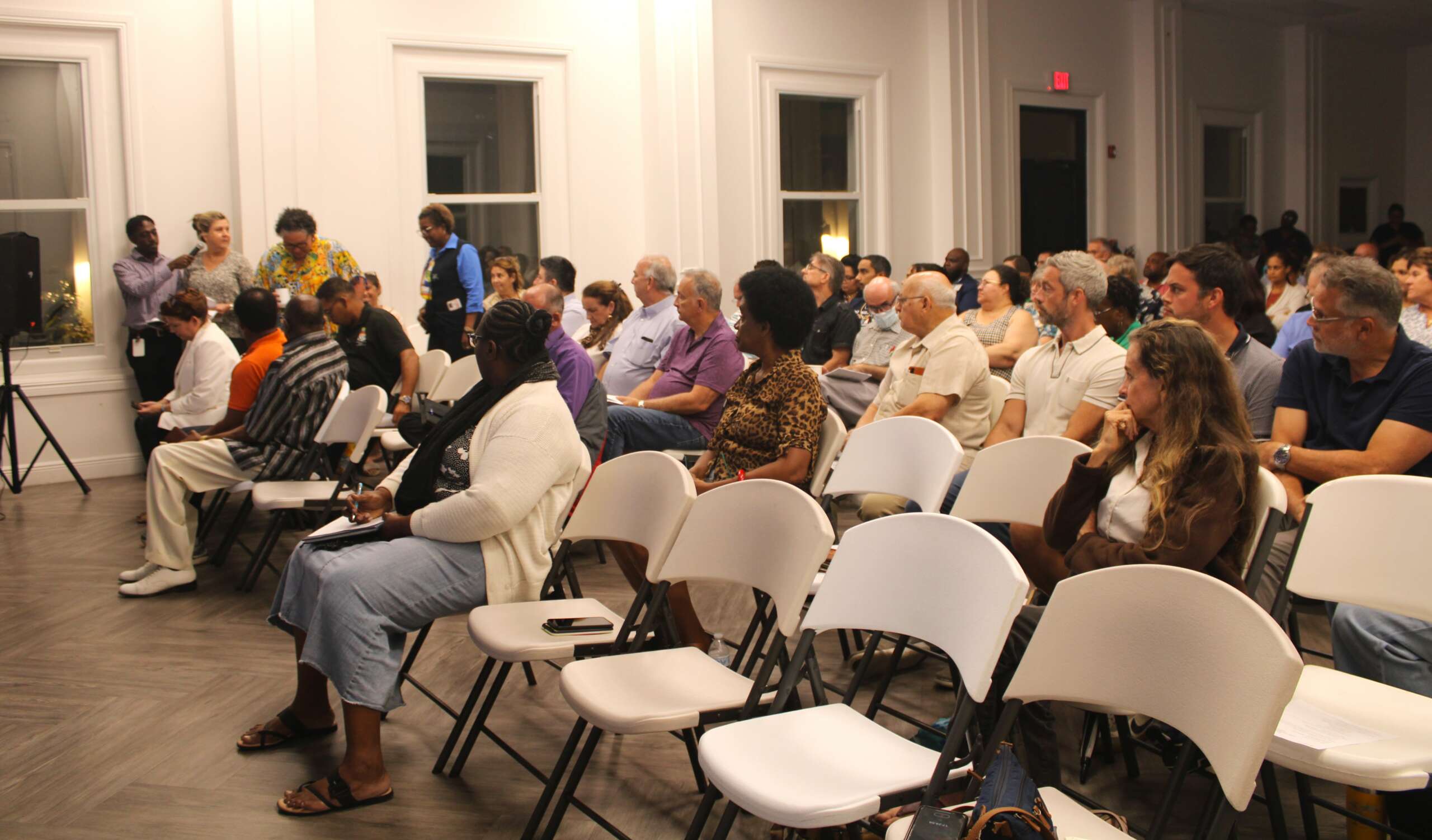
Community members filled Constitution Hall on Thursday evening to give their thoughts on what to prioritise with the development of the capital city, as well as the rest of the islands.
While residents at the first PlanCayman meeting in West Bay highlighted issues like corruption and power cuts, it was zoning enforcement that captured the greatest attention at the highly attended George Town forum.
Development process
The George Town panel was led by Central Planning Authority member Christine Maltman and Chairman Ian Pairaudeau, as well as Department of Planning Director Haroon Pandohie and planning officer Richard Mileham.
Make your voice heard
- Savannah: Monday, 10 June, 7-9pm, Savannah United Church (Postponed to 25 July due to inclement weather)
- Bodden Town: Thursday, 13 June, 7-9pm, Bodden Town Church of God
- North Side: Thursday, 4 July, 7-9pm, Edna Moyle Primary School
- Cayman Brac: Monday, 8 July, 7-9pm, Aston Rutty Centre
- Little Cayman: Monday, 15 July, 7-9pm, Little Cayman Beach Resort
- East End: Thursday, 18 July, 7-9pm, William Allen McLaughlin Civic Centre
- Virtual Meeting: Thursday, 18 July, 12-1pm
Mileham offered a brief overview of the process before panellists fielded questions from the public for two hours.
He noted that crafting an official planning statement, one that has gone through an extensive public consultation period, is a key first step. After it gets approval, planners will turn their attention to specific area proposals.
Many people who took the microphone used the opportunity to voice their concerns about how current zoning regulations are enforced, particularly when it comes to shoreline development.
One attendee asked how many enforcement officers are employed by the Planning Department. Pandohie replied that there are three for enforcing regulations, across all three islands.
However, Maltman said the development plan only speaks to setting different zoning regulations. Making sure those regulations are followed falls under a different part of the law.
“Even if the Planning Department increases the number of enforcement officers, the actual process for enforcement is the thing, in my opinion, that needs to change,” she said.
Protecting natural resources
Several speakers expressed their worries about natural resource protections not being adequately followed when it comes to development approval.
The planning statement draft includes language for bolstering these protections.
Natural resource protection overlay zones would “preserve and protect key habitats, sensitive landscapes and vulnerable ecological areas” and “ensure that development is sensitive to natural resources and protects important natural and ecological features”.
Residents told the panel that it needs to consider exactly who would determine if the development is “sensitive” and by what measures.
Residents stressed the need for community-centred development to address specific concerns like walking back coastal properties and more broadly protecting the islands’ resources for the next three decades.
Half a dozen community meetings are scheduled for the upcoming weeks, including a virtual forum on 18 July. The public can also give their comments directly through https://www.plancayman.ky.
Related Videos








The year that cargo gets shut down for an extended period of time due to one of the many foreseeable potential external calamities that the future may hold, will be the year that we realize how foolish we’ve been to develop over our best agricultural land and squander our marine resources. Population and development increases are unsustainable on an island. Carrying capacity should be assessed in order to determine the limits of each.