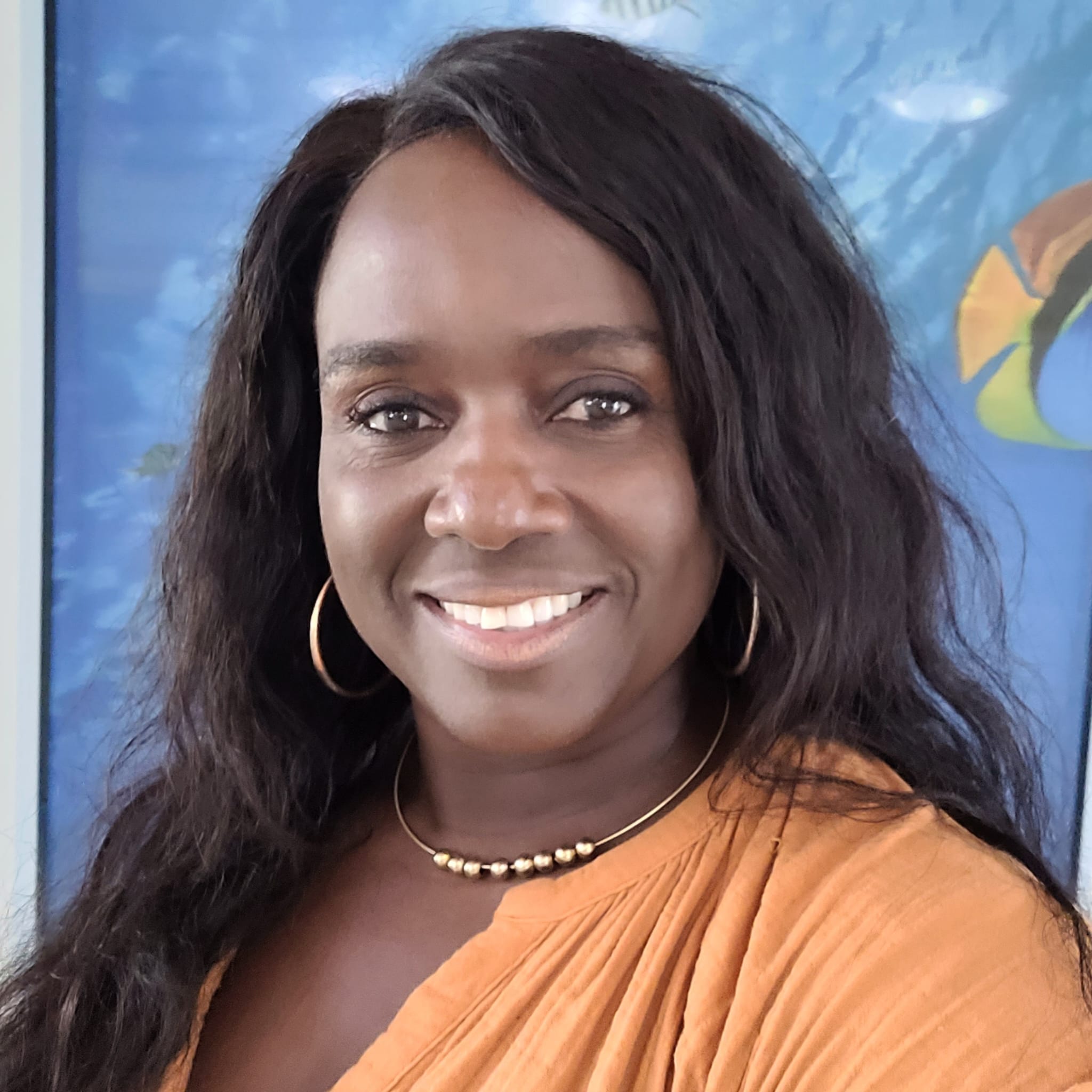
Lovell Marriott, who has staged several one-woman demonstrations in recent years, appeared in Grand Court Friday to appeal against her convictions for disorderly conduct and resisting arrest and her conditional discharge sentence.
Marriott, who represented herself at her trial and again at her appeal hearing on Friday, was convicted in February this year, when Magistrate Philippa McFarlane handed down a conditional discharge sentence and an order to pay a fee of $100.
The conditions of the discharge were that Marriott must keep the peace and stay out of trouble for one year, or risk having a conviction recorded against her.
The charges stemmed from two separate incidents in which Marriott used debris and foliage to block roads in George Town on 14 Feb. 2022.
Marriott told Grand Court Justice Cheryll Richards on Friday that she had not resisted arrest, and that the four police officers who restrained her that day had not told her she was under arrest.
Instead, she insisted, she had been roughly grabbed from behind by the officers, who pushed her to the ground and tightly handcuffed her, causing cuts and bruises.
“It’s a normal reflex, if someone comes up behind you and grabs both of your hands, you are going to respond,” she said, adding, “I was frightened.”
She said previously she had been “illegally arrested more than 10 times” and had never resisted before.
Marriott told Richards that she had not been allowed to show photographs of her injuries to the court in her trial, and no CCTV of the incident was shown.
She said she felt the magistrate had not taken the case seriously.
She described her conditional discharge sentence as a “mockery”, saying it was basically a form of bail and that she was given “one year to behave” herself, adding that her reputation had been destroyed.
“I am not a hooligan,” she said. “I am a decent citizen, a woman of integrity and class. I am a godly woman and I carry myself accordingly. So, for the magistrate to say she is giving me one year to behave myself and I should stay out of trouble, that’s an insult to my integrity, it is an insult to me as a godly woman, it is an insult to my family. And so, I refuse to accept that kind of mockery.”
Marriott argued that her human rights had been abused and that her trial had been unfair.
Crown prosecutor Sophie Quinton-Carter said the issue of photographs of Marriott’s injuries as a result of her arrest had arisen during her trial, but Marriott did not have the mobile phone which held the images on her in court on the day of the court hearing.
“It was discussed that an adjournment would be required in order for the photographs to be sought, and potentially a hearing as to their admissibility,” she said. “The magistrate considered that issue with care … and determined it was not in the interest of justice to adjourn the trial for those to be obtained.”
McFarlane, in her reasons for that decision, had indicated that the injuries were likely to have been sustained as a result of resisting arrest, Quinton-Carter said.
She told Richards that CCTV of the incident was not shown in court because there had “never been any CCTV in relation to this matter”.
Countering Marriott’s argument that the trial was unfair, Quinton-Carter said, “The magistrate in this case gave all reasons for her verdict and her sentence, and ultimately concluded that she was unpersuaded by the appellant’s account that she was assaulted by the police and rejected it as entirely untruthful or, at a minimum, greatly exaggerated.”
Richards’ decision on the appeal case is expected to be delivered on Thursday, 11 July.
Related Videos