

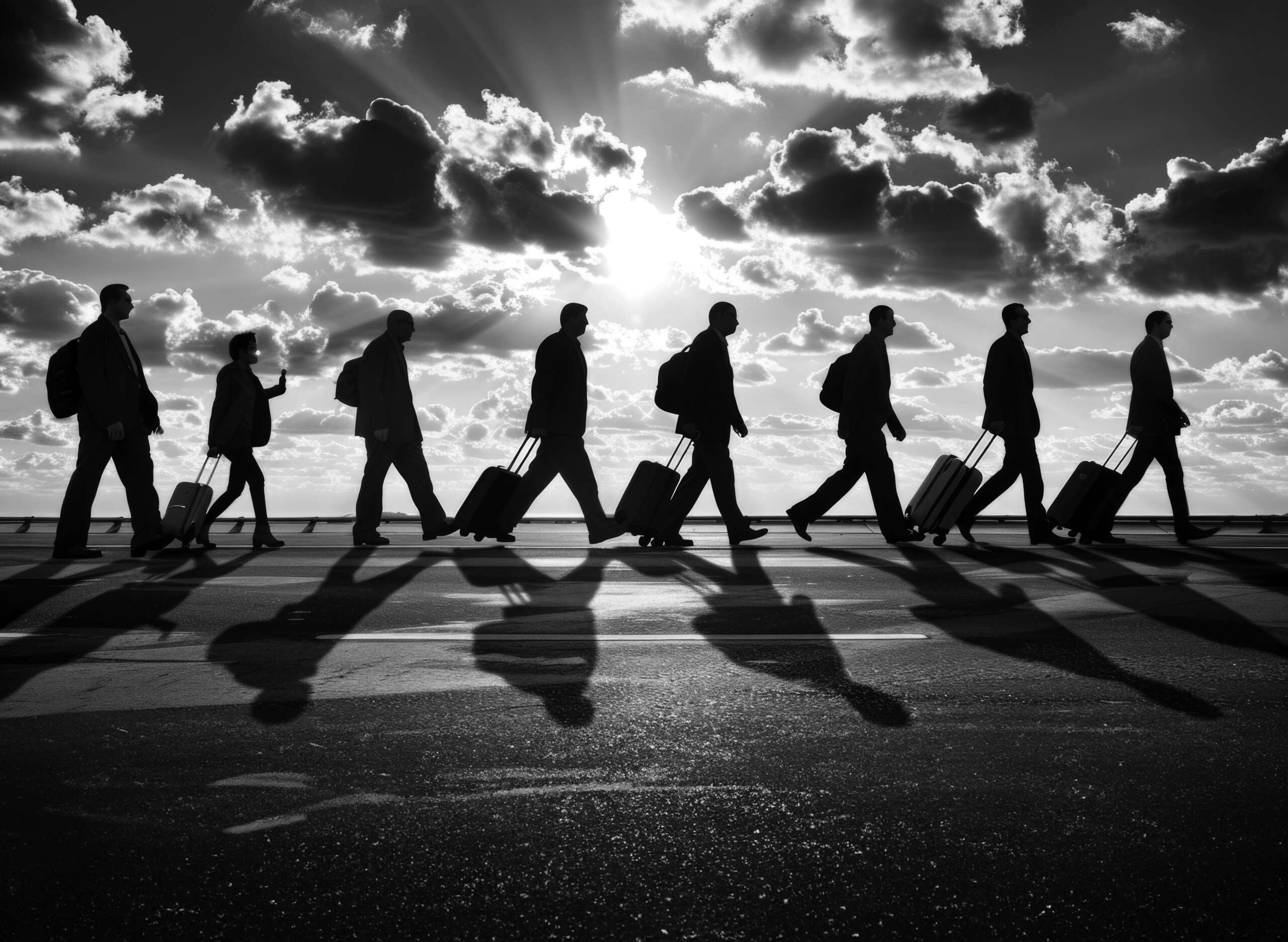
Cayman is facing a brain drain of some of its brightest young talent because of lack of opportunities and the high cost of living on the islands.
Despite spending around $13 million annually on higher education scholarships – some binding students into contracts that compel them to return home after university – there appears to be an increase in the number of young people choosing to live overseas.
Several university graduates told the Compass they felt they had to leave their home to find opportunities that match their education or ambition.
Coupled with the perception of a ‘concrete ceiling’ for locals in key professions, including in the tourism and financial services sectors, they question whether the pathway to meaningful careers really exists in Cayman.
Many said they were grateful for academic opportunities that previous generations never had and would like to use their skills and qualifications to make Cayman a better place.
But they painted a picture of stifled opportunities in the workplace and limited support for business development.
Others told us they felt they would be unable to afford to have a family or buy a home in Cayman.
“I don’t want to just be able to survive pay cheque to pay cheque, I want to be able to have a happy life in my own country,” one current student told us, saying she would like to return to Cayman after her studies but feels hopeless about the prospects.
Another mid-career marketing professional told us she would like to come home, but couldn’t find a job that would match what she is paid in the US.
“It is not a matter of want,” she said. “I need the top salary that fits my experience, otherwise I can’t get by in Cayman.”
Government does not keep statistics on emigration, although Cayman Connection – a social and professional network for Caymanians overseas – now has around 2,000 members. The membership figure for what is a voluntary group represents just a fraction of the total of Cayman Islands nationals living abroad.
In the absence of data, this is necessarily a story built on anecdote and personal testimony. But some key themes emerged from our interviews with multiple Caymanians overseas, preparing to leave or who have returned home after stints abroad.
The biggest concerns were around breadth and diversity of opportunity, perceptions of nepotism and progress based on tenure rather than talent, and a dramatically increasing cost of living that makes it difficult to return to Cayman after time overseas.
From culinary school to making sandwiches
Stefan Ebanks’ disenchantment started during his internship at The Ritz-Carlton resort.
He worked summers at the hotel while completing his bachelor’s degree at the Johnson and Wales University culinary arts programme.
During that time, he says he worked longer hours, took overtime shifts, and never called in sick in an effort to break the prevailing perception of ‘lazy Caymanians’.
He completed his studies and obtained a master’s degree in tourism management.
In an interview with the Compass, back in 2012, Ebanks, then 18, talked about his passion for cooking and his ambitions to become a food and beverage director at The Ritz-Carlton, and Cayman’s tourism minister.
But on returning to Cayman after graduation, he found it difficult to even get onto the first rung of that career ladder.
“The best job I could get was at Subway,” he said.
“There were a few entry-level opportunities, but nothing with any mobility or chances to get into management.”
That contrasted sharply with his fellow graduates, who he saw advancing much more quickly.
He took a manager’s job at a Sweetgreen restaurant in Philadelphia and never looked back.
Ebanks now earns a high six-figure salary as director of operations for a growing food company.
“I think it is a shame I could not prosper in my own country, but am treated as a king in foreign lands,” he said.
Now 31, he sees little prospect of being able to afford to return to Cayman.
The career path is not there, he insists, pointing to the fact that the industry’s top tier staff tend to remain in position for a long time.
“I would never have got that opportunity in the Cayman Islands; nobody would take a chance on me.”

When he looks around the boardrooms and executive positions in Cayman – particularly in hospitality – he says he doesn’t see many faces like his.
“The CEOs are not Caymanian, the HR managers are not Caymanian,” he said. “I don’t see how I will ever be able to get home because there is no opportunity for me there. The only thing would be to come home and run for politics and try to change this.”
Ebanks sees similar struggles among his fellow Caymanian graduates in his year group.
“Some of the smartest people I know are working in Canada, Dubai and the UK. They are not coming back to Cayman.”
Funding for entrepreneurs is hard to come by
One of those people that would like to come back is Jordy Rankine.
As a private chef based in Florida and working with celebrities like record producer Timbaland, he is making a name for himself in the US.
But his dream is to come back to Cayman with his family, including two young children, and to start his own restaurant.
“Cayman culture is disappearing and food is a big part of that,” he said. “There is no modern contemporary Cayman restaurant.”
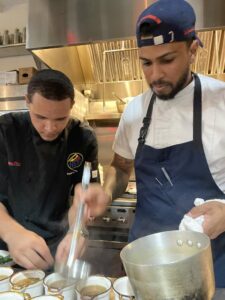
It is partly a consequence of the small market, but compared to the US, he says the opportunities to get funding for a start-up restaurant are limited in Cayman.
He believes government could think outside the box by providing development loans to entrepreneurial Caymanians or offering communal kitchen space or even a disused restaurant, like the Lighthouse in Breakers, as an incubator for local chefs to develop their ideas and train young Caymanians.
Rankine believes he has skills that could help serve his community and keep Cayman culture alive. Recent pop-up events have been a resounding success.
But he doesn’t see a door to achieving his ambition in Cayman right now.
It was the same when he graduated college.
“I had opportunities to learn and grow more in the US,” he said. “Now that I am ready to move back home, I don’t think I can afford to.”
On a recent visit to Cayman, he said, he was shocked by the cost of living. Even with a good salary, he believes it would be difficult to support his young family.
“I also struggle with the moral part of it,” he said. “Who am I to say I deserve to be paid more than another person? But I would need a certain amount to support my family.”
‘In the US, you advance on merit’
The perception that it is a difficult journey for Caymanian graduates to achieve career goals in their own country extends beyond the hospitality field.
A marketing professional, who moved to the US for greater freedom of movement during COVID, told us she had advanced up the career ladder so quickly she couldn’t afford to come back.
“Within a month of being in the US, I had a senior role in a large executive ad agency. Less than a year later, I was offered a director role at one of our clients.
“What has been missing in the Cayman workforce is merit-based recruitment. In the US, it is about fantastic references and a great LinkedIn page.”
She argues that this is not the case in Cayman. She would like to come home but struggles to get interviews for roles at her level.
On one occasion, she said, a firm refused to process her application, without giving reasons.
“There’s a lot of nepotism and not a lot of transparency,” she added.
Her decision to stay overseas is, she says, “linked to the cost of living”, because “You have to be looking for the best job and the best deal you can get to afford to live in Cayman.”
Since she moved to the US, she said she has received scores of resumes from other Caymanians wanting to do the same.
Opportunity in Africa
One entrepreneur who has had significant success in Cayman is planning a future outside of the islands.
Jonathan Webster, the founder of AutoShield and several other businesses, plans the next chapter of life for his family in Ghana.

He said the ‘hyper consumerism’ of modern Cayman was not the place and the value system he wanted to instil in his children, aged 8, 10 and 13.
Ghana also offers a chance to invest in land and businesses at a buy-in level that is not possible in Cayman. He and his family visited the English-speaking country on the west coast of Africa recently and felt a connection and sense of spirituality he believes is being lost in the west.
“I am an African living in the Cayman Islands. That is my heritage,” he said.
He aims to keep his businesses and links to Cayman but sees more opportunity to develop in Ghana.
“I want to create wealth by investing in people and investing in meaningful products and I can’t do that to the same extent in Cayman. I want my children and grandchildren to be proud of what I have created,” he said, arguing for a more ‘conscious capitalism’.
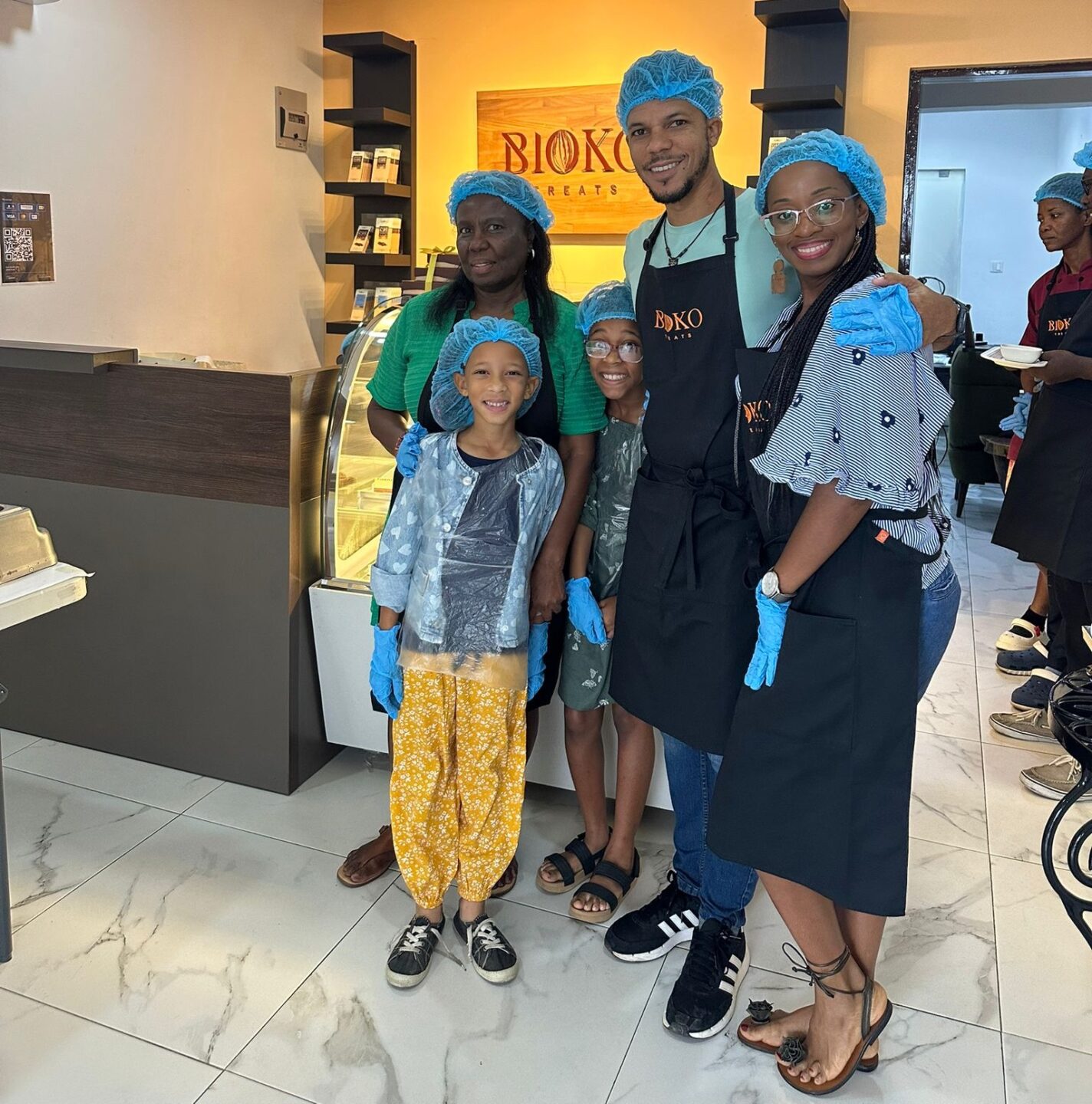
He hopes ultimately to reinvest in Cayman but believes doors of opportunity are more open to him in Ghana. His aunt, who is approaching retirement age, aims to join the family in Africa, where her pension, which would be barely enough to get by in Cayman, will allow her to live comfortably.
He says he is worried for the future of Cayman as inequality increases.
“There has always been rich people in Cayman but now everywhere you go people are driving [Lamborghinis] and Porsches. Children growing up now, in families where they can’t pay the light bill, they are not going to grow up with that sense of Caymankind that we did.”
Students face dilemma
For students considering their future, the question lingers: “Should I stay or should I go?”
Jenae Angelique, 26, studied anthropology and cultural studies at university and is now partway through a master’s degree in law in the UK.
“I don’t want to move away. This is my home,” she said, on a recent trip back to Cayman for the summer.
“Going abroad to study is a temporary thing – my ambition is to come back home to better myself and my country.”
Angelique and her three siblings, all in their 20s, live with their parents in Cayman.
She wonders what kind of career she can pursue that will give her a chance to own a home and have her own family.
“What I want is to be able to live a life of security, where, as a Caymanian, I am able to live happily and feel like I belong, and there is a place for me in my home country.”
She said she had initially been interested in fashion design, but had been advised to pursue careers that were more established in Cayman.
She believes Caymanians are hitting a ‘concrete ceiling’ when it comes to finding opportunities that enable them to live comfortably.
“My personal journey so far has been ‘get your education, get a good job, get experience’ and even when I have done these things it’s like there’s still much I have to do before I can even get a job opportunity with good pay that will enable me to afford the cost of living here.”
“I would feel more optimistic if I saw Caymanians at the top of the firms in all industries,” she said.
Leaving paradise
Ashlea Akinwumi, director of the non-profit Cayman Connection – a social and professional network for Caymanians overseas – said people leave the island for a variety of reasons.
She said financial services and law were the “big players” within Cayman for graduate jobs. Sometimes, students with interests outside of those spheres, particularly in more niche industries like art and fashion, find they have to pursue ambitions elsewhere.
Akinwumi added that there were good opportunities within Cayman in a number of spheres and the non-profit seeks to help create links for those who wish to return.
“We want to make sure young people understand there are opportunities back on island once they graduate,” she said. “We want them to feel valued and to know that people want them to come back and see where their skills can work for their island.”
Some graduates who have returned home said they felt tied to the obligations in their scholarship agreements and ended up taking jobs that didn’t match their skill set or ambition.
Others said they had broken the terms of their agreements because there simply was no job for them back home.
“Government has done an amazing job with scholarships,” one said. “My generation is probably the best educated and best qualified in Cayman’s history. But the opportunities are not there. So many of us have to take jobs that are nothing to do with what we studied or that we are way overqualified for.”
One person who acquired multiple degrees, including an MBA, before working in major companies in New York, said they found his experience counted for little in Cayman.
When they returned home, partly as a consequence of the pandemic and partly to be closer to their family, they were offered a role at a ‘Big 5’ firm that came with a salary $40,000 lower than what they were paid in a similar position in the US, six years earlier.
In the US, they felt they were assessed on merit. In Cayman, in a number of jobs, it has felt like there is a ceiling.
“In the US, I got better offers and a clearer path to how I could move up. At home it has felt a bit more like I am ticking a box as the Caymanian hire.
“I didn’t see any Caymanians in manager or senior manager roles.”
Ministry acknowledges issues
There were 724 students studying higher education overseas on Education Council scholarships in 2022, the last year for which statistics are publicly available.
The Ministry of Education acknowledges scholarship contracts do require graduates to return to Cayman for a period equivalent to the duration of their studies.
Deferments of up to three years are allowed for students who want to pursue employment opportunities overseas before “fulfilling their obligation to work in the Cayman Islands”.
A spokesperson for the ministry acknowledged concerns about limited opportunities for young Caymanians after university are “quite valid”.
The ministry highlighted support from the Scholarship Secretariat Unit as a means of helping “make informed decisions about their areas of study and future career paths that align with the needs of the local economy. The ministry also provides employment opportunities for returning teachers.
“A broader range of employment prospects across various sectors is crucial for recruiting our talented youth,” the spokesperson said.
“As such, we welcome open dialogue and collaboration with other government and private sector stakeholders to address this important issue and develop comprehensive strategies that foster an environment conducive to job creation and career growth for our educated young Caymanians.”
Related Videos













There re no opportunities for the ordinary Caymanian. Unless strings are pull or in the know who you know, you cannot get your foot in the door. Until government changes their main revenue structure from work permits and PR, caymanians will always be last to be employed in the work force.