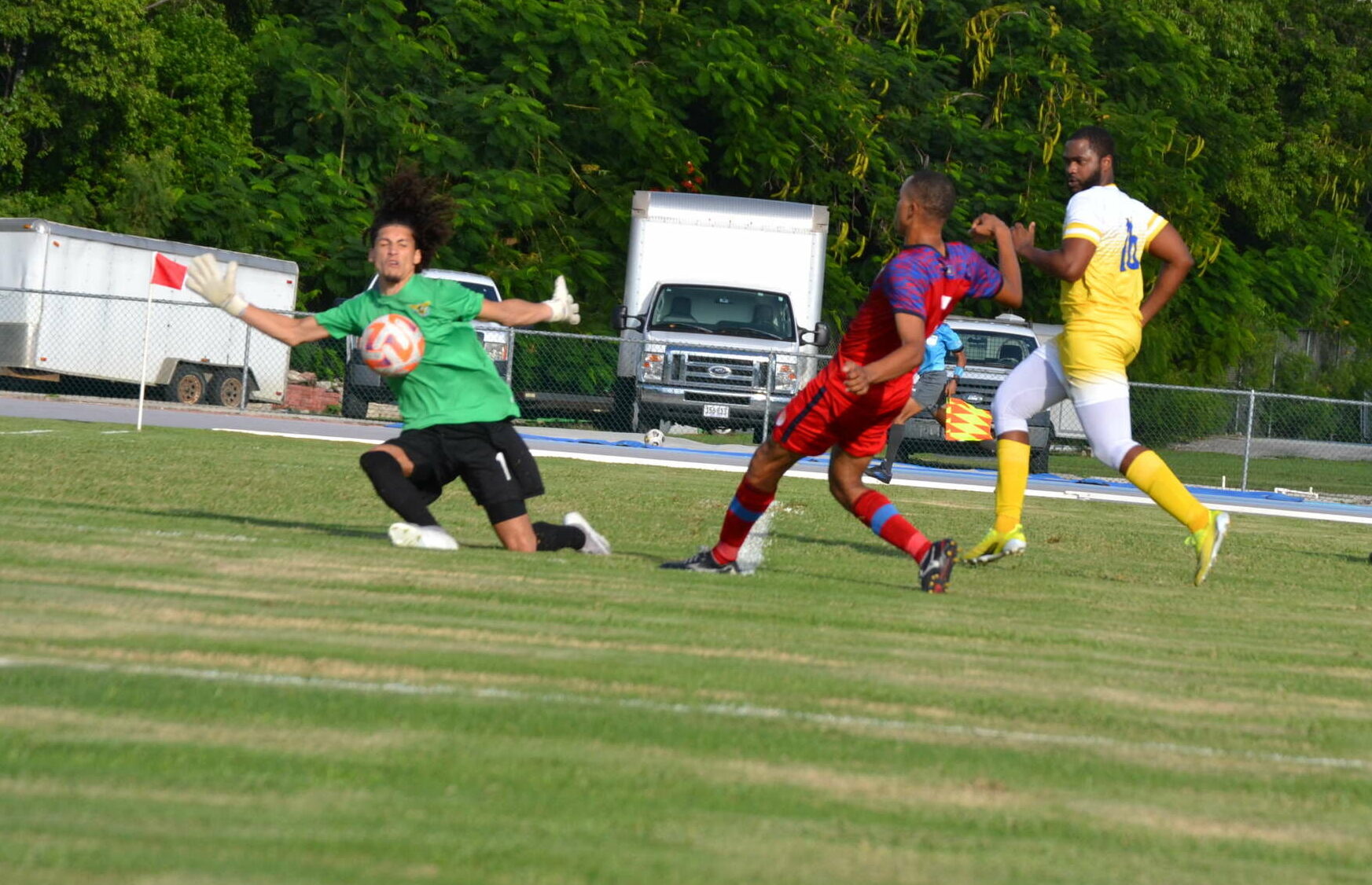
FIFA has launched a global concussion awareness campaign, encouraging all member associations to promote the initiative to help mitigate concussion risks across all levels of football.
To ensure the safety of club and national players, FIFA, in partnership with the World Health Organization, has rolled out several action points to improve the management of a player in the event of a concussion.
Those include a standardised assessment process, performing baseline examinations and post-concussion management.
“Whether playing, coaching or caring for someone who plays football, it is important to understand that concussion should always be taken seriously,” FIFA stated on its website.
The campaign, ‘Suspect and Protect: No Match is Worth the Risk’, is one for which Cayman Islands Football Association president Alfredo Whittaker has already started prep work, explaining to the Compass that his administration will have workshops with clubs to educate them on the campaign before the league action begins in October.
“We at CIFA have the responsibility to assist the clubs, not only in a monetary way, but in the medical department,” Whittaker said. “We will have a workshop with the clubs where each club will have to be mandatorily present with their physio or their medical personnel who sits on the bench.
“This will help the club’s personnel have a better understanding of what a concussion is and other head injuries related to the game.”
One player who can attest to CIFA taking concussions seriously is Caymanian professional footballer Joshewa Frederick-Charlery.
“I have experienced concussion before, and when I had my concussion CIFA always took care of me, so I have to give them props,” Frederick-Charlery told the Compass, noting that he is pleased that FIFA is bringing awareness to the matter.

“I feel like it’s good that FIFA is starting to take players’ health more seriously, especially with concussions, because concussions can leave a long-lasting stain on your life,” he added.
Concussions – a common occurrence in physical sports – can cause long-term damage if not treated properly. Some challenges people may face years after receiving a blow to the head are memory loss, brain fog, slurred speech, and a period of amnesia.
Reports show sports with the highest incidence of concussions are ice hockey, rugby, soccer, basketball and American football, the latter causing a combined 250,000 concussions annually.
To support a consistent level of emergency medical care on the pitch and reduce the number of errors, FIFA has proposed a standardised protocol for teams managing medical emergencies: the FIFA Pre-Match Emergency Action Plan.
The plan comprises a process by which medical teams organise themselves to deliver prioritised care in emergency scenarios.
FIFA noted that the key clinical assessments and intervention roles will help teams to manage the challenging human factors inherent in a time-critical emergency on the field.
“Whilst we cannot predict when emergencies may occur, we can be sure that emergencies will occur, and our job is to be adequately prepared to respond,” FIFA stated.
Insurance needed?
Outside of the many guidelines and procedures listed in FIFA’s new campaign, one that isn’t mandatory for amateur football is health insurance, but for Caymanian veteran footballer Mark Ebanks, he believes there should be insurance measures in place when it comes to Cayman.
“I personally never had a concussion, but it is a serious matter,” Ebanks told the Compass. “I believe every player should have insurance, whether it’s on the national team or clubs, but it starts with the clubs.
“I remember two players having concussion; I remember one player, foam was coming from his mouth, and he had to go to the hospital.”
Whittaker said that he has looked into getting players insured when they represent Cayman.
Cayman football to adhere to FIFA’s new rules barring racism
“For many years, we’ve asked for each player to show proof of insurance,” Whittaker said.
“I tried with several insurance companies to get insurance for the players who don’t have any, but the cost is extremely high and there is a lot of requests from the insurance companies and that’s why CIFA has been unable to assist players without insurance.”
The FIFA awareness campaign also outlined its concussion protocols and toolkits, which highlight grassroots protocols and comes on the heels of their Global Stand Against Racism.
Related Videos