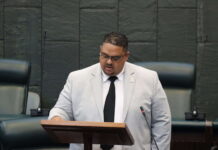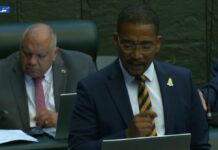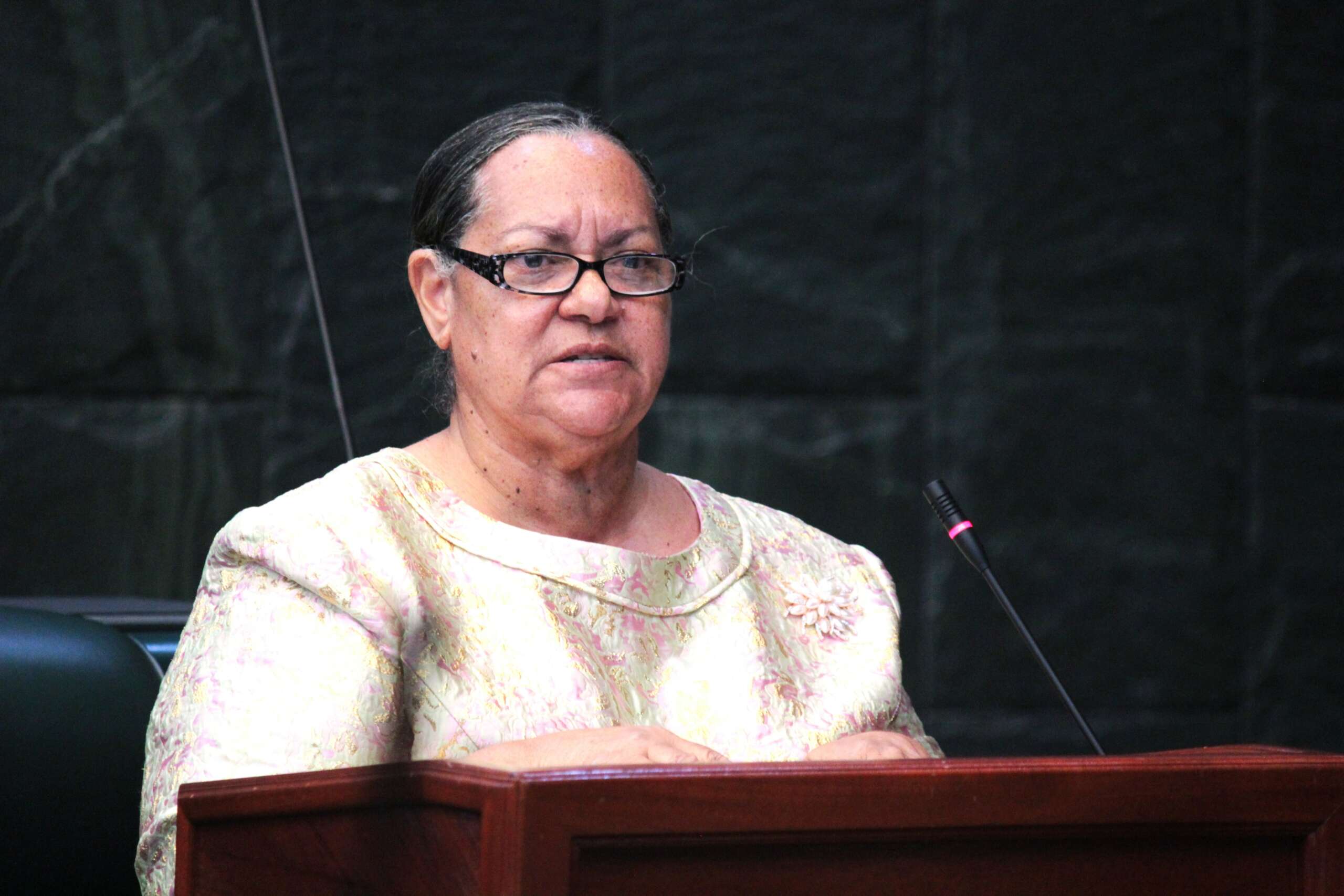
Premier Juliana O’Connor-Connolly and her minority government will face its first legislative challenge in Parliament on 9 Dec. when it pilots 21 pieces of legislation, including financial services amendments, some of which propose fee increases.
With O’Connor-Connolly no longer holding the majority in the House following the departure of four of her government members, including her former Deputy Premier André Ebanks, it remains to be seen how the new balance will impact her legislative agenda.
Ebanks announced his immediate resignation from the United People’s Movement late last month alongside then Sustainability and Climate Resiliency Minister Katherine Ebanks-Wilks, then Health Minister Sabrina Turner and then Parliamentary Secretary Heather Bodden. The group cited conflicts and unprofessional behaviour as reasons behind their exit.
House Speaker Sir Alden McLaughlin, in a statement on Tuesday, announced the new date for the Parliament, saying the meeting is anticipated to run throughout the week starting 9 Dec.
Several annual reports from government entities, as well as deliberation on over 20 bills will form part of the planned agenda for the meeting.
Credit union fee dropped
Among the bills are amendments seeking changes to fee structures within the financial services industry. However, noticeably absent from the list were proposed changes that would have introduced cooperative societies fees, i.e. fees for credit unions.
An initially proposed $200,000 annual fee for credit unions drew widespread criticism from the community, especially the government workers’ credit union, which launched a public campaign to quash the fee.
That campaign prompted the premier’s intervention in August and saw her publicly distance her administration from the fee structure, effectively tossing her then Deputy Premier Ebanks under the bus over that matter.
The public comments from the premier then seemed to confirm speculation of ongoing rifts in the UPM administration.
The Financial Services Ministry, in a statement on the upcoming bills, said they were “developed following a comprehensive review of fee structures by the Ministry of Financial Services and Commerce, General Registry, and the Cayman Islands Monetary Authority (CIMA)”.
That review, it said, found that some fees had not been adjusted in five to 10 years or more.
“Industry’s feedback also was sought on the regulatory revenue proposals,” it added.
Certain bills introduce fees, while others validate and raise fees previously charged by CIMA and the General Registry, it added.
The bills are aimed at implementing government’s revenue-raising measures.
A bill to implement phase 2 of the regulatory framework for virtual asset services in the Cayman Islands is also set to be debated.
New bills on the agenda include the Public Transport Bill, 2024, and the Information and Communications Technology (Validation) Bill, 2024, both of which are sponsored by the Ministry of Planning, Agriculture, Housing, Infrastructure, Transport and Development.
The speaker’s statement said members have until 5pm on 2 Dec. to submit Motions to the Clerk for approval.
So far, it said, no motions have been approved by McLaughlin.
Saunders pushes property fee
Independent Opposition MP Chris Saunders has filed a motion backed by government MP McKeeva Bush seeking government’s support to implement a 2% property fee on foreign-owned properties in the Cayman Islands, which would be used to establish a Health Insurance Protection Fund, effective 1 Jan. 2026.
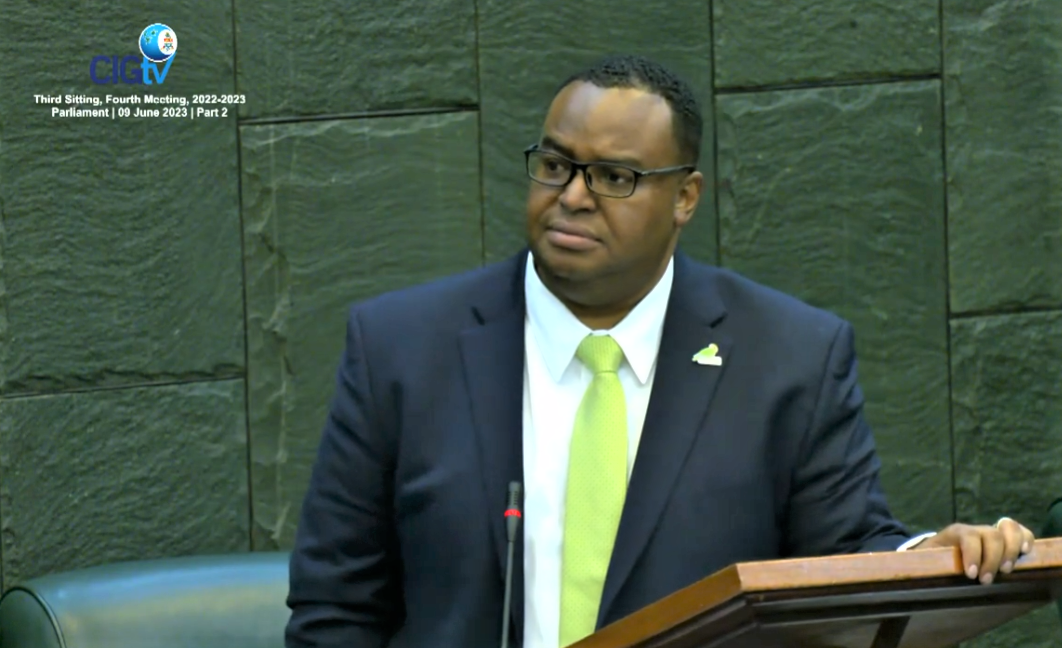
Saunders and Bush, through a social media video, announced the motion.
It calls for government to consider making the necessary changes to existing legislation and regulations to identify all non-Caymanians, non-permanent residents, and non-Caymanian legal entities that own real estate in the Cayman Islands and the value of the real estate as of 31 Dec. 2025 with a view to implementing the 2% fee.
Saunders, in a comment to the Compass on the planned motion, said that it is aimed at helping ease the healthcare burden on the government.
“Rather than kick the can down the road, I think we need to start preparing from now to ensure that when that time comes, our people can retire with dignity and a peace of mind knowing that health insurance will not be an issue,” he said.
Saunders said in the 2023 financial year, government spent $78 million to cover the medical costs of 2,069 Caymanians that had inadequate or no insurance.
“That’s an average of $39,000 per person. We have at least 14,000 Caymanians that will reach retirement age in the next 12 years. Many of them will have the same challenges as current retirees where they may not be able to afford adequate insurance,” he said.
The motion, he said, does not apply to real estate partly owned by Caymanians, permanent residents or Caymanian legal entities.
The Cayman Islands Real Estate Brokers Association (CIREBA), in a statement in response to the proposed motion, said it will continue to monitor developments closely in relation to the proposed motion and “encourage open, informed, and respectful discussions among all groups”.
It said the proposal for an annual 2% fee on foreign-owned real estate properties has not yet undergone the necessary consultative or legislative process.
“We support meaningful dialogue around solutions to national challenges, and we believe it is essential that any proposed measures be thoroughly evaluated for their economic and social implications. At CIREBA, our priority is to support balanced and equitable policies that contribute to the growth and stability of the Cayman Islands for all of us who call these islands home,” it added.
Related Videos