
From diamonds and condos to cryptocurrency and digital tokens, the ways and means to move dirty cash around the global financial system are becoming more diverse and complex every day. For Cayman Islands law enforcement, adapting to those threats is an evolving challenge.
Police seized or froze US$38 million in criminal assets last year — much of it in the digital space — as Cayman’s crime-fighting capability continued to adapt to a dizzying range of new threats.
The islands’ status as a financial centre, with more than 100,000 registered companies and a growing niche in virtual assets, means expectations of local law enforcement continue to expand far beyond what would be typical for a community of this size.
As Cayman prepares for its next evaluation by the Financial Action Task Force — the global watchdog on anti-money laundering and counter-terrorism and proliferation financing — the increasing complexity of the financial services sector presents new challenges.
Elisabeth Lees headed up the islands’ anti-money laundering task force, helping to drive the changes that resulted in Cayman being removed from the global ‘grey list’ of non-compliant counties.
She said Cayman must stay on top of evolving threats — especially in the virtual assets world — to remain in the good graces of global regulators.
Two cases profiled in the Compass as part of this series illustrate both the diversity of threats Cayman is facing and the kind of assistance it has provided in global investigations.
The Royal Cayman Islands Police Service’s Operation El Niño led to the seizure of $6 million of gold at London’s Heathrow Airport, 80% of which was forfeited under the UK Proceeds of Crime Act.
On that occasion, investigators faced a race against time to provide enough evidence and intelligence to their UK counterparts to stop the physical movement of ‘dirty’ Venezuelan gold through Cayman to London and on to Switzerland.
At the other end of the spectrum, an inside-job hack of an island-based blockchain technology company required specialised investigators to track the movement of digital tokens through the global system and retrieve the stolen assets for the Cayman victim.
Victoria Templeman, head of the Cayman Islands Bureau of Financial Investigation — specifically set up to lead the islands’ major cross-border cases— said the capabilities to look into cyber-enabled and cyber-dependent crime had increased in the past few years.
Her unit follows the money to assist global investigations with a link to Cayman. The gold case stands out as an anomaly in a world where the movement of assets and cash is increasingly happening in the digital space. That can still require the physical movements of funds in and out of the jurisdiction, through ‘cold ledger wallets’, the favoured means of keeping digital assets offline.
“You have to declare anything over $10,000 if you come into the country,” Templeman said. “The challenge with crypto is you can carry a billion dollars on ledgers that can be as small as a USB stick.”
The flip side of that is the technology that makes this possible also means that every transaction is forever recorded in a shared, public digital ledger. This enables investigators to trace transactions, as the blockchain provides public and irrefutable evidence that those transactions have happened.
The shift to virtual assets by both legitimate and illegitimate actors is reflected in the data.
Approximately US$32 million of virtual assets was frozen, returned to victims or claimed as proceeds of crime across eight distinct investigations in 2024. That includes an initial $1.55 million worth of tokens returned in the Holograph case.
One challenge in that instance was that the value of the tokens had depreciated by the time they were returned to the victim.
In many complex cross-border cases, Templeman said, there is a need to coordinate with international partners to determine which jurisdiction is best placed to bring any criminal charges, and assist with tracing and recovering assets. The Holograph case, for example, involved a Ukrainian national operating from France who was ultimately arrested in Italy. Cayman assisted in that investigation and worked to get the money back for the locally based victim.
In some sense, both for the reputation of the jurisdiction and for the victims themselves, that is more important.
“My guys work extremely hard on behalf of victims. That is their core moral objective. They’re looking to get money back for people who have been victims of crime,” Templeman said.
Protecting Cayman’s key industry
From a national industry perspective, Lees said Cayman is growing its presence in the virtual assets and cryptocurrency niche.
Having the expertise and the ability to protect those businesses from crime is part of ensuring the reputation of the islands and the viability of fintech as an emerging economic pillar. She said scrutiny from the Financial Action Task Force had helped Cayman shape a well-regulated environment.
“It is important to understand and keep up with the evolving risks on things like virtual assets,” she said. “How are they being used and how are they being misused?
“I think Cayman has done a really good job so far.”
She said regulators and government had taken a detailed and methodical approach to licensing virtual asset service providers and bringing in the underpinning legislation to ensure anyone who does business here is compliant with anti-money laundering regulations.
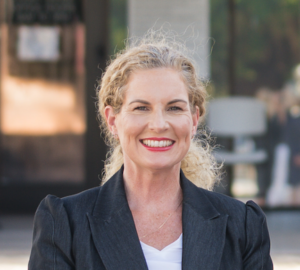
“Fortunately, we haven’t been subject to any of the scandals that have impacted other jurisdictions, and I think that is because there was that careful and detailed and robust examination process for these applications.”
Lees cautions that it is important not to forget the old school targets — from precious metals and artwork to gold, cash and condos — as investigators and regulators seek to prevent the islands being used to launder funds. Staying on top of ‘know your client’ regulations in areas like real estate, which are not as used to such compliance scrutiny, is an ongoing challenge.
Similarly, for lawyers and corporate service providers that provide registered offices to companies overseas, there is a new responsibility to do due diligence on those customers.
Those type of services were highlighted by the Cayman Islands’ National Risk Assessment as having a greater risk profile for Cayman.
Lees argued that the progress made in those areas over the past few years has put Cayman in good stead for its next evaluation in December 2027 when global experts will review five years of data to determine if Cayman remains off the grey list.
Money-laundering convictions remain largely elusive
Lees said the ability to secure money-laundering prosecutions in line with Cayman’s risk profile remains the biggest challenge. But she hopes diplomacy and participation with the Financial Action Task Force, the progression of investigations by the Cayman Islands Bureau of Financial Investigation, and the work done to assist other jurisdictions, as well as in the asset seizure realm, will count in Cayman’s favour.
She said the nature of Cayman as an international financial centre was such that it was important to investigate and prosecute cross-border money laundering and to recover the proceeds of crime, as well as to support other jurisdictions in such cases.
It is important, therefore, that Cayman gets credit from global regulators, like the Financial Action Task Force, for the assistance it provides to other jurisdictions, both in helping obtain prosecutions and seizing or recovering assets, and it is crucial that Cayman also investigates and prosecutes money-laundering matters.
Following the money and freezing it, or recovering it, is a noble contribution, Lees said, to the global fight against organised crime, terror and proliferation financing.
“It takes away the motive. So if you can make it more difficult for people to launder the money or move the proceeds, you take the incentive out of the crime,” she said.
“You want to make the Cayman Islands unappealing to bad actors, because they know that they will be detected and held responsible.”
Related Videos