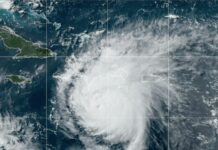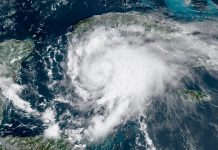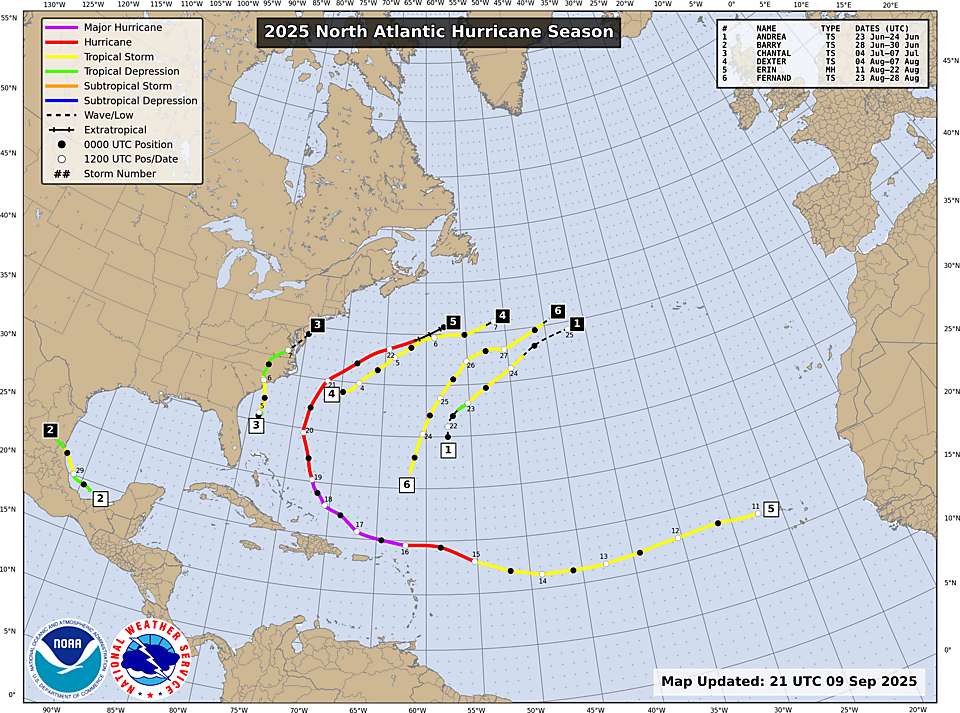
As of 10 September – the climatological peak of the hurricane season – there were no active tropical storms or hurricanes in the entire Atlantic Basin. In addition, no tropical storms or hurricanes have entered the Caribbean Sea so far this year.
Explaining the reasons for the lack of cyclone activity for the year to date, Phil Klotzbach, from the Department of Atmospheric Science Colorado State University said that a combination of factors including a dry and stable tropical Atlantic and a pronounced trough in the western Atlantic increasing vertical wind shear have led to the relatively uneventful first half of the hurricane season.

“We do anticipate the season picking up, however, given that large-scale conditions appear to become more tropical cyclone-favorable later in September,” he said.
In a discussion paper examining the lull in Atlantic tropical cyclone activity issued by Colorado State University on 9 September, the authors said “Since Fernand dissipated on 28 August, the Atlantic has produced no named storms. The National Hurricane Center currently is not expecting any tropical cyclone formations in the next seven days. If that forecast verifies, it will be only the 2nd year since 1950 with no Atlantic named storm activity between 29 August and 16 September. The only other year was 1992.”
The Colorado State meteorologists added, “This pronounced quiet period is quite remarkable at this time of year given that it coincides with the climatological peak of the Atlantic hurricane season.”
Despite the lull, the scientists at Colorado State said that at this point, they do not plan to revise their earlier hurricane season forecast which called for a slightly above average hurricane season.
“This is the second year in a row that the Atlantic hurricane season has gotten very quiet during the climatological peak, despite what would seem to be favourable seasonal conditions for tropical cyclone activity. We do note that 2024 ended up a hyperactive season following its noted mid-season lull.”
Factors that still point to an active second half of the hurricane season include high sea surface temperatures as well as reduced wind shear conditions for later in September and early October, the scientists said.
“We advise considerable caution on writing off the 2025 Atlantic hurricane season. As we saw last year, Atlantic [tropical cyclone] seasons can change from quiet to busy in a hurry.”
The heat is on
There is a welcome lull in tropical cyclone activity around the Cayman Islands so far this summer, but there hasn’t been a lull in rising temperatures.
In fact, statistics released by the Cayman Islands National Weather Service indicate that it has never been hotter in August than it was on the 24th day of the month, when the temperature on Grand Cayman reached 94.8 degrees Fahrenheit.
The national weather service said that temperature ranks as the second highest temperature ever recorded for Grand Cayman, following the 95.5 degrees observed in July 2023. Statistics cited by the Cayman Islands National Weather Service date back to 1991.
According to the weather service, the average temperature also remains above the long-term average by about 1 degree Fahrenheit for both Grand Cayman and the Sister Islands.
August also brought more rain than usual, with a total rainfall for the month coming to 7.2 inches, almost an inch and a half above the 30-year average for the month of 5.8 inches.
Despite the higher-than-average August rainfall, the total accumulated rainfall over the first eight months of the year for Grand Cayman remains one foot (12 inches) below the annual average total. That could change this month and next as September and October are historically the two rainiest months of the year.
Cayman Brac recorded 2.1 inches of rain in August, which is below the 10-year average for the month of 4.7 inches.
Like Grand Cayman, the total accumulated rainfall in the Sister Islands from the beginning of the year through the end of August is also well below average (by about 13 inches).
Related Videos